

Radiators Cost in 2026: What Drives the Price Up?
Radiator costs in 2026 are rising for reasons that go well beyond aluminum or copper prices. For procurement teams, distributors, and market researchers, the real pricing pressure comes from a combination of raw material volatility, energy costs, labor, emissions compliance, CNC machining cost, sheet metal forming, sheet metal welding, logistics, and changing vehicle aftermarket demand. In practical terms, buyers should expect radiator pricing to vary more sharply by product type, manufacturing origin, and quality tier than by material cost alone. The smartest sourcing decisions in 2026 will come from understanding which cost elements are structural, which are temporary, and where negotiation leverage still exists.
This article explains the main factors behind radiator pricing, how they connect to broader car maintenance cost and car maintenance price trends, and what importers, distributors, and business evaluators should watch when comparing suppliers.
What is really pushing radiator prices higher in 2026?
The short answer is that radiator prices are being driven up by a layered cost structure rather than a single factor. While many buyers first look at metal prices, radiator manufacturing is affected by several upstream and downstream pressures at the same time.
The biggest drivers in 2026 include:
- Raw material costs, especially aluminum, copper, plastic resin, and steel for related assemblies
- Energy prices, which directly affect smelting, forming, brazing, welding, and factory overhead
- Labor costs in key manufacturing regions
- CNC machining cost for precise fittings, tanks, brackets, and specialized performance radiator components
- Sheet metal forming expenses for brackets, frames, and structural support parts
- Sheet metal welding and brazing requirements, especially for heavy-duty or premium radiators
- Freight and trade compliance, including tariffs, customs procedures, and shipping disruptions
- Quality certification and testing needed for OEM-grade or export-market acceptance
For buyers, this means the radiator market is no longer best understood through a simple “metal in, product out” pricing model. The final quote reflects manufacturing complexity, quality assurance requirements, and market positioning as much as material input.
How do raw materials influence radiator cost, and where do buyers overestimate their impact?
Raw materials still matter, but they are often overestimated in isolation. Most standard automotive radiators rely heavily on aluminum because it offers a strong balance of thermal performance, weight, and cost. Copper-brass radiators remain relevant in some industrial, commercial, and specialty applications, but they are usually more expensive due to material and production requirements.
In 2026, buyers should watch these material-related variables:
- Aluminum price fluctuations, which affect the core cost base of many passenger vehicle radiators
- Copper market movements, especially for specialized or heavy-duty units
- Engineering plastics used in end tanks and associated components
- Protective coatings and corrosion-resistant finishes, increasingly important in export-grade products
However, a rise in aluminum prices does not always translate directly into the same percentage increase in finished radiator pricing. Why? Because the finished product also includes tooling, joining processes, leak testing, packaging, logistics, warranty allowances, and factory margin. For lower-end products, material costs may be the dominant factor. For higher-spec products, process quality and rejection control can matter just as much.
This is why two radiators with similar dimensions and materials can still have very different market prices.
How do CNC machining cost, sheet metal forming, and sheet metal welding affect radiator pricing?
This is one of the most important pricing questions for trade buyers, especially when comparing standard aftermarket radiators with custom, heavy-duty, or performance-oriented products.
CNC machining cost becomes more significant when a radiator includes precision-machined connectors, mounting interfaces, filler necks, custom housings, or vehicle-specific integration features. In commodity radiators, this cost may be limited. In specialized products, it can substantially increase the total unit cost, especially when tolerances are tight and batch sizes are low.
Sheet metal forming plays a key role in producing brackets, outer frames, reinforcements, and support structures. Forming costs rise when:
- Design complexity increases
- Stronger or thicker materials are used
- Tooling must be customized for lower-volume production
- Dimensional consistency requirements are strict
Sheet metal welding and related joining processes also affect price, particularly in commercial vehicle radiators, industrial cooling systems, and premium aftermarket assemblies. More demanding welding requirements usually mean:
- Higher labor or automation investment
- More post-process inspection
- Greater leak-risk management
- Higher rejection and rework cost
For sourcing teams, these manufacturing details matter because they help explain why “visually similar” products can differ sharply in quotation. A supplier with stronger forming precision and more reliable welding quality may not be the cheapest, but may reduce field failures, returns, and reputation risk.
Why are car maintenance cost and car maintenance price trends relevant to radiator demand?
Radiator pricing is not only a manufacturing issue; it is also connected to broader automotive service economics. As car maintenance cost and car maintenance price rise globally, buyers are seeing shifts in how end users approach repairs and replacements.
Several market effects are worth noting:
- Vehicle owners keep cars longer, increasing replacement demand in the aftermarket
- Repair shops seek more price-tier options, from economy to premium
- Fleet operators prioritize lifecycle cost, not just purchase price
- Distributors face stronger pressure to balance margin, reliability, and availability
In other words, as general car maintenance price levels rise, radiator demand can become more segmented. Some buyers move toward low-cost replacements, while others prefer more durable units to avoid repeat labor, downtime, and warranty claims.
This creates a more complex market in 2026. A radiator is not just a part; it is also a maintenance-value decision. Buyers who understand the end-use context can build more profitable product portfolios.
Which radiator categories are likely to see the biggest price pressure?
Not all radiator categories will be affected equally. Procurement teams should expect the highest price sensitivity in segments where technical requirements, certification needs, or supply chain complexity are greater.
Categories likely to face stronger upward price pressure include:
- Heavy-duty commercial vehicle radiators, due to larger size, more robust construction, and tougher performance expectations
- Performance radiators, where CNC machining cost, specialized welding, and premium materials are more common
- OEM-equivalent radiators, especially where certification and consistency standards are strict
- Low-volume or vehicle-specific models, where tooling and production efficiency are weaker
- Export-market radiators, where packaging, compliance, and logistics raise landed cost
By contrast, highly standardized, mass-market aftermarket radiators may still remain relatively competitive if produced in mature manufacturing hubs with stable capacity and efficient logistics channels.
What should buyers evaluate beyond the supplier’s quoted unit price?
This is where many sourcing mistakes happen. A low radiator quote may look attractive, but the real procurement decision should be based on total landed and operational cost.
Key evaluation points include:
- Material specification accuracy
- Core thickness and heat exchange efficiency
- Leak testing and quality control processes
- Consistency across production batches
- Warranty terms and claim history
- Packaging quality for export transport
- Lead time stability
- Tariff and freight exposure
- Supplier responsiveness in technical problem-solving
For distributors and importers, one of the most useful questions is: Will the cheaper radiator still be cheaper after returns, customer complaints, and replacement labor risk are considered? In many cases, the answer is no.
This is especially important in 2026, when tighter margins and slower inventory turnover can magnify the cost of poor-quality sourcing decisions.
How can procurement teams reduce radiator sourcing risk in 2026?
The best approach is not simply to chase the lowest offer, but to improve cost visibility and sourcing discipline.
Practical steps include:
- Segment suppliers by product tier
Separate commodity radiators from OEM-grade, heavy-duty, or custom products. Different segments require different evaluation methods. - Request process transparency
Ask suppliers how they manage brazing, sheet metal forming, sheet metal welding, machining tolerances, and leak testing. - Compare total landed cost
Include freight, duties, packaging, defect risk, and likely warranty exposure. - Audit quality consistency
A stable medium-price supplier can outperform a low-price supplier with high defect variability. - Monitor end-market maintenance trends
Changes in car maintenance cost and car maintenance price influence downstream buying behavior and product mix strategy. - Build regional sourcing flexibility
Dual-sourcing or backup sourcing can reduce exposure to logistics shocks and trade policy changes.
For business evaluators and researchers, the main takeaway is that radiator cost inflation should be analyzed as part of a wider automotive supply chain pattern, not as an isolated parts-market event.
What is the overall outlook for radiator prices in 2026?
The most likely scenario is continued pricing complexity rather than uniform inflation. Some standard radiator categories may remain price-competitive due to manufacturing scale and intense supplier competition. But premium, specialized, and export-sensitive products are more likely to see sustained cost pressure.
In general, radiator prices in 2026 will be shaped by:
- Persistent process-related manufacturing costs
- Continued energy and labor pressure
- Application-specific design complexity
- Global freight and compliance factors
- Demand shifts linked to vehicle aging and maintenance economics
For procurement teams, this means price benchmarking must be more nuanced. Comparing quotes without understanding the role of CNC machining cost, sheet metal forming, sheet metal welding, quality standards, and downstream maintenance-value considerations can lead to poor decisions.
Radiator cost in 2026 is best understood as a supply chain intelligence issue, not just a purchasing line item. Buyers who evaluate technical process, market positioning, and total operating cost together will be in the strongest position to source competitively and protect margin.
Recommended News
 US CPSC Updates Child Sleep Sack Standard Effective July 2026US CPSC updates child sleep sack standard with new DSST test—mandatory for all U.S.-bound infant sleep sacks from July 2026. Act now to ensure compliance and market access.
 Red Sea Rerouting Pushes Asia-Europe Freight Premium to $1,850/TEURed Sea rerouting pushes Asia-Europe freight premium to $1,850/TEU—impacting importers, manufacturers & logistics providers. Act now to reassess costs, lead times & contracts.
 Mexico NOM-019-SCFI-2026 Effective May 1, 2026: EMC Certification Mandatory for Auto ElectronicsNOM-019-SCFI-2026 EMC certification is now mandatory for auto electronics in Mexico—effective May 1, 2026. Ensure compliance for infotainment, ADAS, OBD-II & more.
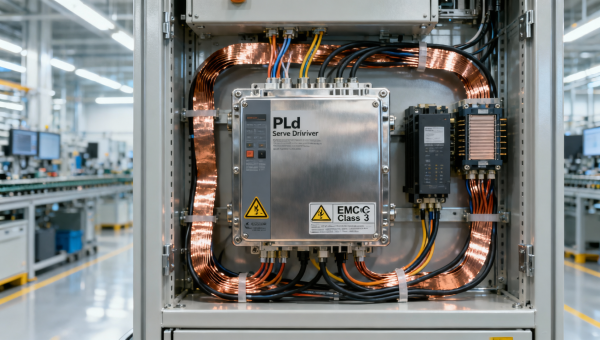
") TÜV Rheinland Updates CE Requirements for Servo Drives (PLd + EMC Class 3)TÜV Rheinland updates CE requirements for servo drives: PLd + EMC Class 3 joint validation mandatory from Q3 2026. Act now to avoid delays, rejections, or compliance risks.
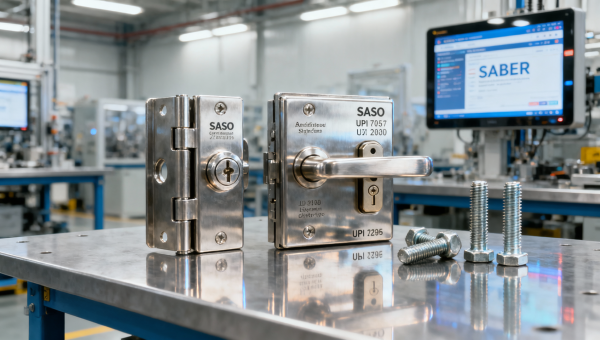
TÜV Rheinland Updates CE Requirements for Servo Drives (PLd + EMC Class 3)TÜV Rheinland updates CE requirements for servo drives: PLd + EMC Class 3 joint validation mandatory from Q3 2026. Act now to avoid delays, rejections, or compliance risks. SABER Phase II Launch: Building Hardware Must Submit Digital e-CoC & UPISABER Phase II mandates digital e-CoC & UPI for building hardware imports to Saudi Arabia—act now to ensure customs clearance and market access.
 FDA AI Diagnostic Device Draft Rules: Bias Assessment for ImportsFDA AI diagnostic device draft rules mandate bias assessment for imports — discover how algorithmic fairness impacts 510(k)/De Novo submissions and what to do now.
 RCEP Green Packaging Mutual Recognition Starts June 1, 2026RCEP Green Packaging Mutual Recognition starts June 1, 2026 — unlock faster exports to Australia, NZ, Japan & Korea with GB/T 37572-2025 certification.
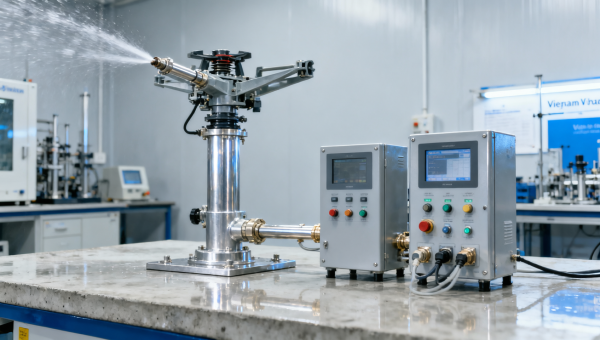
 Vietnam Suspends SASO Mutual Recognition for Chinese Irrigation EquipmentVietnam suspends SASO mutual recognition for Chinese irrigation equipment—impacting exporters, testers & suppliers. Act now to avoid 6–8 week delays & 35% cost hikes.
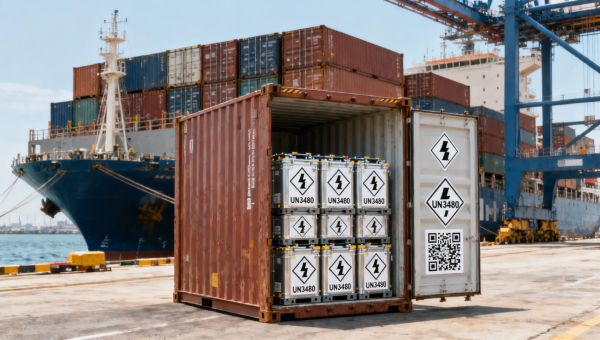
 IMDG Code 41-24 Enforces UN3480 Class 9 Labeling for Li-ion Battery Sea FreightIMDG Code 41-24 enforces UN3480 Class 9 labeling for Li-ion battery sea freight—learn mandatory QR labels, compliance actions & port enforcement risks.
 EU CBAM Enters Enforcement Phase on April 1, 2026EU CBAM enforcement starts April 1, 2026 — critical for Chinese battery materials, construction profiles & industrial coatings exporters. Act now to avoid customs delays.
 Mexico Enforces NOM-019-SCFI-2026 EMC Certification for Auto Electronics from May 2026Mexico enforces NOM-019-SCFI-2026 EMC certification for auto electronics from May 2026 — mandatory local testing, stricter standards, and urgent compliance action required.
 Global Port Congestion Eases, but Red Sea Rerouting PersistsRed Sea rerouting persists amid easing port congestion—Shanghai–Rotterdam freight rates surge 4.2% to $5,280/TEU. Critical insights for exporters, importers & logistics leaders.
 RCEP Green Packaging Mutual Recognition Starts June 2026RCEP Green Packaging Mutual Recognition starts June 2026 — streamline exports to Australia, NZ, Japan & SK with GB/T 37572-2025 certification. Save time & costs!
 FDA AI Diagnostic Device Rules: ABIA Required from Q3 2026FDA AI diagnostic device rules now require ABIA reports from Q3 2026 — essential for 510(k)/De Novo submissions. Stay compliant, avoid delays & secure U.S. market access.
 Vietnam Suspends SASO Mutual Recognition for Chinese Irrigation EquipmentVietnam suspends SASO mutual recognition for Chinese irrigation equipment—sprinkler systems, drip controllers & irrigation systems now require local QUATEST 3 testing. Act now to avoid 12-week delays & 35% cost hikes.
") TÜV Rheinland Updates CE Certification for Industrial Robot Drives (2026 Q3)TÜV Rheinland’s 2026 Q3 CE certification update for industrial robot drives mandates PLd safety + EN 61800-3 EMC — act now to avoid EU market delays.
TÜV Rheinland Updates CE Certification for Industrial Robot Drives (2026 Q3)TÜV Rheinland’s 2026 Q3 CE certification update for industrial robot drives mandates PLd safety + EN 61800-3 EMC — act now to avoid EU market delays. IMDG Code Amendment 41-24 Takes Effect for Lithium Battery Sea FreightIMDG Code Amendment 41-24 is live: New QR labels, bilingual handling tags & SOC disclosure required for UN3480 lithium battery sea freight—act now to avoid delays.
 SASO SABER Phase II: Digital Type Test Reports Required for Building Hardware from Jun 2026SASO SABER Phase II requires digital type test reports & unique product IDs for building hardware exports to Saudi Arabia — effective June 2026. Act now to ensure compliance and avoid customs delays.
 CPSC Updates 16 CFR Part 1236: New Suffocation Test for Children's Sleep Sacks Effective July 2026CPSC Updates 16 CFR Part 1236: New suffocation test for children's sleep sacks takes effect July 2026 — ensure compliance, avoid delays & protect your U.S. market access.
 EN IEC 62471-2:2026 Effective Oct 2026 for EU LED Lighting ExportsEN IEC 62471-2:2026 mandates full-spectrum photobiological safety testing (200–3000 nm) for all EU-bound LED lighting — effective 1 Oct 2026. Act now to secure CE marking & avoid market access delays.
 AI Patent Tools Security Flaw Triggers Compliance ReviewAI Patent Tools security flaw exposed—triggering urgent compliance reviews for medical device, semiconductor & AI firms. Act now to secure submissions.













Popular Tags
Global Trade Insights & Industry
Our mission is to empower global exporters and importers with data-driven insights that foster strategic growth.
Search News
Popular Tags
Industry Overview
The global commercial kitchen equipment market is projected to reach $112 billion by 2027. Driven by urbanization, the rise of e-commerce food delivery, and strict hygiene regulations.