

Mexico NOM-019-SCFI-2026 Effective: Automotive Electronics Require New EMC Certification
Mexico’s new electromagnetic compatibility (EMC) regulation for automotive electronics — NOM-019-SCFI-2026 — takes effect on May 1, 2026, following its official publication by the Ministry of Economy on April 21, 2026. This update directly impacts manufacturers, exporters, and distributors of car electronics, aftermarket parts, and EV accessories targeting the Mexican market — a key North American trade corridor where EMC compliance is now a non-negotiable entry requirement.
Event Overview
On April 21, 2026, Mexico’s Ministry of Economy published NOM-019-SCFI-2026, titled ‘Electromagnetic Compatibility Requirements for Automotive Electronic Equipment’. The standard becomes mandatory on May 1, 2026. It applies to all automotive electronic components, including original equipment (OEM), aftermarket parts, and electric vehicle (EV) accessories. Two new test requirements are introduced: Electrical Fast Transient/Burst Immunity (EFT) and Radio-Frequency Conducted Emission (RFCE). Certificates issued under the superseded NOM-019-SCFI-2018 are automatically invalidated as of the effective date.
Which Subsectors Are Affected
Direct Exporters & OEM Suppliers
Companies exporting automotive electronics to Mexico must ensure new product certifications comply with NOM-019-SCFI-2026 before May 1, 2026. Non-compliant shipments may be denied customs clearance. Unlike the previous version, this revision expands scope to include aftermarket and EV accessory categories — meaning suppliers previously exempt from formal NOM-019 certification (e.g., certain retrofit lighting or infotainment add-ons) now fall under mandatory assessment.
Aftermarket Parts Manufacturers
Manufacturers producing replacement or enhancement electronics — such as dashcams, OBD-II adapters, wireless charging modules, or EV battery management interface units — are newly subject to full NOM-019-SCFI-2026 testing. The inclusion of RFCE and EFT tests raises technical thresholds, particularly for cost-sensitive, high-volume aftermarket products where legacy designs may lack adequate transient suppression or conducted noise filtering.
EV Accessories Producers
Producers of EV-specific components — including DC-DC converters, onboard chargers, thermal management controllers, and vehicle-to-load (V2L) inverters — face stricter EMC validation. These devices operate at higher power levels and switching frequencies, making EFT and RFCE performance more challenging to achieve without design iteration. Pre-certification testing cycles may extend timelines for market entry.
Supply Chain & Certification Service Providers
Third-party labs, certification bodies, and conformity assessment consultants must align their test protocols and reporting templates with NOM-019-SCFI-2026. As the regulation mandates specific test setups and limit values for EFT and RFCE (per ISO 7637-2 and CISPR 25 respectively), service providers need updated accreditation scopes — potentially affecting turnaround times and availability of qualified testing capacity in Mexico and neighboring regions.
What Relevant Companies or Practitioners Should Focus On — And How to Respond Now
Confirm scope applicability for current and planned SKUs
Review product classifications against the official annexes of NOM-019-SCFI-2026 to determine whether existing or upcoming items fall within the regulated categories — especially for hybrid or borderline products (e.g., portable EV chargers marketed for both home and vehicle use). Do not assume legacy NOM-019-SCFI-2018 coverage carries forward.
Initiate pre-compliance testing for EFT and RFCE
Allocate time and budget for early-stage EFT (IEC 61000-4-4) and RFCE (CISPR 25 Class 4/5) testing — particularly for products with microcontrollers, switching power supplies, or high-speed data interfaces. Design revisions may be needed; allow at least 8–12 weeks between first test failure and re-submission.
Verify certification body accreditation status
Ensure your chosen certification body is officially recognized by Mexico’s National Accreditation Entity (EMA) for NOM-019-SCFI-2026. Not all labs accredited for NOM-019-SCFI-2018 have extended scope to cover the two new test items. Request written confirmation of accreditation validity prior to engagement.
Update documentation and labeling workflows
Prepare for revised technical file requirements, including updated test reports, risk assessments per ISO 26262 ASIL relevance (where applicable), and Spanish-language user manuals referencing EMC compliance. Labeling must display the NOM mark along with the certifier’s identification number — format and placement rules differ slightly from prior versions.
Editor Perspective / Industry Observation
From an industry perspective, NOM-019-SCFI-2026 is best understood not as a technical refinement but as a regulatory signal reinforcing Mexico’s alignment with international EMC frameworks — particularly CISPR 25 and ISO 11452 series — while tightening enforcement rigor. Analysis来看, the automatic invalidation of 2018 certificates indicates a deliberate policy shift toward zero grandfathering, suggesting future updates may follow similarly strict transition rules. Observation来看, the timing — just ahead of anticipated growth in Mexican EV assembly and cross-border auto parts trade — points to coordinated regulatory readiness rather than isolated technical adjustment. Current more relevant interpretation is that this is a de facto market access checkpoint, not merely a compliance formality.
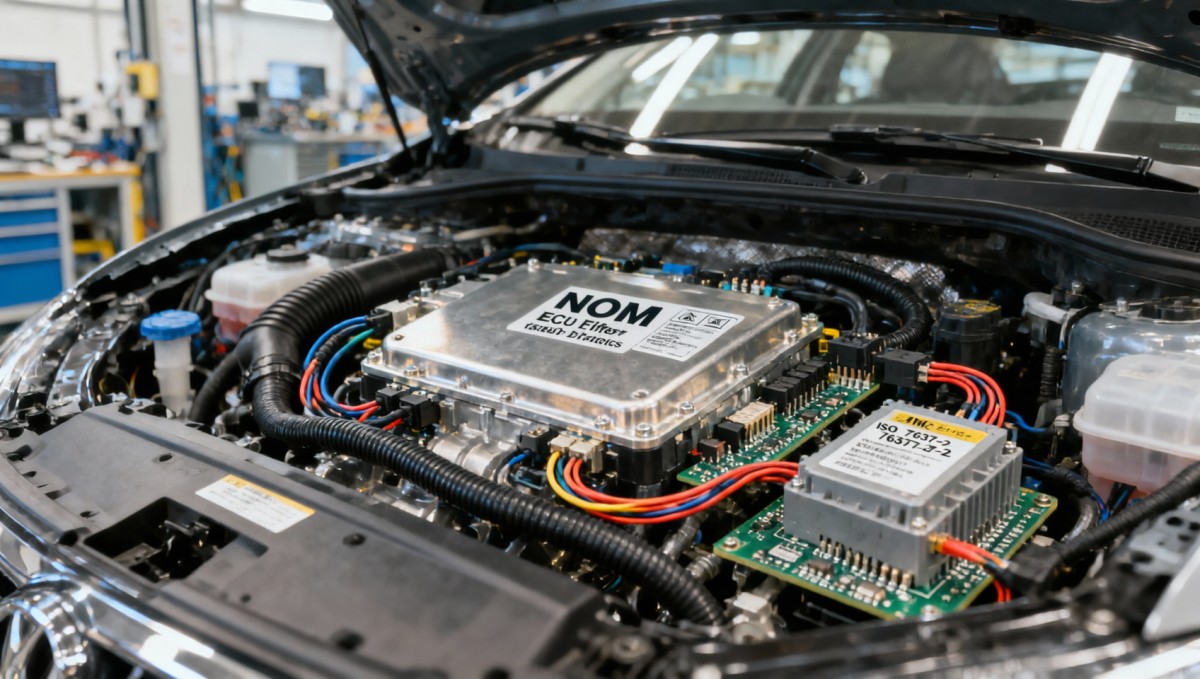
In summary, NOM-019-SCFI-2026 marks a definitive escalation in EMC requirements for automotive electronics entering Mexico. Its impact extends beyond certification logistics: it reshapes product development timelines, supply chain verification practices, and after-sales support obligations. Rather than treating it as a one-time compliance task, stakeholders are better advised to integrate its test criteria into early-stage design reviews — especially for EFT robustness and RFCE filtering — as part of long-term market strategy.
Source: Official Gazette of the Federation (Diario Oficial de la Federación), Mexico Ministry of Economy, NOM-019-SCFI-2026 publication notice dated April 21, 2026. Note: Implementation guidance documents, laboratory accreditation lists, and transitional provisions (if any) remain pending official release and require ongoing monitoring.
Recommended News
 US CPSC Updates Child Sleep Sack Standard Effective July 2026US CPSC updates child sleep sack standard with new DSST test—mandatory for all U.S.-bound infant sleep sacks from July 2026. Act now to ensure compliance and market access.
 Red Sea Rerouting Pushes Asia-Europe Freight Premium to $1,850/TEURed Sea rerouting pushes Asia-Europe freight premium to $1,850/TEU—impacting importers, manufacturers & logistics providers. Act now to reassess costs, lead times & contracts.
 Mexico NOM-019-SCFI-2026 Effective May 1, 2026: EMC Certification Mandatory for Auto ElectronicsNOM-019-SCFI-2026 EMC certification is now mandatory for auto electronics in Mexico—effective May 1, 2026. Ensure compliance for infotainment, ADAS, OBD-II & more.
") TÜV Rheinland Updates CE Requirements for Servo Drives (PLd + EMC Class 3)TÜV Rheinland updates CE requirements for servo drives: PLd + EMC Class 3 joint validation mandatory from Q3 2026. Act now to avoid delays, rejections, or compliance risks.
TÜV Rheinland Updates CE Requirements for Servo Drives (PLd + EMC Class 3)TÜV Rheinland updates CE requirements for servo drives: PLd + EMC Class 3 joint validation mandatory from Q3 2026. Act now to avoid delays, rejections, or compliance risks. SABER Phase II Launch: Building Hardware Must Submit Digital e-CoC & UPISABER Phase II mandates digital e-CoC & UPI for building hardware imports to Saudi Arabia—act now to ensure customs clearance and market access.
 FDA AI Diagnostic Device Draft Rules: Bias Assessment for ImportsFDA AI diagnostic device draft rules mandate bias assessment for imports — discover how algorithmic fairness impacts 510(k)/De Novo submissions and what to do now.
 RCEP Green Packaging Mutual Recognition Starts June 1, 2026RCEP Green Packaging Mutual Recognition starts June 1, 2026 — unlock faster exports to Australia, NZ, Japan & Korea with GB/T 37572-2025 certification.
 Vietnam Suspends SASO Mutual Recognition for Chinese Irrigation EquipmentVietnam suspends SASO mutual recognition for Chinese irrigation equipment—impacting exporters, testers & suppliers. Act now to avoid 6–8 week delays & 35% cost hikes.
 IMDG Code 41-24 Enforces UN3480 Class 9 Labeling for Li-ion Battery Sea FreightIMDG Code 41-24 enforces UN3480 Class 9 labeling for Li-ion battery sea freight—learn mandatory QR labels, compliance actions & port enforcement risks.
 EU CBAM Enters Enforcement Phase on April 1, 2026EU CBAM enforcement starts April 1, 2026 — critical for Chinese battery materials, construction profiles & industrial coatings exporters. Act now to avoid customs delays.
 Mexico Enforces NOM-019-SCFI-2026 EMC Certification for Auto Electronics from May 2026Mexico enforces NOM-019-SCFI-2026 EMC certification for auto electronics from May 2026 — mandatory local testing, stricter standards, and urgent compliance action required.
 Global Port Congestion Eases, but Red Sea Rerouting PersistsRed Sea rerouting persists amid easing port congestion—Shanghai–Rotterdam freight rates surge 4.2% to $5,280/TEU. Critical insights for exporters, importers & logistics leaders.
 RCEP Green Packaging Mutual Recognition Starts June 2026RCEP Green Packaging Mutual Recognition starts June 2026 — streamline exports to Australia, NZ, Japan & SK with GB/T 37572-2025 certification. Save time & costs!
 FDA AI Diagnostic Device Rules: ABIA Required from Q3 2026FDA AI diagnostic device rules now require ABIA reports from Q3 2026 — essential for 510(k)/De Novo submissions. Stay compliant, avoid delays & secure U.S. market access.
 Vietnam Suspends SASO Mutual Recognition for Chinese Irrigation EquipmentVietnam suspends SASO mutual recognition for Chinese irrigation equipment—sprinkler systems, drip controllers & irrigation systems now require local QUATEST 3 testing. Act now to avoid 12-week delays & 35% cost hikes.
") TÜV Rheinland Updates CE Certification for Industrial Robot Drives (2026 Q3)TÜV Rheinland’s 2026 Q3 CE certification update for industrial robot drives mandates PLd safety + EN 61800-3 EMC — act now to avoid EU market delays.
TÜV Rheinland Updates CE Certification for Industrial Robot Drives (2026 Q3)TÜV Rheinland’s 2026 Q3 CE certification update for industrial robot drives mandates PLd safety + EN 61800-3 EMC — act now to avoid EU market delays. IMDG Code Amendment 41-24 Takes Effect for Lithium Battery Sea FreightIMDG Code Amendment 41-24 is live: New QR labels, bilingual handling tags & SOC disclosure required for UN3480 lithium battery sea freight—act now to avoid delays.
 SASO SABER Phase II: Digital Type Test Reports Required for Building Hardware from Jun 2026SASO SABER Phase II requires digital type test reports & unique product IDs for building hardware exports to Saudi Arabia — effective June 2026. Act now to ensure compliance and avoid customs delays.
 CPSC Updates 16 CFR Part 1236: New Suffocation Test for Children's Sleep Sacks Effective July 2026CPSC Updates 16 CFR Part 1236: New suffocation test for children's sleep sacks takes effect July 2026 — ensure compliance, avoid delays & protect your U.S. market access.
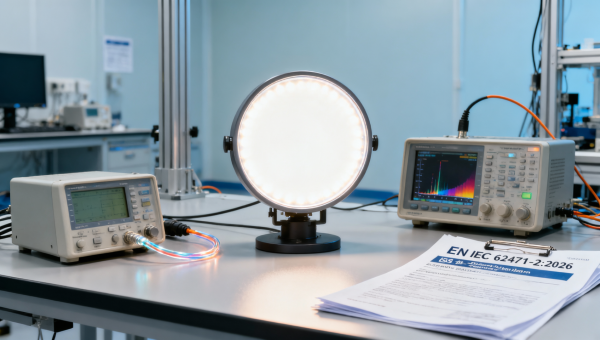
 EN IEC 62471-2:2026 Effective Oct 2026 for EU LED Lighting ExportsEN IEC 62471-2:2026 mandates full-spectrum photobiological safety testing (200–3000 nm) for all EU-bound LED lighting — effective 1 Oct 2026. Act now to secure CE marking & avoid market access delays.
 AI Patent Tools Security Flaw Triggers Compliance ReviewAI Patent Tools security flaw exposed—triggering urgent compliance reviews for medical device, semiconductor & AI firms. Act now to secure submissions.


















Popular Tags
Global Trade Insights & Industry
Our mission is to empower global exporters and importers with data-driven insights that foster strategic growth.
Search News
Popular Tags
Industry Overview
The global commercial kitchen equipment market is projected to reach $112 billion by 2027. Driven by urbanization, the rise of e-commerce food delivery, and strict hygiene regulations.