

Scaffolding Cost in 2026: What Affects the Price?
Scaffolding costs in 2026 are unlikely to be defined by a single line item. For most buyers and evaluators, the real question is not “What is the price per square meter?” but “What is driving the total project cost, and how can we compare suppliers without underestimating risk?” In practical terms, the biggest cost drivers are project complexity, scaffold type, labor conditions, safety compliance, rental duration, transport, and regional market pressure. For procurement teams, distributors, and market researchers, understanding these variables is the key to making better sourcing decisions and avoiding budget surprises.
Whether you are benchmarking suppliers, preparing a commercial offer, or assessing market opportunities, the 2026 scaffolding market requires a more structured cost view. Material volatility, labor shortages in some regions, stricter site safety expectations, and changing project schedules all affect the final price. This article explains what affects scaffolding cost in 2026, which cost elements matter most in procurement, and how decision-makers can evaluate value beyond the initial quote.
What Buyers Usually Mean When They Search “Scaffolding Cost in 2026”
Most users searching this topic are not looking for a generic definition of scaffolding. They usually want one or more of the following:
- A realistic understanding of what makes scaffolding prices rise or fall
- A way to compare rental versus purchase models
- Insight into labor, transport, and compliance costs that are often hidden in quotes
- Guidance on budgeting for commercial, industrial, or infrastructure projects
- Practical criteria for evaluating suppliers and avoiding low-price, high-risk offers
That means the most useful answer is not a broad introduction, but a procurement-focused breakdown of the variables that shape total cost. For B2B readers, the real issue is total project value, not just the headline rate.
The Biggest Factors Affecting Scaffolding Price in 2026
Scaffolding pricing in 2026 is influenced by several cost layers that combine differently depending on the project. Buyers who understand these layers can benchmark quotations more accurately and negotiate with more confidence.
1. Scaffold system type
The choice of system has a major effect on cost. Frame scaffolding, tube and clamp systems, modular scaffolding, suspended platforms, and specialized access systems have different material, assembly, and safety implications. Modular systems may cost more upfront but can reduce labor time on complex builds. Tube and clamp systems often offer flexibility but may require more skilled labor and installation time.
2. Project complexity and structure geometry
Straightforward façade work is usually cheaper than scaffolding around irregular structures, industrial plants, tanks, bridges, or high-access maintenance zones. The more non-standard the building or equipment shape, the higher the planning and installation cost tends to be. Congested sites and limited access also increase labor hours.
3. Height and load requirements
Higher structures require more material, more anchoring, stricter safety planning, and often more time to erect and dismantle. Load-bearing requirements matter as well. Scaffolding intended only for worker access is not priced the same as systems designed to support heavy materials, façade work, or industrial maintenance tools.
4. Rental duration
Short-term projects often carry a higher weekly or monthly rate, while longer rental periods can reduce the apparent unit cost. However, long rentals are not always cheaper overall, especially if project delays lead to idle equipment time. In 2026, scheduling uncertainty remains a meaningful cost risk.
5. Labor availability and wage pressure
In many markets, the shortage of skilled scaffold erectors continues to affect pricing. Labor costs can now represent a larger share of the total than some buyers expect, especially in regions with stronger safety certification requirements or unionized construction environments.
6. Transport and logistics
Delivery, collection, fuel, regional access restrictions, and site handling all influence the final bill. Transport becomes especially important for remote projects, urban sites with restrictions, and international procurement programs where inland freight adds complexity.
7. Compliance and safety standards
Scaffolding that meets local regulations, load testing requirements, inspection protocols, and documentation standards may cost more, but it significantly reduces project risk. Lower-priced suppliers may omit key compliance elements, shifting legal and operational risk to the buyer.
Why Material Markets and Regional Conditions Matter More in 2026
Scaffolding cost is closely tied to broader industrial and construction market conditions. In 2026, several external factors are expected to keep pricing dynamic rather than stable.
Steel and aluminum price movements
Many scaffolding systems depend on steel or aluminum components. Any volatility in raw materials can affect manufacturing cost, rental rates, and replacement pricing. Even when buyers rent instead of purchase, suppliers often adjust rates to reflect asset replacement costs and maintenance burden.
Energy and manufacturing costs
Production, galvanizing, storage, and transport all depend on energy inputs. Rising industrial utility costs or fuel prices can indirectly raise scaffolding quotations.
Construction demand by region
Where construction, industrial turnaround, infrastructure work, or commercial refurbishment is strong, scaffolding capacity can tighten. High local demand tends to push up both rental rates and labor charges. For procurement teams operating across regions, price benchmarking must account for local market saturation instead of assuming a universal rate.
Regulatory pressure
Some markets are increasing enforcement around working-at-height safety, inspection records, and certified installation. As a result, legally compliant suppliers may appear more expensive at quote stage but often deliver lower incident risk and stronger project reliability.
Rental vs. Purchase: Which Option Makes Better Financial Sense?
One of the most common procurement questions is whether to rent or buy scaffolding. The answer depends on usage frequency, storage capability, capital allocation strategy, and how standardized the application is.
When rental is usually better
- Projects are short-term or irregular
- Different jobs require different scaffold configurations
- The buyer wants to avoid storage, maintenance, and inspection responsibilities
- Cash flow flexibility matters more than asset ownership
When purchase may be more economical
- The business uses similar scaffold setups repeatedly
- Project volume is predictable over time
- The company has storage, maintenance capacity, and compliance management processes
- Long-term total cost of ownership is lower than repeated rental fees
For many distributors, contractors, and industrial service providers, the right choice is not purely financial. Rental improves flexibility and reduces operational burden, while ownership may improve margin control where utilization is consistently high. In 2026, higher financing costs in some markets may also influence the buy-versus-rent decision.
What Hidden Costs Are Commonly Missed in Scaffolding Quotes?
A low initial quote does not always mean a low total cost. Some of the most important expenses appear only after work begins or when project conditions change.
Site survey and engineering design
Complex jobs may require technical drawings, load calculations, and site-specific design approvals. These are valuable services, but not always included in the base rate.
Assembly and dismantling charges
Some quotes emphasize equipment rental while underplaying erection and dismantling labor. Buyers should always ask whether these charges are included or billed separately.
Inspection and certification fees
Periodic inspections, handover certificates, and compliance documentation may add cost, especially on regulated sites.
Delay penalties or extended rental periods
Project overruns can increase cost quickly. Procurement teams should review extension terms, minimum rental periods, and late return clauses before signing.
Damage, loss, and replacement liability
Contracts may place substantial financial responsibility on the renter for damaged or missing components. This is especially relevant on large multi-contractor sites.
Special access equipment
Stair towers, debris netting, edge protection, weather protection, hoists, and enclosed access systems can materially increase total package cost.
How Procurement Teams Should Compare Scaffolding Suppliers
For buyers and commercial evaluators, the best supplier is rarely the one with the lowest listed price. A strong evaluation framework should balance cost, compliance, service reliability, and project fit.
Look at total scope, not just unit price
Compare what is actually included: design, transport, erection, dismantling, inspections, project management, and contingency support. A quote that seems higher may include services that prevent later cost escalation.
Assess technical suitability
The supplier should be able to recommend the right system for the application rather than pushing a standard package that does not fit the site. Technical mismatch often leads to rework, delays, or safety exposure.
Verify compliance capability
Ask about certifications, inspection procedures, safety training, and documentation support. This is especially important for industrial sites, infrastructure work, and international contractors working across multiple regulatory environments.
Check operational responsiveness
Can the supplier respond quickly to design changes, urgent additions, or schedule shifts? In practice, service responsiveness often matters as much as headline price.
Review asset condition and maintenance quality
Well-maintained equipment can reduce installation issues and site downtime. Poor-quality or inconsistent inventory can create hidden labor costs and safety concerns.
How Distributors and Market Researchers Can Read Pricing Signals
For distributors, agents, and industry analysts, scaffolding cost trends can also reveal broader market movement. Rising prices may indicate stronger construction demand, tighter labor supply, or higher compliance thresholds. Falling or stagnant pricing can point to local oversupply, weaker project pipelines, or aggressive competition.
Useful pricing signals to monitor in 2026 include:
- Regional construction and infrastructure activity
- Industrial maintenance shutdown schedules
- Steel and aluminum cost trends
- Labor availability and wage inflation
- Changes in workplace safety enforcement
- Supplier fleet expansion or utilization rates
For businesses building sourcing strategies or evaluating channel opportunities, scaffolding is not just an equipment category. It is also a market indicator tied to industrial confidence, project timing, and contractor sentiment.
Practical Questions to Ask Before Accepting a Scaffolding Quote
To reduce cost uncertainty, buyers should ask suppliers a set of direct questions before final approval:
- What exactly is included in the quoted scaffolding cost?
- Is the price based on rental, purchase, or a bundled service model?
- Are transport, erection, dismantling, and inspection included?
- What assumptions were made about project duration and site access?
- How are delays, extensions, or design changes billed?
- What safety certifications and compliance documents will be provided?
- Who is responsible for damage, theft, or missing materials?
- What lead time is required for delivery and installation?
These questions help expose differences between quotes that may look similar on paper but carry very different total-cost implications.
Final Takeaway: Scaffolding Cost in 2026 Is About Control, Not Just Price
The most important insight for 2026 is that scaffolding cost depends on far more than equipment rate cards. Buyers should expect pricing to be shaped by scaffold type, project complexity, height and load needs, labor conditions, logistics, compliance requirements, and market demand. For procurement professionals and business evaluators, the smartest approach is to compare total project value rather than chase the lowest visible number.
In short, if you want to understand what affects the price of scaffolding in 2026, focus on the full commercial structure behind the quote. The best decisions come from identifying hidden costs, validating supplier capability, and aligning the scaffold solution with actual project requirements. That is how businesses reduce risk, improve budget accuracy, and make better sourcing decisions in a changing industrial market.
Recommended News
 US CPSC Updates Child Sleep Sack Standard Effective July 2026US CPSC updates child sleep sack standard with new DSST test—mandatory for all U.S.-bound infant sleep sacks from July 2026. Act now to ensure compliance and market access.
 Red Sea Rerouting Pushes Asia-Europe Freight Premium to $1,850/TEURed Sea rerouting pushes Asia-Europe freight premium to $1,850/TEU—impacting importers, manufacturers & logistics providers. Act now to reassess costs, lead times & contracts.
 Mexico NOM-019-SCFI-2026 Effective May 1, 2026: EMC Certification Mandatory for Auto ElectronicsNOM-019-SCFI-2026 EMC certification is now mandatory for auto electronics in Mexico—effective May 1, 2026. Ensure compliance for infotainment, ADAS, OBD-II & more.
") TÜV Rheinland Updates CE Requirements for Servo Drives (PLd + EMC Class 3)TÜV Rheinland updates CE requirements for servo drives: PLd + EMC Class 3 joint validation mandatory from Q3 2026. Act now to avoid delays, rejections, or compliance risks.
TÜV Rheinland Updates CE Requirements for Servo Drives (PLd + EMC Class 3)TÜV Rheinland updates CE requirements for servo drives: PLd + EMC Class 3 joint validation mandatory from Q3 2026. Act now to avoid delays, rejections, or compliance risks. SABER Phase II Launch: Building Hardware Must Submit Digital e-CoC & UPISABER Phase II mandates digital e-CoC & UPI for building hardware imports to Saudi Arabia—act now to ensure customs clearance and market access.
 FDA AI Diagnostic Device Draft Rules: Bias Assessment for ImportsFDA AI diagnostic device draft rules mandate bias assessment for imports — discover how algorithmic fairness impacts 510(k)/De Novo submissions and what to do now.
 RCEP Green Packaging Mutual Recognition Starts June 1, 2026RCEP Green Packaging Mutual Recognition starts June 1, 2026 — unlock faster exports to Australia, NZ, Japan & Korea with GB/T 37572-2025 certification.
 Vietnam Suspends SASO Mutual Recognition for Chinese Irrigation EquipmentVietnam suspends SASO mutual recognition for Chinese irrigation equipment—impacting exporters, testers & suppliers. Act now to avoid 6–8 week delays & 35% cost hikes.
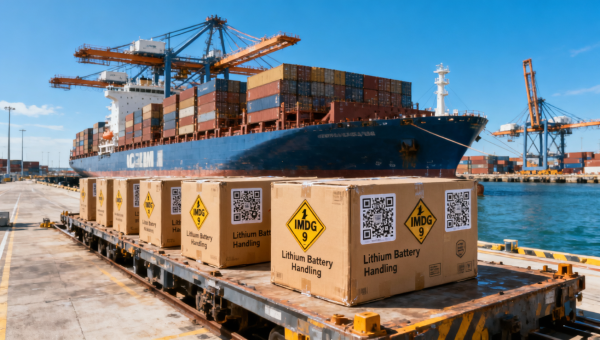
 IMDG Code 41-24 Enforces UN3480 Class 9 Labeling for Li-ion Battery Sea FreightIMDG Code 41-24 enforces UN3480 Class 9 labeling for Li-ion battery sea freight—learn mandatory QR labels, compliance actions & port enforcement risks.
 EU CBAM Enters Enforcement Phase on April 1, 2026EU CBAM enforcement starts April 1, 2026 — critical for Chinese battery materials, construction profiles & industrial coatings exporters. Act now to avoid customs delays.
 Mexico Enforces NOM-019-SCFI-2026 EMC Certification for Auto Electronics from May 2026Mexico enforces NOM-019-SCFI-2026 EMC certification for auto electronics from May 2026 — mandatory local testing, stricter standards, and urgent compliance action required.
 Global Port Congestion Eases, but Red Sea Rerouting PersistsRed Sea rerouting persists amid easing port congestion—Shanghai–Rotterdam freight rates surge 4.2% to $5,280/TEU. Critical insights for exporters, importers & logistics leaders.
 RCEP Green Packaging Mutual Recognition Starts June 2026RCEP Green Packaging Mutual Recognition starts June 2026 — streamline exports to Australia, NZ, Japan & SK with GB/T 37572-2025 certification. Save time & costs!
 FDA AI Diagnostic Device Rules: ABIA Required from Q3 2026FDA AI diagnostic device rules now require ABIA reports from Q3 2026 — essential for 510(k)/De Novo submissions. Stay compliant, avoid delays & secure U.S. market access.
 Vietnam Suspends SASO Mutual Recognition for Chinese Irrigation EquipmentVietnam suspends SASO mutual recognition for Chinese irrigation equipment—sprinkler systems, drip controllers & irrigation systems now require local QUATEST 3 testing. Act now to avoid 12-week delays & 35% cost hikes.
") TÜV Rheinland Updates CE Certification for Industrial Robot Drives (2026 Q3)TÜV Rheinland’s 2026 Q3 CE certification update for industrial robot drives mandates PLd safety + EN 61800-3 EMC — act now to avoid EU market delays.
TÜV Rheinland Updates CE Certification for Industrial Robot Drives (2026 Q3)TÜV Rheinland’s 2026 Q3 CE certification update for industrial robot drives mandates PLd safety + EN 61800-3 EMC — act now to avoid EU market delays. IMDG Code Amendment 41-24 Takes Effect for Lithium Battery Sea FreightIMDG Code Amendment 41-24 is live: New QR labels, bilingual handling tags & SOC disclosure required for UN3480 lithium battery sea freight—act now to avoid delays.
 SASO SABER Phase II: Digital Type Test Reports Required for Building Hardware from Jun 2026SASO SABER Phase II requires digital type test reports & unique product IDs for building hardware exports to Saudi Arabia — effective June 2026. Act now to ensure compliance and avoid customs delays.
 CPSC Updates 16 CFR Part 1236: New Suffocation Test for Children's Sleep Sacks Effective July 2026CPSC Updates 16 CFR Part 1236: New suffocation test for children's sleep sacks takes effect July 2026 — ensure compliance, avoid delays & protect your U.S. market access.
 EN IEC 62471-2:2026 Effective Oct 2026 for EU LED Lighting ExportsEN IEC 62471-2:2026 mandates full-spectrum photobiological safety testing (200–3000 nm) for all EU-bound LED lighting — effective 1 Oct 2026. Act now to secure CE marking & avoid market access delays.
 AI Patent Tools Security Flaw Triggers Compliance ReviewAI Patent Tools security flaw exposed—triggering urgent compliance reviews for medical device, semiconductor & AI firms. Act now to secure submissions.















Popular Tags
Global Trade Insights & Industry
Our mission is to empower global exporters and importers with data-driven insights that foster strategic growth.
Search News
Popular Tags
Industry Overview
The global commercial kitchen equipment market is projected to reach $112 billion by 2027. Driven by urbanization, the rise of e-commerce food delivery, and strict hygiene regulations.