

How to Choose 3D Printing for Low-Volume Parts
Choosing 3D printing for low-volume parts is usually the right move when you need speed, design flexibility, or tooling avoidance more than the absolute lowest unit price. For procurement teams, the decision is rarely about whether additive manufacturing is “innovative.” It is about whether it reduces lead time, limits inventory risk, supports product testing, and delivers acceptable part performance at a sensible total cost. In many low-volume scenarios, it does. In others, CNC machining, urethane casting, or light tooling will be the better commercial choice.
This guide is written for buyers, market researchers, sourcing teams, and business evaluators who need a practical way to judge when 3D printing makes sense for low-volume parts. It focuses on cost logic, material and process fit, supplier evaluation, and risk control rather than generic theory.
What buyers are really trying to decide
When people search for how to choose 3D printing for low-volume parts, the real question is usually this: Will 3D printing help me get functional parts faster and with less risk than conventional manufacturing?
That question breaks into a few commercial decisions:
- Is the required quantity too low to justify molds or tooling?
- Does the part need to be delivered quickly for testing, launch, maintenance, or short-run sales?
- Are the geometry and customization needs difficult or expensive with CNC or injection molding?
- Will the printed material and process meet performance requirements?
- Is the total landed cost competitive when lead time, revisions, scrap risk, and inventory are included?
For most low-volume applications, 3D printing is strongest when demand is uncertain, designs may change, or part complexity is high. It becomes less attractive when tolerances are tight, surface finish expectations are demanding, or unit volumes are rising toward a level where tooling starts to pay back.
When 3D printing is the best choice for low-volume parts
3D printing is often a strong fit in the following situations:
- Rapid prototyping: You need design verification, assembly checks, or user testing before committing to production.
- Bridge production: You need parts now while tooling, certification, or volume ramp-up is still in progress.
- Spare and replacement parts: Demand is irregular, inventory costs are high, or legacy tooling is unavailable.
- Complex geometries: Internal channels, lightweight structures, consolidated assemblies, or custom-fit designs would be costly using subtractive methods.
- Customized small batches: Medical devices, fixtures, housings, or niche aftermarket products need variation without repeated tooling expense.
Examples can be found across industries. Automotive aftermarket teams may use 3D printing for low-volume brackets, covers, clips, and maintenance aids. HVAC and thermal product suppliers may test custom radiator-related housings or connectors. Medical and health equipment teams may prototype enclosures or accessory parts for blood pressure monitors and MRI-adjacent equipment. Consumer and commercial product developers may validate furniture components, interior design elements, or custom accessories before larger runs.
The main commercial advantage is simple: you buy flexibility instead of committing early to hard tooling and inventory.
When CNC machining or conventional tooling may be better
3D printing is not automatically the best process just because volumes are low. Buyers should be careful when the part has one or more of these requirements:
- Very tight tolerances: Precision-critical parts may be easier to control with CNC machining.
- High cosmetic expectations: If the part must have a premium molded look, post-processing cost may reduce the advantage of printing.
- Heavy structural load: Some printed polymers are not the best fit for long-term mechanical stress, heat, or chemical exposure.
- Material compliance needs: Flame resistance, biocompatibility, food contact, or industry certifications may narrow process options.
- Rising demand: If volume is moving from dozens into hundreds or thousands, tooling economics can quickly become more favorable.
CNC machining is often better for metal parts, highly accurate interfaces, and lower-risk production of simple geometries. Injection molding or soft tooling becomes attractive when demand is stable enough to spread tooling cost over more units. Urethane casting can also be a practical middle path for low-volume plastic parts that need a better surface finish or more production-like material behavior.
How to compare total cost, not just quote price
One of the biggest sourcing mistakes is comparing only unit price. For low-volume parts, the better metric is total cost of decision.
When evaluating 3D printing, include:
- Tooling cost avoided
- Lead time saved
- Engineering change cost avoided
- Inventory carrying cost reduced
- Scrap risk from early design freeze avoided
- Post-processing, finishing, and inspection cost
- Shipping and packaging cost
- Supplier communication and iteration time
For example, a printed part may cost more per unit than a molded part, but if molding requires weeks of delay, upfront tooling investment, and commitment before design validation, 3D printing can still be the lower-risk and lower-cost business choice. This is especially true for pilot runs, aftermarket items, regional demand testing, and product lines with uncertain turnover.
A practical rule is:
- If design may change, favor 3D printing.
- If demand is unpredictable, favor 3D printing.
- If geometry is simple and volume is climbing, compare alternatives early.
Which 3D printing process should you choose?
Choosing 3D printing for low-volume parts also means choosing the right additive process. The most common options each serve different purchasing priorities.
FDM / FFF
Good for cost-sensitive prototypes, basic functional checks, jigs, fixtures, and larger parts where appearance is less critical. Material options are broad, but surface finish and fine detail are usually more limited.
SLA / Resin printing
Best for high detail, smooth surfaces, and presentation-quality prototypes. Useful for housings, visual models, and fit checks. Buyers should verify brittleness, UV stability, and long-term functional performance.
SLS / MJF
Often one of the best choices for functional low-volume plastic parts. These processes can produce durable parts with good design freedom and no support structures in many builds. They are commonly used for enclosures, clips, ducts, brackets, and short-run end-use components.
DMLS / SLM / Metal additive
Relevant for specialized metal parts with complex geometry or weight-saving requirements. Usually selected when conventional machining would be difficult, wasteful, or impossible. Cost is higher, so business justification must be clear.
For many B2B buyers seeking low-volume plastic parts, SLS and MJF are often the most commercially balanced options for functional performance, while SLA is preferred for appearance and FDM for economy.
How to judge material suitability before placing an order
Material selection is often where low-volume part sourcing succeeds or fails. Buyers should avoid asking only for “strong” or “durable” material. Instead, match the material to the operating environment.
Ask these questions:
- Will the part face heat, moisture, UV, chemicals, or impact?
- Is the part structural, cosmetic, or both?
- Does it require snap-fit behavior, rigidity, or flexibility?
- Will it be used indoors, outdoors, or in a vehicle or medical environment?
- Does it need compliance documentation or traceability?
For example, an interior design prototype may prioritize finish and visual realism. An outdoor furniture component may need weather resistance. A car maintenance aid may need toughness and heat resistance. A healthcare device enclosure may require a cleaner finish, dimensional consistency, and evidence of material suitability.
Suppliers should be able to explain not only nominal material properties, but also how printing orientation, wall thickness, and post-processing affect actual performance.
Questions procurement teams should ask 3D printing suppliers
If you are evaluating vendors for low-volume parts, supplier capability matters as much as technology. A good RFQ process should test both manufacturing quality and commercial reliability.
Key questions include:
- Which printing process do you recommend for this part, and why?
- What tolerances are realistic for this geometry and material?
- What post-processing is included in the quote?
- Can you provide sample parts or reference projects in similar applications?
- How do you handle design revisions during prototyping or pilot runs?
- What are the lead times for first article and repeat orders?
- What quality control steps are used for dimensional verification?
- Can you support scaling to CNC, molding, or another process later if demand grows?
For sourcing managers and trade-oriented buyers, it is also important to confirm export readiness, packaging standards, communication speed, and documentation quality. The best supplier is not just the one with a machine capacity, but the one that reduces commercial uncertainty.
Common risks when choosing 3D printing for low-volume parts
3D printing can shorten development and supply cycles, but buyers should still manage several common risks:
- Overestimating material performance: Datasheet values do not always match real-world use conditions.
- Ignoring finishing costs: Sanding, coating, dyeing, machining, or support removal can affect price and schedule.
- Expecting molded aesthetics from raw prints: Surface results vary by process.
- Not designing for additive manufacturing: Geometry that works for CNC or molding may not be optimal for printing.
- Skipping pilot validation: Functional testing is still essential before commercial release.
A low-risk approach is to start with a small validation batch, confirm assembly and field performance, then expand usage. This is especially useful for aftermarket products, spare parts programs, distributor-led niche demand, and products entering new geographic markets.
A practical decision framework for buyers
If you need a fast internal decision, use this simplified framework:
- Define the real requirement. Is the part for appearance, testing, temporary production, or end use?
- Estimate realistic volume. Is demand truly low-volume, or just currently uncertain?
- Check performance needs. Mechanical, thermal, chemical, and regulatory needs must be clear.
- Compare process options. 3D printing vs CNC vs casting vs soft tooling.
- Calculate total commercial impact. Include lead time, revisions, tooling avoidance, and inventory risk.
- Validate with a pilot run. Test before committing to broader deployment.
If the part scores high on urgency, complexity, customization, and uncertainty, 3D printing is usually a strong option. If it scores high on precision, cosmetic finish, and repeat demand, alternative processes may deserve more weight.
Final takeaway
Choosing 3D printing for low-volume parts is not just a manufacturing decision. It is a business decision about speed, flexibility, and risk. For procurement teams, researchers, and commercial evaluators, the best use case is typically where tooling would be too slow or too expensive, design changes are still possible, and the part’s performance needs fit available materials and processes.
The smartest approach is to evaluate 3D printing against the full sourcing picture: unit cost, lead time, engineering agility, inventory exposure, and supplier capability. When those factors are considered together, additive manufacturing often proves highly valuable for short-run production, replacement parts, prototyping, and market-testing programs across many industries.
In short, choose 3D printing when low volume, fast response, and flexibility matter more than maximum production efficiency. Choose alternatives when precision, finish, or rising volume shifts the economics. That is the balance experienced buyers should use.
Recommended News
 US CPSC Updates Child Sleep Sack Standard Effective July 2026US CPSC updates child sleep sack standard with new DSST test—mandatory for all U.S.-bound infant sleep sacks from July 2026. Act now to ensure compliance and market access.
 Red Sea Rerouting Pushes Asia-Europe Freight Premium to $1,850/TEURed Sea rerouting pushes Asia-Europe freight premium to $1,850/TEU—impacting importers, manufacturers & logistics providers. Act now to reassess costs, lead times & contracts.
 Mexico NOM-019-SCFI-2026 Effective May 1, 2026: EMC Certification Mandatory for Auto ElectronicsNOM-019-SCFI-2026 EMC certification is now mandatory for auto electronics in Mexico—effective May 1, 2026. Ensure compliance for infotainment, ADAS, OBD-II & more.
") TÜV Rheinland Updates CE Requirements for Servo Drives (PLd + EMC Class 3)TÜV Rheinland updates CE requirements for servo drives: PLd + EMC Class 3 joint validation mandatory from Q3 2026. Act now to avoid delays, rejections, or compliance risks.
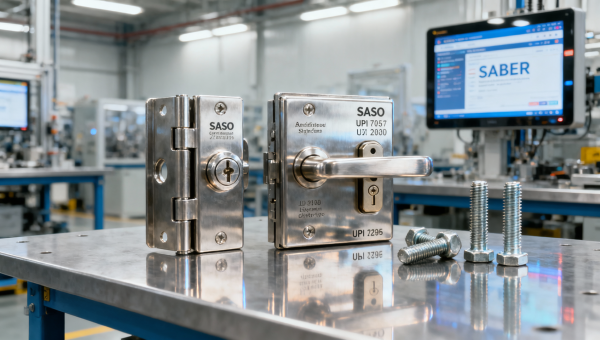
TÜV Rheinland Updates CE Requirements for Servo Drives (PLd + EMC Class 3)TÜV Rheinland updates CE requirements for servo drives: PLd + EMC Class 3 joint validation mandatory from Q3 2026. Act now to avoid delays, rejections, or compliance risks. SABER Phase II Launch: Building Hardware Must Submit Digital e-CoC & UPISABER Phase II mandates digital e-CoC & UPI for building hardware imports to Saudi Arabia—act now to ensure customs clearance and market access.
 FDA AI Diagnostic Device Draft Rules: Bias Assessment for ImportsFDA AI diagnostic device draft rules mandate bias assessment for imports — discover how algorithmic fairness impacts 510(k)/De Novo submissions and what to do now.
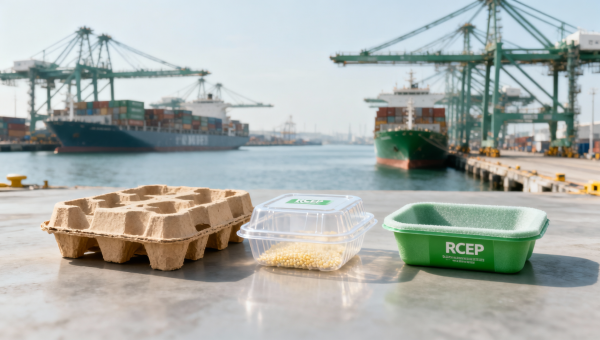
 RCEP Green Packaging Mutual Recognition Starts June 1, 2026RCEP Green Packaging Mutual Recognition starts June 1, 2026 — unlock faster exports to Australia, NZ, Japan & Korea with GB/T 37572-2025 certification.
 Vietnam Suspends SASO Mutual Recognition for Chinese Irrigation EquipmentVietnam suspends SASO mutual recognition for Chinese irrigation equipment—impacting exporters, testers & suppliers. Act now to avoid 6–8 week delays & 35% cost hikes.
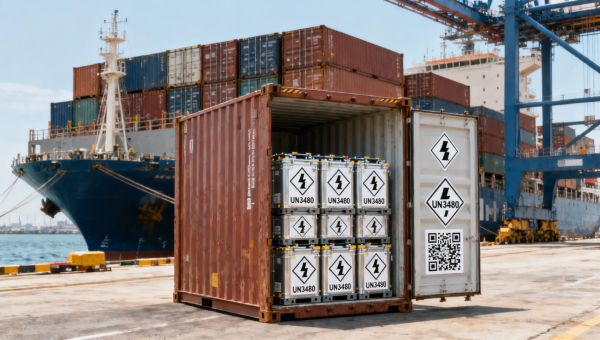
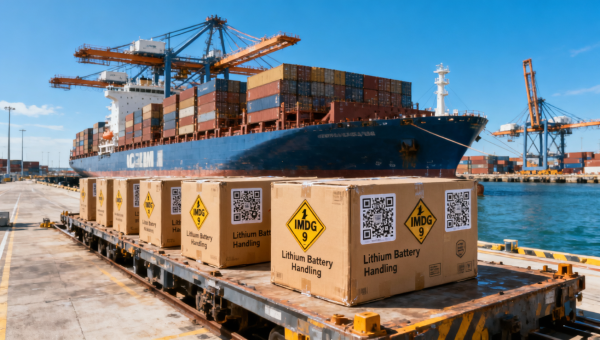
 IMDG Code 41-24 Enforces UN3480 Class 9 Labeling for Li-ion Battery Sea FreightIMDG Code 41-24 enforces UN3480 Class 9 labeling for Li-ion battery sea freight—learn mandatory QR labels, compliance actions & port enforcement risks.
 EU CBAM Enters Enforcement Phase on April 1, 2026EU CBAM enforcement starts April 1, 2026 — critical for Chinese battery materials, construction profiles & industrial coatings exporters. Act now to avoid customs delays.
 Mexico Enforces NOM-019-SCFI-2026 EMC Certification for Auto Electronics from May 2026Mexico enforces NOM-019-SCFI-2026 EMC certification for auto electronics from May 2026 — mandatory local testing, stricter standards, and urgent compliance action required.
 Global Port Congestion Eases, but Red Sea Rerouting PersistsRed Sea rerouting persists amid easing port congestion—Shanghai–Rotterdam freight rates surge 4.2% to $5,280/TEU. Critical insights for exporters, importers & logistics leaders.
 RCEP Green Packaging Mutual Recognition Starts June 2026RCEP Green Packaging Mutual Recognition starts June 2026 — streamline exports to Australia, NZ, Japan & SK with GB/T 37572-2025 certification. Save time & costs!
 FDA AI Diagnostic Device Rules: ABIA Required from Q3 2026FDA AI diagnostic device rules now require ABIA reports from Q3 2026 — essential for 510(k)/De Novo submissions. Stay compliant, avoid delays & secure U.S. market access.
 Vietnam Suspends SASO Mutual Recognition for Chinese Irrigation EquipmentVietnam suspends SASO mutual recognition for Chinese irrigation equipment—sprinkler systems, drip controllers & irrigation systems now require local QUATEST 3 testing. Act now to avoid 12-week delays & 35% cost hikes.
") TÜV Rheinland Updates CE Certification for Industrial Robot Drives (2026 Q3)TÜV Rheinland’s 2026 Q3 CE certification update for industrial robot drives mandates PLd safety + EN 61800-3 EMC — act now to avoid EU market delays.
TÜV Rheinland Updates CE Certification for Industrial Robot Drives (2026 Q3)TÜV Rheinland’s 2026 Q3 CE certification update for industrial robot drives mandates PLd safety + EN 61800-3 EMC — act now to avoid EU market delays. IMDG Code Amendment 41-24 Takes Effect for Lithium Battery Sea FreightIMDG Code Amendment 41-24 is live: New QR labels, bilingual handling tags & SOC disclosure required for UN3480 lithium battery sea freight—act now to avoid delays.
 SASO SABER Phase II: Digital Type Test Reports Required for Building Hardware from Jun 2026SASO SABER Phase II requires digital type test reports & unique product IDs for building hardware exports to Saudi Arabia — effective June 2026. Act now to ensure compliance and avoid customs delays.
 CPSC Updates 16 CFR Part 1236: New Suffocation Test for Children's Sleep Sacks Effective July 2026CPSC Updates 16 CFR Part 1236: New suffocation test for children's sleep sacks takes effect July 2026 — ensure compliance, avoid delays & protect your U.S. market access.
 EN IEC 62471-2:2026 Effective Oct 2026 for EU LED Lighting ExportsEN IEC 62471-2:2026 mandates full-spectrum photobiological safety testing (200–3000 nm) for all EU-bound LED lighting — effective 1 Oct 2026. Act now to secure CE marking & avoid market access delays.
 AI Patent Tools Security Flaw Triggers Compliance ReviewAI Patent Tools security flaw exposed—triggering urgent compliance reviews for medical device, semiconductor & AI firms. Act now to secure submissions.
















Popular Tags
Global Trade Insights & Industry
Our mission is to empower global exporters and importers with data-driven insights that foster strategic growth.
Search News
Popular Tags
Industry Overview
The global commercial kitchen equipment market is projected to reach $112 billion by 2027. Driven by urbanization, the rise of e-commerce food delivery, and strict hygiene regulations.