

Foldable screen technology: which durability claims deserve scrutiny?
Foldable screen technology promises futuristic convenience, but not every durability claim stands up to closer inspection. For researchers tracking product reliability, supply chain signals, and market credibility, understanding how brands test hinges, display layers, and long-term wear is essential. This article examines which claims merit trust, where marketing may overreach, and what durability benchmarks truly matter in a competitive global industry.
For information researchers, the central answer is straightforward: the most trustworthy durability claims are not the biggest numbers, but the most transparent ones. A brand that explains test conditions, environmental limits, hinge design assumptions, and expected real-world performance is generally more credible than one that simply advertises a dramatic fold count.
In foldable screen technology, durability is not a single metric. It is the combined result of hinge engineering, ultra-thin glass behavior, polymer top layers, crease management, dust resistance, adhesive stability, repairability, and software calibration over time. When companies reduce this complexity to a single headline claim, scrutiny is justified.
What is the real search intent behind durability claims in foldable screen technology?
Readers searching this topic are usually not looking for a basic definition of foldable devices. They want to know which durability statements can be taken seriously, which marketing phrases are incomplete, and how to evaluate risk before trusting a brand, product category, or supplier ecosystem.
That search intent often has a second layer. Beyond consumer curiosity, researchers and market observers want to understand whether strong durability messaging reflects genuine technical maturity or simply aggressive positioning in a still-evolving device segment. In other words, durability claims are being read not just as product promises, but as signals of manufacturing capability and brand discipline.
This is especially relevant in a global supply chain context. Foldable screen technology sits at the intersection of advanced materials, precision mechanics, display integration, and after-sales service. A claim about longevity may therefore reveal much more than product confidence. It can indicate how mature a company’s supplier relationships, quality control systems, and field failure monitoring processes have become.
Why headline fold counts deserve careful scrutiny
One of the most common claims in foldable screen technology is the hinge cycle number: 200,000 folds, 400,000 folds, or more. These figures attract attention because they appear objective. However, they are only meaningful when paired with clear information about how testing was conducted.
A fold-cycle claim without context leaves too many unanswered questions. Was the device tested at room temperature only? Was the opening and closing speed controlled? Was dust introduced? Was the device repeatedly folded flat or at mixed angles? Were test units fully functional afterward, or did they merely continue to open and close mechanically?
Even when a test is technically valid, the gap between laboratory performance and daily use can be large. Real users expose devices to pocket lint, backpacks, humidity, accidental pressure, uneven handling, impacts, and partial folds. A hinge that survives a machine-driven test may still develop looseness, creaking, or alignment issues under less predictable conditions.
This does not mean fold-count claims are useless. They can be helpful indicators of engineering progress. But they should not be treated as a complete durability verdict. For researchers, the key question is not simply how many folds were claimed, but what kind of failure the test was designed to detect and what kinds of failure it ignored.
Which parts of foldable screen technology fail first in real-world use?
Durability concerns in foldables rarely begin with a total screen collapse. More often, they emerge as gradual degradation across multiple layers and moving parts. Understanding these likely weak points helps readers assess claims more realistically.
The hinge is the most visible mechanical risk area. Over time, it may lose tension consistency, develop asymmetrical resistance, or allow microscopic debris to affect smoothness. Even if the hinge remains operational, small changes in alignment can influence the display experience and increase stress on flexible layers.
The display stack is another critical vulnerability. Foldable panels typically combine ultra-thin glass with polymer-based protective layers and adhesives. These materials respond differently to repeated stress, temperature shifts, and localized pressure. Visible issues may include deepening crease lines, surface dents, lifting edges, bubbling under the top layer, or touch sensitivity changes.
Adhesives deserve more attention than they usually receive in marketing materials. In foldable screen technology, bonding integrity is central to long-term performance. If adhesive stability weakens under heat, humidity, or repeated bending, the device can show cosmetic or functional defects even when the display itself has not failed.
Finally, real-world durability includes software-assisted performance. Display calibration, touch response mapping, and fold-state detection all contribute to the user’s sense of reliability. A physically durable device that develops inconsistent mode switching or screen responsiveness may still be judged as unreliable in practice.
How brands sometimes overstate durability without making false claims
Not all questionable durability messaging is outright misleading. In many cases, brands use technically defensible statements that still encourage overly broad conclusions. This distinction matters for anyone evaluating credibility.
A company may say a device was tested for a certain number of folds, but omit that the result came from internal lab conditions rather than independent certification. It may emphasize a stronger hinge while saying little about screen-layer wear. It may highlight improved drop resistance on the exterior while avoiding discussion of vulnerability in the folded display area.
Another common tactic is selective comparison. A brand may claim its latest model is significantly more durable than its previous generation. That may be true, but the baseline could have been weak. Improvement over an older model is not the same as strong durability relative to the wider premium device market.
Researchers should also watch for vague language such as “enhanced durability,” “tougher than ever,” or “built to last.” These phrases may reflect genuine upgrades, but they provide no measurable basis for evaluation. In foldable screen technology, precision matters. The more a claim depends on impression rather than disclosed criteria, the more it deserves skepticism.
What evidence makes a durability claim more credible?
The most credible durability claims usually share three characteristics: transparency, specificity, and consistency across independent channels. When these elements appear together, confidence increases significantly.
Transparency means the brand explains testing conditions in useful detail. This includes fold angle, temperature range, environmental exposure, test apparatus, pass-fail criteria, and whether testing covered only mechanical operation or also visual and functional quality after cycling.
Specificity means the claim refers to clearly defined components or outcomes. For example, it is more useful to say that the hinge retained structural integrity after a certain number of cycles under controlled conditions than to say the entire device is “extremely durable.” Specificity gives researchers a narrower, more verifiable target.
Consistency means the marketing message aligns with third-party reviews, teardown findings, warranty patterns, and field reports over time. If a company promotes exceptional resilience but independent users repeatedly report similar defects within months, the credibility of that claim falls sharply.
Independent testing and certification can strengthen trust, but even here nuance is needed. Certification is only meaningful if readers understand what exactly was certified. A dust or water resistance rating, for example, may apply differently to a foldable form factor than to a traditional slab smartphone. Certification should be treated as part of the picture, not the whole picture.
Why repairability and warranty terms are hidden durability indicators
One of the best ways to test confidence in foldable screen technology is to look beyond promotional messaging and examine what happens after failure. Repairability and warranty structure often reveal how realistic a company is about wear and damage risk.
If a product is marketed as highly durable but has expensive, slow, or geographically limited repair support, that mismatch should raise questions. Durable products are not failure-proof, but brands with confidence in their engineering usually invest in repair logistics, screen replacement pathways, and transparent service policies.
Warranty language is equally informative. Researchers should look for exclusions related to protective film removal, pressure damage, particle intrusion, crease evolution, or cosmetic changes near the fold line. Extensive exclusions do not automatically invalidate a claim, but they may indicate where the company sees practical risk.
In B2B intelligence and market research contexts, after-sales infrastructure is especially important. A durability promise backed by robust service networks is more commercially meaningful than a stronger headline claim without support capacity. This matters not only for end users, but also for channel partners, resellers, and cross-border distributors managing brand reputation in local markets.
How supply chain maturity influences durability outcomes
Foldable screen technology is not built by one innovation alone. It depends on synchronized progress across specialty glass, flexible OLEDs, thin-film coatings, hinge modules, adhesives, lamination processes, and precision assembly. A weakness in any part of this chain can undermine durability performance.
For that reason, researchers should interpret durability claims partly as supply chain statements. A company with stable access to proven material suppliers, repeatable manufacturing tolerances, and rapid design-feedback loops is more likely to deliver consistent long-term reliability than one relying on fragmented or recently scaled production networks.
Supplier concentration also matters. If a key layer or component comes from a narrow vendor base, quality issues can spread across multiple models or brands. On the other hand, vertical integration can improve control, but it may also reduce external validation if the company tests and certifies too much of its own stack internally.
This broader view is where durability analysis becomes useful for trade intelligence. Product reliability affects return rates, resale confidence, replacement demand, and regional market adoption. In emerging device categories, exaggerated durability claims may inflate short-term attention, but sustained market growth depends on operational credibility across the supply chain.
Which durability benchmarks matter more than flashy marketing numbers?
For practical evaluation, several benchmarks deserve more attention than headline fold counts alone. The first is performance retention: does the display, hinge feel, and touch response remain consistent after prolonged use? Durability is not just survival, but stable quality over time.
The second is environmental tolerance. A meaningful assessment should consider heat, cold, humidity, dust exposure, and pressure events, because these conditions better reflect real-world stress. A device that performs well only in ideal conditions has limited practical durability value.
The third is defect pattern frequency. Researchers should pay attention to recurring failure themes across review units, user forums, service data, and independent testing. Repeatable issues often tell a more reliable story than company-issued durability claims.
The fourth is repair economics. If a foldable device can technically survive long use but requires very costly repair when minor damage occurs, the effective durability proposition weakens. Economic durability matters alongside mechanical durability, especially for commercial buyers and market analysts.
The fifth is generation-over-generation improvement consistency. A one-time breakthrough is encouraging, but sustained engineering progress across multiple model cycles is a stronger signal of category maturity. In foldable screen technology, repeatable refinement often matters more than bold launch claims.
How researchers can assess foldable screen technology more effectively
A practical evaluation framework can help information researchers separate credible progress from promotional noise. Start by identifying the exact claim type: fold count, impact resistance, scratch resistance, water resistance, crease reduction, or service life confidence. Each requires different evidence.
Next, compare internal brand claims with third-party observations. Look at laboratory reviews, teardown analyses, reliability commentary, and long-term user reports. Early review coverage often highlights design strengths, while six-month or one-year follow-ups reveal whether those strengths hold up in practice.
Then evaluate the claim against usage reality. Ask whether the test conditions reflect common user environments and whether the claim addresses the most likely failure points. If a company emphasizes hinge endurance but says little about screen-layer wear, your assessment should remain limited.
Finally, place the product within the broader industry curve. Some durability weaknesses are model-specific, while others reflect a category still balancing innovation and resilience. The most useful research conclusions acknowledge both product-level evidence and the evolving state of foldable screen technology as a whole.
Final assessment: which claims deserve trust?
The durability claims that deserve the most trust are those that define their scope clearly, disclose testing assumptions, align with independent findings, and are supported by repair and warranty structures that reflect real confidence. These claims may sound less dramatic than marketing headlines, but they are far more valuable for serious evaluation.
Claims that deserve the most scrutiny are broad promises built around a single metric, especially when they avoid discussing environmental conditions, display-layer wear, service limitations, or common real-world failure modes. In foldable screen technology, omission is often more revealing than exaggeration.
For information researchers, the takeaway is clear. Do not judge durability by the largest number in a product launch. Judge it by the quality of the evidence, the completeness of the testing story, and the consistency between engineering claims and field reality. That approach offers a more dependable view of product credibility, supply chain maturity, and long-term market potential.
Recommended News
 China’s First Embodied AI Robot Export Liability Insurance Launched in GuangxiEmbodied AI Robot Export Liability Insurance launched in Guangxi—China’s first insurer-backed solution for EU/Japan-bound industrial & service robots. Boost compliance, trust & tenders now.
 Morocco: 4th Top African Recipient of EU Energy Aid, Boosting China’s PV & Storage ExportsMorocco’s EU energy aid boost unlocks opportunities for Chinese PV mounting structures & containerized energy storage exports—act now to leverage new regulatory advantages.
 Industrial Robot Controller Thermal Gel: China's Export-Ready Heat Dissipation SolutionIndustrial Robot Controller Thermal Gel: China’s export-ready, TÜV-certified heat dissipation solution (8.5 W/mK) for robotics in SEA & Mexico.
 ADB Raises Vietnam’s 2026 GDP Forecast to 7.2% on Sino-Vietnam Supply Chain IntegrationADB raises Vietnam’s 2026 GDP forecast to 7.2% amid deepening Sino-Vietnam supply chain integration in electronics, solar PV, and lithium battery PACK production — key insight for OEMs, exporters & integrators.
 First National SME Service Demonstration Platforms AnnouncedFirst National SME Service Demonstration Platforms announced—16 specialize in REACH, UKCA, UL certification & rapid factory audits for exporters.
 U.S. Natural Gas Inventory Growth Below Forecast: Impact on Plastic Export CostsU.S. natural gas inventory growth missed forecast—impacting plastic export costs globally. Learn how rising TTF prices affect PP/PE resin costs, margins & supply chain strategy for exporters.
 EN 62368-1:2026 Enforced in EU: Thermal Runaway Protection for Wearables & Smart Home DevicesEN 62368-1:2026 is now mandatory in the EU—learn how thermal runaway protection impacts wearables, smart home devices & EV accessories.
 Q1 2026 Industrial Profits Up 15.5%: Supply Chain Cost Stability ConfirmedQ1 2026 Industrial Profits Up 15.5% — supply chain cost stability confirmed for global procurement, contract manufacturing & OEM teams.
") MIIT Releases Service Trade Standardization Plan (2026–2030)MIIT's 2026–2030 Service Trade Standardization Plan boosts AI-driven digital services—remote QA, cloud maintenance, intelligent warehouse SaaS—for global export competitiveness.
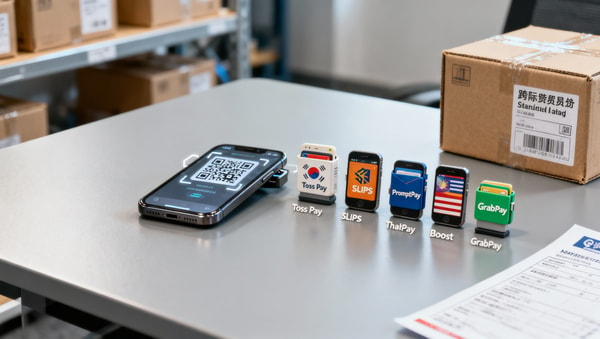
MIIT Releases Service Trade Standardization Plan (2026–2030)MIIT's 2026–2030 Service Trade Standardization Plan boosts AI-driven digital services—remote QA, cloud maintenance, intelligent warehouse SaaS—for global export competitiveness. WeChat Pay Integrates QR Codes from 5 Countries for B2B Cross-Border SettlementWeChat Pay integrates QR codes from South Korea, Sri Lanka, Thailand, Malaysia & Singapore — enabling faster, cheaper B2B cross-border settlement for global buyers and Chinese suppliers.
 Portable oxygen concentrators get noisy over time for several reasonsPortable oxygen concentrators get noisy over time due to dust, wear, loose parts, and aging compressors. Learn key causes, inspection priorities, and service tips to prevent failures.
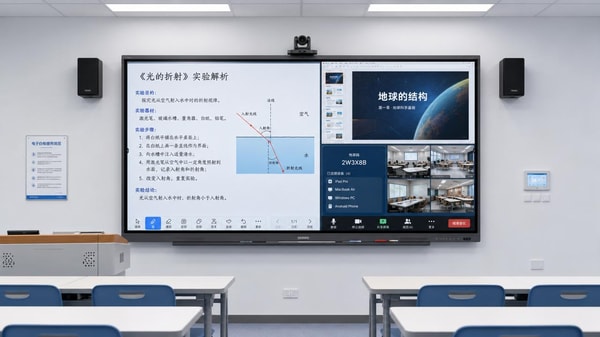
 Interactive whiteboards: what schools regret not checking earlyInteractive whiteboards can boost learning, but schools often regret missing key checks on compatibility, durability, training, and support. Discover how to buy smarter.
 Medical diagnostic equipment downtime usually starts with this oversightMedical diagnostic equipment downtime often starts with one overlooked maintenance gap. Learn the warning signs, hidden costs, and smart service strategies to improve uptime.
 Eco-friendly building materials: where certification changes the decisionEco-friendly building materials now win or lose on certification. Learn how verified standards reduce sourcing risk, support compliance, and improve procurement decisions.
 Ergonomic workspace design mistakes that still cause daily strainErgonomic workspace design mistakes can silently cause daily strain, fatigue, and lower productivity. Discover practical fixes to improve comfort, focus, and workstation performance.
 Outdoor garden supplies that wear out too fast in summer heatOutdoor garden supplies can fail fast in extreme summer heat. Discover which items wear out first, what materials last longer, and how to buy smarter for durable, cost-saving performance.
 Sustainable home decor: how to spot green claims with substanceSustainable home decor explained: learn how to spot credible green claims, avoid greenwashing, compare materials and certifications, and choose stylish, healthier pieces with real impact.
 Modern office furniture trends that improve layout flexibilityModern office furniture trends are transforming flexible workplace design. Explore modular, mobile, ergonomic, and acoustic solutions that boost productivity and smarter space planning.
 Smart street lighting works best when control systems are not overlookedSmart street lighting succeeds when control systems come first. Learn how better monitoring, dimming, and integration improve ROI, maintenance efficiency, and long-term project performance.
 What solid-state battery breakthroughs are still years from market?Solid-state battery breakthroughs sound transformative, but which ones are still years from market? Explore the technical, cost, and scaling barriers shaping real adoption timelines.
 Commercial LED lighting retrofits: when is payback slower than planned?Commercial LED lighting payback can slip when costs, runtime, rebates, and controls are misjudged. Learn the hidden risks and review steps that protect ROI before approval.



















Popular Tags
Global Trade Insights & Industry
Our mission is to empower global exporters and importers with data-driven insights that foster strategic growth.
Search News
Popular Tags
Industry Overview
The global commercial kitchen equipment market is projected to reach $112 billion by 2027. Driven by urbanization, the rise of e-commerce food delivery, and strict hygiene regulations.