

Q1 2026 Lithium Battery Export Prices Rise 11.3% YoY
China’s lithium-ion energy storage battery exports maintained strong momentum in Q1 2026, with average export prices rising 11.3% year-on-year to $128.4/kWh — a development particularly relevant for exporters, raw material procurers, battery system integrators, and global distribution partners operating in the energy storage value chain. This pricing trend reflects structural shifts in product mix and regional demand, warranting close attention from stakeholders across upstream procurement, midstream manufacturing, and downstream channel management.
Event Overview
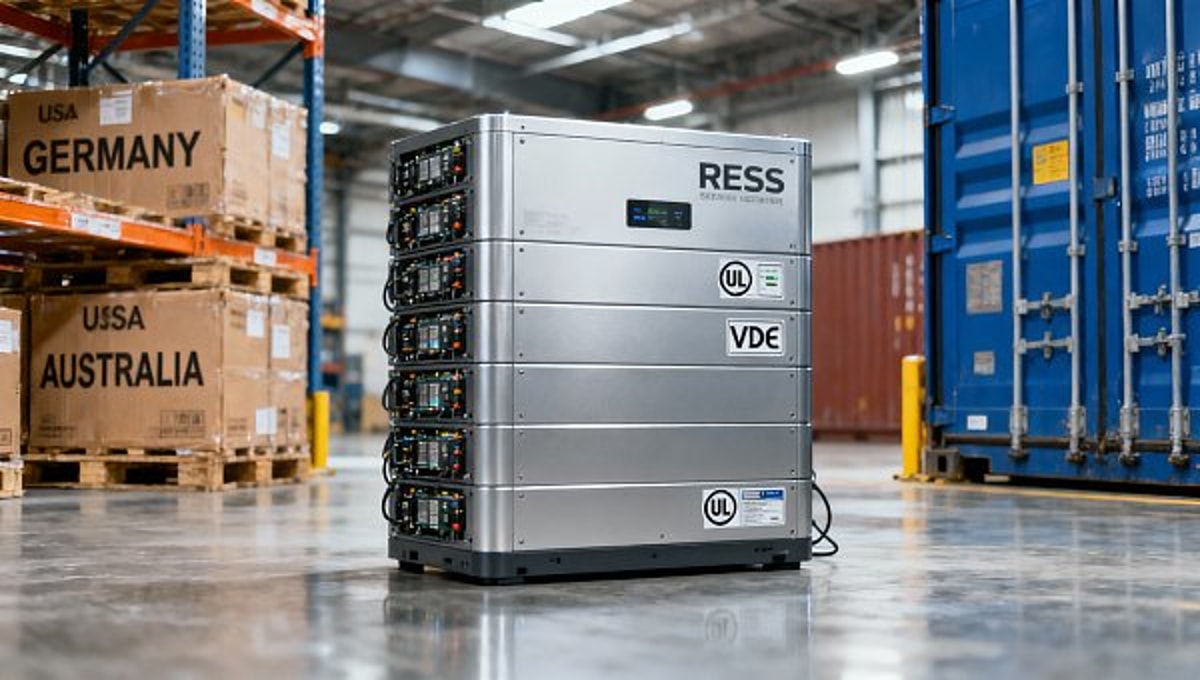
According to statistics released by China’s General Administration of Customs on April 30, 2026, China exported 28.7 GWh of lithium-ion energy storage batteries in Q1 2026 — up 22.6% year-on-year. The average export price reached $128.4/kWh, an increase of 11.3% compared to the same period in 2025. This price growth was driven by stabilization of upstream lithium, cobalt, and nickel prices, as well as a higher share of high-value-added residential energy storage systems (RESS) in total exports. Residential storage system orders accounted for 63% of export volume, with primary growth observed in Germany, the United States, Australia, and South Africa.
Impact on Specific Industry Segments
Direct Export Trading Enterprises
These enterprises face improved unit revenue per kWh but also tighter margin pressure due to increased compliance and certification requirements in key markets (e.g., VDE/UL/AS/NRS standards). The rise in RESS share implies greater need for bundled software, installation support, and after-sales service capabilities — not just hardware shipment.
Raw Material Procurement Enterprises
While lithium, cobalt, and nickel prices have stabilized, the shift toward higher-spec residential systems may increase demand for premium-grade cathode materials and advanced electrolytes. Procurement strategies must now account for performance-tier differentiation — not only volume-based cost optimization.
Cell & System Manufacturing Enterprises
Manufacturers supplying residential storage systems are seeing stronger order visibility, but also heightened technical expectations (e.g., longer cycle life, wider operating temperature range, integrated EMS). The 63% RESS share signals a structural move away from utility-scale commodity cells — requiring recalibration of production planning and R&D focus.
Distribution & Channel Management Enterprises
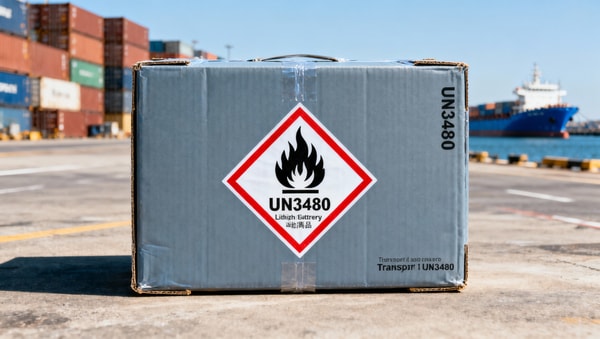
Distributors serving Germany, the U.S., Australia, and South Africa are experiencing accelerated inventory turnover for compact, plug-and-play residential units. However, logistics complexity is rising due to stricter packaging, labeling, and documentation rules for lithium battery shipments in these jurisdictions.
Related Enterprises or Practitioners Should Focus On
Monitor official tariff and regulatory updates in target markets
Germany and the U.S. have recently proposed new energy storage safety labeling requirements and customs valuation guidelines. Exporters should track implementation timelines — especially for RESS products where classification under HS code 8507.60 may trigger additional scrutiny.
Track RESS-specific demand signals by country and channel
The 63% RESS share is not uniform across markets: e.g., Germany’s RESS orders are largely dealer-driven, while U.S. demand is increasingly direct-to-consumer via e-commerce platforms. Channel-specific inventory planning and compliance documentation must be differentiated accordingly.
Review sourcing terms for cathode and electrolyte suppliers
Stabilized raw material prices do not imply static supply contracts. With RESS demand favoring NMC 811 and LFP with silicon-carbon anodes, procurement teams should verify whether existing agreements cover performance-grade specifications — not just nominal chemistry.
Prepare for extended lead times on certified RESS components
Key BMS ICs, fire-retardant enclosures, and UL-listed DC disconnects are experiencing longer lead times due to concurrent demand spikes in Europe and North America. Early engagement with component suppliers and buffer stock planning for critical subassemblies is advisable.
Editorial Perspective / Industry Observation
Observably, the Q1 2026 data point reflects a maturing phase in China’s energy storage export profile — shifting from volume-led growth to value-led composition. The 11.3% price increase is less a sign of raw material inflation and more an indicator of successful product upgrading and market segmentation. Analysis shows this trend is still early-stage: the RESS share gain (to 63%) has occurred alongside relatively stable cell-level capacity utilization, suggesting further room for margin expansion if quality consistency and certification speed improve. From an industry perspective, this is currently more of a directional signal than a fully consolidated outcome — one that rewards agility in product positioning and regulatory responsiveness over scale alone.
Conclusion: The Q1 2026 export data underscores a structural inflection in China’s lithium storage battery trade — marked not by volume surge alone, but by deliberate movement into higher-value, more regulated, and technically demanding residential applications. It is better understood as evidence of ongoing capability building rather than a transient price spike. Stakeholders should treat it as a benchmark for evaluating their own readiness in certification, channel alignment, and supply chain resilience — not as a standalone commercial opportunity.
Information Source: General Administration of Customs of the People’s Republic of China (released April 30, 2026). Note: Ongoing observation is warranted for Q2 2026 export volume and price trends, particularly regarding potential adjustments in German import VAT treatment for RESS and U.S. Section 301 tariff exclusions under review.
Recommended News
 CDE Adds 74 International Experts to Accelerate MedTech Export RegistrationCDE adds 74 international experts to accelerate MedTech export registration—key for IVD, imaging & rehab device exporters targeting FDA, EU MDR, Health Canada.
 MIIT Launches Space-Ground Computing & Green Data Center Export PlanMIIT's Space-Ground Computing & Green Data Center Export Plan unlocks global opportunities for liquid-cooled servers, PV direct-drive power, and satellite-ground scheduling—learn key impacts now.
 2026 Bio-based Raw Material Supplier Guide ReleasedBio-based raw material supplier guide 2026: Discover 47 ISO 16128-certified Chinese PLA, PBAT & PHA suppliers trusted by CBL, BPI & JIS.
 Q1 2026 Lithium Battery Export Prices Rise 11.3% YoYQ1 2026 Lithium Battery Export Prices Rise 11.3% YoY — discover why residential energy storage systems (RESS) drove the surge and what it means for exporters, suppliers & integrators.
 ‘Modular-Data Resonance’ Initiative Launches AI+Manufacturing Interface StandardModular-Data Resonance standard GB/T 45288-2026 launches AI+manufacturing interoperability—key for smart equipment exporters, MES/SCADA & AI model developers targeting EU/US markets.
 China's First Embodied AI Robot Export Liability Insurance Launched in GuangxiChina's first Embodied AI Robot Export Liability Insurance launched in Guangxi—key for robotics exporters targeting EU & SEA markets. Get compliant, certified, and covered.
 State Grid Launches $682M Embodied AI Inspection Equipment ProcurementState Grid’s $940M embodied AI inspection tender mandates IEC 62443-4-2 & ISO 13482 certs—key for robotics makers and global compliance teams. Act now.
 WeChat Pay Cross-Border B2B QR Code Live in 5 ASEAN CountriesWeChat Pay Cross-Border B2B QR Code is now live in 5 ASEAN countries — enabling fast, low-cost, local-currency settlements for SMEs and trade firms. Discover how it cuts costs by 47% and accelerates procurement.
 RCEP Green Packaging Mutual Recognition Extended to AU, NZ, JP, KRRCEP Green Packaging Mutual Recognition now extends to AU, NZ, JP, KR — unlock faster customs clearance & zero on-site inspection for compliant Chinese food packaging exports.
 IMDG Code 41-24 Enforces UN3480 Lithium Battery Labeling GloballyIMDG Code 41-24 enforces global UN3480 lithium battery labeling, packaging & e-CMR rules from 1 May 2026—act now to avoid port rejections and delays.
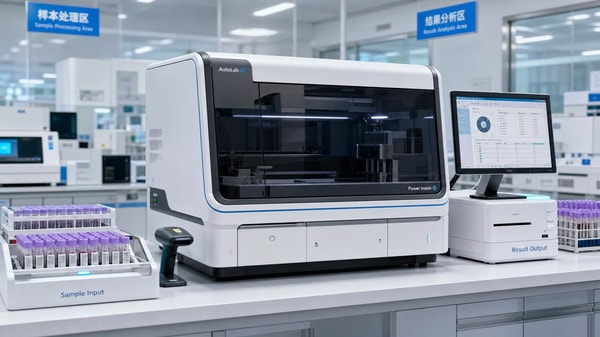
 Medical diagnostic equipment buying mistakes often start with workflowMedical diagnostic equipment buying mistakes often begin with workflow gaps. Learn how to compare systems, uncover hidden costs, and choose suppliers that fit real clinical operations.
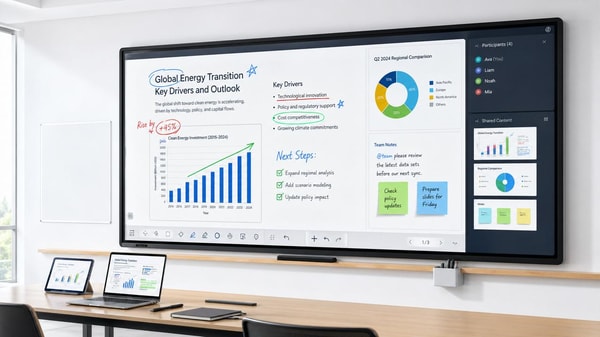
 Interactive whiteboards are improving, but teacher adoption is unevenInteractive whiteboards are improving fast, but teacher adoption remains uneven. Explore what drives classroom success, ROI, and smarter edtech implementation.
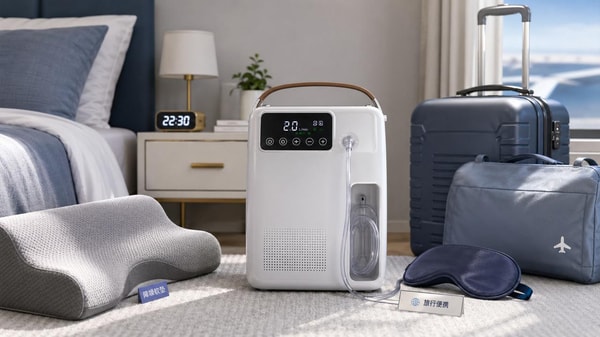
 Portable oxygen concentrators: what noise levels feel acceptable?Portable oxygen concentrators: discover what noise levels feel acceptable for sleep, travel, work, and home use, with practical guidance to choose a quieter, more comfortable model.
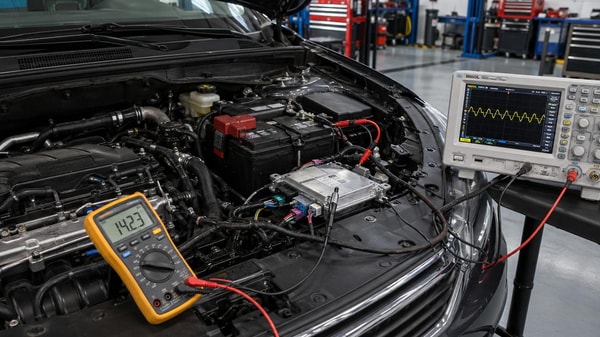
 Car electronics failures often start with power instabilityCar electronics issues often begin with hidden power instability. Learn how voltage drops, ripple, and weak grounds cause faults—and how smarter diagnostics cut repair time and repeat failures.
 Telemedicine hardware works best when setup friction is lowTelemedicine hardware works best with low setup friction. Discover how faster deployment, easier operation, and scenario-based selection improve care efficiency and service quality.
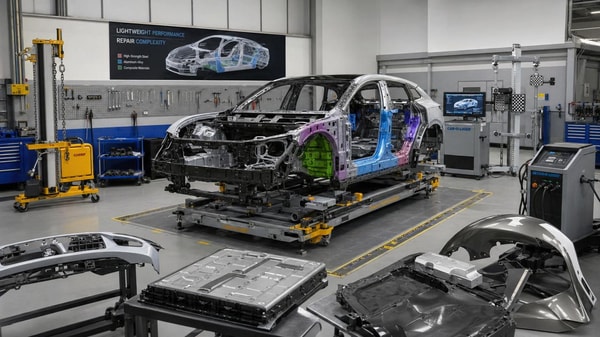
 Are light-weighting vehicle materials worth the repair tradeoff?Light-weighting vehicle materials: Are efficiency gains worth higher repair costs? Explore lifecycle impact, EV value, downtime risks, and smarter sourcing decisions.
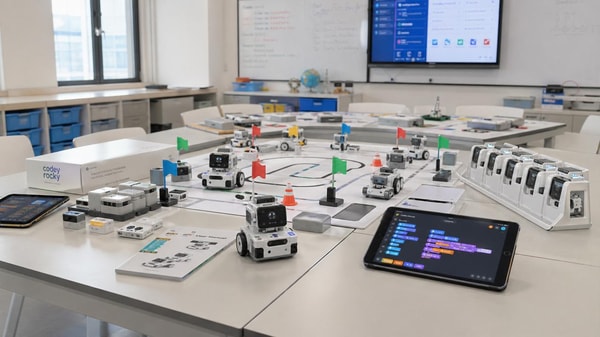
 Educational robots in class: novelty or lasting value?Educational robots are moving beyond classroom novelty. Discover how they create lasting value through STEM learning, scalability, and smarter school purchasing decisions.
 Biodegradable plastics fail when disposal assumptions are wrongBiodegradable plastics can fail when real disposal systems do not match design assumptions. Learn the compliance, contamination, and claim risks before they damage trust.
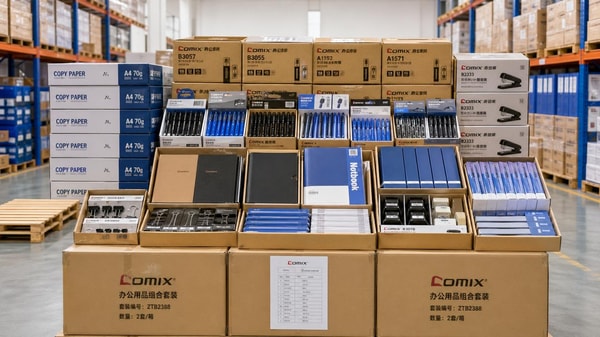
 Office stationery wholesale margins depend on boring detailsOffice stationery wholesale margins are won in the details—packaging, MOQ, freight, and SKU rotation. Learn how distributors protect profit and reduce hidden cost leakage.
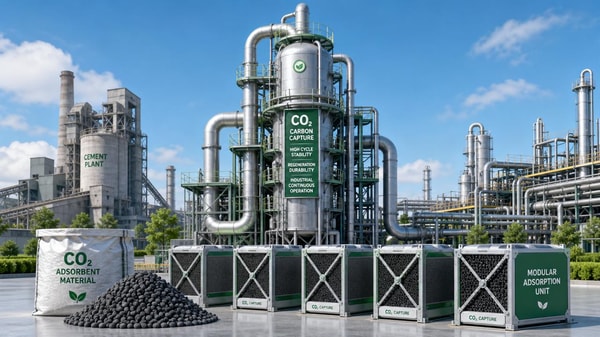
 Carbon capture materials are improving, but durability still mattersCarbon capture materials are improving, but durability still decides ROI. Explore cycle stability, regeneration resilience, and supplier evaluation factors for reliable industrial deployment.
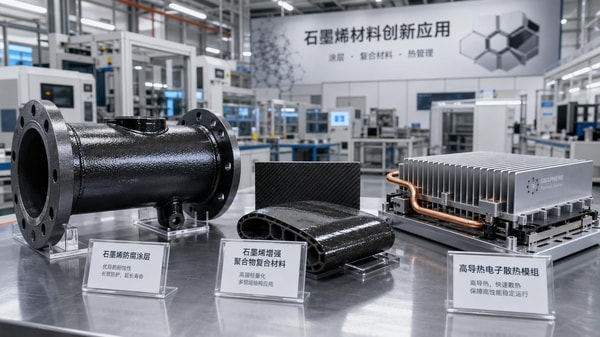
 Which graphene applications in industry are moving beyond pilots?Graphene applications in industry are moving beyond pilots fastest in coatings, composites, thermal management, sensors, and energy storage. See where commercialization is gaining traction.








Popular Tags
Global Trade Insights & Industry
Our mission is to empower global exporters and importers with data-driven insights that foster strategic growth.
Search News
Popular Tags
Industry Overview
The global commercial kitchen equipment market is projected to reach $112 billion by 2027. Driven by urbanization, the rise of e-commerce food delivery, and strict hygiene regulations.