

Biodegradable plastics fail when disposal assumptions are wrong
Biodegradable plastics are often promoted as a safer alternative to conventional materials, but their real-world impact depends heavily on how they are collected, sorted, and treated after use. When disposal systems fail to match product design assumptions, quality and safety managers face rising compliance risks, contamination issues, and misleading sustainability claims that can disrupt operations and damage stakeholder trust.
Understanding biodegradable plastics in operational reality
Biodegradable plastics are not a single material family with a single end-of-life pathway. In practice, the term may refer to polymers designed to break down under industrial composting conditions, materials marketed for home compostability, or blends that degrade only within specific temperature, humidity, and microbial ranges. For quality control and safety management teams, this distinction matters because disposal assumptions often become embedded in product claims, packaging specifications, supplier declarations, and customer communications.
A common operational problem is that many products labeled as biodegradable plastics are designed around a controlled disposal environment that may not exist across actual trade routes. A package shipped through 3 to 5 distribution nodes, stored for 30 to 90 days, and sold into regions with uneven waste collection infrastructure may never reach the treatment stream assumed in its design. Once that mismatch appears, the sustainability promise becomes a compliance and reputation issue rather than a performance advantage.
This issue is especially important in the broader industrial and trade environment, where imported and exported goods move across different waste policies, labeling rules, and material recovery systems. A product acceptable in one market may trigger sorting errors, contamination, or false expectation concerns in another. For organizations responsible for incoming material quality, outbound packaging validation, and environmental claim review, biodegradable plastics require process-level scrutiny rather than marketing-level acceptance.
Why disposal assumptions matter more than material intent
The phrase “biodegradable” sounds simple, but biodegradation is conditional. It usually depends on four variables: time, temperature, oxygen profile, and microbial activity. If one or more of these variables fall outside the required range, degradation may slow dramatically or stop. That means a film or molded part expected to break down within a controlled 8 to 24 week industrial composting cycle may remain intact much longer in landfill, marine, roadside, or mixed recycling environments.
For safety managers, the risk extends beyond waste performance. Disposal assumptions influence storage stability, residue management, pest control, odor risk, and cross-contamination protocols. For example, a food-contact application using biodegradable plastics may perform adequately in use but create disposal confusion once mixed with recyclable polyethylene or polypropylene streams. The result can be rejected loads, internal sorting costs, or complaints from downstream handlers.
For quality teams, another concern is claim verification. Supplier documents may describe a resin as biodegradable without clearly stating whether it is compostable, in what environment it degrades, and under which test conditions. If purchasing, packaging, and sustainability teams rely on a broad claim without clarifying these boundaries, the business can unintentionally overstate environmental performance across multiple markets.
Typical points of confusion
- Biodegradable does not automatically mean suitable for home composting or uncontrolled natural environments.
- A material may degrade in one system within 12 weeks but remain persistent for many months in another system.
- Claims made at resin level do not always apply to finished products with inks, coatings, multilayer structures, or adhesives.
- Disposal instructions that are valid in one country may be inaccurate in markets with limited composting access.
Why the industry keeps focusing on biodegradable plastics
Across the general industrial sector, biodegradable plastics remain a high-interest topic because companies are under pressure to reduce conventional plastic dependence, respond to customer sustainability requirements, and align with evolving packaging policies. In export-oriented business, material choices now affect not only product protection but also documentation, labeling, and buyer confidence. A packaging decision that once sat mainly with procurement now involves compliance, quality, legal review, and environmental risk assessment.
The attention is also driven by supply chain complexity. A single product line may use 5 to 10 packaging components sourced from multiple suppliers, converted in different facilities, and delivered into dozens of markets. If just one component using biodegradable plastics is poorly specified, the resulting risk can spread across warehousing, customs declarations, customer audits, and waste handling instructions. This makes material clarity a governance issue, not only a product design issue.
For organizations that manage brand exposure and industrial intelligence, the subject is increasingly linked to trust. Buyers, distributors, and regulators now compare sustainability language against actual disposal infrastructure. When public claims move faster than operational reality, businesses face stronger scrutiny. This is one reason data-led market observation and cross-border policy tracking have become essential in material selection and communication planning.
Key industry drivers behind the discussion
The current market focus is shaped by several converging factors: tighter packaging rules, more retailer requirements, faster consumer scrutiny of green claims, and higher expectations from business customers. In many sectors, review cycles for packaging materials have shortened from multi-year intervals to annual or even semiannual reassessments. That shorter cycle increases the need for quality managers to document why a biodegradable plastics option is suitable, where it is suitable, and what controls are required after use.
Another driver is the uneven pace of waste system development. Some metropolitan areas provide industrial composting access within a 50 to 100 kilometer logistics radius, while many secondary markets do not. From a quality and safety perspective, that means one packaging specification may perform responsibly in one destination but create disposal ambiguity in another. Material strategy therefore has to be mapped against destination infrastructure, not just against lab-based degradation claims.
The table below summarizes why biodegradable plastics continue to attract attention, and where the operational pressure points usually emerge for industrial users.
This overview shows that the main challenge is not whether biodegradable plastics can work in principle, but whether the commercial system around them can support correct use and correct disposal. For quality teams, the practical question is always conditional: in which product, in which market, under which handling controls, and with which disposal instruction?
Operational value and risk for quality and safety managers
Biodegradable plastics can offer real operational value when they are matched to the right application. In some short-life packaging formats, controlled-service environments, or closed collection systems, they may support cleaner waste segregation and align with customer sustainability targets. However, those benefits depend on disciplined specification management. A quality function should treat biodegradable plastics as a controlled material category with defined use limits, not as a universal replacement.
The risk side is more varied than many organizations first expect. Material confusion can affect incoming inspections, line compatibility, seal performance, storage life, and downstream disposal guidance. In a typical 6 to 12 month packaging review cycle, teams may test barrier or mechanical performance but spend less time validating post-use handling. That gap can leave a hidden exposure, especially when products are sold into regions with mixed waste streams and inconsistent labeling literacy.
Safety managers should also consider indirect effects. If biodegradable plastics are assumed to leave the waste system quickly, operators may underestimate accumulation risks in storage bins, transfer stations, or humid back-of-house areas. Likewise, if a product is marketed as environmentally safer, disposal staff may not follow sorting discipline with the same rigor as they would for conventional plastics. These behavioral assumptions can undermine otherwise well-designed waste procedures.
Where biodegradable plastics fit best
The most suitable applications usually share three features: short service life, clear disposal pathways, and limited material complexity. Examples may include single-material service items collected in a controlled venue, certain organic-waste-linked liners, or specific packaging programs with documented post-use handling. In contrast, multilayer export packaging, long-shelf-life formats, and mixed-material assemblies often require more caution because performance and disposal assumptions become harder to validate consistently.
The next table helps classify common application conditions from a quality and safety perspective. It is not a certification tool, but it offers a practical screening framework for initial review.
For many industrial users, this kind of classification prevents overgeneralization. Instead of asking whether biodegradable plastics are good or bad, the more useful question is whether a specific product-system combination can support them without creating hidden quality, safety, or communication failures.
Core review points for internal teams
- Define the disposal environment assumed by the supplier and compare it with actual destination markets.
- Check whether the claim applies to the finished article, not just the base polymer.
- Review storage and transport conditions, especially if lead times exceed 45 to 60 days.
- Assess contamination risk if the item is likely to enter conventional recycling streams.
- Align disposal wording across label copy, sales materials, technical sheets, and customer instructions.
Common failure scenarios when disposal systems do not match design assumptions
The most frequent failure scenario is infrastructure mismatch. A manufacturer selects biodegradable plastics expecting industrial composting, but the target market mainly uses landfill disposal or mixed household collection. In that case, the product may not deliver the expected environmental outcome, and customer-facing claims may become difficult to defend. This risk grows when products are sold through distributors who simplify disposal instructions for convenience.
A second scenario is stream contamination. If biodegradable plastics look similar to conventional plastics, they may be placed into recycling bins by consumers, warehouse staff, or commercial users. Even small percentages of mis-sorted materials can create quality concerns for recycled output streams, depending on the application and processor tolerance. For quality managers, this means disposal communication must be evaluated not only for correctness but also for practical user behavior.
A third scenario involves unsupported claim language. Packaging may state “biodegradable” without clarifying where, how, or within what general timeframe degradation is expected. In audit settings, this can raise questions about whether the business has exercised adequate care in environmental communication. The issue is not always bad intent; often it results from incomplete handover between sourcing, technical, marketing, and compliance teams.
Practical warning signs in supplier or product review
Quality and safety teams should slow down the approval process when several warning signs appear together. These signs do not automatically disqualify biodegradable plastics, but they indicate a higher need for documentation, pilot validation, and market-specific instructions. In many cases, early screening can prevent months of corrective action later in the distribution chain.
- The supplier provides broad biodegradability language but no clear description of disposal conditions.
- Finished product additives, inks, or multilayer constructions are not covered in available technical information.
- The product is intended for 10 or more export destinations with very different waste systems.
- Customer service teams do not have a standard disposal explanation for buyers and distributors.
- Warehouse or retail staff are likely to sort the product visually rather than by documented material guidance.
When these warning signs exist, the right response is usually a structured review rather than a rushed replacement decision. Businesses that handle complex global trade flows benefit from centralizing such reviews, because the same claim may carry different operational consequences across sectors, regions, and customer types.
Practical guidance for stronger control, communication, and cross-border use
A workable strategy for biodegradable plastics begins with narrowing the claim. Instead of treating biodegradability as a general environmental benefit, define it as a material property valid under specific conditions. This shift helps quality and safety managers translate a broad concept into a controlled specification. In many organizations, that means adding material review checkpoints at three stages: supplier qualification, finished-product approval, and market release documentation.
Documentation should cover more than test language. Teams should map product destination, expected storage duration, disposal route, and user handling behavior. For example, if a product typically spends 20 to 40 days in ocean freight, 10 to 20 days in customs and inland warehousing, and another 30 days in retail circulation, the full material exposure window may affect both performance and disposal clarity. Such mapping is especially useful where products move through global B2B networks and multiple customer segments.
Internal communication is equally important. Purchasing may focus on cost and availability, operations on runnability, marketing on claims, and sustainability teams on impact reduction. Without a shared review framework, biodegradable plastics can be approved on incomplete assumptions. A short cross-functional checklist often provides more protection than a long technical file that no team fully uses.
Recommended control framework
The following approach is practical for industrial firms, importers, exporters, and packaging decision-makers that need clearer control over biodegradable plastics in real supply chains.
This framework is effective because it connects material science with operational governance. It helps businesses avoid the common mistake of making a valid technical claim in an invalid market context. For organizations operating across 50+ sectors or broad trade categories, that discipline supports stronger consistency in environmental messaging and lowers avoidable downstream risk.
Working with better market intelligence
Because biodegradable plastics are affected by regional waste systems, policy direction, and buyer expectations, decision-making improves when teams use current market intelligence rather than fixed assumptions. A packaging choice made 12 months ago may need review if destination infrastructure changes, retailer guidelines shift, or customer sectors begin requesting more detailed documentation. Timely industry monitoring is therefore part of quality assurance, not just a strategic planning activity.
For foreign trade enterprises, the value of a strong information network is practical. It supports faster understanding of which markets are becoming stricter on environmental claims, where composting access remains limited, and how industrial users are reframing material selection criteria. In a supply chain environment where credibility affects both sales conversion and long-term partnerships, better information reduces avoidable errors before they become public issues.
Why work with us on material intelligence and communication planning
GTIIN and TradeVantage help global exporters, importers, and industrial stakeholders make better decisions in complex information environments. When evaluating biodegradable plastics, businesses rarely need only a definition. They need market context, sector trends, cross-border visibility, and a clearer understanding of how claims will be interpreted by buyers, partners, and search-driven audiences. That is where a high-authority intelligence platform adds practical value.
Our editorial and industry monitoring capabilities are built to bridge information gaps across the global supply chain. We track manufacturing developments, industrial shifts, and market-facing communication patterns that influence how material choices are perceived and evaluated. For quality personnel and safety managers, this supports stronger internal alignment between operational controls and external messaging, especially when biodegradable plastics are part of a broader sustainability narrative.
If your team is reviewing biodegradable plastics for packaging, product communication, or export-market positioning, contact us to discuss the topics that matter most: material claim interpretation, destination-market information, category-specific content planning, brand exposure strategy, backlink support, delivery timing for editorial placement, and visibility-building opportunities across global trade audiences. We can also help you clarify communication priorities before sample support, quotation discussion, or customized market outreach begins.
Recommended News
 Medical diagnostic equipment buying mistakes often start with workflowMedical diagnostic equipment buying mistakes often begin with workflow gaps. Learn how to compare systems, uncover hidden costs, and choose suppliers that fit real clinical operations.
 Interactive whiteboards are improving, but teacher adoption is unevenInteractive whiteboards are improving fast, but teacher adoption remains uneven. Explore what drives classroom success, ROI, and smarter edtech implementation.
 Portable oxygen concentrators: what noise levels feel acceptable?Portable oxygen concentrators: discover what noise levels feel acceptable for sleep, travel, work, and home use, with practical guidance to choose a quieter, more comfortable model.
 Car electronics failures often start with power instabilityCar electronics issues often begin with hidden power instability. Learn how voltage drops, ripple, and weak grounds cause faults—and how smarter diagnostics cut repair time and repeat failures.
 Telemedicine hardware works best when setup friction is lowTelemedicine hardware works best with low setup friction. Discover how faster deployment, easier operation, and scenario-based selection improve care efficiency and service quality.
 Are light-weighting vehicle materials worth the repair tradeoff?Light-weighting vehicle materials: Are efficiency gains worth higher repair costs? Explore lifecycle impact, EV value, downtime risks, and smarter sourcing decisions.
 Educational robots in class: novelty or lasting value?Educational robots are moving beyond classroom novelty. Discover how they create lasting value through STEM learning, scalability, and smarter school purchasing decisions.
 Biodegradable plastics fail when disposal assumptions are wrongBiodegradable plastics can fail when real disposal systems do not match design assumptions. Learn the compliance, contamination, and claim risks before they damage trust.
 Office stationery wholesale margins depend on boring detailsOffice stationery wholesale margins are won in the details—packaging, MOQ, freight, and SKU rotation. Learn how distributors protect profit and reduce hidden cost leakage.
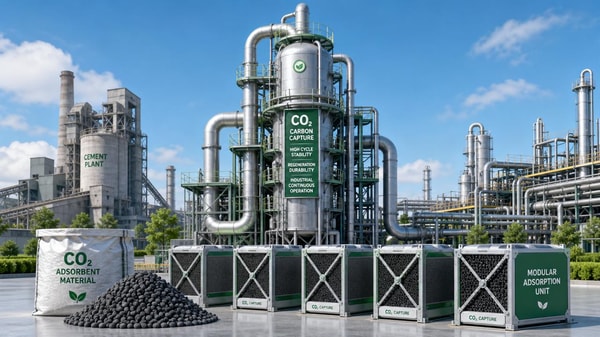
 Carbon capture materials are improving, but durability still mattersCarbon capture materials are improving, but durability still decides ROI. Explore cycle stability, regeneration resilience, and supplier evaluation factors for reliable industrial deployment.
 Which graphene applications in industry are moving beyond pilots?Graphene applications in industry are moving beyond pilots fastest in coatings, composites, thermal management, sensors, and energy storage. See where commercialization is gaining traction.
 Precision farming drones need better data, not just better flight timePrecision farming drones deliver more value through accurate maps, crop insights, and faster decisions than longer flight time alone. See how better data improves farm efficiency.
 Smart classroom solutions often disappoint for one simple reasonSmart classroom solutions often fail when complexity is ignored. Discover how project leaders can improve adoption, scalability, ROI, and long-term classroom performance.
 Organic fertilizers: when higher cost brings better soil resultsOrganic fertilizers may cost more, but they can improve soil structure, moisture retention, and long-term plant health. Learn when the higher price delivers better garden results.
 Agri-PV systems can raise land efficiency, but not everywhereAgri-PV systems can improve land efficiency, but only in the right conditions. Explore where they work, key risks, and how to evaluate profitable deployment.
 Smart home devices wholesale gets risky when standards do not matchSmart home devices wholesale becomes risky when standards, protocols, and certifications do not align. Learn how to reduce sourcing errors, control costs, and protect buyer trust.
 Wearable technology users quit when comfort is overlookedWearable technology users quit when comfort is ignored. Discover the checklist for fit, weight, skin safety, and long-term wear to choose devices that improve adoption and user satisfaction.
 Next-gen wireless charging still faces a heat management gapNext-gen wireless charging still faces a critical heat management gap. Explore how thermal risks affect efficiency, safety, lifecycle, and product readiness.
 Foldable screen technology looks mature until repair costs appearFoldable screen technology looks premium and practical, but are repair costs too high? Discover the real tradeoff between innovation, durability, and long-term value before you buy.
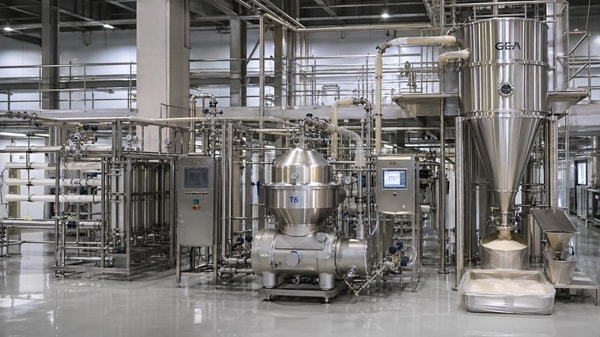
 Plant-based protein processing bottlenecks start after extractionPlant-based protein processing bottlenecks often begin after extraction. Discover downstream risks, supplier evaluation tips, and cost-saving insights for better sourcing decisions.
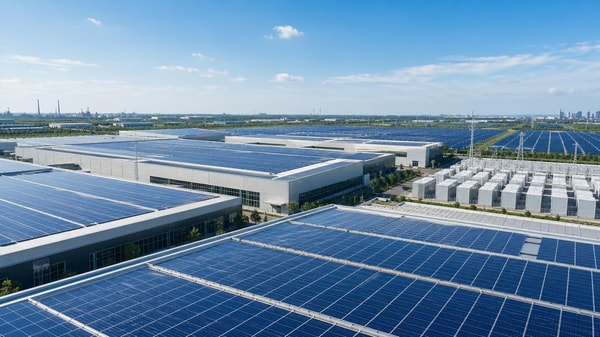
 Photovoltaic solar panels lose value when degradation is underestimatedPhotovoltaic solar panels can lose value fast when degradation is underestimated. Learn how realistic modeling protects ROI, asset valuation, and smarter solar investment decisions.














Popular Tags
Global Trade Insights & Industry
Our mission is to empower global exporters and importers with data-driven insights that foster strategic growth.
Search News
Popular Tags
Industry Overview
The global commercial kitchen equipment market is projected to reach $112 billion by 2027. Driven by urbanization, the rise of e-commerce food delivery, and strict hygiene regulations.