

IMDG Code 41-24 Enforces UN3480 Lithium Battery Labeling Globally
As of 1 May 2026, the International Maritime Organization’s (IMO) International Maritime Dangerous Goods Code (IMDG Code) Amendment 41-24 enters mandatory global force—introducing new labeling, packaging verification, and electronic consignment note (e-CMR) data requirements for lithium-ion batteries classified under UN3480. This change directly affects exporters in China’s lithium battery manufacturing sector shipping to North America, Europe, Japan, South Korea, and Southeast Asia—and signals heightened compliance pressure across maritime logistics chains.
Event Overview
The IMO’s IMDG Code Amendment 41-24 becomes globally enforceable on 1 May 2026. It mandates three key requirements for UN3480 lithium-ion batteries transported by sea: (1) a new standardized transport label; (2) verified packaging documentation meeting updated performance criteria; and (3) inclusion of specific data fields in electronic cargo manifests (e-CMR). These requirements apply uniformly across all IMO member states, with no transitional grace period for enforcement.
Industries Affected by Segment
Direct Exporters (OEMs and Contract Manufacturers)
Manufacturers shipping finished lithium-ion battery cells or packs under UN3480 face immediate operational impact: non-compliant labels or missing e-CMR fields may trigger port rejection or detention at destination terminals in EU, US, or ASEAN jurisdictions. Packaging revalidation may delay shipment cycles, especially where existing UN-certified packaging does not meet revised drop-test or stacking-load thresholds.
Supply Chain Service Providers (Freight Forwarders, Customs Brokers, 3PLs)
Third-party logistics providers must now verify label placement, confirm packaging test reports are current and jurisdictionally accepted, and ensure e-CMR submissions include all newly required fields (e.g., battery state-of-charge range, thermal management status). Errors may result in carrier refusal or customs hold—shifting liability upstream to shippers.
Importers and Distributors Receiving UN3480 Shipments
Downstream importers—particularly those managing just-in-time inventory—face increased risk of container delays or demurrage charges if incoming shipments lack compliant labeling or validated packaging records. No retroactive acceptance is stipulated in Amendment 41-24; non-conforming containers may be refused entry regardless of prior trade history.
What Relevant Enterprises Should Monitor and Act On
Confirm national implementation timelines and enforcement protocols
While the IMDG Code amendment is globally effective as of 1 May 2026, individual flag states and port authorities may issue supplementary guidance on inspection scope or document validation methods. Enterprises should monitor updates from national maritime safety administrations (e.g., US Coast Guard, UK MCA, Japan MLIT) and major container terminal operators.
Validate packaging certification against updated UN Manual of Tests and Criteria criteria
Amendment 41-24 references revised testing parameters in Part III, Section 38.3 of the UN Manual. Existing UN38.3 test reports issued before 2026 may not satisfy the new verification standard. Companies should audit active packaging certifications and initiate retesting where required—especially for large-format or high-energy-density cells.
Integrate mandatory e-CMR data fields into ERP or TMS systems
The amendment specifies new data elements—including battery chemistry subtype, maximum charge voltage, and whether thermal runaway mitigation systems are installed. Logistics teams must ensure these fields are captured at order entry and transmitted accurately via EDI or API integrations with carriers’ e-CMR platforms.
Update internal labeling workflows and warehouse quality checks
The new UN3480 label design includes enhanced pictograms and bilingual hazard statements. Printing specifications, label durability standards (e.g., water resistance, adhesion), and placement rules (e.g., adjacent to handling marks) must be incorporated into packaging SOPs and line-side QC checklists—not only for export but also for domestic consolidation facilities serving international routes.
Editorial Perspective / Industry Observation
Observably, this amendment reflects a broader regulatory shift toward harmonized, data-driven hazardous goods oversight—not merely a technical update. Analysis shows that the simultaneous enforcement of physical labeling, packaging verification, and structured digital documentation suggests regulators are preparing for interoperable, automated port clearance systems. From an industry perspective, the absence of phased implementation indicates IMO views these requirements as operationally mature and technically feasible. Current enforcement patterns observed during the 40-22 trial phase suggest early scrutiny will focus on label accuracy and e-CMR completeness rather than packaging revalidation—making documentation readiness the highest-leverage priority for near-term compliance.
It is more accurate to interpret Amendment 41-24 not as an isolated rule change, but as a signal of tightening integration between classification standards, physical logistics controls, and digital trade infrastructure. The requirement for standardized e-CMR fields, in particular, aligns with the IMO’s long-term strategy toward paperless maritime trade and real-time cargo risk profiling.
Consequently, this development is less about incremental compliance and more about structural alignment: enterprises that treat it solely as a labeling update risk overlooking its implications for system interoperability, cross-border data governance, and end-to-end supply chain visibility.

Conclusion
The mandatory implementation of IMDG Code Amendment 41-24 marks a definitive step toward stricter, more systematic control of lithium-ion battery transport by sea. Its significance lies not in novelty—but in enforceability: for the first time, label, package, and digital record requirements are co-enforced under a single global timeline. For affected stakeholders, this is best understood not as a temporary adjustment, but as the baseline for all future UN3480 maritime shipments. Preparedness hinges on verifying documentation integrity, updating operational workflows, and treating digital and physical compliance as interdependent—not sequential—requirements.
Information Sources
- International Maritime Organization (IMO), IMDG Code Amendment 41-24, adopted 2024, effective 1 May 2026
- IMO Circular MSC.1/Circ.1695 (2024), Guidance on Implementation of New UN3480 Requirements
- Note: National adoption details (e.g., EU Commission Delegated Regulation updates, US PHMSA alignment notices) remain pending publication and are subject to ongoing monitoring.
Recommended News
 CDE Adds 74 International Experts to Accelerate MedTech Export RegistrationCDE adds 74 international experts to accelerate MedTech export registration—key for IVD, imaging & rehab device exporters targeting FDA, EU MDR, Health Canada.
 MIIT Launches Space-Ground Computing & Green Data Center Export PlanMIIT's Space-Ground Computing & Green Data Center Export Plan unlocks global opportunities for liquid-cooled servers, PV direct-drive power, and satellite-ground scheduling—learn key impacts now.
 2026 Bio-based Raw Material Supplier Guide ReleasedBio-based raw material supplier guide 2026: Discover 47 ISO 16128-certified Chinese PLA, PBAT & PHA suppliers trusted by CBL, BPI & JIS.
 Q1 2026 Lithium Battery Export Prices Rise 11.3% YoYQ1 2026 Lithium Battery Export Prices Rise 11.3% YoY — discover why residential energy storage systems (RESS) drove the surge and what it means for exporters, suppliers & integrators.
 ‘Modular-Data Resonance’ Initiative Launches AI+Manufacturing Interface StandardModular-Data Resonance standard GB/T 45288-2026 launches AI+manufacturing interoperability—key for smart equipment exporters, MES/SCADA & AI model developers targeting EU/US markets.
 China's First Embodied AI Robot Export Liability Insurance Launched in GuangxiChina's first Embodied AI Robot Export Liability Insurance launched in Guangxi—key for robotics exporters targeting EU & SEA markets. Get compliant, certified, and covered.
 State Grid Launches $682M Embodied AI Inspection Equipment ProcurementState Grid’s $940M embodied AI inspection tender mandates IEC 62443-4-2 & ISO 13482 certs—key for robotics makers and global compliance teams. Act now.
 WeChat Pay Cross-Border B2B QR Code Live in 5 ASEAN CountriesWeChat Pay Cross-Border B2B QR Code is now live in 5 ASEAN countries — enabling fast, low-cost, local-currency settlements for SMEs and trade firms. Discover how it cuts costs by 47% and accelerates procurement.
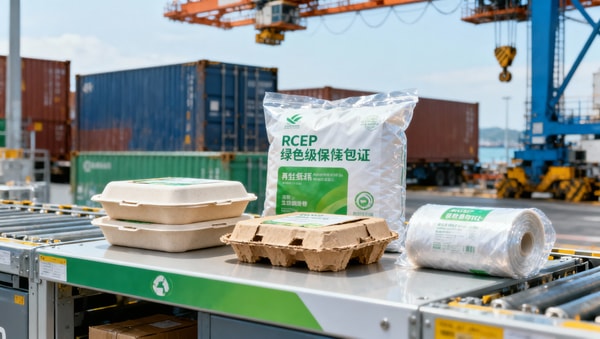
 RCEP Green Packaging Mutual Recognition Extended to AU, NZ, JP, KRRCEP Green Packaging Mutual Recognition now extends to AU, NZ, JP, KR — unlock faster customs clearance & zero on-site inspection for compliant Chinese food packaging exports.
 IMDG Code 41-24 Enforces UN3480 Lithium Battery Labeling GloballyIMDG Code 41-24 enforces global UN3480 lithium battery labeling, packaging & e-CMR rules from 1 May 2026—act now to avoid port rejections and delays.
 Medical diagnostic equipment buying mistakes often start with workflowMedical diagnostic equipment buying mistakes often begin with workflow gaps. Learn how to compare systems, uncover hidden costs, and choose suppliers that fit real clinical operations.
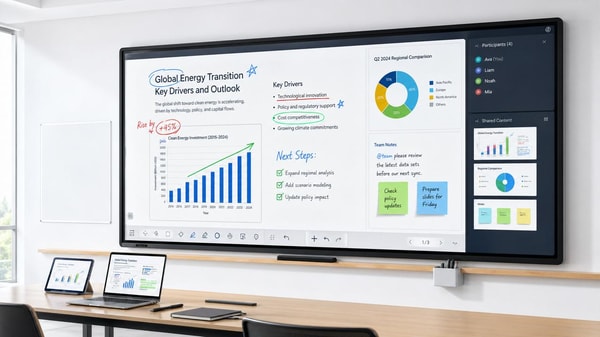
 Interactive whiteboards are improving, but teacher adoption is unevenInteractive whiteboards are improving fast, but teacher adoption remains uneven. Explore what drives classroom success, ROI, and smarter edtech implementation.
 Portable oxygen concentrators: what noise levels feel acceptable?Portable oxygen concentrators: discover what noise levels feel acceptable for sleep, travel, work, and home use, with practical guidance to choose a quieter, more comfortable model.
 Car electronics failures often start with power instabilityCar electronics issues often begin with hidden power instability. Learn how voltage drops, ripple, and weak grounds cause faults—and how smarter diagnostics cut repair time and repeat failures.
 Telemedicine hardware works best when setup friction is lowTelemedicine hardware works best with low setup friction. Discover how faster deployment, easier operation, and scenario-based selection improve care efficiency and service quality.
 Are light-weighting vehicle materials worth the repair tradeoff?Light-weighting vehicle materials: Are efficiency gains worth higher repair costs? Explore lifecycle impact, EV value, downtime risks, and smarter sourcing decisions.
 Educational robots in class: novelty or lasting value?Educational robots are moving beyond classroom novelty. Discover how they create lasting value through STEM learning, scalability, and smarter school purchasing decisions.
 Biodegradable plastics fail when disposal assumptions are wrongBiodegradable plastics can fail when real disposal systems do not match design assumptions. Learn the compliance, contamination, and claim risks before they damage trust.
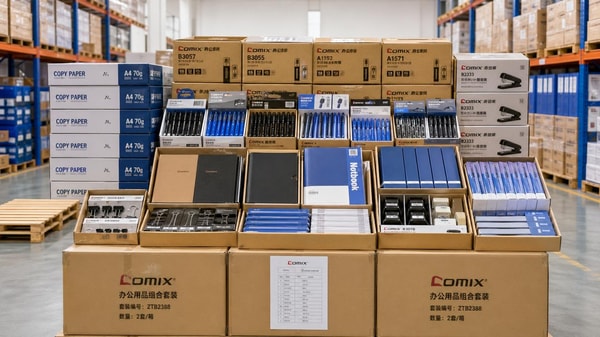
 Office stationery wholesale margins depend on boring detailsOffice stationery wholesale margins are won in the details—packaging, MOQ, freight, and SKU rotation. Learn how distributors protect profit and reduce hidden cost leakage.
 Carbon capture materials are improving, but durability still mattersCarbon capture materials are improving, but durability still decides ROI. Explore cycle stability, regeneration resilience, and supplier evaluation factors for reliable industrial deployment.
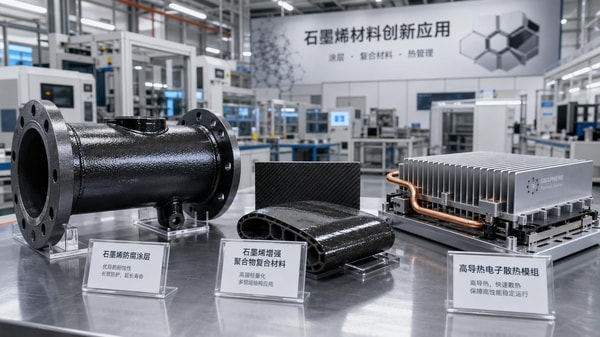
 Which graphene applications in industry are moving beyond pilots?Graphene applications in industry are moving beyond pilots fastest in coatings, composites, thermal management, sensors, and energy storage. See where commercialization is gaining traction.

















Popular Tags
Global Trade Insights & Industry
Our mission is to empower global exporters and importers with data-driven insights that foster strategic growth.
Search News
Popular Tags
Industry Overview
The global commercial kitchen equipment market is projected to reach $112 billion by 2027. Driven by urbanization, the rise of e-commerce food delivery, and strict hygiene regulations.