

Medical diagnostic equipment buying mistakes often start with workflow
Buying Medical diagnostic equipment is rarely just a product decision—it is a workflow decision that affects accuracy, turnaround time, staff efficiency, and long-term cost. For procurement teams, many expensive mistakes begin when device features are evaluated before clinical processes, integration needs, and user requirements. This article explores how a workflow-first approach helps buyers reduce risk, improve adoption, and make smarter sourcing choices.
For procurement professionals, the core search intent behind this topic is practical: how to avoid costly purchasing mistakes by matching equipment to real diagnostic workflows rather than buying based on specs, brand reputation, or price alone. What matters most is whether the equipment fits the daily reality of sample handling, staff skill levels, reporting requirements, maintenance capacity, and system integration.
The biggest concerns usually center on five questions: Will this device improve throughput? Will clinicians and technicians actually use it well? Can it integrate with existing systems? What hidden costs will appear after purchase? And how can buyers compare suppliers beyond marketing claims? A useful article must therefore focus less on generic product features and more on process mapping, evaluation criteria, implementation risk, and sourcing decisions that support operational outcomes.
Why workflow mistakes happen before procurement teams realize it
Many buying errors start with a familiar pattern. A department identifies an urgent need, suppliers present attractive product demos, and decision-makers compare technical specifications. On paper, the process appears rational. In practice, however, Medical diagnostic equipment often enters environments where success depends on dozens of small operational details that are easy to overlook during the sourcing stage.
A machine may offer high test speed, but if sample preparation is still manual and labor-intensive, the lab may never achieve the promised throughput. A system may have excellent analytical performance, but if results cannot move smoothly into the hospital information system or laboratory information system, staff will create workarounds. Those workarounds increase error risk, add labor, and reduce confidence in the investment.
Another common issue is that procurement teams are asked to buy for multiple stakeholders with different priorities. Clinicians may want broader test menus. Lab managers may prioritize reliability. IT teams may focus on connectivity and cybersecurity. Finance may emphasize total cost of ownership. If no one translates these needs into a shared workflow framework, the final purchasing decision often favors the most visible product feature instead of the most operationally useful choice.
This is why a workflow-first approach matters. It forces buyers to begin not with the machine, but with how work currently moves, where delays occur, what errors happen repeatedly, and what outcomes the organization actually wants to improve. In many cases, the wrong equipment is not low-quality equipment. It is equipment that does not fit the real operating environment.
What procurement teams should map before comparing equipment
Before requesting quotations or attending product demonstrations, buyers should document the current diagnostic workflow in a level of detail that suppliers often do not see. This includes patient intake or sample receipt, labeling, preparation, test execution, verification, result reporting, storage, and quality control checkpoints. Each stage reveals constraints that influence what type of device will be suitable.
For example, if samples arrive in large batches at fixed times, equipment selection should account for peak-load handling rather than average daily volume. If urgent requests are frequent, random access capability or rapid turnaround options may matter more than headline throughput. If the facility operates across multiple shifts with varying staff skill levels, ease of use, guided interfaces, and training requirements become major purchasing criteria.
Procurement teams should also map physical workflow. Where will the equipment be placed? Is there enough bench or floor space? What are the utility requirements for power, ventilation, water, waste handling, or environmental control? Seemingly minor installation constraints can delay deployment or force costly changes after purchase. In some settings, logistics around consumable storage and reagent access are just as important as device performance.
Another critical area is exception handling. Buyers should ask what happens when a sample fails, a barcode is unreadable, a reagent lot changes, or a result needs repeat testing. The best equipment for one facility may be the one that handles routine volume efficiently; for another, it may be the system that manages exceptions with the least disruption. Workflow mapping makes these differences visible early.
How to evaluate Medical diagnostic equipment beyond product specifications
Technical specifications are necessary, but they are not sufficient. Procurement professionals need evaluation criteria that connect product capability to operational value. A useful starting point is to separate what the device can do in ideal conditions from what the organization can consistently achieve in real conditions. That distinction is where many purchasing decisions become stronger.
Start with throughput in context. Ask not only how many tests per hour the equipment can run, but under what assumptions. Does that figure include calibration time, maintenance interruptions, reruns, sample loading, and operator intervention? A slightly slower system with better uptime and smoother workflow integration may deliver more real output over a month than a faster machine that requires frequent manual support.
Next, examine usability from the perspective of daily operators. How many steps are required per test cycle? What training burden will the system create? Can temporary or newly onboarded staff use it safely and correctly? Does the interface reduce the chance of mistakes? Usability directly affects adoption, labor costs, and quality outcomes, especially in facilities dealing with staffing pressure or frequent shift changes.
Integration deserves equal weight. Medical diagnostic equipment that cannot exchange data effectively with LIS, HIS, ERP, or reporting platforms may generate hidden administrative work. Buyers should request detailed information about interoperability, interface standards, middleware compatibility, cybersecurity controls, user access management, and remote support options. Connectivity problems often appear after installation, when switching costs are already high.
Finally, assess serviceability. What is the preventive maintenance schedule? How quickly can engineers respond? Are spare parts and consumables available locally or regionally? Is remote diagnostics supported? Can the supplier provide uptime data from similar installations? Good equipment with weak service support can become a recurring operational risk. For procurement teams, post-sale support is not secondary; it is part of the product value.
Hidden costs that make a “good deal” expensive later
One of the most common buying mistakes is focusing too heavily on purchase price. In diagnostic environments, the initial capital cost may represent only a portion of the total financial impact. A lower-priced system can become more expensive over its lifecycle if it requires higher labor input, more consumables, more downtime, or more manual reconciliation between systems.
Consumables are a major source of hidden cost. Buyers should review reagent pricing, lot stability, shelf life, minimum order quantities, storage conditions, and supplier reliability. If usage fluctuates, expiring consumables can erode the economics of a seemingly affordable platform. Closed systems that depend on proprietary reagents may offer convenience, but they can also reduce negotiating leverage over time.
Training and onboarding costs also deserve more attention than they usually receive. If a system is complex to operate, the organization may face recurring costs in training, retraining, competency validation, and supervisory oversight. These are not always visible in the procurement spreadsheet, but they affect productivity and error rates over the life of the equipment.
Downtime carries both financial and clinical consequences. A device that fails frequently may trigger outsourcing costs, delayed reporting, overtime, or patient dissatisfaction. Buyers should ask suppliers for service-level commitments, mean time to repair, preventive maintenance schedules, and backup recommendations. It is often wise to calculate the cost of one day of lost operation and use that figure when comparing vendors.
There is also the cost of poor fit. If workflow mismatch leads staff to bypass features, duplicate data entry, or maintain manual logs, the organization may pay continuously in hidden labor. In these situations, the equipment was not necessarily purchased badly in technical terms. It was purchased without a complete view of how work would actually be performed every day.
Questions procurement teams should ask suppliers before shortlisting
A strong supplier conversation should move beyond brochures and standard demos. Procurement teams should present realistic workflow scenarios and ask suppliers to explain how their solution performs within those conditions. This reveals whether the vendor understands practical implementation or is relying on generalized marketing claims.
Useful questions include: What facility profile is this equipment best suited for? What are the common reasons customers underuse the system? What workflow changes are usually required after installation? What is the average implementation timeline? Which functions depend on optional modules, software licenses, or third-party integrations? Answers to these questions often uncover scope gaps early.
Buyers should also request evidence from comparable deployments. Case references are most valuable when they match the buyer’s test volumes, staffing model, and operating constraints. A system that performs well in a tertiary hospital may not be ideal for a smaller regional facility, and vice versa. Comparable use cases help procurement teams understand how the equipment behaves outside controlled demonstration settings.
Another important line of inquiry concerns support structure. Who handles installation, calibration, training, and maintenance? Is support delivered directly by the manufacturer, a distributor, or a third-party service network? What inventory of spare parts is held locally? For international sourcing, logistics, customs lead times, and cross-border service responsiveness can materially affect uptime and risk.
Finally, buyers should ask suppliers to clarify what operational assumptions are built into their performance claims. If a vendor promises labor savings, what staffing model are they assuming? If they promise faster turnaround, what pre-analytical processes must already be in place? This prevents procurement teams from approving business cases based on outcomes that depend on conditions the facility does not currently meet.
Building a workflow-first evaluation framework internally
To reduce sourcing risk, procurement teams should create a structured evaluation framework before final vendor comparison begins. The framework should assign weighted criteria across workflow fit, analytical performance, integration, service, compliance, total cost of ownership, and supplier credibility. This keeps decisions aligned with business priorities rather than personal preferences or isolated stakeholder influence.
One practical method is to score each option across current-state fit and future-state fit. Current-state fit measures how well the equipment works within existing staffing, layout, software, and volume conditions. Future-state fit measures whether the system can support expected expansion, menu changes, automation goals, or multi-site standardization. This helps buyers avoid selecting a system that solves today’s issue but limits tomorrow’s growth.
Cross-functional input is essential. Procurement should involve clinical users, laboratory leaders, IT, facilities, finance, and quality or regulatory stakeholders early enough that concerns can shape the evaluation criteria. When input is gathered too late, the team often discovers integration barriers or operational objections after supplier selection, when negotiation leverage has already weakened.
Site visits, live references, or pilot evaluations can add significant value where budgets and timelines allow. Observing Medical diagnostic equipment in real use reveals practical truths that spec sheets cannot show: operator behavior, queue patterns, alarm frequency, maintenance burden, and user satisfaction. Even a brief structured observation can improve procurement judgment more than another round of brochure comparison.
When the right decision is not the most advanced device
In many procurement cycles, there is pressure to choose the newest or most feature-rich system. Yet the most advanced option is not always the smartest investment. If a facility lacks the volume, staffing, data infrastructure, or process maturity to use advanced functionality effectively, the extra capability may remain idle while complexity increases.
A simpler system may generate better outcomes if it matches the facility’s workflow, training capacity, and reliability needs. For procurement teams, success should be defined by sustained performance, user adoption, manageable cost, and consistent clinical support—not by the prestige of buying the most sophisticated platform available. Technology should fit the operation, not the other way around.
This does not mean buyers should ignore future readiness. Rather, they should distinguish between meaningful scalability and unnecessary complexity. A good purchasing decision balances present needs with realistic future plans. It also recognizes that implementation discipline, supplier support, and workflow alignment often create more value than incremental technical features.
For organizations sourcing across international markets, this principle becomes even more important. A globally marketed solution may be technically excellent, but buyers still need to confirm local service quality, regulatory fit, consumable availability, and integration support. In cross-border procurement, operational fit is the filter that turns market information into a sound sourcing decision.
Conclusion: buy for the process, not just the product
The most expensive mistakes in buying Medical diagnostic equipment often begin before a quotation is signed. They begin when teams evaluate devices in isolation from the workflow they are supposed to improve. A machine can be accurate, modern, and competitively priced—and still be the wrong choice if it does not align with real processes, people, systems, and service conditions.
For procurement professionals, the strongest approach is clear: map the workflow first, define operational priorities, test supplier claims against real use conditions, and compare options based on total value rather than headline specifications. When buying decisions are grounded in workflow reality, organizations reduce implementation risk, improve staff adoption, and protect long-term return on investment.
In short, better sourcing starts with better process understanding. If the workflow is wrong, even excellent equipment can disappoint. If the workflow is understood, buyers are far more likely to choose a system that delivers durable clinical and operational value.
Recommended News
 Medical diagnostic equipment buying mistakes often start with workflowMedical diagnostic equipment buying mistakes often begin with workflow gaps. Learn how to compare systems, uncover hidden costs, and choose suppliers that fit real clinical operations.
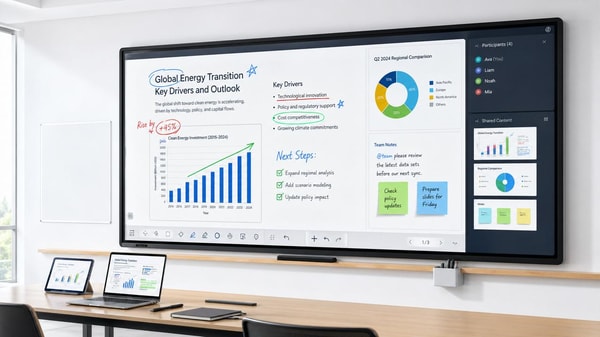
 Interactive whiteboards are improving, but teacher adoption is unevenInteractive whiteboards are improving fast, but teacher adoption remains uneven. Explore what drives classroom success, ROI, and smarter edtech implementation.
 Portable oxygen concentrators: what noise levels feel acceptable?Portable oxygen concentrators: discover what noise levels feel acceptable for sleep, travel, work, and home use, with practical guidance to choose a quieter, more comfortable model.
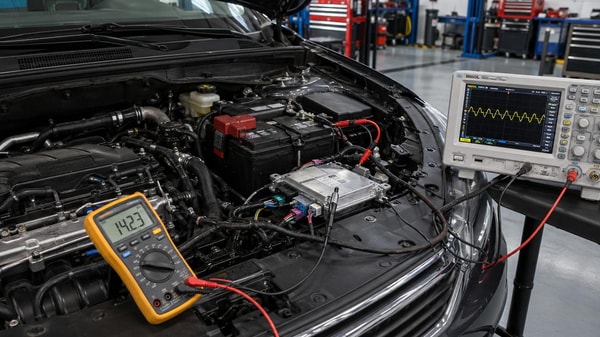
 Car electronics failures often start with power instabilityCar electronics issues often begin with hidden power instability. Learn how voltage drops, ripple, and weak grounds cause faults—and how smarter diagnostics cut repair time and repeat failures.
 Telemedicine hardware works best when setup friction is lowTelemedicine hardware works best with low setup friction. Discover how faster deployment, easier operation, and scenario-based selection improve care efficiency and service quality.
 Are light-weighting vehicle materials worth the repair tradeoff?Light-weighting vehicle materials: Are efficiency gains worth higher repair costs? Explore lifecycle impact, EV value, downtime risks, and smarter sourcing decisions.
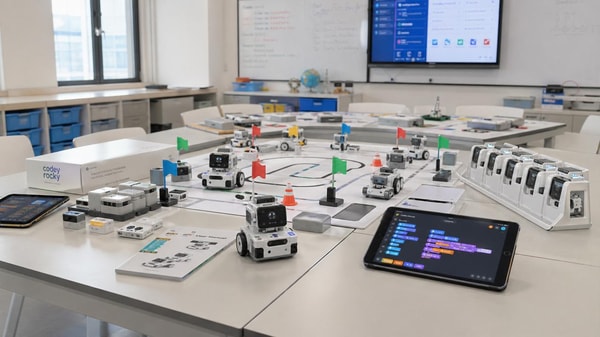
 Educational robots in class: novelty or lasting value?Educational robots are moving beyond classroom novelty. Discover how they create lasting value through STEM learning, scalability, and smarter school purchasing decisions.
 Biodegradable plastics fail when disposal assumptions are wrongBiodegradable plastics can fail when real disposal systems do not match design assumptions. Learn the compliance, contamination, and claim risks before they damage trust.
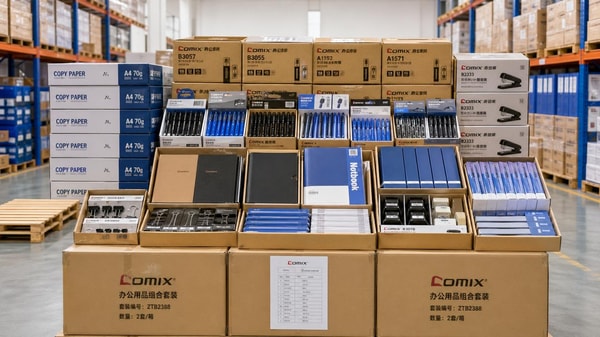
 Office stationery wholesale margins depend on boring detailsOffice stationery wholesale margins are won in the details—packaging, MOQ, freight, and SKU rotation. Learn how distributors protect profit and reduce hidden cost leakage.
 Carbon capture materials are improving, but durability still mattersCarbon capture materials are improving, but durability still decides ROI. Explore cycle stability, regeneration resilience, and supplier evaluation factors for reliable industrial deployment.
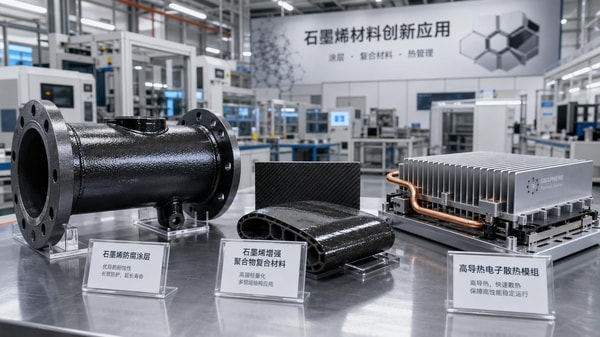
 Which graphene applications in industry are moving beyond pilots?Graphene applications in industry are moving beyond pilots fastest in coatings, composites, thermal management, sensors, and energy storage. See where commercialization is gaining traction.
 Precision farming drones need better data, not just better flight timePrecision farming drones deliver more value through accurate maps, crop insights, and faster decisions than longer flight time alone. See how better data improves farm efficiency.
 Smart classroom solutions often disappoint for one simple reasonSmart classroom solutions often fail when complexity is ignored. Discover how project leaders can improve adoption, scalability, ROI, and long-term classroom performance.
 Organic fertilizers: when higher cost brings better soil resultsOrganic fertilizers may cost more, but they can improve soil structure, moisture retention, and long-term plant health. Learn when the higher price delivers better garden results.
 Agri-PV systems can raise land efficiency, but not everywhereAgri-PV systems can improve land efficiency, but only in the right conditions. Explore where they work, key risks, and how to evaluate profitable deployment.
 Smart home devices wholesale gets risky when standards do not matchSmart home devices wholesale becomes risky when standards, protocols, and certifications do not align. Learn how to reduce sourcing errors, control costs, and protect buyer trust.
 Wearable technology users quit when comfort is overlookedWearable technology users quit when comfort is ignored. Discover the checklist for fit, weight, skin safety, and long-term wear to choose devices that improve adoption and user satisfaction.
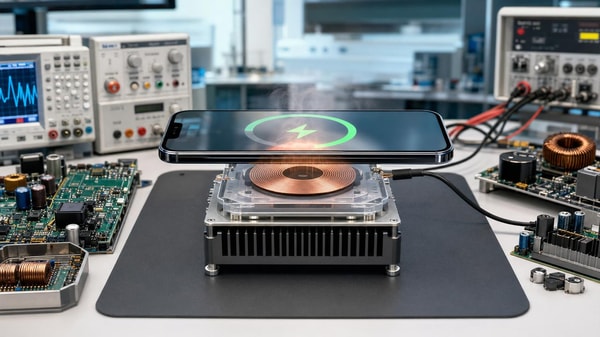
 Next-gen wireless charging still faces a heat management gapNext-gen wireless charging still faces a critical heat management gap. Explore how thermal risks affect efficiency, safety, lifecycle, and product readiness.
 Foldable screen technology looks mature until repair costs appearFoldable screen technology looks premium and practical, but are repair costs too high? Discover the real tradeoff between innovation, durability, and long-term value before you buy.
 Plant-based protein processing bottlenecks start after extractionPlant-based protein processing bottlenecks often begin after extraction. Discover downstream risks, supplier evaluation tips, and cost-saving insights for better sourcing decisions.
 Photovoltaic solar panels lose value when degradation is underestimatedPhotovoltaic solar panels can lose value fast when degradation is underestimated. Learn how realistic modeling protects ROI, asset valuation, and smarter solar investment decisions.















Popular Tags
Global Trade Insights & Industry
Our mission is to empower global exporters and importers with data-driven insights that foster strategic growth.
Search News
Popular Tags
Industry Overview
The global commercial kitchen equipment market is projected to reach $112 billion by 2027. Driven by urbanization, the rise of e-commerce food delivery, and strict hygiene regulations.