

‘Modular-Data Resonance’ Initiative Launches AI+Manufacturing Interface Standard
On April 30, 2026, China’s Ministry of Industry and Information Technology (MIIT) and the Standardization Administration of China jointly launched the ‘Modular-Data Resonance’ initiative, releasing the first national standard — GB/T 45288-2026, Interface Standard for Industrial AI Models and MES/SCADA Systems. The standard supports OPC UA, MTConnect, and ISA-95, and has received preliminary mutual recognition from Germany’s VDMA and the U.S. Association For Manufacturing Technology (AMT). It is set to serve as the default data interoperability basis for Chinese smart equipment exports to the EU and North American markets — directly impacting industrial automation, smart machinery, and AI-integrated manufacturing solution providers.
Event Overview
The ‘Modular-Data Resonance’ initiative was officially launched on April 30, 2026, by MIIT and the Standardization Administration of China. The first standard issued under the initiative is GB/T 45288-2026, titled Interface Standard for Industrial AI Models and MES/SCADA Systems. It specifies technical requirements for data exchange between industrial AI models and core manufacturing execution (MES) and supervisory control and data acquisition (SCADA) systems. The standard is designed to be compatible with OPC UA, MTConnect, and ISA-95. As confirmed in official announcements, it has obtained preliminary mutual recognition from Germany’s Verband Deutscher Maschinen- und Anlagenbau (VDMA) and the U.S. Association For Manufacturing Technology (AMT).
Industries Affected
Smart Equipment Exporters
Exporters of CNC machine tools, robotics systems, and automated production lines face direct compliance implications. Starting from the effective date of GB/T 45288-2026, EU and North American importers may require demonstrable conformance to this standard as part of technical documentation or CE/UL certification support packages.
Industrial Software Providers
Vendors of MES, SCADA, and edge-AI inference platforms must assess compatibility with GB/T 45288-2026’s data schema and message protocols. Non-conforming software may encounter integration delays or rejection during joint validation with Chinese OEM hardware partners targeting export markets.
AI Model Developers for Manufacturing
Companies developing predictive maintenance, quality inspection, or process optimization models must align output formats, metadata tagging, and real-time streaming interfaces with the standard’s defined semantics — especially when those models are embedded in export-bound equipment or offered as SaaS modules integrated into foreign MES environments.
Systems Integrators & OEMs
Firms assembling turnkey smart factories or retrofitting legacy lines using mixed Chinese and international components will need to verify whether their integration architecture satisfies the standard’s cross-system handshake requirements — particularly at the boundary between AI inference engines and legacy control layers.
What Enterprises and Practitioners Should Focus On Now
Monitor official implementation timelines and conformity assessment guidance
GB/T 45288-2026 is a recommended national standard (GB/T), not mandatory (GB) — but its designation as the ‘default data interface basis’ for exports signals strong policy alignment. Stakeholders should track upcoming MIIT circulars or CNAS-recognized testing lab announcements regarding verification procedures.
Assess exposure by product category and target market
Companies exporting high-value automation systems (e.g., semiconductor packaging equipment, precision machining centers) to Germany or the U.S. should prioritize conformance review. Lower-tier components (e.g., sensors, drives without embedded AI logic) are less likely to fall under immediate scope — though supply chain traceability requirements may cascade downstream.
Distinguish between regulatory signal and operational readiness
Initial VDMA/AMT recognition reflects technical alignment, not formal equivalence or automatic acceptance. Buyers in EU/North America retain contractual discretion; conformance remains a competitive differentiator, not yet a hard gate — but one that may tighten with adoption cycles beyond 2026.
Prepare internal interface documentation and test logs
Manufacturers should begin mapping current MES/SCADA–AI data flows against GB/T 45288-2026’s defined endpoints, payload structures, and error-handling conventions. Preparing auditable logs now supports faster third-party validation later — especially where co-development with foreign integrators is involved.
Editorial Perspective / Industry Observation
Observably, this initiative marks a deliberate shift from domestic standard-setting toward structured international interoperability scaffolding. Analysis shows GB/T 45288-2026 is less about imposing new technical constraints than codifying existing de facto practices among leading Chinese AI-manufacturing vendors — then packaging them for cross-border recognition. From an industry perspective, it functions primarily as a coordination signal: aligning domestic R&D, certification, and export documentation around a single interface framework. It is not yet a binding requirement, but rather an early-stage infrastructure signal — one whose weight will grow with adoption velocity in pilot export corridors and supporting test lab capacity.
Current more appropriate interpretation is that GB/T 45288-2026 represents a ‘compliance horizon’, not a compliance deadline. Its value lies not in immediate enforcement, but in reducing long-term friction for Chinese AI-enabled hardware entering regulated industrial markets — provided stakeholders treat it as a design reference point, not just a paperwork item.

Conclusion: The launch of GB/T 45288-2026 reflects a maturing phase in China’s AI+manufacturing integration strategy — moving from isolated innovation to systemic interoperability. Its significance lies not in technical novelty, but in institutional coordination across standards bodies, regulators, and trade partners. For industry participants, the most rational stance is proactive alignment — treating the standard as a forward-looking benchmark for interface design, documentation, and partner engagement, rather than a reactive compliance trigger.
Source: Official announcement by the Ministry of Industry and Information Technology (MIIT) and the Standardization Administration of China, April 30, 2026; confirmed scope and mutual recognition status per VDMA and AMT public statements (as cited in MIIT release). Note: Ongoing observation is warranted for official implementation guidelines, CNAS-accredited testing protocols, and updates to VDMA/AMT recognition status.
Recommended News
 CDE Adds 74 International Experts to Accelerate MedTech Export RegistrationCDE adds 74 international experts to accelerate MedTech export registration—key for IVD, imaging & rehab device exporters targeting FDA, EU MDR, Health Canada.
 MIIT Launches Space-Ground Computing & Green Data Center Export PlanMIIT's Space-Ground Computing & Green Data Center Export Plan unlocks global opportunities for liquid-cooled servers, PV direct-drive power, and satellite-ground scheduling—learn key impacts now.
 2026 Bio-based Raw Material Supplier Guide ReleasedBio-based raw material supplier guide 2026: Discover 47 ISO 16128-certified Chinese PLA, PBAT & PHA suppliers trusted by CBL, BPI & JIS.
 Q1 2026 Lithium Battery Export Prices Rise 11.3% YoYQ1 2026 Lithium Battery Export Prices Rise 11.3% YoY — discover why residential energy storage systems (RESS) drove the surge and what it means for exporters, suppliers & integrators.
 ‘Modular-Data Resonance’ Initiative Launches AI+Manufacturing Interface StandardModular-Data Resonance standard GB/T 45288-2026 launches AI+manufacturing interoperability—key for smart equipment exporters, MES/SCADA & AI model developers targeting EU/US markets.
 China's First Embodied AI Robot Export Liability Insurance Launched in GuangxiChina's first Embodied AI Robot Export Liability Insurance launched in Guangxi—key for robotics exporters targeting EU & SEA markets. Get compliant, certified, and covered.
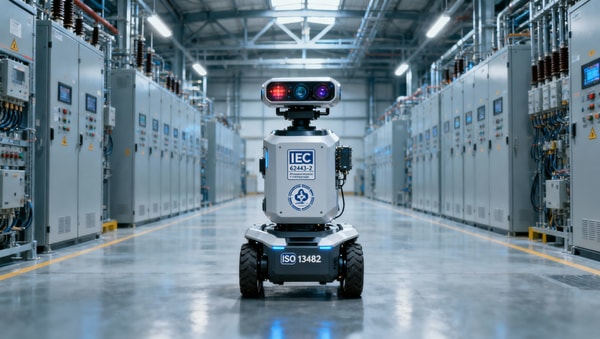
 State Grid Launches $682M Embodied AI Inspection Equipment ProcurementState Grid’s $940M embodied AI inspection tender mandates IEC 62443-4-2 & ISO 13482 certs—key for robotics makers and global compliance teams. Act now.
 WeChat Pay Cross-Border B2B QR Code Live in 5 ASEAN CountriesWeChat Pay Cross-Border B2B QR Code is now live in 5 ASEAN countries — enabling fast, low-cost, local-currency settlements for SMEs and trade firms. Discover how it cuts costs by 47% and accelerates procurement.
 RCEP Green Packaging Mutual Recognition Extended to AU, NZ, JP, KRRCEP Green Packaging Mutual Recognition now extends to AU, NZ, JP, KR — unlock faster customs clearance & zero on-site inspection for compliant Chinese food packaging exports.
 IMDG Code 41-24 Enforces UN3480 Lithium Battery Labeling GloballyIMDG Code 41-24 enforces global UN3480 lithium battery labeling, packaging & e-CMR rules from 1 May 2026—act now to avoid port rejections and delays.
 Medical diagnostic equipment buying mistakes often start with workflowMedical diagnostic equipment buying mistakes often begin with workflow gaps. Learn how to compare systems, uncover hidden costs, and choose suppliers that fit real clinical operations.
 Interactive whiteboards are improving, but teacher adoption is unevenInteractive whiteboards are improving fast, but teacher adoption remains uneven. Explore what drives classroom success, ROI, and smarter edtech implementation.
 Portable oxygen concentrators: what noise levels feel acceptable?Portable oxygen concentrators: discover what noise levels feel acceptable for sleep, travel, work, and home use, with practical guidance to choose a quieter, more comfortable model.
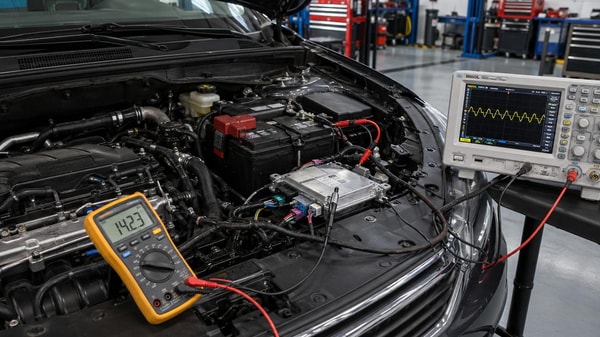
 Car electronics failures often start with power instabilityCar electronics issues often begin with hidden power instability. Learn how voltage drops, ripple, and weak grounds cause faults—and how smarter diagnostics cut repair time and repeat failures.
 Telemedicine hardware works best when setup friction is lowTelemedicine hardware works best with low setup friction. Discover how faster deployment, easier operation, and scenario-based selection improve care efficiency and service quality.
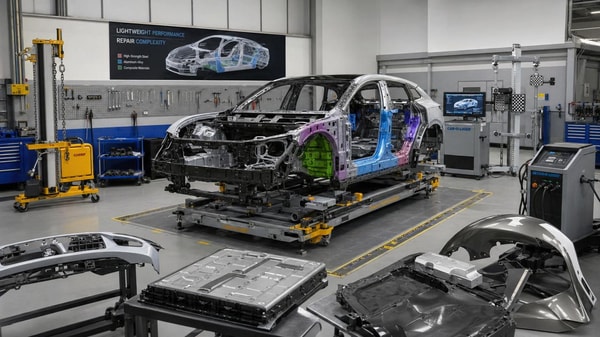
 Are light-weighting vehicle materials worth the repair tradeoff?Light-weighting vehicle materials: Are efficiency gains worth higher repair costs? Explore lifecycle impact, EV value, downtime risks, and smarter sourcing decisions.
 Educational robots in class: novelty or lasting value?Educational robots are moving beyond classroom novelty. Discover how they create lasting value through STEM learning, scalability, and smarter school purchasing decisions.
 Biodegradable plastics fail when disposal assumptions are wrongBiodegradable plastics can fail when real disposal systems do not match design assumptions. Learn the compliance, contamination, and claim risks before they damage trust.
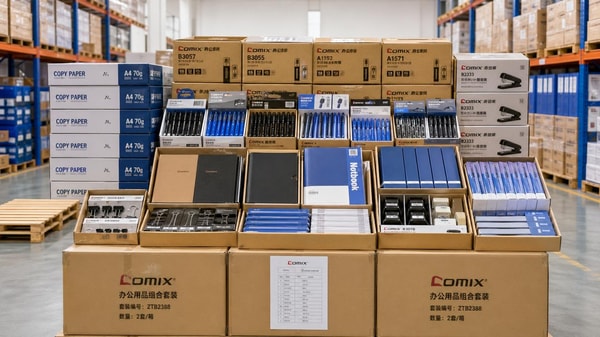
 Office stationery wholesale margins depend on boring detailsOffice stationery wholesale margins are won in the details—packaging, MOQ, freight, and SKU rotation. Learn how distributors protect profit and reduce hidden cost leakage.
 Carbon capture materials are improving, but durability still mattersCarbon capture materials are improving, but durability still decides ROI. Explore cycle stability, regeneration resilience, and supplier evaluation factors for reliable industrial deployment.
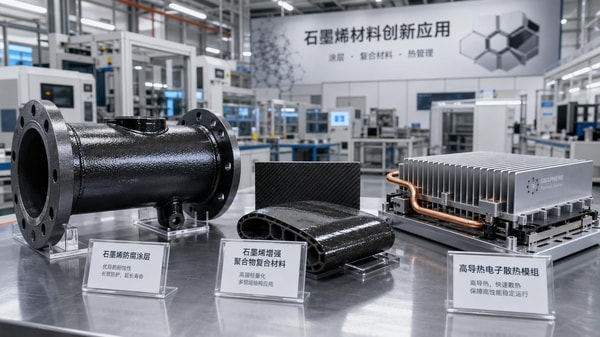
 Which graphene applications in industry are moving beyond pilots?Graphene applications in industry are moving beyond pilots fastest in coatings, composites, thermal management, sensors, and energy storage. See where commercialization is gaining traction.
















Popular Tags
Global Trade Insights & Industry
Our mission is to empower global exporters and importers with data-driven insights that foster strategic growth.
Search News
Popular Tags
Industry Overview
The global commercial kitchen equipment market is projected to reach $112 billion by 2027. Driven by urbanization, the rise of e-commerce food delivery, and strict hygiene regulations.