

Telemedicine hardware works best when setup friction is low
Telemedicine hardware delivers the best results when users can set it up quickly and start working without confusion. For operators and frontline users, low setup friction means fewer delays, smoother workflows, and more reliable remote care. In a fast-moving environment, choosing solutions that are intuitive, dependable, and easy to deploy can directly improve efficiency, user confidence, and service quality.
Why setup friction matters across telemedicine use scenarios
Not every telemedicine workflow fails because of weak clinical capability or poor network coverage. In many day-to-day operations, the first breakdown happens much earlier: during unpacking, cable connection, user login, camera positioning, microphone checks, or software pairing. When Telemedicine hardware takes 30 to 60 minutes to become operational instead of 5 to 15 minutes, small delays quickly turn into missed consultations, staff frustration, and lower service capacity.
For operators, the issue is not only technical complexity. It is also about repeatability. Hardware that works well in one pilot room may become difficult in a mobile cart, a rural clinic, a pharmacy consultation booth, or a temporary outreach site. Across 3 to 5 common deployment environments, setup friction often appears in different forms: unstable peripherals, unclear ports, poor battery readiness, inconsistent mounting, or confusing user interfaces.
This is why scenario-based evaluation is more useful than generic product claims. A hospital teleconsultation room can tolerate some fixed infrastructure. A home-visit nurse team cannot. A specialist imaging workflow may accept higher equipment complexity if image quality is critical. A general triage station usually needs speed first. Telemedicine hardware should therefore be judged by the fit between use case, operator skill level, setup steps, and service time window.
Core signs of low-friction deployment
- The system can be unpacked, powered, connected, and tested in fewer than 10 core steps.
- A first-time operator can learn routine startup within 1 to 2 short sessions rather than several days.
- Accessories such as camera, display, speaker, and diagnostic tools are clearly matched and labeled.
- Recovery from common issues, such as cable disconnection or software restart, takes minutes rather than requiring specialist support.
In practical procurement, low setup friction usually improves more than convenience. It can reduce idle equipment time, shorten staff training cycles, and support more stable service rollout across multiple sites. For B2B buyers and operators using industry intelligence platforms such as GTIIN and TradeVantage, comparing deployment effort alongside performance specifications gives a more realistic picture of long-term usability.
Three common application scenarios and what operators should prioritize
Telemedicine hardware is not used in one uniform environment. Frontline users often switch between fixed rooms, semi-mobile clinical spaces, and community-facing service points. Each setting changes the importance of portability, peripheral integration, cleaning routine, startup speed, and connection stability. The table below compares typical scenarios that operators frequently manage.
The biggest takeaway is that Telemedicine hardware should not be evaluated only by camera resolution or device count. In a fixed consultation room, integrated cabling and repeatable workstation layout may matter more than mobility. In bedside or outreach use, even a strong feature set can become a burden if operators must reconnect multiple peripherals every time they change location.
Scenario 1: Fixed consultation rooms
This is often the most stable environment for telemedicine. Power access, network connections, lighting control, and furniture layout are usually predictable. Because of that, operators should focus on standardization. If 4 rooms use slightly different camera mounts, microphone placement, or login flow, user errors increase even when the hardware itself is capable.
For this scenario, low setup friction means routine readiness. The system should allow a nurse, technician, or administrative operator to verify the station in under 5 minutes between sessions. Useful features include one-touch power sequencing, fixed-angle camera presets, labeled connections, and dependable speaker volume. Operators benefit most when the station behaves the same way every day.
This scenario is suitable for slightly more integrated Telemedicine hardware, especially when specialist consultations require additional peripherals. However, the more devices added, the more important it becomes to reduce manual switching. A room used for 10 to 20 appointments per day cannot afford repeated cable changes or complex startup scripts.
Scenario 2: Mobile carts and bedside use
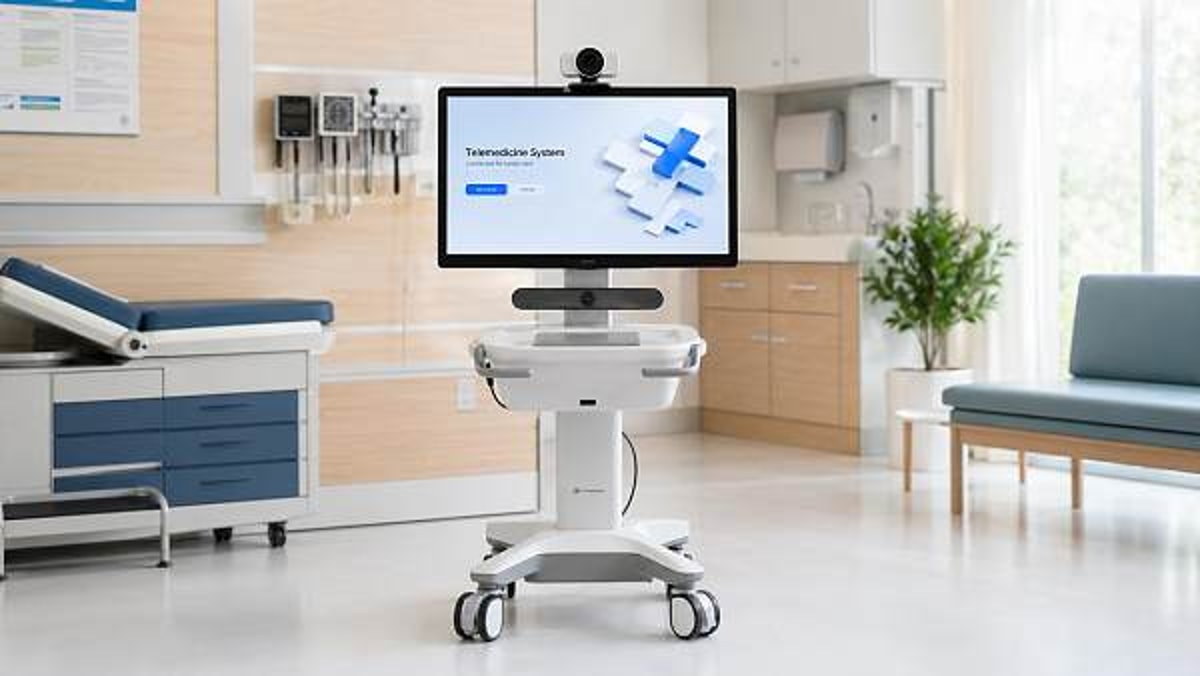
Bedside workflows are highly sensitive to setup friction because operators are moving while also managing patient interaction, infection control, and time pressure. In these settings, Telemedicine hardware should be compact, secure, and fast to recover after movement. Loose accessories, exposed wiring, or unstable battery status can interrupt care and create operator hesitation.
A practical benchmark is whether the cart can move between two points, reconnect if needed, and be consultation-ready within 3 to 8 minutes. Operators should also check wheel stability, handle placement, screen adjustability, and charging routine. A device that performs well on paper but requires constant repositioning or re-pairing will feel inefficient in live use.
This environment favors modular but tightly managed hardware design. Diagnostic tools may still be necessary, but they should not create excessive cable clutter or mounting complexity. The goal is not the lowest number of components at any cost; it is the lowest operational burden for repeated daily movement.
Scenario 3: Community access points and non-specialist settings
Pharmacies, rural access sites, employer wellness rooms, and temporary screening booths often rely on staff who are not full-time telehealth technicians. In these environments, user confidence matters as much as technical function. Telemedicine hardware should provide clear prompts, minimal assembly, and obvious status indicators so that staff can guide patients without escalating every issue.
Operators in this scenario should prioritize simple startup logic, easy sanitation, and basic environmental tolerance. If the service point opens for only a few consultation windows each day, a 20-minute setup routine is too heavy. A better target is a stable 10 to 15 minute deployment with fewer than 2 likely failure points that require remote assistance.
This is often where low-friction Telemedicine hardware creates the strongest business value. Service expansion depends on repeatable deployment across multiple sites, sometimes 5, 10, or more locations. The easier the hardware is to train, maintain, and reset, the faster operators can scale access without a disproportionate support burden.
How requirements change by workflow, staff profile, and service intensity
Even within the same facility, telemedicine workflows differ. A general follow-up consultation, a chronic care check-in, a remote specialist review, and a triage interaction do not ask the same things from operators. The right Telemedicine hardware therefore depends on who uses it, how often it is used, and how many peripherals must be managed during a typical service cycle.
In lower-intensity workflows, operators usually need simplicity first. In more advanced workflows, they need reliable peripheral coordination. The common mistake is buying a system designed for the most complex use case, then deploying it everywhere. This increases training time, raises confusion in routine appointments, and often leaves features underused for 70% or more of daily sessions.
A better approach is to map hardware to workflow tiers. This helps teams avoid over-specification in simple settings and under-specification in clinically demanding ones. It also supports clearer procurement conversations about accessories, support scope, and site readiness.
Workflow-based comparison for operators
The following table shows how setup expectations shift by use intensity. Operators can use it to assess whether a given hardware package is aligned with the real service model instead of a generic feature list.
For operators, the table highlights a useful rule: higher capability is valuable only when it remains manageable. If users need 2 to 3 different manuals for a common task, the setup burden is already too high for routine service. Telemedicine hardware should support the workflow, not force staff to work around the device.
What different operator groups usually care about
- Nurses and frontline coordinators often care about startup speed, battery readiness, cleaning access, and room-to-room movement.
- Technical support staff usually prioritize port consistency, replacement compatibility, cable management, and troubleshooting steps.
- Administrative managers tend to focus on deployment time, training hours, support frequency, and multi-site standardization.
- Procurement teams often look at packaging completeness, accessory options, expected lead time, and whether the same platform can fit 2 to 4 service models.
These differences matter because the best purchase decision usually balances all four views. Industry intelligence platforms such as GTIIN and TradeVantage are useful in this process because they help buyers compare market options, sourcing patterns, and deployment considerations across suppliers and regions rather than only reading isolated product descriptions.
Practical selection criteria that reduce setup delays
When operators evaluate Telemedicine hardware, they should move beyond broad claims like easy to use or plug and play. Those phrases only become meaningful when converted into observable criteria. A useful selection method is to score the device across setup time, accessory complexity, movement requirement, support burden, and recovery from common faults.
A realistic field review should include at least one first-time setup, one repeat setup by a regular operator, and one simple fault recovery exercise. If each of these tasks can be completed in a predictable time range, such as 5 to 15 minutes depending on scenario, the hardware is more likely to support stable deployment. If times vary wildly across users, the design may depend too heavily on operator experience.
It is also wise to confirm site constraints early. Power access, network availability, secure mounting points, cleaning routine, ambient noise, and storage space often determine whether a theoretically suitable device becomes practical in daily use. Telemedicine hardware that ignores these site realities usually creates hidden setup friction after purchase.
Operator checklist before approval
- Confirm the main scenario: fixed room, mobile cart, bedside, outreach, or mixed deployment.
- Measure acceptable setup time for that scenario, such as under 10 minutes for fixed use or under 8 minutes after movement for bedside use.
- List all required peripherals and remove any that add complexity without supporting the actual workflow.
- Check whether one trained operator can complete startup, shutdown, cleaning, and reconnection without specialist help.
- Ask about replacement parts, packaging completeness, and typical delivery windows, which commonly range from several days for standard accessories to several weeks for specialized configurations.
Common warning signs
Be cautious when the hardware demo works only with vendor assistance, when startup requires multiple hidden steps, or when accessory compatibility is explained verbally but not labeled physically. These are strong indicators that real operators may struggle later. Another warning sign is when a mobile setup needs frequent recalibration after short movement, because that usually increases support calls within the first 30 to 90 days of deployment.
Operators should also watch for over-integrated bundles that are difficult to service in parts. If one small failure takes an entire cart or station out of use, downtime risk rises. In many cases, the most practical Telemedicine hardware is not the one with the longest feature list, but the one that combines stable core performance with easy replacement, predictable setup, and realistic support requirements.
From a global sourcing perspective, buyers should compare packaging standards, spare component availability, and documentation quality as carefully as technical specifications. Trade-focused market visibility, including insights aggregated through GTIIN and TradeVantage, can help businesses identify suppliers that understand export readiness, documentation consistency, and multi-market deployment expectations.
Common misjudgments when matching telemedicine hardware to real-world use
One of the most common mistakes is assuming that all telemedicine environments need the same level of hardware. This often leads to overbuilt stations in simple service points and underprepared systems in high-demand workflows. The result is inefficient capital use and lower user satisfaction. A better fit starts by asking where the device will be used 80% of the time, not where it might occasionally be used.
Another misjudgment is evaluating Telemedicine hardware only during a controlled demonstration. Real use includes shift changes, rushed room turnover, inconsistent lighting, cable wear, and non-technical operators. If a setup succeeds only in ideal conditions, it may not perform well in day-to-day service. Testing should cover at least 2 to 3 realistic operational situations before final approval.
Teams also sometimes underestimate documentation quality. Clear quick-start guides, visible labels, and simple troubleshooting paths reduce dependence on one experienced person. In multi-site environments, this matters even more. Once deployment reaches several branches or partner sites, every extra minute of training multiplies across the network.
Frequently overlooked details
- Whether the camera and audio setup still perform well after repeated cleaning and repositioning.
- Whether batteries, chargers, and mounting accessories are included or sourced separately.
- Whether operators can identify connection status quickly without opening multiple menus.
- Whether support materials are usable by staff with mixed technical backgrounds across 2 or more shifts.
A practical decision rule
If the hardware saves clinical time but adds too much operator effort, the deployment may still underperform. In contrast, if the system offers slightly fewer advanced functions but supports stable startup, faster room turnover, and easier scaling, it often creates stronger long-term value. For most users and operators, dependable routine use beats occasional peak performance.
This is especially true for businesses expanding services across regions. Standardized, easy-to-deploy Telemedicine hardware is easier to document, easier to source repeatedly, and easier to support across different market conditions. When comparing suppliers through a B2B intelligence lens, practical deployment consistency should be a key decision factor alongside price and feature scope.
The strongest results usually come from matching the hardware package to a clearly defined operational scenario, validating setup in real conditions, and aligning sourcing decisions with long-term support capacity. That approach lowers friction not only on day one, but across the full service lifecycle.
Why choose us for market insight and sourcing guidance
If you are evaluating Telemedicine hardware for fixed rooms, mobile carts, community access points, or multi-site rollout, the next step is not guessing from generic product pages. It is confirming the fit between your actual use scenario, operator profile, expected setup time, and sourcing plan. That is where structured industry visibility becomes valuable.
GTIIN and TradeVantage support global B2B decision-making with real-time market updates, industrial trend tracking, and cross-sector intelligence across more than 50 sectors. For buyers, exporters, and importers working with telemedicine deployment projects, this helps connect product evaluation with supply chain reality, market availability, and stronger digital exposure in international trade channels.
Contact us if you need support with parameter confirmation, scenario-based product selection, delivery cycle review, export-oriented supplier visibility, certification-related reference points, sample coordination, or quotation communication. If your team wants to compare Telemedicine hardware options with a clearer view of setup friction, operator usability, and market readiness, we can help you move from broad interest to a more practical sourcing direction.
Recommended News
 Medical diagnostic equipment buying mistakes often start with workflowMedical diagnostic equipment buying mistakes often begin with workflow gaps. Learn how to compare systems, uncover hidden costs, and choose suppliers that fit real clinical operations.
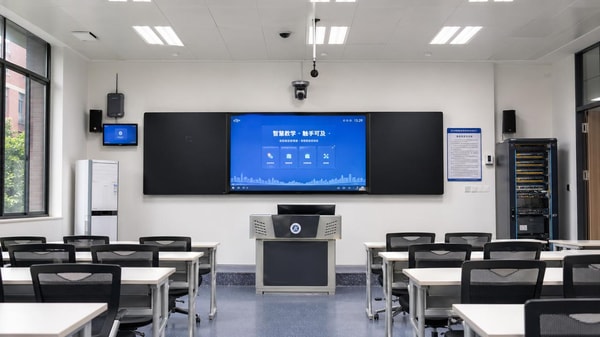
 Interactive whiteboards are improving, but teacher adoption is unevenInteractive whiteboards are improving fast, but teacher adoption remains uneven. Explore what drives classroom success, ROI, and smarter edtech implementation.
 Portable oxygen concentrators: what noise levels feel acceptable?Portable oxygen concentrators: discover what noise levels feel acceptable for sleep, travel, work, and home use, with practical guidance to choose a quieter, more comfortable model.
 Car electronics failures often start with power instabilityCar electronics issues often begin with hidden power instability. Learn how voltage drops, ripple, and weak grounds cause faults—and how smarter diagnostics cut repair time and repeat failures.
 Telemedicine hardware works best when setup friction is lowTelemedicine hardware works best with low setup friction. Discover how faster deployment, easier operation, and scenario-based selection improve care efficiency and service quality.
 Are light-weighting vehicle materials worth the repair tradeoff?Light-weighting vehicle materials: Are efficiency gains worth higher repair costs? Explore lifecycle impact, EV value, downtime risks, and smarter sourcing decisions.
 Educational robots in class: novelty or lasting value?Educational robots are moving beyond classroom novelty. Discover how they create lasting value through STEM learning, scalability, and smarter school purchasing decisions.
 Biodegradable plastics fail when disposal assumptions are wrongBiodegradable plastics can fail when real disposal systems do not match design assumptions. Learn the compliance, contamination, and claim risks before they damage trust.
 Office stationery wholesale margins depend on boring detailsOffice stationery wholesale margins are won in the details—packaging, MOQ, freight, and SKU rotation. Learn how distributors protect profit and reduce hidden cost leakage.
 Carbon capture materials are improving, but durability still mattersCarbon capture materials are improving, but durability still decides ROI. Explore cycle stability, regeneration resilience, and supplier evaluation factors for reliable industrial deployment.
 Which graphene applications in industry are moving beyond pilots?Graphene applications in industry are moving beyond pilots fastest in coatings, composites, thermal management, sensors, and energy storage. See where commercialization is gaining traction.
 Precision farming drones need better data, not just better flight timePrecision farming drones deliver more value through accurate maps, crop insights, and faster decisions than longer flight time alone. See how better data improves farm efficiency.
 Smart classroom solutions often disappoint for one simple reasonSmart classroom solutions often fail when complexity is ignored. Discover how project leaders can improve adoption, scalability, ROI, and long-term classroom performance.
 Organic fertilizers: when higher cost brings better soil resultsOrganic fertilizers may cost more, but they can improve soil structure, moisture retention, and long-term plant health. Learn when the higher price delivers better garden results.
 Agri-PV systems can raise land efficiency, but not everywhereAgri-PV systems can improve land efficiency, but only in the right conditions. Explore where they work, key risks, and how to evaluate profitable deployment.
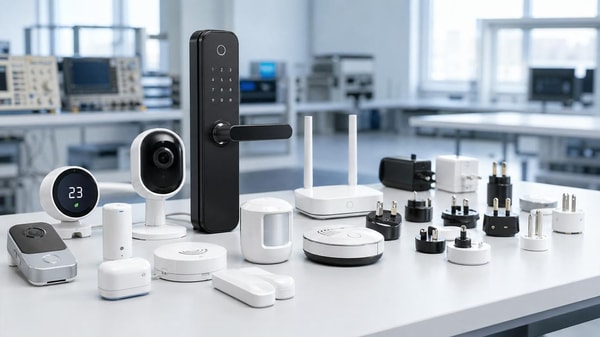
 Smart home devices wholesale gets risky when standards do not matchSmart home devices wholesale becomes risky when standards, protocols, and certifications do not align. Learn how to reduce sourcing errors, control costs, and protect buyer trust.
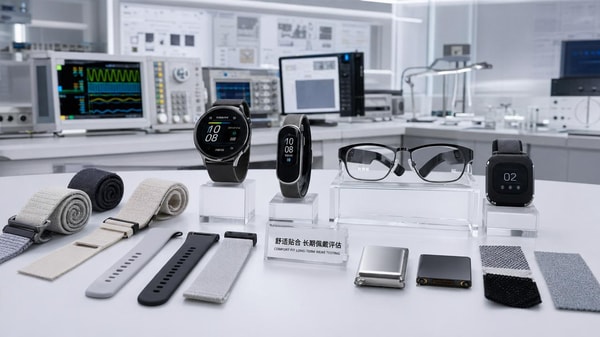
 Wearable technology users quit when comfort is overlookedWearable technology users quit when comfort is ignored. Discover the checklist for fit, weight, skin safety, and long-term wear to choose devices that improve adoption and user satisfaction.
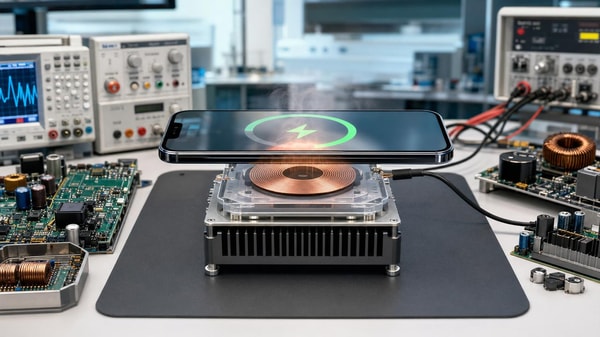
 Next-gen wireless charging still faces a heat management gapNext-gen wireless charging still faces a critical heat management gap. Explore how thermal risks affect efficiency, safety, lifecycle, and product readiness.
 Foldable screen technology looks mature until repair costs appearFoldable screen technology looks premium and practical, but are repair costs too high? Discover the real tradeoff between innovation, durability, and long-term value before you buy.
 Plant-based protein processing bottlenecks start after extractionPlant-based protein processing bottlenecks often begin after extraction. Discover downstream risks, supplier evaluation tips, and cost-saving insights for better sourcing decisions.
 Photovoltaic solar panels lose value when degradation is underestimatedPhotovoltaic solar panels can lose value fast when degradation is underestimated. Learn how realistic modeling protects ROI, asset valuation, and smarter solar investment decisions.









Popular Tags
Global Trade Insights & Industry
Our mission is to empower global exporters and importers with data-driven insights that foster strategic growth.
Search News
Popular Tags
Industry Overview
The global commercial kitchen equipment market is projected to reach $112 billion by 2027. Driven by urbanization, the rise of e-commerce food delivery, and strict hygiene regulations.