

Educational robots in class: novelty or lasting value?
Educational robots are moving from eye-catching classroom experiments to serious tools for skill development, engagement, and future-ready learning. For business decision-makers, the key question is not whether Educational robots attract attention, but whether they deliver measurable value in outcomes, scalability, and long-term adoption. This article examines the commercial, educational, and strategic factors shaping their role in modern classrooms.
Why the conversation around Educational robots has shifted
The market discussion is no longer centered on whether Educational robots are innovative. That question was relevant 5 to 10 years ago, when robotics kits were often purchased for pilot classrooms, science fairs, or short-term coding initiatives. Today, the shift is more practical: schools, distributors, and education-focused technology suppliers are evaluating whether these tools can support repeatable learning outcomes, fit within annual budget cycles, and remain useful across multiple grades or teaching contexts.
This change matters to enterprise decision-makers across the broader education supply chain. Importers, exporters, content platforms, hardware manufacturers, and channel partners are all affected by a new buying logic. Instead of asking whether Educational robots are visually appealing, procurement teams increasingly compare device durability, curriculum alignment, teacher training requirements, software update frequency, and support lifecycle. In many cases, the classroom robot is no longer treated as a stand-alone gadget, but as one element within a wider digital learning ecosystem.
Another signal is the expansion of demand beyond elite or highly experimental institutions. Educational robots are now being assessed for mainstream K-12 use, after-school programs, vocational pathways, maker spaces, and even cross-disciplinary learning that includes language, design, and problem-solving. As adoption broadens, the threshold for success rises. A product that works in a 20-student demo may not work in a district rollout spanning 6 to 18 months, multiple campuses, and diverse teacher skill levels.
Key signals behind the change
- Procurement decisions increasingly favor platforms that can be used across 2 to 4 subjects rather than single-event novelty tools.
- Schools expect hardware life cycles of roughly 3 to 5 years, which raises questions about maintenance, spare parts, and software compatibility.
- Teacher readiness has become a major filter; solutions requiring more than 8 to 12 hours of onboarding often face slower rollout.
- Buyers are paying closer attention to interoperability, classroom management functions, and age-appropriate learning pathways.
For global B2B participants, this means Educational robots should be analyzed not only as learning devices, but also as products shaped by procurement discipline, service expectations, and longer-term digital strategy. That shift from curiosity to operational value is the strongest signal that the category is entering a more mature phase.
What is driving sustained interest in Educational robots
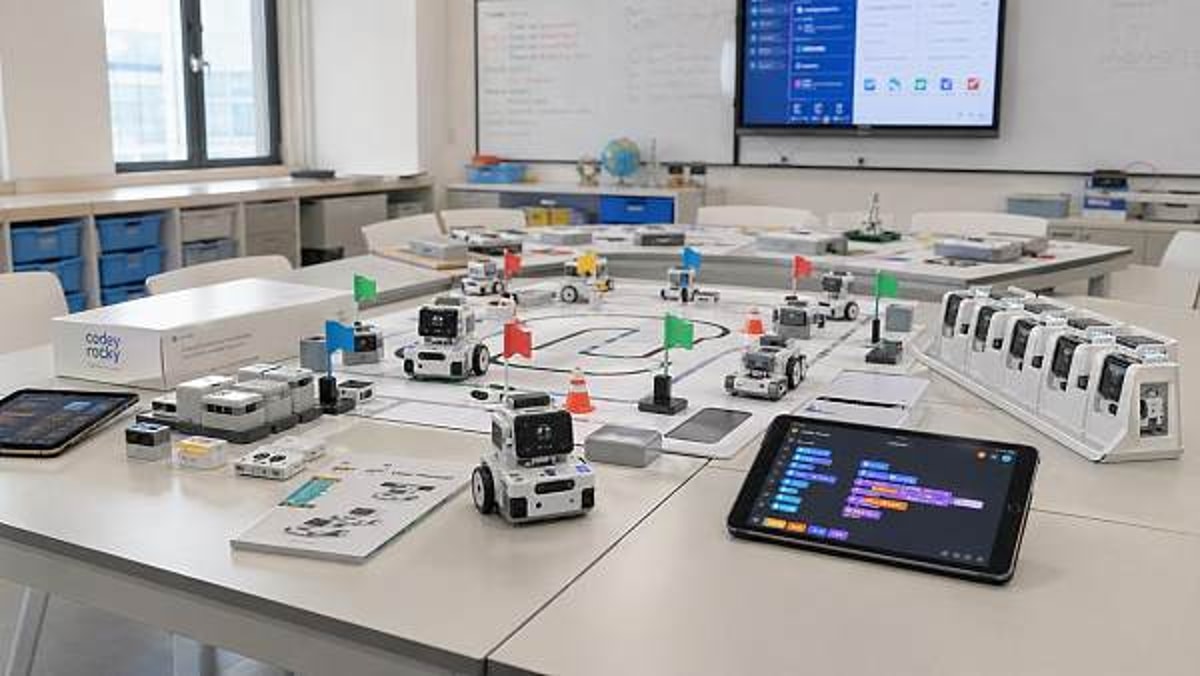
Several forces are pushing Educational robots beyond temporary popularity. The first is the broader demand for applied STEM learning. Many education systems want learners to move from passive content consumption to hands-on experimentation. Educational robots provide a visible way to connect coding, physical computing, mechanics, logic, and collaboration. Unlike purely screen-based tools, they create a feedback loop between digital instructions and physical outcomes, which is valuable in foundational and intermediate skill development.
The second driver is workforce signaling. Business leaders and policy stakeholders increasingly discuss future skills in terms of automation awareness, computational thinking, data literacy, and problem-solving. Educational robots align with that direction because they introduce system thinking early. Even when students do not become robotics engineers, they gain exposure to sequencing, troubleshooting, iteration, and team-based execution. For institutions and suppliers, that makes the category easier to justify in strategic rather than purely experimental terms.
A third factor is product evolution. Earlier classroom robots often suffered from weak software ecosystems, limited lesson integration, or fragile components. Newer solutions in the market tend to offer modular sensors, app-based programming interfaces, cloud-linked content updates, and flexible difficulty levels. While quality still varies by vendor, the category as a whole is becoming more deployment-ready. That makes Educational robots more attractive for structured procurement, especially where buyers compare total cost of use over 12, 24, or 36 months.
Main drivers and what they mean for commercial stakeholders
The table below summarizes the main forces shaping the Educational robots market and the practical implications for manufacturers, distributors, and institutional buyers.
The important takeaway is that Educational robots are being pulled forward by both pedagogical and commercial forces. Interest is not sustained by visual appeal alone. It is sustained when a solution can combine engagement, curriculum fit, and manageable ownership demands. For B2B stakeholders, that creates a more serious and potentially more stable market, but also a more demanding one.
A practical trend to watch
One practical trend is the move from one-off kits toward ecosystem bundles. Buyers increasingly prefer a package that includes hardware, lesson resources, software access, charging options, replacement parts, and onboarding support. In a competitive bidding environment, that bundled approach often matters more than adding another isolated feature.
Where Educational robots create lasting value and where they still struggle
The strongest case for Educational robots appears in settings where active learning is already valued and where teachers receive structured implementation support. In these environments, robots can increase participation, make abstract concepts more concrete, and create collaborative tasks that are easier to observe and assess. For younger learners, simple robots can develop sequencing and logic. For older learners, more advanced systems can support coding, sensor integration, and engineering design challenges.
However, value is not automatic. Educational robots often underperform when they are introduced without curriculum mapping, when only a small number of teachers are trained, or when devices are too complex for the target age group. A school may purchase 30 units, but if setup takes 15 minutes per session and troubleshooting consumes another 10, classroom efficiency drops quickly. The result is a predictable pattern: enthusiasm in month 1, limited use by month 6, and uncertain renewal by the end of year 1.
For decision-makers, the right question is therefore not “Do Educational robots work?” but “Under which conditions do they work consistently?” Lasting value usually depends on four variables: age fit, lesson integration, teacher confidence, and total support model. If one of these is missing, outcomes become uneven. That is why the most sustainable products are not always the most technically advanced. They are often the ones that reduce friction in daily use.
From novelty factor to operational value
The comparison below highlights how Educational robots are judged differently as the market matures.
This distinction is especially important for exporters and solution providers addressing institutional buyers. Demonstration success is useful, but not sufficient. The commercial winners in Educational robots will be those that reduce deployment risk and help customers move from isolated excitement to repeatable classroom practice.
Typical friction points in adoption
- Mismatch between robot complexity and student age band.
- Insufficient teacher support after the first training session.
- Limited replacement parts or slow service response times.
- Software updates that disrupt existing lesson plans or device compatibility.
These issues are not reasons to reject Educational robots, but they are reasons to evaluate them with more discipline. In many cases, the category delivers value when implementation design is as strong as the product itself.
How different stakeholders are affected across the supply chain
The rising importance of Educational robots affects more than schools. It also influences product sourcing strategies, localization needs, training service models, and content partnerships. For manufacturers, the challenge is balancing innovation with robustness. For distributors, the challenge is selecting products that can be supported locally. For trade platforms and B2B intelligence providers, the challenge is helping buyers compare signals across regions, product types, and adoption stages.
Regional differences also matter. In some markets, robotics demand is driven by formal curriculum reform. In others, after-school learning centers and private education providers play a larger role. This means the same Educational robots may need different positioning, language support, or training materials depending on the destination market. A product with strong demand in one channel may face slower uptake in another unless the offering is adapted.
For enterprise buyers and channel partners, timing is increasingly important. A district-level rollout may require a 3- to 6-month evaluation process, while enrichment centers may make decisions within 4 to 8 weeks. Understanding these cycles helps suppliers plan inventory, demonstrations, pricing strategy, and after-sales capacity more effectively.
Impact by stakeholder group
The following table outlines how the current Educational robots trend affects different participants in the ecosystem.
This broader ecosystem view explains why Educational robots have become a strategic category rather than a niche talking point. The products themselves matter, but so do distribution readiness, service expectations, and information transparency. In a global trade environment, these supporting factors often determine whether demand can scale sustainably.
Signals worth monitoring over the next 12 to 24 months
- Whether buyers increasingly request bundled content and support instead of hardware-only quotations.
- Whether procurement documents emphasize interoperability, battery handling, and classroom fleet management.
- Whether vocational and middle-school programs become stronger growth channels than one-time enrichment purchases.
- Whether suppliers can shorten onboarding time without weakening educational depth.
For decision-makers, these signals provide a more reliable basis for judgment than short-term publicity. They indicate whether Educational robots are becoming embedded in real institutional workflows.
What enterprise decision-makers should evaluate before committing
Business leaders considering Educational robots as part of a product portfolio, sourcing plan, or channel strategy should treat the category with the same discipline used for other technology-enabled learning solutions. The first step is to define the intended use case clearly. Is the goal introductory coding, cross-curricular engagement, engineering pathways, or enrichment revenue? A robot that performs well in one scenario may be inefficient in another. Clear use-case definition reduces the risk of overbuying features or underestimating support needs.
The second step is to evaluate total operational fit. This includes charging logistics, software update method, language support, storage requirements, replacement part access, and the average time required to prepare devices for the next class. In many deployments, these practical factors matter more than raw specifications. If the ownership model is too demanding, usage rates can fall below expectations within one or two terms.
The third step is to assess evidence of repeatable use. That does not require exaggerated claims or unrealistic performance promises. It requires reasonable indicators such as lesson breadth, age progression, teacher usability, and sustainability over a 12-month cycle. For buyers, the strongest Educational robots are often those that combine moderate technical capability with low friction and dependable support.
A practical evaluation checklist
- Confirm target learner age range and whether the interface matches that developmental stage.
- Check if lesson resources cover at least one semester or multiple difficulty levels.
- Review expected onboarding time for teachers and support staff.
- Clarify spare parts, software updates, and troubleshooting channels before purchase.
- Estimate total deployment timeline, which may range from 2 to 12 weeks depending on scale and training needs.
- Ask whether the solution supports pilot-to-scale transition without a complete platform change.
Why information quality now matters more
As the Educational robots segment becomes more competitive, decision quality depends heavily on access to credible market intelligence. Buyers are no longer choosing between robotics and no robotics. They are choosing among formats, ecosystems, sourcing partners, and support models. That is where industry intelligence platforms play a meaningful role: they help businesses track product direction, supplier visibility, demand signals across regions, and emerging decision criteria in a fragmented global market.
For companies involved in international trade, timely visibility is especially valuable. A well-positioned supplier benefits not only from product relevance but also from discoverability, trust, and informed market context. In a sector where buyers are comparing long-term fit rather than just first impressions, credible exposure can directly influence shortlist quality and partnership opportunities.
How to respond to the trend and where to get support
The most balanced conclusion is that Educational robots are neither a passing classroom distraction nor an automatic success story. Their lasting value depends on how well they align with real educational goals, realistic deployment conditions, and sustainable commercial support. The trend is moving in a positive direction, but the market is also becoming less forgiving of weak implementation, thin documentation, or unsupported product claims.
For enterprise decision-makers, the priority is to judge the category through a business lens as well as a learning lens. Watch how Educational robots are being integrated, not just advertised. Focus on adoption signals over hype, operational design over feature lists, and channel readiness over short-term visibility. Organizations that make these distinctions early are better positioned to identify resilient opportunities in both supply and demand.
Why choose us? GTIIN and TradeVantage help global exporters, importers, and industry participants interpret fast-moving sectors with practical market intelligence, high-visibility content exposure, and decision-oriented trend analysis. If you need support evaluating the Educational robots market, you can contact us to discuss supplier positioning, product selection direction, delivery cycle expectations, localization considerations, quotation communication, or how current market signals may affect your international business strategy.
Recommended News
 Medical diagnostic equipment buying mistakes often start with workflowMedical diagnostic equipment buying mistakes often begin with workflow gaps. Learn how to compare systems, uncover hidden costs, and choose suppliers that fit real clinical operations.
 Interactive whiteboards are improving, but teacher adoption is unevenInteractive whiteboards are improving fast, but teacher adoption remains uneven. Explore what drives classroom success, ROI, and smarter edtech implementation.
 Portable oxygen concentrators: what noise levels feel acceptable?Portable oxygen concentrators: discover what noise levels feel acceptable for sleep, travel, work, and home use, with practical guidance to choose a quieter, more comfortable model.
 Car electronics failures often start with power instabilityCar electronics issues often begin with hidden power instability. Learn how voltage drops, ripple, and weak grounds cause faults—and how smarter diagnostics cut repair time and repeat failures.
 Telemedicine hardware works best when setup friction is lowTelemedicine hardware works best with low setup friction. Discover how faster deployment, easier operation, and scenario-based selection improve care efficiency and service quality.
 Are light-weighting vehicle materials worth the repair tradeoff?Light-weighting vehicle materials: Are efficiency gains worth higher repair costs? Explore lifecycle impact, EV value, downtime risks, and smarter sourcing decisions.
 Educational robots in class: novelty or lasting value?Educational robots are moving beyond classroom novelty. Discover how they create lasting value through STEM learning, scalability, and smarter school purchasing decisions.
 Biodegradable plastics fail when disposal assumptions are wrongBiodegradable plastics can fail when real disposal systems do not match design assumptions. Learn the compliance, contamination, and claim risks before they damage trust.
 Office stationery wholesale margins depend on boring detailsOffice stationery wholesale margins are won in the details—packaging, MOQ, freight, and SKU rotation. Learn how distributors protect profit and reduce hidden cost leakage.
 Carbon capture materials are improving, but durability still mattersCarbon capture materials are improving, but durability still decides ROI. Explore cycle stability, regeneration resilience, and supplier evaluation factors for reliable industrial deployment.
 Which graphene applications in industry are moving beyond pilots?Graphene applications in industry are moving beyond pilots fastest in coatings, composites, thermal management, sensors, and energy storage. See where commercialization is gaining traction.
 Precision farming drones need better data, not just better flight timePrecision farming drones deliver more value through accurate maps, crop insights, and faster decisions than longer flight time alone. See how better data improves farm efficiency.
 Smart classroom solutions often disappoint for one simple reasonSmart classroom solutions often fail when complexity is ignored. Discover how project leaders can improve adoption, scalability, ROI, and long-term classroom performance.
 Organic fertilizers: when higher cost brings better soil resultsOrganic fertilizers may cost more, but they can improve soil structure, moisture retention, and long-term plant health. Learn when the higher price delivers better garden results.
 Agri-PV systems can raise land efficiency, but not everywhereAgri-PV systems can improve land efficiency, but only in the right conditions. Explore where they work, key risks, and how to evaluate profitable deployment.
 Smart home devices wholesale gets risky when standards do not matchSmart home devices wholesale becomes risky when standards, protocols, and certifications do not align. Learn how to reduce sourcing errors, control costs, and protect buyer trust.
 Wearable technology users quit when comfort is overlookedWearable technology users quit when comfort is ignored. Discover the checklist for fit, weight, skin safety, and long-term wear to choose devices that improve adoption and user satisfaction.
 Next-gen wireless charging still faces a heat management gapNext-gen wireless charging still faces a critical heat management gap. Explore how thermal risks affect efficiency, safety, lifecycle, and product readiness.
 Foldable screen technology looks mature until repair costs appearFoldable screen technology looks premium and practical, but are repair costs too high? Discover the real tradeoff between innovation, durability, and long-term value before you buy.
 Plant-based protein processing bottlenecks start after extractionPlant-based protein processing bottlenecks often begin after extraction. Discover downstream risks, supplier evaluation tips, and cost-saving insights for better sourcing decisions.
 Photovoltaic solar panels lose value when degradation is underestimatedPhotovoltaic solar panels can lose value fast when degradation is underestimated. Learn how realistic modeling protects ROI, asset valuation, and smarter solar investment decisions.












Popular Tags
Global Trade Insights & Industry
Our mission is to empower global exporters and importers with data-driven insights that foster strategic growth.
Search News
Popular Tags
Industry Overview
The global commercial kitchen equipment market is projected to reach $112 billion by 2027. Driven by urbanization, the rise of e-commerce food delivery, and strict hygiene regulations.