

Office stationery wholesale margins depend on boring details
In Office stationery wholesale, margins rarely disappear because of headline costs alone—they leak through packaging specs, order minimums, freight terms, replenishment timing, and slow-moving SKUs. For distributors, agents, and resellers, mastering these overlooked details is often the difference between stable profit and constant price pressure. This article explores the practical factors that quietly shape margin performance in a competitive wholesale market.
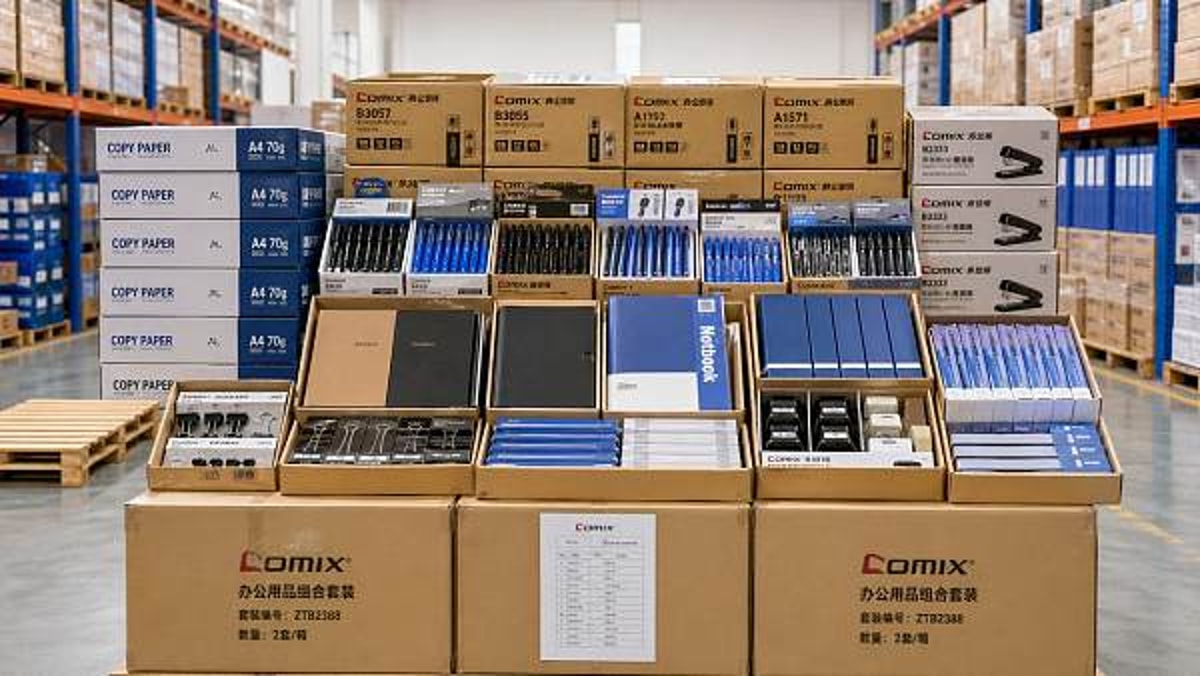
For B2B buyers, the category often looks simple from the outside: pens, notebooks, folders, copy paper, staplers, and desk essentials. Yet wholesale profitability is usually determined by operational details that sit between factory quotes and final sell-through. A distributor may negotiate a 3% lower unit price, then lose 5% through inefficient carton dimensions, mixed-SKU replenishment, damaged packaging, or poor inventory rotation.
That is why Office stationery wholesale deserves the same disciplined analysis applied to larger industrial categories. Margin control depends on specification management, supply chain visibility, purchase planning, and channel fit. For trade-focused businesses using market intelligence platforms such as GTIIN and TradeVantage, the opportunity is not only to source better, but also to identify where hidden cost leakage is most likely to occur across regions, customer segments, and product mixes.
Why “small” specification choices have oversized impact on margin
In Office stationery wholesale, specification drift is one of the most common reasons margin forecasts fail. A ballpoint pen may look interchangeable across suppliers, but differences in writing length, barrel material, clip strength, ink refill type, and blister versus bulk packing can alter landed cost by 4%–12%. The issue becomes larger when the buyer manages 50 to 200 SKUs and replenishes monthly.
Packaging is especially important because stationery products are low to medium value per cubic meter. A carton that is only 8% less space-efficient can raise ocean freight allocation per unit far more than expected. For regional distributors moving mixed loads, inner box counts such as 12, 24, or 48 pieces also affect warehouse handling speed, shelf replenishment, and break-pack labor.
Where specification errors usually start
The first error is buying from sample approval rather than from a locked specification sheet. A sample may pass visual inspection, but if the production version uses lighter paper weight, weaker adhesive, or thinner poly material, return rates can rise quietly over a 60 to 90 day period. The second error is ignoring retail presentation needs, particularly for agents supplying modern trade or office supply chains.
The third error is approving attractive MOQs without calculating true assortment efficiency. A low MOQ of 500 pieces sounds flexible, but if the assortment creates too many low-velocity variants, inventory days can stretch from 45 to 90 days. In categories with frequent reorders, that working capital drag can erase the advantage of a lower initial purchase threshold.
Checklist for specification discipline
- Define unit, inner pack, master carton, and pallet quantities before price comparison.
- Record material and performance basics, such as gsm for notebooks, sheet brightness for copy paper, or writing distance for pens.
- Set an acceptable tolerance range for dimensions, color variance, and print placement.
- Confirm whether products are bulk-packed, shelf-ready, or individually barcoded.
A disciplined buyer in Office stationery wholesale is not trying to overcomplicate simple items. The goal is to remove ambiguity before volume grows. Once monthly purchasing reaches even 1 to 2 containers or several thousand mixed cartons, small specification inconsistencies create a recurring margin drain that is difficult to reverse.
MOQ, carton logic, and freight terms: the hidden math behind landed cost
Most margin discussions begin with FOB price, but landed cost is often shaped more by MOQ structure and shipping logic than by the headline quote. In Office stationery wholesale, products like file folders, binders, and desk organizers are often volumetric. Others, such as metal staplers or paper clips, are compact but heavier. Mixing the two efficiently can reduce freight cost per sellable unit by a meaningful margin.
The commercial terms matter as well. FOB may suit experienced importers that can consolidate orders from 3 to 5 factories, while CIF may be more practical for smaller distributors that do not yet control freight bookings at scale. The problem arises when buyers compare supplier offers without normalizing all cost components, including inland transport, documentation, palletization, and destination handling fees.
A practical landed cost comparison
The table below shows how common buying structures influence effective cost in Office stationery wholesale. The numbers are directional and intended for evaluation logic rather than fixed market pricing.
The key takeaway is that the lowest unit price rarely equals the strongest gross margin. Buyers should model at least 4 cost layers: ex-factory price, packaging effect on cubic volume, freight allocation, and expected inventory holding time. A quote that is 2% higher at source can still produce a better result if it reduces damage, picking time, or stock aging.
Questions to ask before confirming freight terms
- Can the supplier optimize carton dimensions without increasing damage risk?
- Is the MOQ based on production efficiency, raw material minimums, or sales policy?
- Can multiple stationery SKUs be consolidated into one shipment window of 7–10 days?
- Are destination charges predictable, or do they fluctuate by port and season?
For importers and agents, these questions are not administrative details. They are margin tools. Better freight logic in Office stationery wholesale can improve competitiveness without forcing the sales team into constant discounting.
Inventory rotation and replenishment timing decide who keeps the profit
A distributor can buy well and still underperform if replenishment timing is weak. Office stationery wholesale includes fast-moving core lines and highly uneven secondary items. Black pens, A4 copy paper, and standard notebooks may rotate every 15 to 30 days. Specialty organizers, premium gift sets, or novelty desk accessories may sit for 90 to 180 days. Mixing them under one replenishment rule is a costly mistake.
The first objective is to segment SKUs by velocity, not just by supplier. A simple A-B-C framework is enough for many businesses. A-items can be reviewed weekly, B-items every 2 weeks, and C-items monthly. This does not require advanced software at the beginning, but it does require disciplined sell-through monitoring at the channel level.
A practical SKU rotation model
The following table outlines a practical way for distributors and resellers to manage stationery inventory by turnover pattern.
This model matters because inventory costs are not only financial. Slow-moving SKUs consume warehouse slots, picking labor, sales attention, and often credit capacity. In Office stationery wholesale, where many items have modest ticket value, the indirect cost of aged stock can exceed the apparent gross profit of carrying a wide assortment.
Common replenishment mistakes
- Buying seasonal back-to-school lines too early and holding them for 4 to 6 months.
- Reordering based on supplier promotions rather than customer depletion rates.
- Keeping low-volume color variants because they complete the catalog, even when sell-through is under 1 unit per branch per week.
- Failing to account for 30–45 day lead times when ordering imported paper and filing products.
Distributors that monitor weekly sales signals, incoming shipment timing, and channel-specific demand patterns tend to hold margin more consistently. For companies following cross-border supply movements through GTIIN and TradeVantage, this also means reacting earlier to regional demand shifts, shipping delays, and sourcing changes before those issues show up in gross profit reports.
Product mix, channel fit, and the real cost of slow-moving stationery
Not every stationery item belongs in every channel. Office stationery wholesale often fails when buyers pursue assortment breadth without clarifying where each SKU will sell. A corporate procurement channel may prioritize standardization, refill compatibility, and contract pricing. An independent retail network may need attractive packaging, lower pack sizes, and more color variety. Selling the wrong mix into the wrong channel creates silent margin erosion.
The hidden cost of a slow mover is larger than its carrying value. If a $1.20 landed item stays unsold for 120 days, the business loses more than storage space. It may also trigger promotional markdowns, fragmented replenishment, and additional sales effort. When slow SKUs represent even 15%–20% of an assortment, they can distort the purchasing profile of the entire category.
How channel fit should guide assortment
A resilient Office stationery wholesale strategy typically groups products into core staples, margin enhancers, and tactical items. Core staples drive regular turnover. Margin enhancers include better-finish notebooks, desk accessories, or presentation products with stronger unit economics. Tactical items may support seasonal campaigns, tenders, or client-specific requests but should be tightly controlled.
Buyers should review at least 5 decision points before expanding a stationery assortment: reorder frequency, packaging suitability, shelf or catalog presentation, customer replacement behavior, and cross-selling potential. In many cases, cutting 10 weak SKUs can improve service level on 20 stronger lines and release working capital for faster-selling stock.
Red flags that a SKU is hurting margin
- It requires repeated discounting after 60 days in stock.
- It sells only when bundled with a better-performing item.
- Its packaging creates higher damage or repacking labor.
- Its reorder quantity exceeds realistic 90-day demand.
- It adds complexity but contributes less than 3% of category sales.
For resellers and agents, this is where market intelligence becomes commercially useful. Trade-focused data does not just help identify suppliers; it helps refine channel positioning. When importers understand how product preferences differ across institutions, resellers, e-commerce buyers, or contract office clients, they can stop treating all stationery demand as uniform and start protecting margin through smarter assortment design.
A practical buying framework for distributors, agents, and resellers
A strong Office stationery wholesale program does not rely on price negotiation alone. It requires a repeatable evaluation framework that can be used across suppliers, product families, and purchase cycles. The most effective teams review cost, sell-through, channel fit, and service reliability together rather than in separate departments. That creates faster purchasing decisions and fewer surprises after goods arrive.
The framework below is especially useful for companies sourcing across borders or managing mixed portfolios. It is designed to reduce avoidable margin leakage without slowing commercial activity.
Five-step margin control process
- Standardize specs: build one purchase sheet covering unit details, pack counts, labeling, and carton dimensions.
- Model landed cost: compare at least 3 scenarios using different MOQs, freight terms, and replenishment assumptions.
- Segment SKUs: classify fast, medium, and slow movers and align order quantities to 30, 60, or 90-day demand windows.
- Track post-arrival performance: review damage, pick accuracy, customer complaints, and sell-through within the first 2 to 4 weeks.
- Refine assortment quarterly: remove weak variants and reinvest in proven lines or better channel-specific packs.
Supplier and SKU evaluation matrix
The following matrix can help buyers compare offers without overemphasizing ex-factory price.
What this framework does well is force buyers to connect procurement choices to downstream outcomes. In Office stationery wholesale, the best margin is often the result of fewer assumptions and better process discipline. It is not glamorous, but it is scalable.
FAQ for trade buyers
How should a new distributor start building a stationery assortment?
Start with 20 to 30 core SKUs that cover daily-use demand, then expand only after 60 to 90 days of sales observation. Priority lines often include pens, notebooks, copy paper, files, markers, and desk basics. This reduces complexity and reveals which channels respond best.
What lead time is common in imported Office stationery wholesale?
A practical planning range is 30–45 days for production plus transit time, though this varies by product type, season, and consolidation method. Buyers should build a buffer for peak periods, especially before school or year-end procurement cycles.
How often should slow movers be reviewed?
A monthly review is usually enough, but any SKU with 90 days of low sell-through should trigger a decision: bundle it, discount it, replace it, or discontinue it. Carrying weak items too long makes future purchasing less accurate.
Office stationery wholesale rewards businesses that pay attention to the details many competitors ignore. Packaging specs, MOQ logic, freight structure, reorder timing, and assortment discipline each look minor in isolation. Together, they can determine whether a distributor protects margin, ties up cash in the wrong SKUs, or enters repeated price wars.
For distributors, agents, and resellers operating across changing supply conditions, better information is a commercial advantage. GTIIN and TradeVantage help international trade companies follow market shifts, sourcing signals, and category trends that support sharper buying decisions and stronger channel positioning. If you want to refine your Office stationery wholesale strategy, reduce hidden cost leakage, and build a more resilient product portfolio, contact us to explore tailored market insight and visibility solutions.
Recommended News
 Medical diagnostic equipment buying mistakes often start with workflowMedical diagnostic equipment buying mistakes often begin with workflow gaps. Learn how to compare systems, uncover hidden costs, and choose suppliers that fit real clinical operations.
 Interactive whiteboards are improving, but teacher adoption is unevenInteractive whiteboards are improving fast, but teacher adoption remains uneven. Explore what drives classroom success, ROI, and smarter edtech implementation.
 Portable oxygen concentrators: what noise levels feel acceptable?Portable oxygen concentrators: discover what noise levels feel acceptable for sleep, travel, work, and home use, with practical guidance to choose a quieter, more comfortable model.
 Car electronics failures often start with power instabilityCar electronics issues often begin with hidden power instability. Learn how voltage drops, ripple, and weak grounds cause faults—and how smarter diagnostics cut repair time and repeat failures.
 Telemedicine hardware works best when setup friction is lowTelemedicine hardware works best with low setup friction. Discover how faster deployment, easier operation, and scenario-based selection improve care efficiency and service quality.
 Are light-weighting vehicle materials worth the repair tradeoff?Light-weighting vehicle materials: Are efficiency gains worth higher repair costs? Explore lifecycle impact, EV value, downtime risks, and smarter sourcing decisions.
 Educational robots in class: novelty or lasting value?Educational robots are moving beyond classroom novelty. Discover how they create lasting value through STEM learning, scalability, and smarter school purchasing decisions.
 Biodegradable plastics fail when disposal assumptions are wrongBiodegradable plastics can fail when real disposal systems do not match design assumptions. Learn the compliance, contamination, and claim risks before they damage trust.
 Office stationery wholesale margins depend on boring detailsOffice stationery wholesale margins are won in the details—packaging, MOQ, freight, and SKU rotation. Learn how distributors protect profit and reduce hidden cost leakage.
 Carbon capture materials are improving, but durability still mattersCarbon capture materials are improving, but durability still decides ROI. Explore cycle stability, regeneration resilience, and supplier evaluation factors for reliable industrial deployment.
 Which graphene applications in industry are moving beyond pilots?Graphene applications in industry are moving beyond pilots fastest in coatings, composites, thermal management, sensors, and energy storage. See where commercialization is gaining traction.
 Precision farming drones need better data, not just better flight timePrecision farming drones deliver more value through accurate maps, crop insights, and faster decisions than longer flight time alone. See how better data improves farm efficiency.
 Smart classroom solutions often disappoint for one simple reasonSmart classroom solutions often fail when complexity is ignored. Discover how project leaders can improve adoption, scalability, ROI, and long-term classroom performance.
 Organic fertilizers: when higher cost brings better soil resultsOrganic fertilizers may cost more, but they can improve soil structure, moisture retention, and long-term plant health. Learn when the higher price delivers better garden results.
 Agri-PV systems can raise land efficiency, but not everywhereAgri-PV systems can improve land efficiency, but only in the right conditions. Explore where they work, key risks, and how to evaluate profitable deployment.
 Smart home devices wholesale gets risky when standards do not matchSmart home devices wholesale becomes risky when standards, protocols, and certifications do not align. Learn how to reduce sourcing errors, control costs, and protect buyer trust.
 Wearable technology users quit when comfort is overlookedWearable technology users quit when comfort is ignored. Discover the checklist for fit, weight, skin safety, and long-term wear to choose devices that improve adoption and user satisfaction.
 Next-gen wireless charging still faces a heat management gapNext-gen wireless charging still faces a critical heat management gap. Explore how thermal risks affect efficiency, safety, lifecycle, and product readiness.
 Foldable screen technology looks mature until repair costs appearFoldable screen technology looks premium and practical, but are repair costs too high? Discover the real tradeoff between innovation, durability, and long-term value before you buy.
 Plant-based protein processing bottlenecks start after extractionPlant-based protein processing bottlenecks often begin after extraction. Discover downstream risks, supplier evaluation tips, and cost-saving insights for better sourcing decisions.
 Photovoltaic solar panels lose value when degradation is underestimatedPhotovoltaic solar panels can lose value fast when degradation is underestimated. Learn how realistic modeling protects ROI, asset valuation, and smarter solar investment decisions.




















Popular Tags
Global Trade Insights & Industry
Our mission is to empower global exporters and importers with data-driven insights that foster strategic growth.
Search News
Popular Tags
Industry Overview
The global commercial kitchen equipment market is projected to reach $112 billion by 2027. Driven by urbanization, the rise of e-commerce food delivery, and strict hygiene regulations.