

2026 Bio-based Raw Material Supplier Guide Released
On April 28, 2026, the China National Light Industry Council (CNLIC) and SGS jointly released the 2026 Bio-based Raw Material Export Supplier White List (First Batch), marking a formal step toward standardized, verifiable sourcing of sustainable feedstocks for global supply chains. Apparel, personal care, and protective equipment manufacturers — particularly those serving EU and US markets — should monitor this development closely, as it directly affects supplier qualification, procurement efficiency, and compliance readiness.
Event Overview
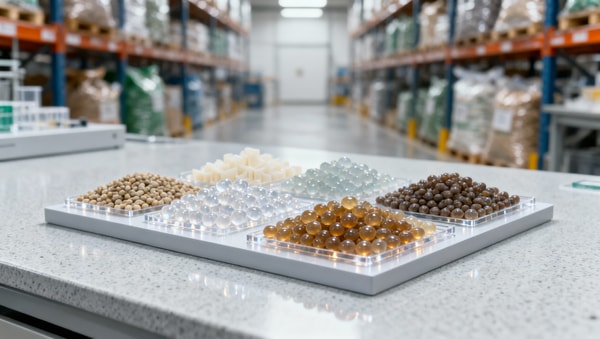
On April 28, 2026, the China National Light Industry Council and SGS published the 2026 Bio-based Raw Material Export Supplier White List (First Batch). The list covers eight material categories: polylactic acid (PLA), polyhydroxyalkanoates (PHA), bamboo fiber, algae extracts, and five others not specified in the source. To be included, suppliers must hold both ISO 16128 certification for bio-based content and EN 16785-1 certification for industrial compostability. The guide has been adopted as a preferred reference for green raw material procurement in the Asia-Pacific region by international fast-moving consumer goods (FMCG) brands including Van Wielink Group (Netherlands) and Method Products (USA).
Impact on Specific Industry Segments
Direct Exporters & Trading Enterprises
These enterprises are directly affected because inclusion in the White List serves as a pre-qualified benchmark for international buyers. Impact manifests in faster tender responses, reduced third-party verification requests from overseas clients, and potentially improved contract conversion rates — especially when bidding for sustainability-linked tenders in Europe and North America.
Raw Material Procurement Teams (Brand Owners & OEMs)
Procurement functions across eco-friendly fabrics, beauty devices, and personal protective equipment (PPE) sectors face streamlined vendor onboarding. The White List reduces due diligence time for bio-based inputs, as certified suppliers have already met two internationally recognized standards. This may accelerate new product launches tied to green claims or regulatory deadlines (e.g., EU Packaging and Packaging Waste Regulation).
Downstream Manufacturers (Converters & Assemblers)
Manufacturers integrating bio-based materials into finished goods benefit indirectly: upstream supply stability improves, and documentation traceability strengthens. However, they remain responsible for verifying chain-of-custody and final product compliance — the White List does not substitute for their own conformity assessments.
Supply Chain & Certification Service Providers
Third-party auditors, logistics partners specializing in temperature- or humidity-sensitive biopolymers, and documentation support firms may see increased demand for services aligned with ISO 16128 and EN 16785-1 requirements — particularly for exporters preparing for White List reapplication or expansion beyond the initial eight categories.
What Relevant Enterprises or Practitioners Should Focus On Now
Monitor official updates on White List expansion and revision cycles
The first batch covers only eight material types and is explicitly labeled “initial.” Analysis shows that future iterations may include additional feedstocks (e.g., cellulose acetate, lignin derivatives) or introduce tiered classifications (e.g., “verified,” “pre-qualified,” “under review”). Stakeholders should track CNLIC and SGS announcements for eligibility windows and evaluation timelines.
Prioritize alignment with the two mandatory certifications
Current eligibility hinges solely on ISO 16128 (bio-based carbon content) and EN 16785-1 (industrial compostability). From industry perspective, companies not yet holding both should assess technical feasibility and lead time for certification — especially if targeting contracts with Van Wielink, Method, or other early adopters naming the White List as a procurement criterion.
Distinguish between policy signal and operational requirement
Observably, the White List is not a regulatory mandate but a market-driven qualification tool. Its adoption by specific global brands makes it functionally binding for suppliers engaging those customers — yet it carries no legal force for non-participating buyers. Companies should map their customer portfolio against known adopters before reallocating internal resources.
Prepare documentation and communication protocols for downstream transparency
Suppliers on the list should proactively compile audit reports, test certificates, and batch-level declarations to support buyers’ sustainability reporting (e.g., EPDs, ESG disclosures). Current more suitable approach is to treat the White List as a credibility anchor — one that requires consistent evidence maintenance, not just one-time validation.
Editorial Perspective / Industry Observation
This release is better understood as a coordination mechanism than a regulatory milestone. Analysis shows it reflects growing alignment among Chinese industry associations, international certifiers, and global brand sustainability teams — not top-down regulation. It signals increasing standardization pressure on bio-based material supply chains, particularly at the interface between Asian producers and Western-facing brands. Observably, its influence will scale with adoption breadth: currently limited to select FMCG players, but functionally significant where applied. The White List’s real-world impact depends less on its publication and more on how consistently buyers enforce it in procurement RFPs and quality agreements.
Conclusion
While not legally binding, the 2026 White List introduces a de facto benchmark for supplier trustworthiness in key bio-based material categories. Its value lies in reducing verification friction — not eliminating due diligence. For stakeholders, it is best interpreted as an early indicator of tightening sustainability gatekeeping in global sourcing, rather than a standalone compliance endpoint.
Information Sources
Main source: Official announcement by China National Light Industry Council and SGS, issued April 28, 2026.
Note: Expansion scope, application frequency, and potential integration with national green procurement policies remain under observation and are not confirmed in current public information.
Recommended News
 CMDE Adds 74 External Experts to Boost Med Device Export RegistrationCMDE Adds 74 External Experts to Boost Med Device Export Registration — accelerate FDA/EU/GCC submissions for medical equipment & rehab devices.
 MIIT Launches Space-Ground Compute & Power CoordinationMIIT Launches Space-Ground Compute & Power Coordination—unlocking export opportunities in liquid cooling, optical modules & high-efficiency servers for hot-humid markets.
 2026 Bio-based Raw Material Supplier Guide Released2026 Bio-based Raw Material Supplier Guide: Discover the official White List for PLA, PHA, bamboo fiber & more — boost EU/US compliance and procurement efficiency now.
 China Launches 'Model-Data Resonance' Initiative for AI+Manufacturing StandardsChina's 'Model-Data Resonance' initiative launches AI+Manufacturing standards — CESI/AI-MFG-2026 ensures plug-and-play interoperability for CNC, AGVs, MES & more across global smart factories.
 China’s First Embodied AI Robot Export Liability Insurance Launched in GuangxiChina’s first Embodied AI Robot Export Liability Insurance launched in Guangxi—key for robot exporters targeting EU, US & Saudi markets. Secure compliance-backed coverage now.
 State Grid’s $680M Embodied AI Procurement Opens Export PathState Grid’s $680M embodied AI procurement sets global safety standards — IEC 62061 SIL2 & GB/T 38851 compliance unlocks EU/UK/NA export opportunities.
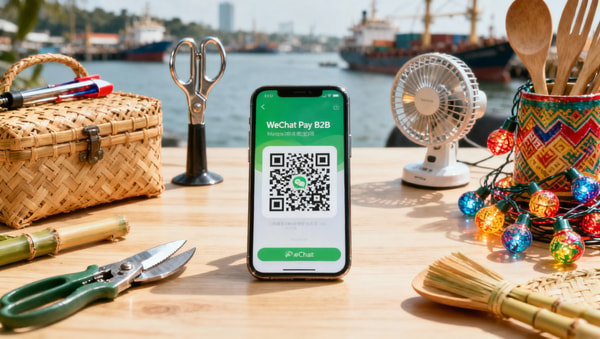
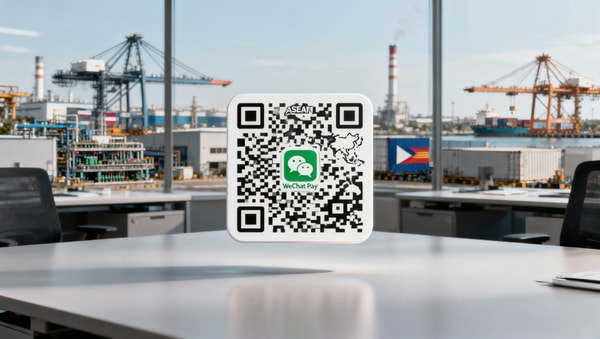
 WeChat Pay Cross-Border B2B QR Code Access in 5 ASEAN CountriesWeChat Pay Cross-Border B2B QR Code Access now live in 5 ASEAN countries — enabling real-time, local-currency settlements up to USD 50,000. Boost your hardware, garden & appliance exports today!
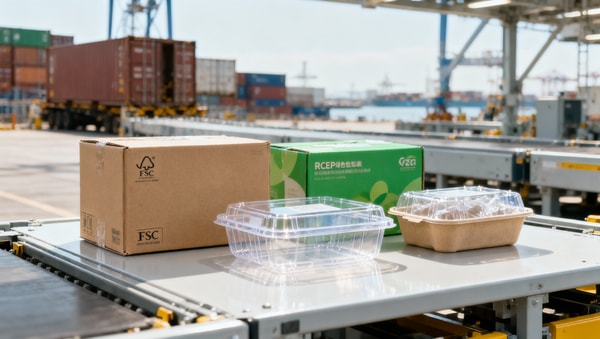
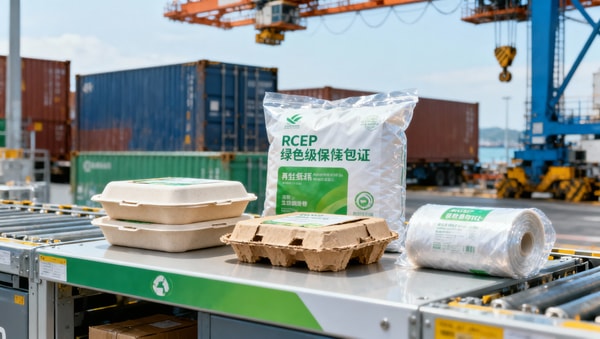
 RCEP Green Packaging Mutual Recognition Extended to AU, NZ, JP, KRRCEP Green Packaging Mutual Recognition now extends to AU, NZ, JP, KR — enabling customs-exempt clearance for certified Chinese food, infant & supplement packaging. Act now.
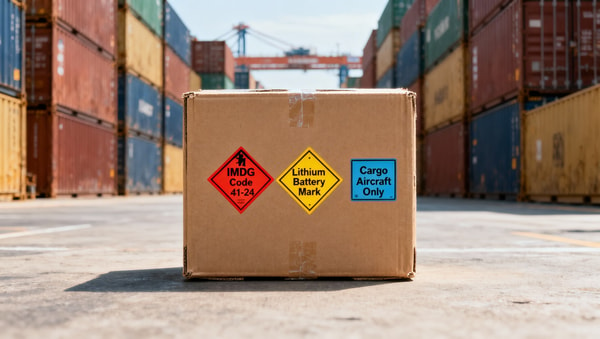
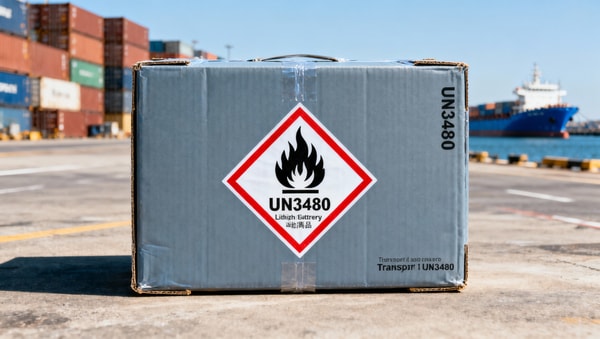
 IMDG Code 41-24 Enforces New UN3480 Lithium Battery Labels GloballyIMDG Code 41-24 mandates new UN3480 lithium battery labels globally from 1 May 2026—ensure compliance now to avoid shipment delays, rejections & penalties.
 CDE Adds 74 International Experts to Accelerate MedTech Export RegistrationCDE adds 74 international experts to accelerate MedTech export registration—key for IVD, imaging & rehab device exporters targeting FDA, EU MDR, Health Canada.
 MIIT Launches Space-Ground Computing & Green Data Center Export PlanMIIT's Space-Ground Computing & Green Data Center Export Plan unlocks global opportunities for liquid-cooled servers, PV direct-drive power, and satellite-ground scheduling—learn key impacts now.
 2026 Bio-based Raw Material Supplier Guide ReleasedBio-based raw material supplier guide 2026: Discover 47 ISO 16128-certified Chinese PLA, PBAT & PHA suppliers trusted by CBL, BPI & JIS.
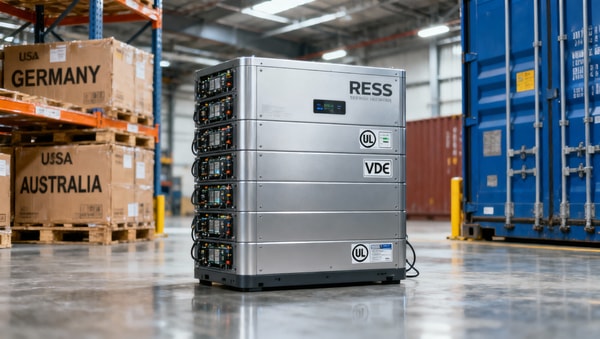
 Q1 2026 Lithium Battery Export Prices Rise 11.3% YoYQ1 2026 Lithium Battery Export Prices Rise 11.3% YoY — discover why residential energy storage systems (RESS) drove the surge and what it means for exporters, suppliers & integrators.
 ‘Modular-Data Resonance’ Initiative Launches AI+Manufacturing Interface StandardModular-Data Resonance standard GB/T 45288-2026 launches AI+manufacturing interoperability—key for smart equipment exporters, MES/SCADA & AI model developers targeting EU/US markets.
 China's First Embodied AI Robot Export Liability Insurance Launched in GuangxiChina's first Embodied AI Robot Export Liability Insurance launched in Guangxi—key for robotics exporters targeting EU & SEA markets. Get compliant, certified, and covered.
 State Grid Launches $682M Embodied AI Inspection Equipment ProcurementState Grid’s $940M embodied AI inspection tender mandates IEC 62443-4-2 & ISO 13482 certs—key for robotics makers and global compliance teams. Act now.
 WeChat Pay Cross-Border B2B QR Code Live in 5 ASEAN CountriesWeChat Pay Cross-Border B2B QR Code is now live in 5 ASEAN countries — enabling fast, low-cost, local-currency settlements for SMEs and trade firms. Discover how it cuts costs by 47% and accelerates procurement.
 RCEP Green Packaging Mutual Recognition Extended to AU, NZ, JP, KRRCEP Green Packaging Mutual Recognition now extends to AU, NZ, JP, KR — unlock faster customs clearance & zero on-site inspection for compliant Chinese food packaging exports.
 IMDG Code 41-24 Enforces UN3480 Lithium Battery Labeling GloballyIMDG Code 41-24 enforces global UN3480 lithium battery labeling, packaging & e-CMR rules from 1 May 2026—act now to avoid port rejections and delays.
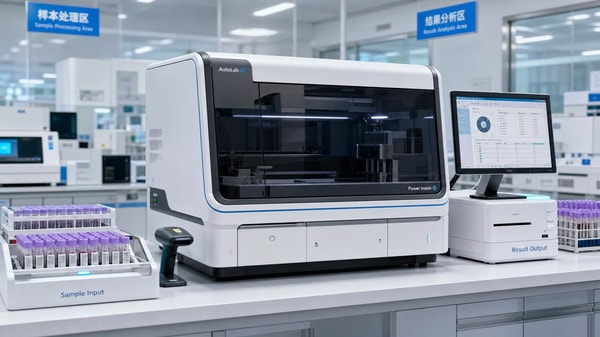
 Medical diagnostic equipment buying mistakes often start with workflowMedical diagnostic equipment buying mistakes often begin with workflow gaps. Learn how to compare systems, uncover hidden costs, and choose suppliers that fit real clinical operations.
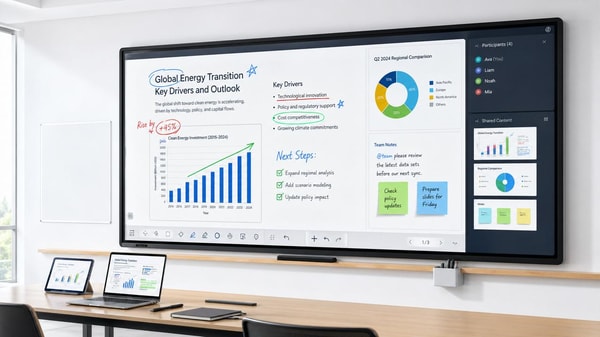
 Interactive whiteboards are improving, but teacher adoption is unevenInteractive whiteboards are improving fast, but teacher adoption remains uneven. Explore what drives classroom success, ROI, and smarter edtech implementation.










Popular Tags
Global Trade Insights & Industry
Our mission is to empower global exporters and importers with data-driven insights that foster strategic growth.
Search News
Popular Tags
Industry Overview
The global commercial kitchen equipment market is projected to reach $112 billion by 2027. Driven by urbanization, the rise of e-commerce food delivery, and strict hygiene regulations.