

EN 62368-1:2026 Mandatory from Oct 2026: Thermal Runaway Protection for Wearables & Smart Home Devices
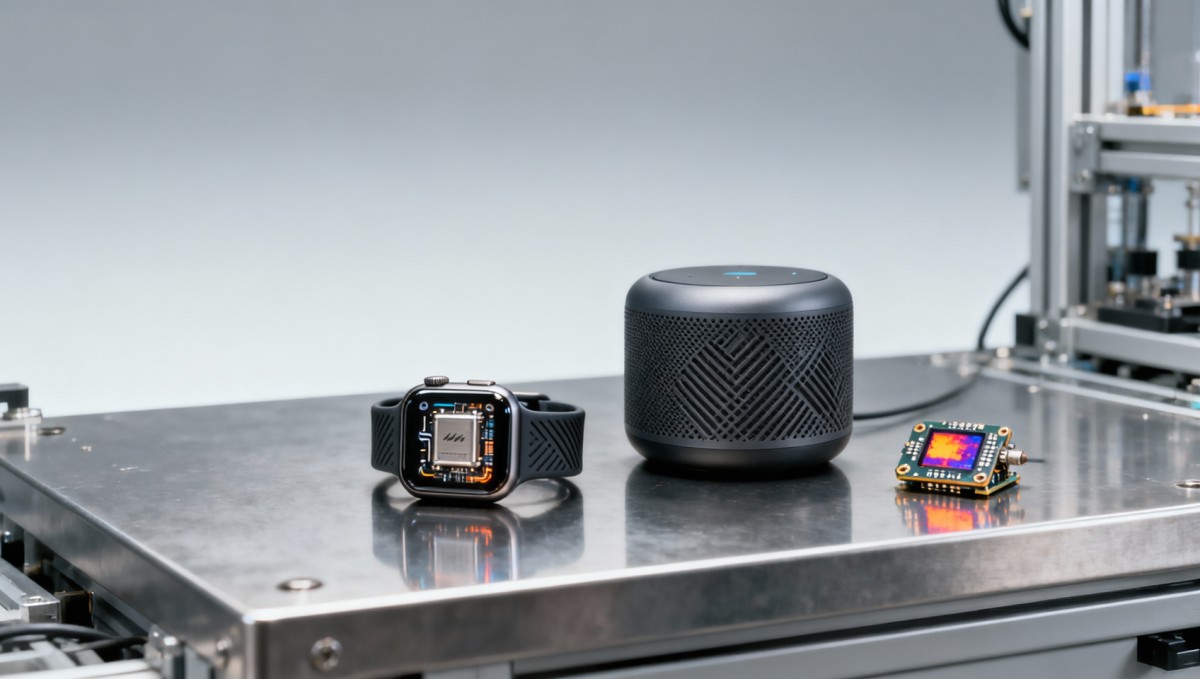
Effective 1 October 2026, the revised EN 62368-1:2026 standard — published by CENELEC on 29 April 2026 — introduces mandatory, system-level thermal runaway propagation testing for lithium-ion battery–powered consumer electronics. This update directly impacts manufacturers and exporters of wearables, smart home devices, and mobile accessories targeting the EU market.
Event Overview
CENELEC officially published EN 62368-1:2026 on 29 April 2026. The standard becomes mandatory for placing new products on the EU market as of 1 October 2026. It adds specific requirements for evaluating and mitigating thermal runaway propagation at the end-product level — applicable to all consumer electronic devices containing lithium batteries, including wearables, smart home appliances, and mobile accessories. Exporters based in China must complete CB certificate updates under the new edition by Q3 2026 to maintain market access.
Which Subsectors Are Affected
Direct Trading Enterprises (e.g., OEM/ODM Exporters)
These entities are directly responsible for CE marking compliance and CB certification. Non-compliant products cannot be legally placed on the EU market after 1 October 2026. Impact includes delayed shipments, potential customs rejection, and retesting costs if legacy certifications are not upgraded ahead of the deadline.
Manufacturing Enterprises (e.g., Electronics Assembly & Enclosure Suppliers)
Thermal runaway propagation testing is a whole-device requirement — meaning mechanical design, thermal management layout, cell spacing, barrier materials, and firmware-triggered shutdown logic may all require revision. Manufacturers must verify that final assembly configurations meet the new test criteria, not just individual components.
Supply Chain Service Providers (e.g., Certification Bodies, Lab Testing Partners)
Demand for EN 62368-1:2026-compliant testing is expected to rise significantly in H2 2026. Lead times for full-system thermal propagation tests — which involve controlled cell abuse and monitoring of adjacent cells/modules — may extend. Service providers need to confirm lab accreditation scope covers the updated Annex G (or equivalent) requirements.
What Relevant Enterprises or Practitioners Should Focus On — And How to Respond Now
Confirm CB Certificate Validity and Upgrade Timeline
Verify whether current CB certificates reference EN 62368-1:2017 or EN 62368-1:2020. Only certificates issued against EN 62368-1:2026 (or upgraded before 1 October 2026) remain valid for new product introductions. Plan for technical documentation updates and possible retesting no later than Q3 2026.
Review Product Architecture for Thermal Propagation Mitigation
Assess whether existing designs include features such as fire-retardant barriers between cells, thermal fuses with propagation-aware thresholds, or firmware-based overtemperature cutoffs that activate before adjacent cells reach critical temperature. Analysis shows these features are now subject to verification during whole-unit testing — not just component-level evaluation.
Engage Early with Accredited Labs on Test Scope and Capacity
Identify labs accredited for EN 62368-1:2026 Annex G (thermal runaway propagation) testing. Observably, not all labs currently offering EN 62368-1 testing have implemented this specific test method. Confirm test protocols, sample requirements, and typical turnaround time before initiating formal submissions.
Monitor Official Interpretations and Harmonized Standards Updates
While EN 62368-1:2026 is published, the European Commission’s Official Journal listing — which confers presumption of conformity under the Radio Equipment Directive (RED) and Low Voltage Directive (LVD) — remains pending. From industry perspective, this listing is required for full regulatory acceptance; its timing may affect enforcement practicality in early Q4 2026.
Editorial Perspective / Industry Observation
This revision is better understood as a regulatory signal — rather than an immediate operational shift — indicating the EU’s increasing emphasis on systemic battery safety beyond cell-level certification. Analysis shows the focus has shifted from ‘does the battery meet UN 38.3?’ to ‘does the entire device prevent cascading failure?’. It reflects evolving risk assessment frameworks in response to real-world incident data, particularly in compact, high-density wearable and IoT form factors. Current observability suggests enforcement will prioritize new product registrations first, with less scrutiny on existing stock — but proactive alignment remains essential given certification lead times.
It is not yet a finalized compliance endpoint: the absence of harmonized status in the Official Journal means conformity assessment bodies and market surveillance authorities may apply varying interpretations until formal listing occurs. Therefore, this development is best viewed as a staged transition — one requiring both technical preparation and ongoing policy tracking.
Conclusion
The EN 62368-1:2026 update marks a structural shift toward integrated thermal safety accountability in consumer electronics. Its significance lies not only in the new test requirement itself, but in how it redefines responsibility across the value chain — from cell suppliers to end-product integrators. For affected enterprises, this is less about passing a single test and more about embedding propagation-aware design and verification practices into development workflows. At present, the most appropriate interpretation is that this is a binding technical requirement with enforceable timelines — yet one whose practical implementation depends on parallel developments in official harmonization and lab readiness.
Information Sources
Primary source: CENELEC EN 62368-1:2026 standard document, published 29 April 2026.
Note: Harmonized status in the EU Official Journal has not yet been confirmed and remains under observation.
Recommended News
 MIIT Releases First List of Completed 10G-PON Pilot ProjectsMIIT Releases First List of Completed 10G-PON Pilot Projects — discover how XGS-PON, 25G WDM-PON chips and China’s 10G optical network pilots impact global export opportunities.
 Morocco: 4th Top African Recipient of EU Energy Aid, New Channel for Chinese PV & StorageMorocco: 4th top African recipient of EU energy aid (€4.1B) — unlocking new opportunities for Chinese PV modules, solar trackers, PV-storage cabinets & microgrid systems.
 MIIT Launches Space-Ground Computing Coordination PlanMIIT Launches Space-Ground Computing Coordination Plan — unlocking export opportunities for energy-efficient data center hardware in emerging markets.
 ADB Raises Vietnam’s 2026 GDP Forecast to 7.2% on China-Vietnam Supply Chain UpgradesADB raises Vietnam’s 2026 GDP forecast to 7.2% amid China-Vietnam supply chain upgrades in electronics, PV, and NEV sectors—key insight for global manufacturers and procurement teams.
 EN 62368-1:2026 Mandatory from Oct 2026: Thermal Runaway Protection for Wearables & Smart Home DevicesEN 62368-1:2026 mandates thermal runaway protection for wearables & smart home devices from Oct 2026 — act now to ensure EU market access, CB certification, and design compliance.
 UAE Emerges as Global AI Hub; Chinese AI Hardware Gains TractionUAE emerges as global AI hub—Chinese AI hardware from Shenzhen, Hangzhou & Suzhou gains traction in smart infrastructure, sandbox deployments & GCC market access.
 CMDE Adds 74 External Experts to Boost Med Device Export RegistrationCMDE Adds 74 External Experts to Boost Med Device Export Registration — accelerate FDA/EU/GCC submissions for medical equipment & rehab devices.
 MIIT Launches Space-Ground Compute & Power CoordinationMIIT Launches Space-Ground Compute & Power Coordination—unlocking export opportunities in liquid cooling, optical modules & high-efficiency servers for hot-humid markets.
 2026 Bio-based Raw Material Supplier Guide Released2026 Bio-based Raw Material Supplier Guide: Discover the official White List for PLA, PHA, bamboo fiber & more — boost EU/US compliance and procurement efficiency now.
 China Launches 'Model-Data Resonance' Initiative for AI+Manufacturing StandardsChina's 'Model-Data Resonance' initiative launches AI+Manufacturing standards — CESI/AI-MFG-2026 ensures plug-and-play interoperability for CNC, AGVs, MES & more across global smart factories.
 China’s First Embodied AI Robot Export Liability Insurance Launched in GuangxiChina’s first Embodied AI Robot Export Liability Insurance launched in Guangxi—key for robot exporters targeting EU, US & Saudi markets. Secure compliance-backed coverage now.
 State Grid’s $680M Embodied AI Procurement Opens Export PathState Grid’s $680M embodied AI procurement sets global safety standards — IEC 62061 SIL2 & GB/T 38851 compliance unlocks EU/UK/NA export opportunities.
 WeChat Pay Cross-Border B2B QR Code Access in 5 ASEAN CountriesWeChat Pay Cross-Border B2B QR Code Access now live in 5 ASEAN countries — enabling real-time, local-currency settlements up to USD 50,000. Boost your hardware, garden & appliance exports today!
 RCEP Green Packaging Mutual Recognition Extended to AU, NZ, JP, KRRCEP Green Packaging Mutual Recognition now extends to AU, NZ, JP, KR — enabling customs-exempt clearance for certified Chinese food, infant & supplement packaging. Act now.
 IMDG Code 41-24 Enforces New UN3480 Lithium Battery Labels GloballyIMDG Code 41-24 mandates new UN3480 lithium battery labels globally from 1 May 2026—ensure compliance now to avoid shipment delays, rejections & penalties.
 CDE Adds 74 International Experts to Accelerate MedTech Export RegistrationCDE adds 74 international experts to accelerate MedTech export registration—key for IVD, imaging & rehab device exporters targeting FDA, EU MDR, Health Canada.
 MIIT Launches Space-Ground Computing & Green Data Center Export PlanMIIT's Space-Ground Computing & Green Data Center Export Plan unlocks global opportunities for liquid-cooled servers, PV direct-drive power, and satellite-ground scheduling—learn key impacts now.
 2026 Bio-based Raw Material Supplier Guide ReleasedBio-based raw material supplier guide 2026: Discover 47 ISO 16128-certified Chinese PLA, PBAT & PHA suppliers trusted by CBL, BPI & JIS.
 Q1 2026 Lithium Battery Export Prices Rise 11.3% YoYQ1 2026 Lithium Battery Export Prices Rise 11.3% YoY — discover why residential energy storage systems (RESS) drove the surge and what it means for exporters, suppliers & integrators.
 ‘Modular-Data Resonance’ Initiative Launches AI+Manufacturing Interface StandardModular-Data Resonance standard GB/T 45288-2026 launches AI+manufacturing interoperability—key for smart equipment exporters, MES/SCADA & AI model developers targeting EU/US markets.
 China's First Embodied AI Robot Export Liability Insurance Launched in GuangxiChina's first Embodied AI Robot Export Liability Insurance launched in Guangxi—key for robotics exporters targeting EU & SEA markets. Get compliant, certified, and covered.


















Popular Tags
Global Trade Insights & Industry
Our mission is to empower global exporters and importers with data-driven insights that foster strategic growth.
Search News
Popular Tags
Industry Overview
The global commercial kitchen equipment market is projected to reach $112 billion by 2027. Driven by urbanization, the rise of e-commerce food delivery, and strict hygiene regulations.