

China’s First Embodied AI Robot Export Liability Insurance Launched in Guangxi
On April 27, 2026, PICC Property & Casualty Guangxi Branch issued the nation’s first dedicated export liability insurance policy for embodied intelligent robots — a milestone that directly impacts exporters of service, inspection, and medical-assist robots, as well as compliance officers, risk managers, and cross-border legal teams. This development signals an emerging layer of regulatory and financial infrastructure supporting China’s AI hardware exports, particularly into high-compliance markets such as the EU, U.S., and Saudi Arabia.
Event Overview
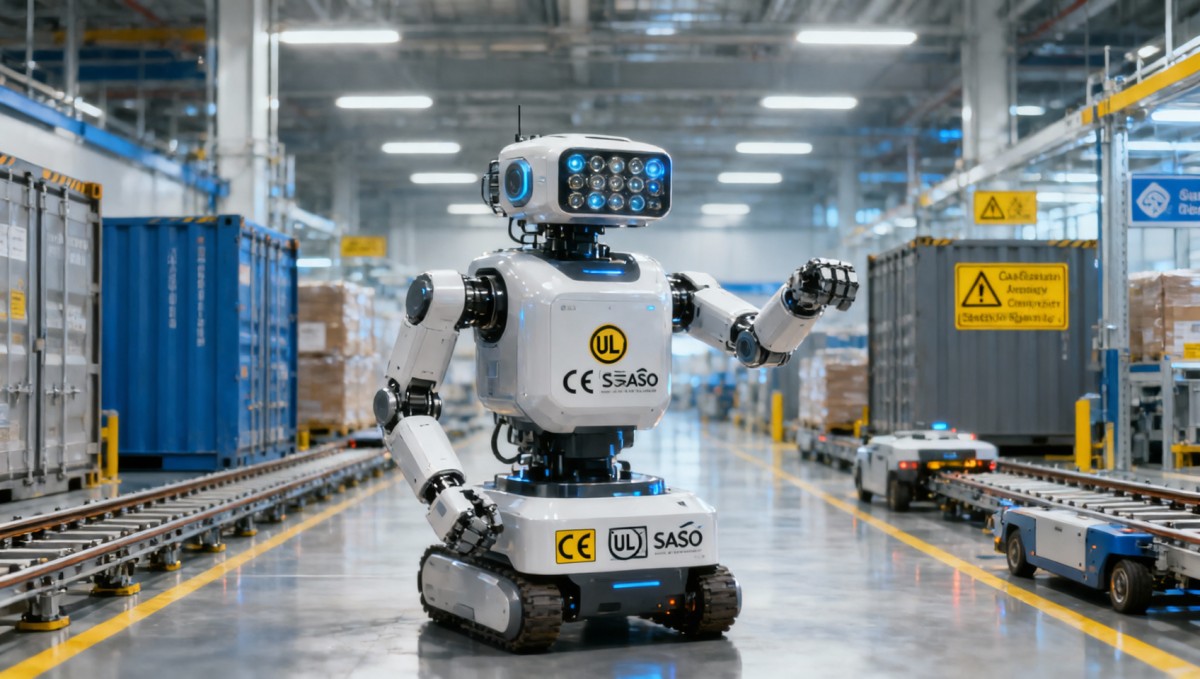
On April 27, 2026, PICC Property & Casualty Guangxi Branch signed the first national ‘Embodied Intelligent Robot Export Liability Insurance’ policy. The coverage explicitly addresses bodily injury and property damage arising from AI-driven decision errors during overseas use. It incorporates compliance requirements under three key regulatory frameworks: the EU AI Act (for high-risk AI systems), UL 3300 (U.S. safety standard for robots), and SASO robotics safety regulations (Saudi Arabia). No further details on premium structure, underwriting criteria, or claims process have been publicly disclosed.
Industries Affected by Segment
Direct Exporters of Service/Inspection/Medical Robots
These enterprises face heightened contractual and reputational exposure when selling AI-integrated robots abroad. The new insurance product provides a verifiable third-party risk mitigation instrument — potentially easing buyer due diligence and enabling faster contract closure. Impact manifests in tender requirements, warranty terms, and post-sale liability allocation in international sales agreements.
Contract Manufacturers and OEMs Supplying AI Robot Subsystems
OEMs supplying perception modules, motion control units, or embedded AI stacks may be indirectly referenced in downstream liability clauses. While not direct policyholders, their component-level compliance (e.g., adherence to UL 3300 test protocols or EU AI Act documentation standards) becomes more material to end-product certification and insurability. This increases scrutiny on technical documentation traceability and firmware update governance.
Export Compliance Officers and Cross-Border Legal Teams
Compliance functions must now integrate insurance-readiness into pre-shipment workflows. Coverage scope — especially its alignment with EU AI Act high-risk categorization and UL 3300 conformance — implies that technical files, risk assessments, and human oversight mechanisms must meet insurer-defined benchmarks. This adds a new checkpoint beyond statutory conformity assessment.
What Relevant Enterprises or Practitioners Should Monitor and Do Now
Track insurer-specific underwriting guidelines as they emerge
Analysis shows that this is a pilot product; PICC has not yet published standardized underwriting criteria. Exporters should monitor official announcements from PICC Guangxi and related industry bulletins for eligibility thresholds — e.g., required AI validation reports, minimum cybersecurity controls, or mandatory human-in-the-loop design documentation.
Assess exposure in priority markets: EU, U.S., and Saudi Arabia
Observably, the policy explicitly references EU AI Act, UL 3300, and SASO — indicating these jurisdictions are initial focus areas. Companies targeting other markets (e.g., Japan, ASEAN, or Brazil) should not assume automatic applicability. Current coverage appears calibrated to regulatory regimes with codified AI risk classification and robot safety standards.
Distinguish between regulatory compliance and insurability
From industry perspective, CE marking or UL listing alone does not guarantee eligibility. Insurers may impose additional conditions — such as incident reporting SLAs, audit rights, or restrictions on autonomous operation modes. Firms should avoid conflating regulatory approval with insurance readiness in internal risk planning.
Prepare technical documentation for potential insurer review
Current more suitable action is to consolidate existing AI system documentation — including risk assessments, failure mode analyses, human oversight logs, and validation test reports — ahead of formal engagement with insurers. Early alignment reduces friction during underwriting and supports faster policy issuance.
Editorial Perspective / Industry Observation
This policy is best understood as an early-stage market signal — not yet a scalable solution. Analysis shows it fills a documented gap in China’s export risk management toolkit, but remains a single insurer’s initiative with unconfirmed scalability or inter-insurer recognition. Observably, its significance lies less in immediate uptake and more in validating demand for AI-specific liability instruments among Chinese hardware exporters. From industry angle, it reflects growing pressure on manufacturers to demonstrate not just functional safety, but algorithmic accountability across global markets — a trend likely to accelerate as AI regulation matures.
It is not yet evidence of systemic insurance infrastructure for AI hardware. Rather, it marks the beginning of a necessary alignment between product compliance, commercial risk transfer, and evolving regulatory expectations.
Conclusion
This initiative represents a targeted, jurisdiction-specific step toward mitigating AI-related export liability — not a comprehensive risk solution. Its current value is procedural: it introduces a formal mechanism linking technical compliance, regulatory alignment, and third-party financial backing. For industry stakeholders, it is more meaningfully interpreted as a prompt to audit AI documentation rigor, clarify liability boundaries in international contracts, and anticipate tighter integration between compliance and insurance functions — rather than as an immediate operational fix.
Information Sources
Main source: Official announcement by PICC Property & Casualty Guangxi Branch (April 27, 2026). No secondary data sources or policy documents have been released. Ongoing observation is warranted regarding underwriting criteria, geographic expansion, and adoption by other insurers or export platforms.
Recommended News
 CMDE Adds 74 External Experts to Boost Med Device Export RegistrationCMDE Adds 74 External Experts to Boost Med Device Export Registration — accelerate FDA/EU/GCC submissions for medical equipment & rehab devices.
 MIIT Launches Space-Ground Compute & Power CoordinationMIIT Launches Space-Ground Compute & Power Coordination—unlocking export opportunities in liquid cooling, optical modules & high-efficiency servers for hot-humid markets.
 2026 Bio-based Raw Material Supplier Guide Released2026 Bio-based Raw Material Supplier Guide: Discover the official White List for PLA, PHA, bamboo fiber & more — boost EU/US compliance and procurement efficiency now.
 China Launches 'Model-Data Resonance' Initiative for AI+Manufacturing StandardsChina's 'Model-Data Resonance' initiative launches AI+Manufacturing standards — CESI/AI-MFG-2026 ensures plug-and-play interoperability for CNC, AGVs, MES & more across global smart factories.
 China’s First Embodied AI Robot Export Liability Insurance Launched in GuangxiChina’s first Embodied AI Robot Export Liability Insurance launched in Guangxi—key for robot exporters targeting EU, US & Saudi markets. Secure compliance-backed coverage now.
 State Grid’s $680M Embodied AI Procurement Opens Export PathState Grid’s $680M embodied AI procurement sets global safety standards — IEC 62061 SIL2 & GB/T 38851 compliance unlocks EU/UK/NA export opportunities.
 WeChat Pay Cross-Border B2B QR Code Access in 5 ASEAN CountriesWeChat Pay Cross-Border B2B QR Code Access now live in 5 ASEAN countries — enabling real-time, local-currency settlements up to USD 50,000. Boost your hardware, garden & appliance exports today!
 RCEP Green Packaging Mutual Recognition Extended to AU, NZ, JP, KRRCEP Green Packaging Mutual Recognition now extends to AU, NZ, JP, KR — enabling customs-exempt clearance for certified Chinese food, infant & supplement packaging. Act now.
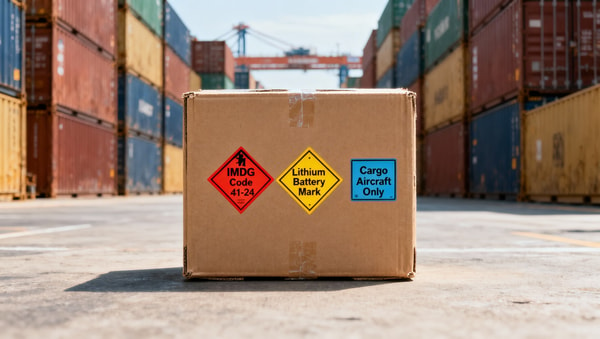
 IMDG Code 41-24 Enforces New UN3480 Lithium Battery Labels GloballyIMDG Code 41-24 mandates new UN3480 lithium battery labels globally from 1 May 2026—ensure compliance now to avoid shipment delays, rejections & penalties.
 CDE Adds 74 International Experts to Accelerate MedTech Export RegistrationCDE adds 74 international experts to accelerate MedTech export registration—key for IVD, imaging & rehab device exporters targeting FDA, EU MDR, Health Canada.
 MIIT Launches Space-Ground Computing & Green Data Center Export PlanMIIT's Space-Ground Computing & Green Data Center Export Plan unlocks global opportunities for liquid-cooled servers, PV direct-drive power, and satellite-ground scheduling—learn key impacts now.
 2026 Bio-based Raw Material Supplier Guide ReleasedBio-based raw material supplier guide 2026: Discover 47 ISO 16128-certified Chinese PLA, PBAT & PHA suppliers trusted by CBL, BPI & JIS.
 Q1 2026 Lithium Battery Export Prices Rise 11.3% YoYQ1 2026 Lithium Battery Export Prices Rise 11.3% YoY — discover why residential energy storage systems (RESS) drove the surge and what it means for exporters, suppliers & integrators.
 ‘Modular-Data Resonance’ Initiative Launches AI+Manufacturing Interface StandardModular-Data Resonance standard GB/T 45288-2026 launches AI+manufacturing interoperability—key for smart equipment exporters, MES/SCADA & AI model developers targeting EU/US markets.
 China's First Embodied AI Robot Export Liability Insurance Launched in GuangxiChina's first Embodied AI Robot Export Liability Insurance launched in Guangxi—key for robotics exporters targeting EU & SEA markets. Get compliant, certified, and covered.
 State Grid Launches $682M Embodied AI Inspection Equipment ProcurementState Grid’s $940M embodied AI inspection tender mandates IEC 62443-4-2 & ISO 13482 certs—key for robotics makers and global compliance teams. Act now.
 WeChat Pay Cross-Border B2B QR Code Live in 5 ASEAN CountriesWeChat Pay Cross-Border B2B QR Code is now live in 5 ASEAN countries — enabling fast, low-cost, local-currency settlements for SMEs and trade firms. Discover how it cuts costs by 47% and accelerates procurement.
 RCEP Green Packaging Mutual Recognition Extended to AU, NZ, JP, KRRCEP Green Packaging Mutual Recognition now extends to AU, NZ, JP, KR — unlock faster customs clearance & zero on-site inspection for compliant Chinese food packaging exports.
 IMDG Code 41-24 Enforces UN3480 Lithium Battery Labeling GloballyIMDG Code 41-24 enforces global UN3480 lithium battery labeling, packaging & e-CMR rules from 1 May 2026—act now to avoid port rejections and delays.
 Medical diagnostic equipment buying mistakes often start with workflowMedical diagnostic equipment buying mistakes often begin with workflow gaps. Learn how to compare systems, uncover hidden costs, and choose suppliers that fit real clinical operations.
 Interactive whiteboards are improving, but teacher adoption is unevenInteractive whiteboards are improving fast, but teacher adoption remains uneven. Explore what drives classroom success, ROI, and smarter edtech implementation.







Popular Tags
Global Trade Insights & Industry
Our mission is to empower global exporters and importers with data-driven insights that foster strategic growth.
Search News
Popular Tags
Industry Overview
The global commercial kitchen equipment market is projected to reach $112 billion by 2027. Driven by urbanization, the rise of e-commerce food delivery, and strict hygiene regulations.