

CMDE Adds 74 External Experts to Boost Med Device Export Registration
On April 25, 2026, the Center for Medical Device Evaluation (CMDE) under China’s National Medical Products Administration (NMPA) published a newly expanded roster of 74 external experts. This development signals accelerating technical readiness for international regulatory submissions — particularly for Medical Equipment and Rehabilitation Care exporters targeting U.S., EU, and Middle Eastern markets.
Event Overview
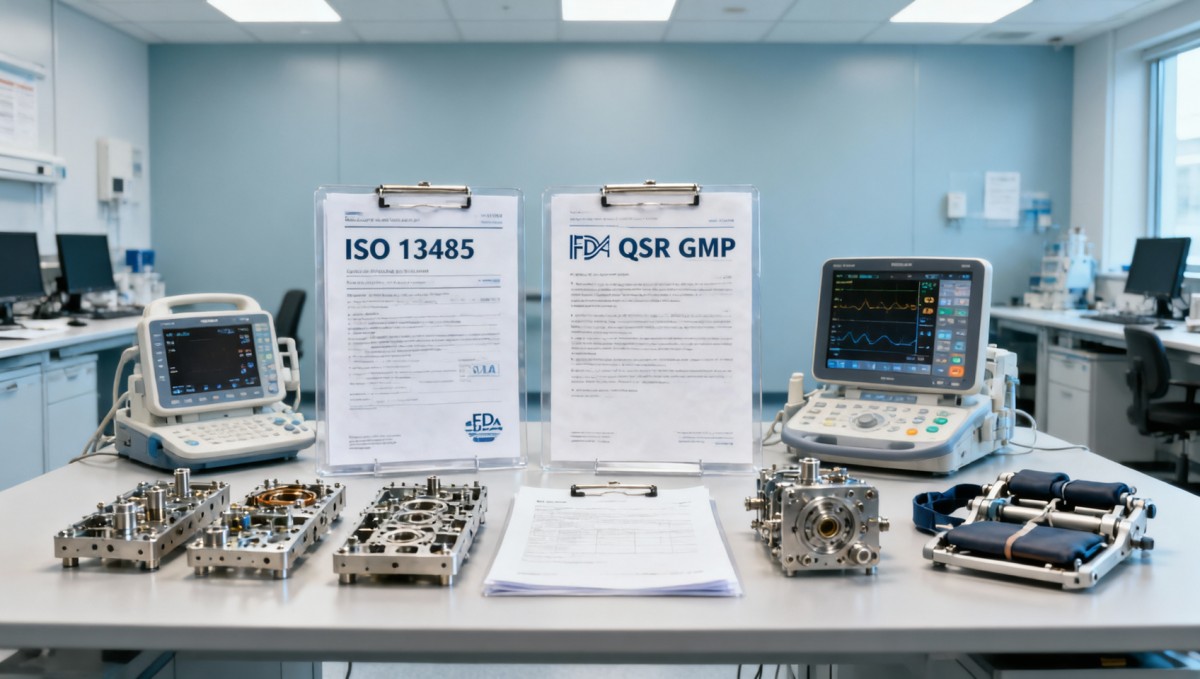
On April 25, 2026, CMDE publicly released its latest list of externally appointed experts, totaling 74 individuals. Among them, 32 possess documented audit experience under FDA’s Quality System Regulation (QSR 820), ISO 13485:2016, and Saudi Food and Drug Authority (SFDA) GMP requirements. The list is currently in public consultation phase per official notice.
Industries Affected
Direct Exporters of Medical Equipment
These companies — especially those exporting Class II or higher active devices (e.g., ultrasound systems, patient monitors, rehabilitation equipment) — stand to benefit from shortened overseas registration timelines. The inclusion of experts with cross-regional audit expertise suggests improved alignment between domestic technical review practices and international regulatory expectations, potentially reducing rework during foreign submissions.
Manufacturers of Rehabilitation Devices
Rehabilitation care product makers often face complex conformity assessments in target markets due to functional safety and clinical performance requirements. With 32 experts experienced in FDA QSR 820 and ISO 13485:2016, CMDE’s capacity to pre-validate design controls, risk management files, and production documentation may improve — indirectly supporting faster responses to queries from overseas regulators.
Regulatory Affairs Service Providers
Firms offering regulatory strategy, technical dossier preparation, or audit readiness support are likely to see increased demand for services aligned with U.S. and Gulf Cooperation Council (GCC) requirements. The expert profile indicates CMDE is prioritizing capacity in areas directly relevant to FDA 510(k)/De Novo pathways and SFDA registration — signaling where service differentiation may matter most.
What Relevant Enterprises or Practitioners Should Focus On
Monitor Official Updates on Expert Roles and Engagement Scope
Current information confirms only the publication of names and selected qualifications. It remains unconfirmed whether these experts will participate in pre-submission consultations, dossier reviews, or training programs. Enterprises should track CMDE’s subsequent announcements — particularly any guidance on how external experts contribute to technical review workflows.
Prioritize Documentation Readiness for Key Export Categories
Given the emphasis on active devices and experts with FDA/SFDA/ISO 13485 audit backgrounds, manufacturers exporting ultrasound, monitoring, or electromechanical rehabilitation equipment should verify completeness of their QMS documentation, clinical evaluation reports, and labeling compliance against target-market specifications — especially where harmonized standards apply.
Distinguish Between Policy Signal and Operational Impact
The expert roster reflects institutional capacity-building, not an immediate procedural change. While average overseas registration timelines for Class II+ active devices are projected to fall to within eight months, this projection is not yet codified in policy or confirmed by historical benchmarking. Enterprises should treat it as a forward-looking indicator — not a guaranteed timeline reduction.
Align Internal Training and Vendor Selection with Emerging Audit Expectations
Companies engaging third-party auditors or internal quality teams should assess whether current training covers FDA QSR 820 interpretation, ISO 13485:2016 clause-specific implementation, and GCC-specific documentation requirements (e.g., SFDA Arabic-language labeling). Selecting vendors with verifiable experience in these exact frameworks may reduce submission friction.
Editorial Perspective / Industry Observation
Observably, this expansion is best understood as a structural signal — not an operational milestone. It reflects CMDE’s ongoing effort to strengthen technical interoperability with major regulatory jurisdictions, rather than announcing a new approval pathway or accelerated review program. Analysis shows that the composition of the expert pool deliberately targets gaps in real-world audit exposure, suggesting a longer-term focus on improving the quality and regulatory defensibility of export dossiers at source. From an industry perspective, the value lies less in immediate speed gains and more in reduced technical rejection rates and fewer post-submission information requests — provided domestic manufacturers align documentation rigor with the expectations embedded in these experts’ professional backgrounds.
Conclusion
This expert roster update does not alter current regulatory procedures, but it does reinforce a measurable trend: China’s medical device technical review infrastructure is increasingly calibrated to international regulatory benchmarks. For exporters, the practical implication is not automatic acceleration — but a growing opportunity to achieve first-time submission success in priority markets, provided documentation, quality systems, and regulatory strategy reflect the same standards these experts routinely assess.
Information Sources
Main source: Public notice issued by the Center for Medical Device Evaluation (CMDE), National Medical Products Administration (NMPA), published April 25, 2026.
Note: The projected eight-month average registration timeline for Class II+ active devices remains a forward-looking estimate cited in the original notice; no historical data or implementation timeline has been officially disclosed. Continued observation is warranted.
Recommended News
 CMDE Adds 74 External Experts to Boost Med Device Export RegistrationCMDE Adds 74 External Experts to Boost Med Device Export Registration — accelerate FDA/EU/GCC submissions for medical equipment & rehab devices.
 MIIT Launches Space-Ground Compute & Power CoordinationMIIT Launches Space-Ground Compute & Power Coordination—unlocking export opportunities in liquid cooling, optical modules & high-efficiency servers for hot-humid markets.
 2026 Bio-based Raw Material Supplier Guide Released2026 Bio-based Raw Material Supplier Guide: Discover the official White List for PLA, PHA, bamboo fiber & more — boost EU/US compliance and procurement efficiency now.
 China Launches 'Model-Data Resonance' Initiative for AI+Manufacturing StandardsChina's 'Model-Data Resonance' initiative launches AI+Manufacturing standards — CESI/AI-MFG-2026 ensures plug-and-play interoperability for CNC, AGVs, MES & more across global smart factories.
 China’s First Embodied AI Robot Export Liability Insurance Launched in GuangxiChina’s first Embodied AI Robot Export Liability Insurance launched in Guangxi—key for robot exporters targeting EU, US & Saudi markets. Secure compliance-backed coverage now.
 State Grid’s $680M Embodied AI Procurement Opens Export PathState Grid’s $680M embodied AI procurement sets global safety standards — IEC 62061 SIL2 & GB/T 38851 compliance unlocks EU/UK/NA export opportunities.
 WeChat Pay Cross-Border B2B QR Code Access in 5 ASEAN CountriesWeChat Pay Cross-Border B2B QR Code Access now live in 5 ASEAN countries — enabling real-time, local-currency settlements up to USD 50,000. Boost your hardware, garden & appliance exports today!
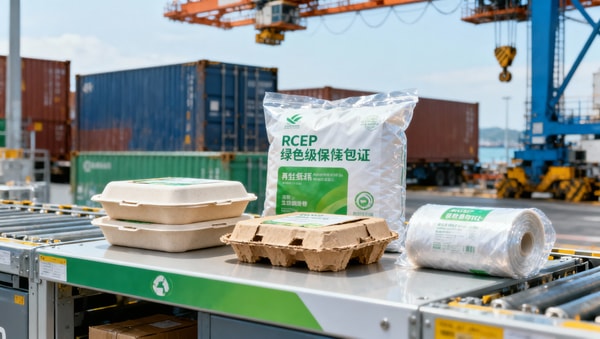
 RCEP Green Packaging Mutual Recognition Extended to AU, NZ, JP, KRRCEP Green Packaging Mutual Recognition now extends to AU, NZ, JP, KR — enabling customs-exempt clearance for certified Chinese food, infant & supplement packaging. Act now.
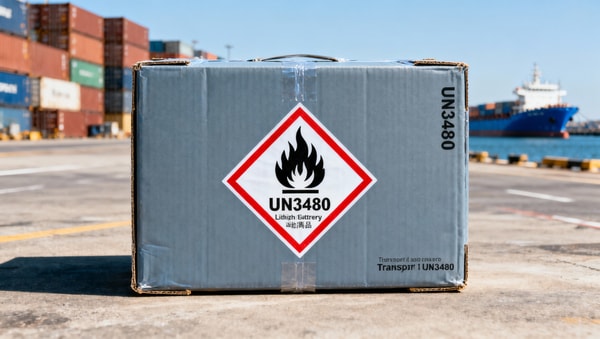
 IMDG Code 41-24 Enforces New UN3480 Lithium Battery Labels GloballyIMDG Code 41-24 mandates new UN3480 lithium battery labels globally from 1 May 2026—ensure compliance now to avoid shipment delays, rejections & penalties.
 CDE Adds 74 International Experts to Accelerate MedTech Export RegistrationCDE adds 74 international experts to accelerate MedTech export registration—key for IVD, imaging & rehab device exporters targeting FDA, EU MDR, Health Canada.
 MIIT Launches Space-Ground Computing & Green Data Center Export PlanMIIT's Space-Ground Computing & Green Data Center Export Plan unlocks global opportunities for liquid-cooled servers, PV direct-drive power, and satellite-ground scheduling—learn key impacts now.
 2026 Bio-based Raw Material Supplier Guide ReleasedBio-based raw material supplier guide 2026: Discover 47 ISO 16128-certified Chinese PLA, PBAT & PHA suppliers trusted by CBL, BPI & JIS.
 Q1 2026 Lithium Battery Export Prices Rise 11.3% YoYQ1 2026 Lithium Battery Export Prices Rise 11.3% YoY — discover why residential energy storage systems (RESS) drove the surge and what it means for exporters, suppliers & integrators.
 ‘Modular-Data Resonance’ Initiative Launches AI+Manufacturing Interface StandardModular-Data Resonance standard GB/T 45288-2026 launches AI+manufacturing interoperability—key for smart equipment exporters, MES/SCADA & AI model developers targeting EU/US markets.
 China's First Embodied AI Robot Export Liability Insurance Launched in GuangxiChina's first Embodied AI Robot Export Liability Insurance launched in Guangxi—key for robotics exporters targeting EU & SEA markets. Get compliant, certified, and covered.
 State Grid Launches $682M Embodied AI Inspection Equipment ProcurementState Grid’s $940M embodied AI inspection tender mandates IEC 62443-4-2 & ISO 13482 certs—key for robotics makers and global compliance teams. Act now.
 WeChat Pay Cross-Border B2B QR Code Live in 5 ASEAN CountriesWeChat Pay Cross-Border B2B QR Code is now live in 5 ASEAN countries — enabling fast, low-cost, local-currency settlements for SMEs and trade firms. Discover how it cuts costs by 47% and accelerates procurement.
 RCEP Green Packaging Mutual Recognition Extended to AU, NZ, JP, KRRCEP Green Packaging Mutual Recognition now extends to AU, NZ, JP, KR — unlock faster customs clearance & zero on-site inspection for compliant Chinese food packaging exports.
 IMDG Code 41-24 Enforces UN3480 Lithium Battery Labeling GloballyIMDG Code 41-24 enforces global UN3480 lithium battery labeling, packaging & e-CMR rules from 1 May 2026—act now to avoid port rejections and delays.
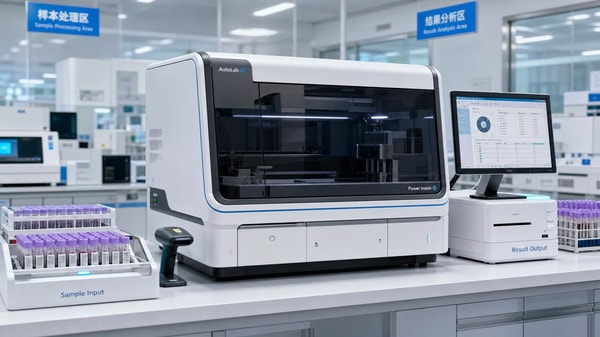
 Medical diagnostic equipment buying mistakes often start with workflowMedical diagnostic equipment buying mistakes often begin with workflow gaps. Learn how to compare systems, uncover hidden costs, and choose suppliers that fit real clinical operations.
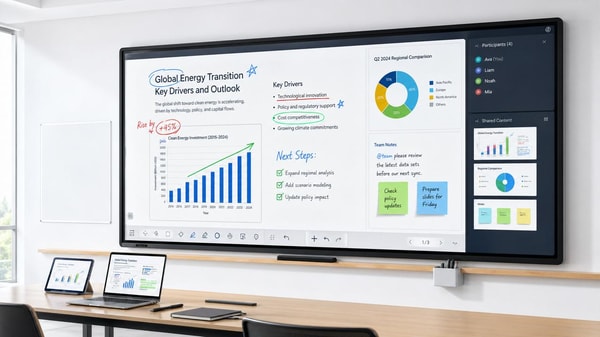
 Interactive whiteboards are improving, but teacher adoption is unevenInteractive whiteboards are improving fast, but teacher adoption remains uneven. Explore what drives classroom success, ROI, and smarter edtech implementation.














Popular Tags
Global Trade Insights & Industry
Our mission is to empower global exporters and importers with data-driven insights that foster strategic growth.
Search News
Popular Tags
Industry Overview
The global commercial kitchen equipment market is projected to reach $112 billion by 2027. Driven by urbanization, the rise of e-commerce food delivery, and strict hygiene regulations.