

UAE Emerges as Global AI Hub; Chinese AI Hardware Gains Traction
Stanford University’s 2026 AI Index Report, released in early 2024, identifies the United Arab Emirates as the world’s leading AI hub for governance, talent development, and real-world deployment. The report highlights growing integration of Chinese AI-enabled hardware—particularly from Shenzhen, Hangzhou, and Suzhou—into UAE smart infrastructure projects. This development carries implications for global AI supply chains, cross-border technology trade, and regional market access strategies, especially for firms engaged in AIoT, edge computing, and industrial vision systems.
Event Overview
The 2026 Artificial Intelligence Index Report, published by Stanford University, states that the UAE has become the world’s strongest AI governance, talent, and application deployment hub. Its AI regulatory sandbox has attracted over 120 Chinese AI hardware and solutions providers for testing. The report specifically notes that Shenzhen-based AIoT modules, Hangzhou-developed edge AI servers, and Suzhou-built machine vision kits collectively accounted for 37% of procurement in UAE smart campus, port automation, and security upgrade projects.
Which Subsectors Are Affected
Direct Exporters of AI-Enabled Hardware
Companies exporting AIoT modules, edge AI servers, or industrial machine vision systems to the Middle East are directly impacted. The UAE’s regulatory sandbox provides a low-risk pathway for compliance validation and pilot deployment—reducing time-to-market for hardware entering GCC and broader MENA markets.
Contract Manufacturers & OEMs Supporting Chinese AI Hardware Brands
Firms providing assembly, firmware integration, or certification support for Shenzhen-, Hangzhou-, or Suzhou-sourced AI hardware face increased demand for region-specific adaptations—including Arabic-language UI localization, GCC telecom standards (e.g., TD-LTE/5G SA interoperability), and UAE data residency requirements.
Supply Chain & Logistics Service Providers
Third-party logistics providers, customs brokers, and warehousing operators handling AI hardware shipments to the UAE must now accommodate new documentation flows tied to sandbox participation—such as sandbox test permits, temporary import licenses, and post-pilot re-export or local registration pathways.
Technology Compliance & Certification Consultants
Consultants supporting AI hardware vendors on regulatory alignment must prioritize UAE’s National AI Strategy 2031 implementation frameworks—including the UAE AI Office’s conformity assessment guidelines and sandbox reporting templates—rather than relying solely on EU or US precedents.
What Relevant Companies or Practitioners Should Focus On Now
Monitor UAE AI Office policy updates and sandbox expansion timelines
The UAE AI Office has not yet published formal phase-two criteria for scaling sandbox outcomes into full commercial licensing. Firms should track official announcements for thresholds related to data sovereignty, model transparency, and local AI ethics board engagement—key prerequisites for post-sandbox market entry.
Assess procurement patterns in UAE smart campus, port, and security verticals
Given the reported 37% procurement share across these three sectors, exporters should prioritize technical documentation aligned with UAE Smart City Framework requirements—including interoperability with Dubai Pulse and Abu Dhabi’s Ghadan 21 platforms—and verify compatibility with local cybersecurity certifications (e.g., UAE IA’s Information Assurance Standard).
Distinguish between sandbox participation signals and actual commercial contracts
Participation in the regulatory sandbox does not equate to binding procurement. Companies should treat sandbox engagements as technical validation milestones—not revenue commitments—and maintain parallel channel development efforts (e.g., distributor partnerships, local entity formation) to avoid over-reliance on test-phase visibility.
Prepare for localized after-sales service and firmware update infrastructure
UAE public-sector procurement increasingly requires in-region technical support SLAs and over-the-air (OTA) update capabilities compliant with UAE Data Law (Federal Decree-Law No. 45 of 2021). Exporters should evaluate whether existing remote maintenance architectures meet latency, language, and audit logging expectations.
Editorial Perspective / Industry Observation
Observably, this development is less about immediate market capture and more about structural positioning: the UAE sandbox functions as a de facto “regulatory gateway” for AI hardware seeking credibility in emerging markets where formal AI legislation remains nascent. Analysis shows that the 37% procurement figure reflects concentrated adoption in publicly funded infrastructure—not broad-based private-sector uptake. From an industry perspective, the trend signals growing demand for hardware that bridges AI capability with jurisdiction-specific compliance—not just raw performance. It is better understood as an early-stage signal of shifting procurement logic in strategic infrastructure, rather than evidence of widespread commercial readiness.
Current attention should focus on how sandbox outcomes translate into standardized certification pathways—not just pilot success rates. Sustained relevance depends on whether UAE’s framework evolves into a replicable benchmark for other Gulf Cooperation Council (GCC) members.
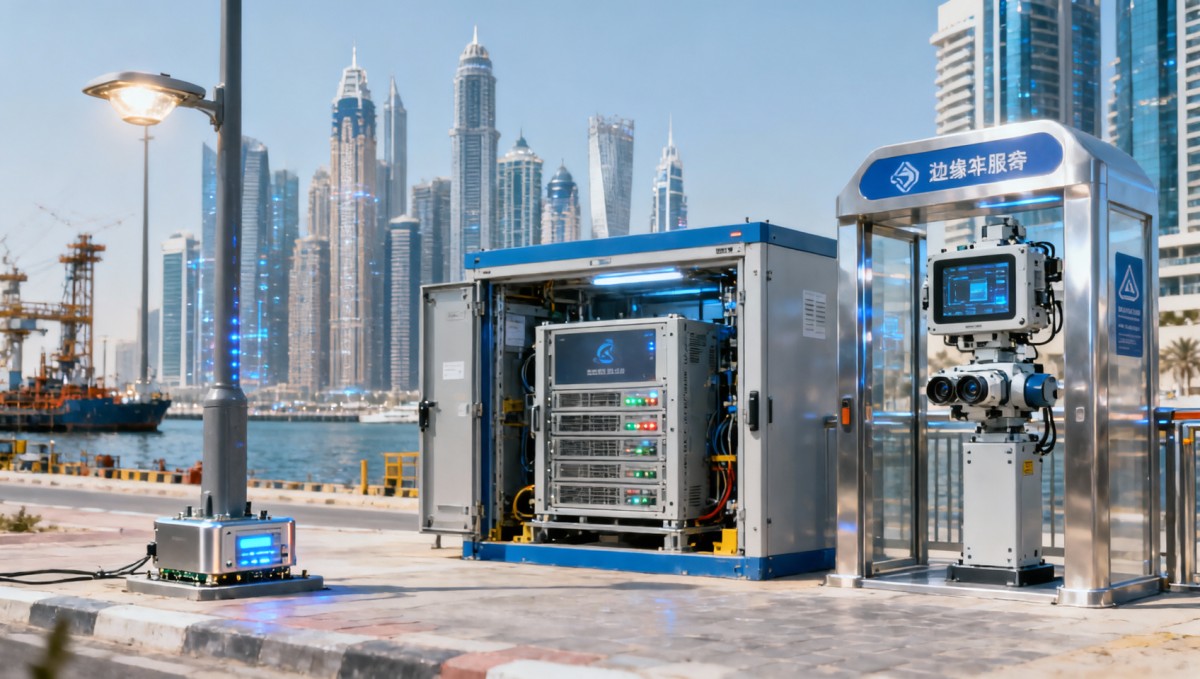
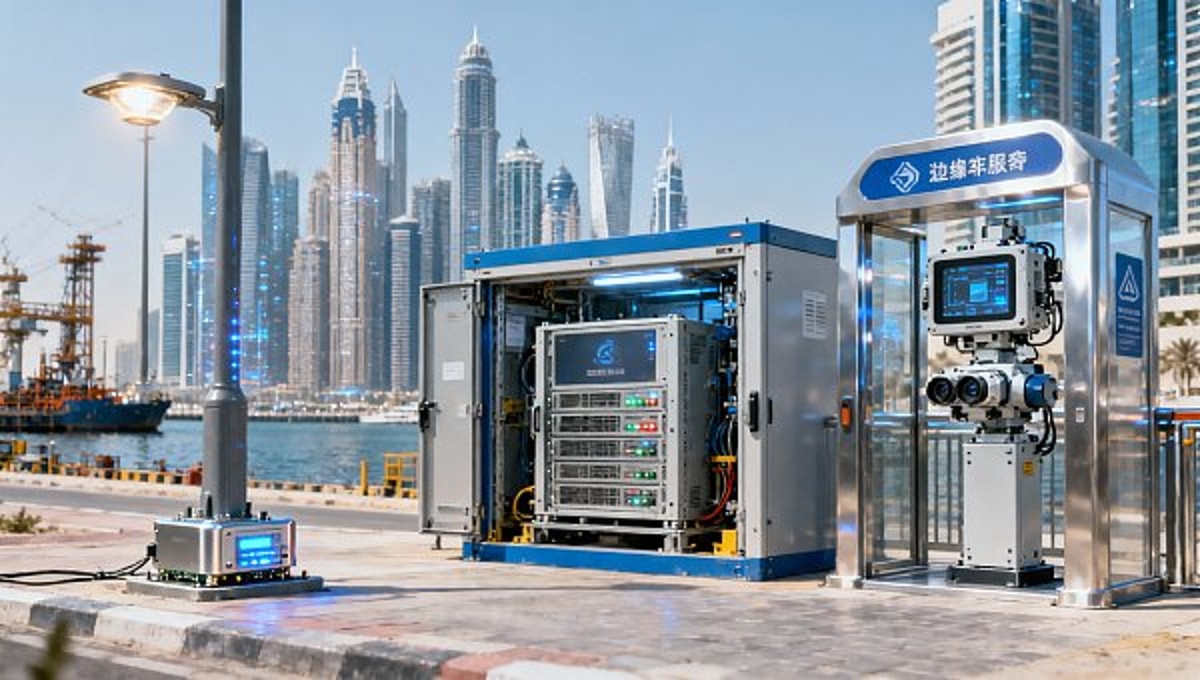
Conclusion: The UAE’s emergence as an AI hub, per the 2026 AI Index Report, underscores a broader shift toward jurisdictional gatekeeping in AI hardware deployment. For industry stakeholders, it signals rising importance of regulatory interoperability alongside technical capability—and suggests that market access in key growth regions will increasingly hinge on structured, sandbox-validated compliance—not just product specifications. This is best interpreted not as a near-term sales catalyst, but as a medium-term recalibration of go-to-market requirements for AI-enabled industrial hardware.
Source: Stanford University, 2026 Artificial Intelligence Index Report. Note: The report’s methodology, full dataset, and detailed country-level annexes remain under embargo pending official release; ongoing observation is recommended for updates on UAE sandbox policy evolution and GCC-wide harmonization efforts.
Recommended News
 MIIT Releases First List of Completed 10G-PON Pilot ProjectsMIIT Releases First List of Completed 10G-PON Pilot Projects — discover how XGS-PON, 25G WDM-PON chips and China’s 10G optical network pilots impact global export opportunities.
 Morocco: 4th Top African Recipient of EU Energy Aid, New Channel for Chinese PV & StorageMorocco: 4th top African recipient of EU energy aid (€4.1B) — unlocking new opportunities for Chinese PV modules, solar trackers, PV-storage cabinets & microgrid systems.
 MIIT Launches Space-Ground Computing Coordination PlanMIIT Launches Space-Ground Computing Coordination Plan — unlocking export opportunities for energy-efficient data center hardware in emerging markets.
 ADB Raises Vietnam’s 2026 GDP Forecast to 7.2% on China-Vietnam Supply Chain UpgradesADB raises Vietnam’s 2026 GDP forecast to 7.2% amid China-Vietnam supply chain upgrades in electronics, PV, and NEV sectors—key insight for global manufacturers and procurement teams.
 EN 62368-1:2026 Mandatory from Oct 2026: Thermal Runaway Protection for Wearables & Smart Home DevicesEN 62368-1:2026 mandates thermal runaway protection for wearables & smart home devices from Oct 2026 — act now to ensure EU market access, CB certification, and design compliance.
 UAE Emerges as Global AI Hub; Chinese AI Hardware Gains TractionUAE emerges as global AI hub—Chinese AI hardware from Shenzhen, Hangzhou & Suzhou gains traction in smart infrastructure, sandbox deployments & GCC market access.
 CMDE Adds 74 External Experts to Boost Med Device Export RegistrationCMDE Adds 74 External Experts to Boost Med Device Export Registration — accelerate FDA/EU/GCC submissions for medical equipment & rehab devices.
 MIIT Launches Space-Ground Compute & Power CoordinationMIIT Launches Space-Ground Compute & Power Coordination—unlocking export opportunities in liquid cooling, optical modules & high-efficiency servers for hot-humid markets.
 2026 Bio-based Raw Material Supplier Guide Released2026 Bio-based Raw Material Supplier Guide: Discover the official White List for PLA, PHA, bamboo fiber & more — boost EU/US compliance and procurement efficiency now.
 China Launches 'Model-Data Resonance' Initiative for AI+Manufacturing StandardsChina's 'Model-Data Resonance' initiative launches AI+Manufacturing standards — CESI/AI-MFG-2026 ensures plug-and-play interoperability for CNC, AGVs, MES & more across global smart factories.
 China’s First Embodied AI Robot Export Liability Insurance Launched in GuangxiChina’s first Embodied AI Robot Export Liability Insurance launched in Guangxi—key for robot exporters targeting EU, US & Saudi markets. Secure compliance-backed coverage now.
 State Grid’s $680M Embodied AI Procurement Opens Export PathState Grid’s $680M embodied AI procurement sets global safety standards — IEC 62061 SIL2 & GB/T 38851 compliance unlocks EU/UK/NA export opportunities.
 WeChat Pay Cross-Border B2B QR Code Access in 5 ASEAN CountriesWeChat Pay Cross-Border B2B QR Code Access now live in 5 ASEAN countries — enabling real-time, local-currency settlements up to USD 50,000. Boost your hardware, garden & appliance exports today!
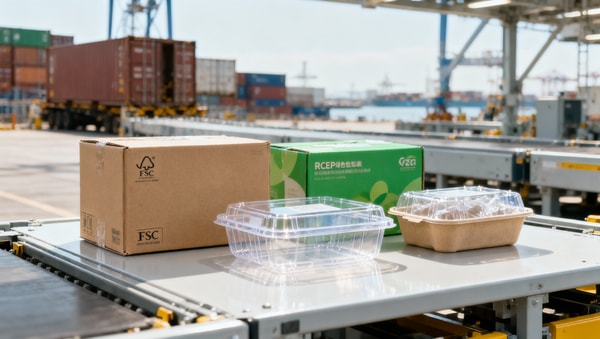
 RCEP Green Packaging Mutual Recognition Extended to AU, NZ, JP, KRRCEP Green Packaging Mutual Recognition now extends to AU, NZ, JP, KR — enabling customs-exempt clearance for certified Chinese food, infant & supplement packaging. Act now.
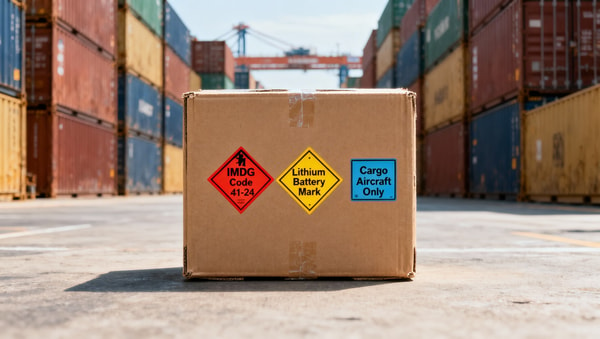
 IMDG Code 41-24 Enforces New UN3480 Lithium Battery Labels GloballyIMDG Code 41-24 mandates new UN3480 lithium battery labels globally from 1 May 2026—ensure compliance now to avoid shipment delays, rejections & penalties.
 CDE Adds 74 International Experts to Accelerate MedTech Export RegistrationCDE adds 74 international experts to accelerate MedTech export registration—key for IVD, imaging & rehab device exporters targeting FDA, EU MDR, Health Canada.
 MIIT Launches Space-Ground Computing & Green Data Center Export PlanMIIT's Space-Ground Computing & Green Data Center Export Plan unlocks global opportunities for liquid-cooled servers, PV direct-drive power, and satellite-ground scheduling—learn key impacts now.
 2026 Bio-based Raw Material Supplier Guide ReleasedBio-based raw material supplier guide 2026: Discover 47 ISO 16128-certified Chinese PLA, PBAT & PHA suppliers trusted by CBL, BPI & JIS.
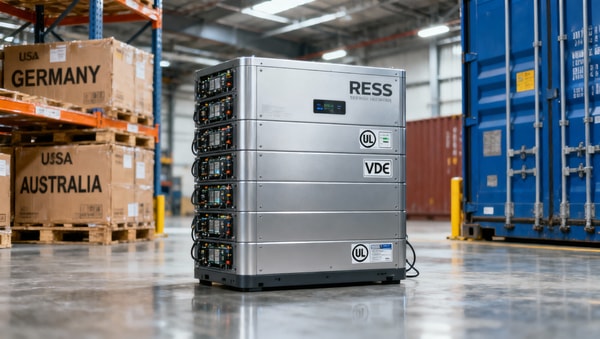
 Q1 2026 Lithium Battery Export Prices Rise 11.3% YoYQ1 2026 Lithium Battery Export Prices Rise 11.3% YoY — discover why residential energy storage systems (RESS) drove the surge and what it means for exporters, suppliers & integrators.
 ‘Modular-Data Resonance’ Initiative Launches AI+Manufacturing Interface StandardModular-Data Resonance standard GB/T 45288-2026 launches AI+manufacturing interoperability—key for smart equipment exporters, MES/SCADA & AI model developers targeting EU/US markets.
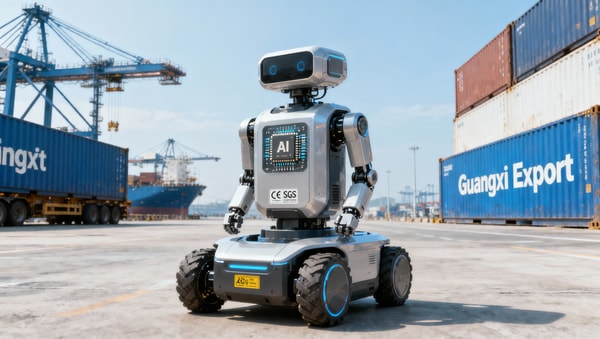
 China's First Embodied AI Robot Export Liability Insurance Launched in GuangxiChina's first Embodied AI Robot Export Liability Insurance launched in Guangxi—key for robotics exporters targeting EU & SEA markets. Get compliant, certified, and covered.














Popular Tags
Global Trade Insights & Industry
Our mission is to empower global exporters and importers with data-driven insights that foster strategic growth.
Search News
Popular Tags
Industry Overview
The global commercial kitchen equipment market is projected to reach $112 billion by 2027. Driven by urbanization, the rise of e-commerce food delivery, and strict hygiene regulations.