

MIIT Launches Space-Ground Compute & Power Coordination
On April 26, 2026, China’s Ministry of Industry and Information Technology (MIIT) issued the Guiding Opinions on Advancing Green and Low-Carbon Development of Computing Infrastructure, marking the first formal inclusion of ‘space-based computing ground coordination nodes’ into China’s new green computing architecture. This development signals emerging opportunities for data center equipment exporters—particularly in liquid cooling systems, optical modules, and high-efficiency servers—targeting high-temperature, high-humidity markets such as the Middle East and Africa.
Event Overview
On April 26, 2026, MIIT released the Guiding Opinions on Advancing Green and Low-Carbon Development of Computing Infrastructure. The document explicitly incorporates ‘space-based computing ground coordination nodes’ into the national framework for next-generation green computing infrastructure. It supports integration of BeiDou + low-Earth-orbit (LEO) satellite communication modules into liquid-cooled IDC equipment to meet stringent PUE <1.15 requirements in hot-humid regions. Pilot validations have been completed with Etisalat (UAE) and Rain Telecom (South Africa).
Industries Affected
Direct Exporters of Data Center Hardware
Exporters of servers, liquid cooling units, and optical interconnects are directly affected because the policy validates a technical pathway—satellite-augmented thermal management—that addresses a previously underserved environmental constraint (PUE <1.15 under high ambient temperature and humidity). Demand may shift toward integrated, communications-enabled cooling solutions rather than standalone hardware.
Manufacturers of Liquid Cooling Systems
These firms face both opportunity and adaptation pressure: the guidance incentivizes embedding LEO/BeiDou modems into cooling infrastructure, implying new R&D and certification requirements—not just thermal performance, but RF coexistence, power management, and edge firmware compatibility.
Optical Module Suppliers
Because the policy emphasizes high-bandwidth, low-latency backhaul between ground nodes and space assets, optical modules supporting 800G+ coherent or pluggable DWDM interfaces—especially those qualified for outdoor or semi-outdoor deployment—may see increased specification alignment requests from system integrators targeting pilot regions.
Data Center System Integrators & Solution Providers
Integrators serving overseas telecom operators must now assess whether their current rack-level or facility-level designs accommodate embedded satellite comms interfaces and associated power/thermal margins. The Etisalat and Rain pilots indicate that interoperability with regional spectrum allocations and local cloud orchestration platforms is becoming a de facto requirement—not just hardware compliance.
What Enterprises and Practitioners Should Monitor and Act On
Track official implementation roadmaps and technical annexes
The Guiding Opinions are high-level policy. Analysis shows that detailed technical specifications—for example, minimum LEO modem latency, BeiDou signal integrity thresholds under thermal stress, or PUE measurement protocols for hybrid space-ground workloads—are not yet published. Enterprises should monitor MIIT-affiliated standardization bodies (e.g., CCSA) for upcoming working group outputs.
Focus on three priority export segments: UAE, South Africa, and follow-on GCC/AU markets
Observably, the two confirmed pilot partners—Etisalat and Rain Telecom—represent early adopter profiles in distinct regulatory and climatic environments. Current more relevant action is to map existing product certifications (e.g., IEC 62368-1, EN 55032 Class B) against local EMC and spectrum licensing rules in these jurisdictions, rather than broadening market outreach prematurely.
Distinguish policy signaling from near-term procurement impact
From industry perspective, this guidance is primarily a framework-setting instrument—not an immediate tender driver. It does not mandate technology adoption nor allocate funding. Enterprises should avoid over-indexing on ‘space compute’ branding; instead, prioritize incremental upgrades to existing liquid-cooled platform documentation (e.g., adding satellite comms interface footprints, updated thermal derating curves).
Prepare cross-functional readiness for joint validation cycles
Given the pilot nature of current deployments, analysis suggests future engagements will require coordinated testing across hardware, firmware, satellite link layer, and local grid stability parameters. Companies should proactively align internal teams—R&D, regulatory affairs, and field applications—to support joint lab validation timelines, especially around radio frequency interference (RFI) and time-synchronized thermal load profiling.
Editorial Perspective / Industry Observation
This policy is best understood as a strategic signal—not an operational mandate. Observably, MIIT is codifying a systems-level approach to global green computing challenges, where terrestrial infrastructure constraints (heat, power, connectivity) are addressed through hybrid architectures rather than incremental efficiency gains alone. It reflects a broader pivot: from exporting discrete components to enabling context-aware, climate-resilient infrastructure stacks. However, the actual scale of demand remains contingent on follow-up standards, satellite constellation maturity (especially LEO coverage over Africa), and local utility pricing models. Industry should treat this as a multi-year capability-building milestone—not a short-term sales catalyst.

Conclusion: This directive repositions China’s green data center export value proposition—from energy efficiency per rack to environmental resilience per region. It does not replace conventional PUE optimization, but layers in connectivity and autonomy as non-negotiable attributes for specific geographies. Currently, it is more accurately interpreted as a targeted infrastructure readiness framework than a market-entry trigger.
Source: Ministry of Industry and Information Technology (MIIT) of the People’s Republic of China, Guiding Opinions on Advancing Green and Low-Carbon Development of Computing Infrastructure, issued April 26, 2026. Note: Technical implementation details—including certification pathways, timeline for standards publication, and expansion beyond current pilot operators—remain pending observation.
Recommended News
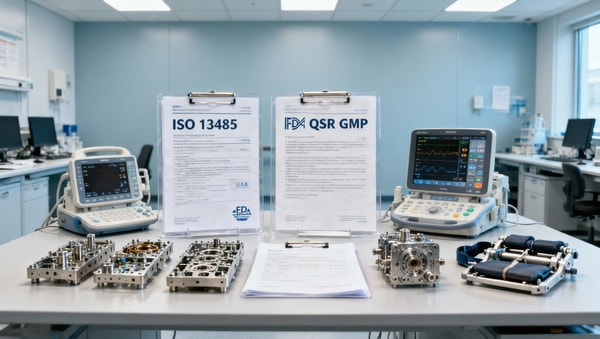
 CMDE Adds 74 External Experts to Boost Med Device Export RegistrationCMDE Adds 74 External Experts to Boost Med Device Export Registration — accelerate FDA/EU/GCC submissions for medical equipment & rehab devices.
 MIIT Launches Space-Ground Compute & Power CoordinationMIIT Launches Space-Ground Compute & Power Coordination—unlocking export opportunities in liquid cooling, optical modules & high-efficiency servers for hot-humid markets.
 2026 Bio-based Raw Material Supplier Guide Released2026 Bio-based Raw Material Supplier Guide: Discover the official White List for PLA, PHA, bamboo fiber & more — boost EU/US compliance and procurement efficiency now.
 China Launches 'Model-Data Resonance' Initiative for AI+Manufacturing StandardsChina's 'Model-Data Resonance' initiative launches AI+Manufacturing standards — CESI/AI-MFG-2026 ensures plug-and-play interoperability for CNC, AGVs, MES & more across global smart factories.
 China’s First Embodied AI Robot Export Liability Insurance Launched in GuangxiChina’s first Embodied AI Robot Export Liability Insurance launched in Guangxi—key for robot exporters targeting EU, US & Saudi markets. Secure compliance-backed coverage now.
 State Grid’s $680M Embodied AI Procurement Opens Export PathState Grid’s $680M embodied AI procurement sets global safety standards — IEC 62061 SIL2 & GB/T 38851 compliance unlocks EU/UK/NA export opportunities.
 WeChat Pay Cross-Border B2B QR Code Access in 5 ASEAN CountriesWeChat Pay Cross-Border B2B QR Code Access now live in 5 ASEAN countries — enabling real-time, local-currency settlements up to USD 50,000. Boost your hardware, garden & appliance exports today!
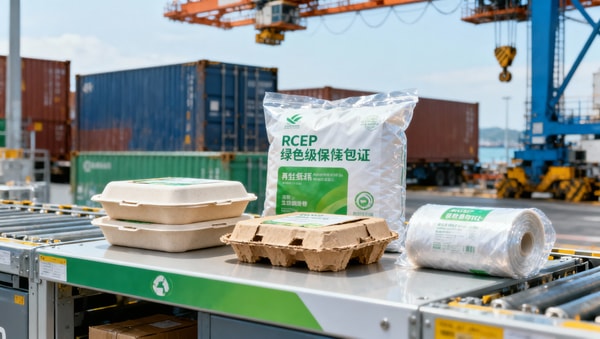
 RCEP Green Packaging Mutual Recognition Extended to AU, NZ, JP, KRRCEP Green Packaging Mutual Recognition now extends to AU, NZ, JP, KR — enabling customs-exempt clearance for certified Chinese food, infant & supplement packaging. Act now.
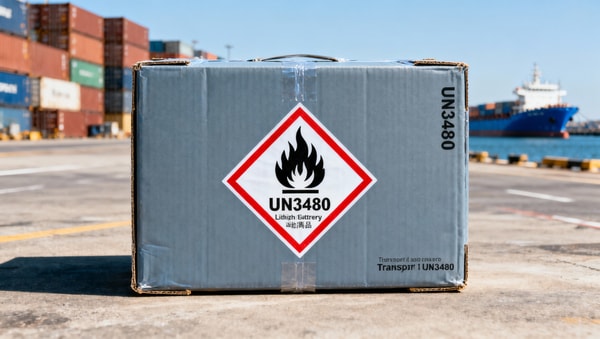
 IMDG Code 41-24 Enforces New UN3480 Lithium Battery Labels GloballyIMDG Code 41-24 mandates new UN3480 lithium battery labels globally from 1 May 2026—ensure compliance now to avoid shipment delays, rejections & penalties.
 CDE Adds 74 International Experts to Accelerate MedTech Export RegistrationCDE adds 74 international experts to accelerate MedTech export registration—key for IVD, imaging & rehab device exporters targeting FDA, EU MDR, Health Canada.
 MIIT Launches Space-Ground Computing & Green Data Center Export PlanMIIT's Space-Ground Computing & Green Data Center Export Plan unlocks global opportunities for liquid-cooled servers, PV direct-drive power, and satellite-ground scheduling—learn key impacts now.
 2026 Bio-based Raw Material Supplier Guide ReleasedBio-based raw material supplier guide 2026: Discover 47 ISO 16128-certified Chinese PLA, PBAT & PHA suppliers trusted by CBL, BPI & JIS.
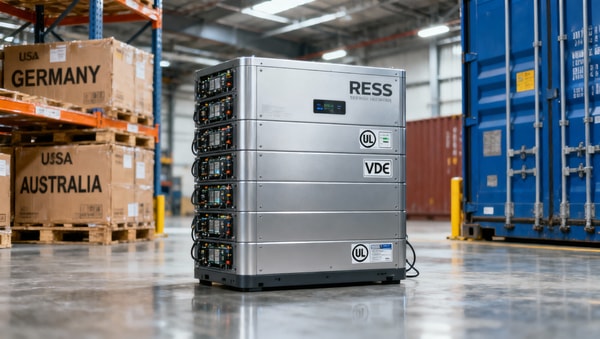
 Q1 2026 Lithium Battery Export Prices Rise 11.3% YoYQ1 2026 Lithium Battery Export Prices Rise 11.3% YoY — discover why residential energy storage systems (RESS) drove the surge and what it means for exporters, suppliers & integrators.
 ‘Modular-Data Resonance’ Initiative Launches AI+Manufacturing Interface StandardModular-Data Resonance standard GB/T 45288-2026 launches AI+manufacturing interoperability—key for smart equipment exporters, MES/SCADA & AI model developers targeting EU/US markets.
 China's First Embodied AI Robot Export Liability Insurance Launched in GuangxiChina's first Embodied AI Robot Export Liability Insurance launched in Guangxi—key for robotics exporters targeting EU & SEA markets. Get compliant, certified, and covered.
 State Grid Launches $682M Embodied AI Inspection Equipment ProcurementState Grid’s $940M embodied AI inspection tender mandates IEC 62443-4-2 & ISO 13482 certs—key for robotics makers and global compliance teams. Act now.
 WeChat Pay Cross-Border B2B QR Code Live in 5 ASEAN CountriesWeChat Pay Cross-Border B2B QR Code is now live in 5 ASEAN countries — enabling fast, low-cost, local-currency settlements for SMEs and trade firms. Discover how it cuts costs by 47% and accelerates procurement.
 RCEP Green Packaging Mutual Recognition Extended to AU, NZ, JP, KRRCEP Green Packaging Mutual Recognition now extends to AU, NZ, JP, KR — unlock faster customs clearance & zero on-site inspection for compliant Chinese food packaging exports.
 IMDG Code 41-24 Enforces UN3480 Lithium Battery Labeling GloballyIMDG Code 41-24 enforces global UN3480 lithium battery labeling, packaging & e-CMR rules from 1 May 2026—act now to avoid port rejections and delays.
 Medical diagnostic equipment buying mistakes often start with workflowMedical diagnostic equipment buying mistakes often begin with workflow gaps. Learn how to compare systems, uncover hidden costs, and choose suppliers that fit real clinical operations.
 Interactive whiteboards are improving, but teacher adoption is unevenInteractive whiteboards are improving fast, but teacher adoption remains uneven. Explore what drives classroom success, ROI, and smarter edtech implementation.
















Popular Tags
Global Trade Insights & Industry
Our mission is to empower global exporters and importers with data-driven insights that foster strategic growth.
Search News
Popular Tags
Industry Overview
The global commercial kitchen equipment market is projected to reach $112 billion by 2027. Driven by urbanization, the rise of e-commerce food delivery, and strict hygiene regulations.