

Photovoltaic solar panels: what changes total output over time?
Photovoltaic solar panels are a long-term investment, but their total output does not remain constant over time. For business decision-makers evaluating energy strategy, asset performance, or procurement risk, understanding what drives output changes is essential. From material degradation and installation conditions to climate, maintenance, and technology quality, several factors influence real-world generation and long-term returns.
For commercial and industrial buyers, the key issue is not simply how many watts a module is rated for on day one. The more important question is how much usable electricity a photovoltaic solar panels system will deliver in year 5, year 10, and year 25 under actual operating conditions. Output drift affects payback periods, internal energy cost forecasts, maintenance budgets, and contract negotiation with EPCs, distributors, and equipment suppliers.
In global trade and industrial planning, this topic also matters because sourcing decisions made at the procurement stage can lock in long-term performance differences. Two systems with similar upfront pricing may produce materially different lifetime energy yields depending on cell quality, temperature behavior, installation geometry, and service discipline. For companies managing multiple sites across regions, even a 3% to 8% variance in annual production can alter investment priorities.
Why photovoltaic output changes over time
The total output of photovoltaic solar panels changes because a solar asset is influenced by both internal and external variables. Internal variables include cell structure, encapsulation quality, solder integrity, and inverter conversion efficiency. External variables include irradiance levels, ambient temperature, dust load, wind exposure, shading patterns, and maintenance frequency. Over a 20- to 30-year service life, these factors interact rather than act alone.
Degradation is normal, but the rate matters
All photovoltaic solar panels degrade with age. In practical terms, many commercial modules experience a higher initial drop in the first 12 months, followed by a slower annual decline. A common planning assumption in the market is an initial loss of around 1% to 3%, then an annual degradation range of roughly 0.3% to 0.8%, depending on technology tier, operating environment, and manufacturing consistency.
For a business buyer, the difference between 0.4% and 0.7% annual degradation is significant. Across a 25-year asset life, that gap can materially affect total energy yield, especially for projects above 500 kW or for portfolios spread across warehouses, factories, logistics hubs, or export processing facilities. This is why warranty wording and degradation curves deserve as much attention as module nameplate power.
Common degradation drivers
- UV exposure that slowly affects encapsulation materials over 10 to 20 years
- Thermal cycling caused by day-night temperature variation, often repeated 300+ times per year
- Microcracks from transport, installation stress, or wind and snow loading
- Moisture ingress in humid, coastal, or poorly sealed installations
- Potential induced degradation and hotspot formation under adverse electrical conditions
Temperature reduces real-world generation
A module tested under Standard Test Conditions does not represent a typical rooftop afternoon in a manufacturing zone or logistics park. As panel temperature rises, output usually falls. In many commercial installations, module operating temperature can exceed ambient air temperature by 20°C to 35°C. In hot climates, this means a system rated at a certain output level may deliver noticeably less during peak heat.
Temperature coefficients therefore deserve close review in any photovoltaic solar panels procurement process. Buyers comparing similar products should not focus only on wattage labels. A module with slightly lower nominal power but better temperature behavior may produce more annual energy in tropical, desert, or high-radiation markets.
The table below highlights how major factors typically influence long-term output and why they should be included in investment screening and supplier evaluation.
The key conclusion is that output loss is rarely caused by one issue alone. A moderate degradation profile combined with high operating temperatures and infrequent cleaning can create a much larger energy shortfall than expected at the budgeting stage. For enterprise buyers, lifetime performance modeling should therefore be multidimensional rather than based on module datasheets alone.
Site conditions and installation choices that shape lifetime yield
Even premium photovoltaic solar panels can underperform if system design and installation quality are weak. Site-specific conditions have a measurable impact on output over 12 months, across seasons, and throughout the full asset life. For factories, office parks, cold storage facilities, and distribution centers, the most overlooked risks are often shading movement, roof constraints, heat accumulation, and mismatch between inverter sizing and actual load profile.
Orientation, tilt, and shading control
Panel orientation and tilt determine how effectively modules capture sunlight across the day and year. A small design deviation may not seem critical, but across a 1 MW rooftop system it can translate into meaningful annual output differences. Businesses should examine shading sources within a 360-degree field, including HVAC units, parapets, nearby structures, trees, cranes, and future construction plans within the next 3 to 5 years.
Partial shading is especially damaging because one shaded area can affect an entire string. In dense industrial sites, this can create hidden losses that are not visible from a basic roof survey. A proper design review should include hourly shading analysis, at least seasonal sun-path consideration, and allowance for maintenance access corridors so that technicians do not create additional shadowing through ad hoc equipment placement.
Installation checkpoints for buyers
- Confirm structural load limits and rooftop usable area before module selection.
- Review orientation and tilt assumptions against local irradiance patterns.
- Ask for shading analysis at different hours and seasons, not just one daytime snapshot.
- Check cable routing, drainage clearance, and ventilation spacing under modules.
- Verify installation tolerances and commissioning test records before acceptance.
Ventilation and balance-of-system quality
The output of photovoltaic solar panels depends not only on modules but also on the surrounding mechanical and electrical system. Adequate rear ventilation helps reduce thermal buildup. Inadequate spacing can trap heat, increasing operating temperature and lowering production. On rooftops with dark surfaces or limited air movement, this issue can persist for 4 to 6 months of the warm season.
Balance-of-system components also matter. Inverters, connectors, combiner boxes, and wiring losses can gradually erode effective yield. If connectors are poorly crimped or cables are undersized, small losses accumulate every day. Over several years, avoidable system loss can become more expensive than the upfront savings from low-cost components.
Operations, maintenance, and performance monitoring
Long-term output management is where many commercial projects either protect value or lose it. Once photovoltaic solar panels are commissioned, the priority shifts from installation quality to disciplined operations. Monitoring, cleaning, inspection, and replacement planning determine whether the system maintains expected generation or quietly drifts below forecast for months at a time.
Cleaning frequency and soiling loss
Dust, pollen, bird droppings, industrial residue, and salt mist can all reduce light transmission. In some temperate locations, natural rainfall may keep soiling within a manageable range for much of the year. In arid zones, ports, mining belts, cement clusters, and heavy manufacturing parks, however, output losses can rise quickly if cleaning intervals are extended from 1 month to 3 months or more.
The right cleaning schedule depends on site economics. A business should compare the cost of a cleaning cycle against expected energy recovered. For larger systems, even a 4% restoration in output may justify a structured service calendar. Safety procedures, water availability, roof access, and production downtime should also be incorporated into O&M planning.
The following framework can help enterprise buyers align maintenance strategy with site conditions and portfolio scale.
A disciplined O&M program does more than preserve generation. It also improves forecast reliability, supports warranty claims with evidence, and reduces the risk of hidden underperformance across multisite solar portfolios. For decision-makers, that means better budgeting accuracy and stronger asset governance.
Monitoring systems and exception management
Without monitoring, output loss may go unnoticed for weeks. Basic meter data is not enough for higher-value installations. Commercial operators should seek monitoring at the string or inverter level, with alert thresholds for abnormal drops, temperature anomalies, and communication failures. A 2% to 3% unexplained variance sustained over several billing cycles should trigger investigation rather than be treated as normal fluctuation.
For distributed enterprises with sites in multiple countries, monitoring also supports benchmarking. It becomes easier to compare how identical photovoltaic solar panels perform in humid, dusty, cold, or high-heat environments. These comparisons improve future procurement strategy and help buyers refine technical specifications for later expansion phases.
How to evaluate procurement risk before you buy
Output over time is heavily influenced by decisions made before delivery, installation, and commissioning. For procurement teams, the goal is to reduce lifetime performance uncertainty, not only to negotiate the lowest initial price. A disciplined evaluation process should cover module quality, supplier consistency, technical documentation, logistics handling, warranty terms, and post-sale support capability.
Questions that matter in supplier assessment
- What is the stated first-year degradation allowance, and what is the annual decline afterward?
- How does the module perform under high-temperature conditions common to the destination market?
- What packaging and transport controls are used to reduce microcrack risk during long-distance shipment?
- What documentation is available for inspection, testing, and warranty claim support?
- What response time is offered for underperformance investigation or component replacement?
Practical buying criteria for decision-makers
At a minimum, buyers should compare 4 dimensions: degradation profile, temperature coefficient, warranty structure, and serviceability. For international trade buyers, two additional dimensions should be included: packaging robustness for cross-border logistics and after-sales coordination across time zones. These criteria are often more predictive of long-term satisfaction than a small unit price difference.
It is also wise to separate headline power from expected site yield. A module with higher nominal wattage is not automatically the better choice. If another product offers stronger consistency under heat, lower degradation, and better support documentation, it may generate a superior lifetime return. This is especially relevant for enterprises with energy-intensive operations or 7-day production schedules.
Common misconceptions that distort investment decisions
One common misconception is that output loss is minimal as long as the system is new. In reality, installation defects, early soiling, inverter mismatch, or hidden shading can reduce expected performance within the first 3 to 6 months. Another misconception is that all photovoltaic solar panels in the same power class will age similarly. Manufacturing quality and system context can create substantial divergence over time.
A third misconception is that maintenance can be postponed without material financial effect. For a small residential system, delays may be manageable. For a commercial installation serving a warehouse cluster or export-oriented factory, however, a prolonged 5% output gap can affect electricity savings, operating margins, and carbon reporting assumptions. Scale changes the cost of neglect.
What business leaders should prioritize for long-term value
The most effective approach is to manage photovoltaic solar panels as long-life productive assets rather than one-time equipment purchases. That means combining sound product selection, site-specific engineering, routine maintenance, and performance analytics from the start. Enterprises planning 10-year to 25-year energy strategies should build decisions around lifetime yield, not just procurement cost per watt.
A robust internal review should include at least 6 checkpoints: site suitability, degradation assumptions, thermal performance, shading risk, maintenance plan, and monitoring design. Where projects span several geographies, businesses should also compare local climate stress, labor access, cleaning constraints, and import logistics. This broader lens reduces the chance of overestimating actual generation.
For companies using market intelligence to support sourcing and expansion, the value of accurate information is substantial. Understanding how output changes over time helps procurement teams negotiate better specifications, helps finance teams build more realistic return models, and helps operations teams preserve energy yield after commissioning. In a market where margins, resilience, and sustainability targets increasingly intersect, better solar decisions are strategic decisions.
If your business is assessing photovoltaic solar panels for industrial facilities, trade operations, or cross-border procurement programs, a data-led evaluation process will produce stronger long-term outcomes. To explore supplier trends, technical selection factors, and market intelligence that supports more informed energy investment, contact us today, request a tailored solution, or learn more about industry-specific sourcing insights through TradeVantage.
Recommended News
 China’s First Embodied AI Robot Export Liability Insurance Launched in GuangxiEmbodied AI Robot Export Liability Insurance launched in Guangxi—China’s first insurer-backed solution for EU/Japan-bound industrial & service robots. Boost compliance, trust & tenders now.
 Morocco: 4th Top African Recipient of EU Energy Aid, Boosting China’s PV & Storage ExportsMorocco’s EU energy aid boost unlocks opportunities for Chinese PV mounting structures & containerized energy storage exports—act now to leverage new regulatory advantages.
 Industrial Robot Controller Thermal Gel: China's Export-Ready Heat Dissipation SolutionIndustrial Robot Controller Thermal Gel: China’s export-ready, TÜV-certified heat dissipation solution (8.5 W/mK) for robotics in SEA & Mexico.
 ADB Raises Vietnam’s 2026 GDP Forecast to 7.2% on Sino-Vietnam Supply Chain IntegrationADB raises Vietnam’s 2026 GDP forecast to 7.2% amid deepening Sino-Vietnam supply chain integration in electronics, solar PV, and lithium battery PACK production — key insight for OEMs, exporters & integrators.
 First National SME Service Demonstration Platforms AnnouncedFirst National SME Service Demonstration Platforms announced—16 specialize in REACH, UKCA, UL certification & rapid factory audits for exporters.
 U.S. Natural Gas Inventory Growth Below Forecast: Impact on Plastic Export CostsU.S. natural gas inventory growth missed forecast—impacting plastic export costs globally. Learn how rising TTF prices affect PP/PE resin costs, margins & supply chain strategy for exporters.
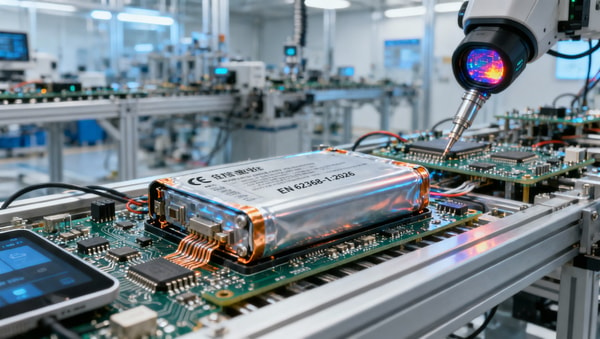
 EN 62368-1:2026 Enforced in EU: Thermal Runaway Protection for Wearables & Smart Home DevicesEN 62368-1:2026 is now mandatory in the EU—learn how thermal runaway protection impacts wearables, smart home devices & EV accessories.
 Q1 2026 Industrial Profits Up 15.5%: Supply Chain Cost Stability ConfirmedQ1 2026 Industrial Profits Up 15.5% — supply chain cost stability confirmed for global procurement, contract manufacturing & OEM teams.
") MIIT Releases Service Trade Standardization Plan (2026–2030)MIIT's 2026–2030 Service Trade Standardization Plan boosts AI-driven digital services—remote QA, cloud maintenance, intelligent warehouse SaaS—for global export competitiveness.
MIIT Releases Service Trade Standardization Plan (2026–2030)MIIT's 2026–2030 Service Trade Standardization Plan boosts AI-driven digital services—remote QA, cloud maintenance, intelligent warehouse SaaS—for global export competitiveness. WeChat Pay Integrates QR Codes from 5 Countries for B2B Cross-Border SettlementWeChat Pay integrates QR codes from South Korea, Sri Lanka, Thailand, Malaysia & Singapore — enabling faster, cheaper B2B cross-border settlement for global buyers and Chinese suppliers.
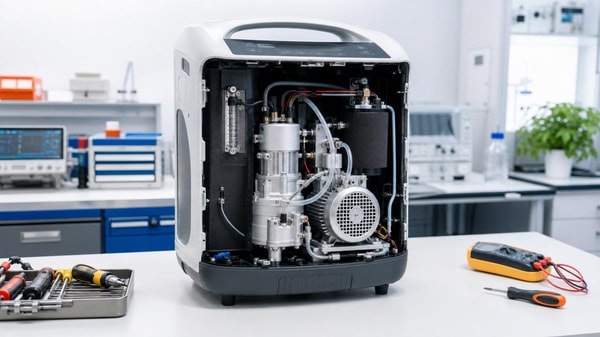
 Portable oxygen concentrators get noisy over time for several reasonsPortable oxygen concentrators get noisy over time due to dust, wear, loose parts, and aging compressors. Learn key causes, inspection priorities, and service tips to prevent failures.
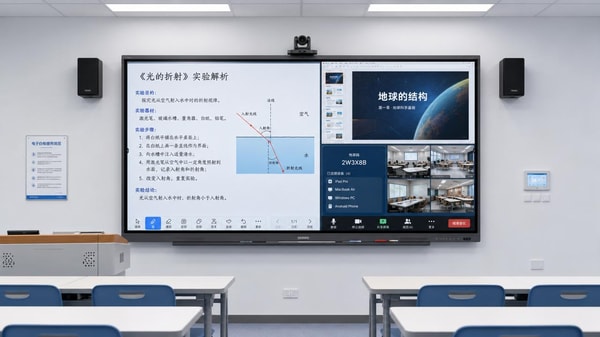
 Interactive whiteboards: what schools regret not checking earlyInteractive whiteboards can boost learning, but schools often regret missing key checks on compatibility, durability, training, and support. Discover how to buy smarter.
 Medical diagnostic equipment downtime usually starts with this oversightMedical diagnostic equipment downtime often starts with one overlooked maintenance gap. Learn the warning signs, hidden costs, and smart service strategies to improve uptime.
 Eco-friendly building materials: where certification changes the decisionEco-friendly building materials now win or lose on certification. Learn how verified standards reduce sourcing risk, support compliance, and improve procurement decisions.
 Ergonomic workspace design mistakes that still cause daily strainErgonomic workspace design mistakes can silently cause daily strain, fatigue, and lower productivity. Discover practical fixes to improve comfort, focus, and workstation performance.
 Outdoor garden supplies that wear out too fast in summer heatOutdoor garden supplies can fail fast in extreme summer heat. Discover which items wear out first, what materials last longer, and how to buy smarter for durable, cost-saving performance.
 Sustainable home decor: how to spot green claims with substanceSustainable home decor explained: learn how to spot credible green claims, avoid greenwashing, compare materials and certifications, and choose stylish, healthier pieces with real impact.
 Modern office furniture trends that improve layout flexibilityModern office furniture trends are transforming flexible workplace design. Explore modular, mobile, ergonomic, and acoustic solutions that boost productivity and smarter space planning.
 Smart street lighting works best when control systems are not overlookedSmart street lighting succeeds when control systems come first. Learn how better monitoring, dimming, and integration improve ROI, maintenance efficiency, and long-term project performance.
 What solid-state battery breakthroughs are still years from market?Solid-state battery breakthroughs sound transformative, but which ones are still years from market? Explore the technical, cost, and scaling barriers shaping real adoption timelines.
 Commercial LED lighting retrofits: when is payback slower than planned?Commercial LED lighting payback can slip when costs, runtime, rebates, and controls are misjudged. Learn the hidden risks and review steps that protect ROI before approval.









Popular Tags
Global Trade Insights & Industry
Our mission is to empower global exporters and importers with data-driven insights that foster strategic growth.
Search News
Popular Tags
Industry Overview
The global commercial kitchen equipment market is projected to reach $112 billion by 2027. Driven by urbanization, the rise of e-commerce food delivery, and strict hygiene regulations.