

How Much Does a Lawn Mower Cost in 2026
Planning budgets for 2026 means looking beyond headline lawn mower cost and comparing wider sourcing signals across industries. From radiators price trends and sheet metal gauge impacts to demand shifts in high performance spark plugs, buyers need reliable benchmarks before making decisions. This guide breaks down what drives lawn mower pricing in 2026, helping procurement teams, distributors, and market researchers evaluate costs, product tiers, and supplier value with greater confidence.
In 2026, lawn mower prices are expected to range from about $120 for basic small electric units to $6,000+ for commercial-grade zero-turn or robotic systems. For most buyers, the real question is not just “how much does a lawn mower cost,” but which price band matches the intended use, operating cost, product lifespan, and resale or distribution value. That is especially important for procurement teams, distributors, and commercial evaluators comparing supplier offers across markets.
Quick Answer: How Much Does a Lawn Mower Cost in 2026?
If you need a practical 2026 benchmark, the market can be divided into several common pricing tiers:
- Manual reel mowers: $80–$200
- Entry-level corded electric mowers: $120–$250
- Battery-powered walk-behind mowers: $250–$900
- Gas-powered walk-behind mowers: $220–$800
- Self-propelled premium mowers: $450–$1,200
- Ride-on lawn tractors: $1,800–$4,500
- Zero-turn commercial mowers: $3,500–$12,000+
- Robotic lawn mowers: $700–$5,000+
For B2B buyers, these are only starting points. Final price depends on battery capacity, deck material, engine or motor supplier, cutting width, smart features, packaging standards, order volume, certifications, and after-sales support.
What Is Actually Driving Lawn Mower Prices in 2026?
Several cost drivers are shaping the 2026 lawn mower market, and they matter to buyers far more than retail list prices alone.
1. Power system shifts
Battery-powered equipment continues gaining share, especially in residential and light-commercial segments. This raises price sensitivity around lithium battery packs, chargers, motor controllers, and cell sourcing. A mower with two high-capacity batteries may cost significantly more upfront than a basic gas model, even if long-term maintenance is lower.
2. Steel, aluminum, and fabricated parts costs
Decks, handles, wheel assemblies, and chassis parts remain exposed to metal price volatility. Buyers tracking sheet metal gauge, coating quality, and stamping complexity will understand why similar-looking products can vary widely in cost.
3. Engine and component sourcing
Gas mowers are affected by small-engine supply conditions, emissions compliance requirements, and the cost of related components such as filters, ignition modules, and high performance spark plugs. Premium branded engines typically command higher prices but may improve reliability and warranty confidence.
4. Smart and robotic features
Connected robotic mowers with GPS mapping, app integration, obstacle sensing, and anti-theft systems command premium pricing. In many cases, software capability now influences price almost as much as cutting performance.
5. Freight, compliance, and packaging
For importers and distributors, the delivered cost includes carton design, pallet optimization, battery shipping rules, country-specific certifications, and seasonal freight swings. These factors can materially change procurement decisions.
Price by Lawn Mower Type: Which Segment Fits Which Buyer?
Different buyer groups should evaluate mower pricing differently, because the lowest purchase price is not always the best commercial choice.
Manual and basic electric mowers
These sit at the low end of the market and are mainly suitable for small lawns, price-sensitive retail channels, or entry-level seasonal demand. They work best when procurement priority is low unit cost rather than long-duty performance.
Battery walk-behind mowers
This is one of the most important growth categories in 2026. Pricing is higher than many entry gas units, but these models appeal strongly in markets where users prefer lower noise, reduced maintenance, and cleaner operation. For distributors, the key margin question is whether the package includes battery and charger or sells them separately.
Gas-powered walk-behind mowers
These remain relevant in many regions because they offer familiar performance, strong cutting power, and wide serviceability. However, fuel costs, maintenance, and tightening environmental standards may weaken their value proposition in some channels.
Riding mowers and lawn tractors
These are aimed at larger properties and semi-professional use. Prices increase with engine displacement, transmission quality, cutting deck width, comfort features, and attachments.
Zero-turn and commercial mowers
For landscaping contractors and fleet buyers, productivity per hour matters more than sticker price. A more expensive machine may still deliver better return through faster cutting, fewer service stops, and stronger durability.
Robotic mowers
Robotic units represent a premium but increasingly strategic category. They appeal in labor-constrained markets and high-end residential segments. Buyers should assess not just the machine price, but installation support, software updates, perimeter setup, and replacement parts availability.
What Do Procurement Teams and Distributors Need to Compare Beyond Unit Price?
For professional buyers, evaluating lawn mower cost in 2026 requires a landed-cost and lifecycle-cost view.
- MOQ and volume breaks: Small price differences can widen sharply depending on order scale.
- Battery inclusion: Some quotes exclude batteries or chargers, making offers appear cheaper than they are.
- Warranty terms: Longer coverage may justify a higher purchase price if failure rates are lower.
- Spare parts program: Blades, belts, wheels, batteries, ignition parts, and service kits affect downstream profitability.
- Assembly and packaging format: Knock-down packaging may reduce shipping costs but increase destination labor.
- Certification readiness: UL, CE, EPA, CARB, or local battery transport compliance can alter import viability.
- Seasonality and replenishment speed: Lawn equipment is timing-sensitive, and stock delays can be more costly than modest unit-price increases.
For distributors and agents, supplier stability and support often matter as much as initial factory price. A slightly higher-cost supplier with stronger documentation, steadier lead times, and better claims handling may create lower total commercial risk.
How Material, Engine, and Component Trends Influence 2026 Costs
One reason lawn mower pricing varies so much is that it reflects multiple upstream industrial inputs.
Metal fabrication and deck construction affect durability, corrosion resistance, and freight weight. Heavier decks may signal stronger build quality, but they also raise material and shipping costs.
Battery chemistry and cell sourcing remain critical for cordless models. Capacity, recharge cycle life, and thermal performance all influence final pricing. Buyers comparing cordless mower offers should verify watt-hours, not just voltage claims.
Engine ecosystem inputs such as carburetors, air filters, and spark plug quality continue to affect gas-model cost and performance. In markets with strong commercial usage, dependable ignition and parts compatibility remain important buying criteria.
Plastic resin and wheel component pricing also impact lower- and mid-tier units. While these are less visible than engines or batteries, they influence product durability and perceived value.
For sourcing teams, this means that lawn mower prices should not be analyzed in isolation. Watching adjacent industrial categories can provide clues about future quote movement and supplier pricing behavior.
What Is a Reasonable Budget for Different Buyer Scenarios?
A practical budget depends on end-user type and channel strategy.
- Retail entry-level program: Budget around $120–$300 per unit for basic electric or small push models.
- Mainstream home-use assortment: Budget around $300–$800 for battery or gas walk-behind models with better features.
- Premium residential lineup: Budget around $800–$2,500 for advanced self-propelled, riding, or robotic solutions.
- Commercial landscaping fleet: Budget around $3,500–$12,000+ for zero-turn and heavy-duty equipment.
- Importer test order or market validation program: Keep room for compliance, sample freight, spare parts, and claim reserves beyond unit price.
If the goal is distribution, budgeting should include not only acquisition cost but also margin structure, promotional support, inventory turnover expectations, and service burden.
Are Lawn Mowers Likely to Get More Expensive in 2026?
In many markets, average selling prices are likely to stay firm or rise modestly, especially for battery-powered and robotic categories. Several reasons support this view:
- continued demand for cordless convenience
- higher battery and electronics content
- persistent compliance and logistics costs
- premiumization in residential outdoor equipment
- growing labor-saving demand for robotic systems
That said, competition may keep pricing aggressive in entry-level segments, particularly where private-label suppliers and high-volume exporters are active. Buyers may see sharper discounting on older gas inventory as some sellers shift focus toward battery platforms.
How to Judge Whether a Higher-Priced Lawn Mower Is Worth It
A higher-priced mower is usually worth considering when it delivers one or more of the following:
- lower maintenance frequency
- higher cut quality and faster task completion
- longer operating life
- stronger after-sales support
- better battery interchangeability across product lines
- higher end-user satisfaction and lower return rates
For commercial buyers, the most useful question is not “Is this mower cheap?” but “Will this mower protect margin, reduce service issues, and fit the intended market position?” That is the right lens for both procurement teams and distributors.
Final Takeaway
So, how much does a lawn mower cost in 2026? The short answer is roughly $120 to over $12,000, depending on type, power source, performance level, and commercial use case. But for serious buyers, the better answer is that lawn mower cost should be evaluated through product tier, total landed cost, operating value, and supplier reliability.
Battery and robotic models are pushing average prices upward in key segments, while gas and entry-level categories remain highly competitive. For market researchers, purchasing teams, and distributors, the smartest approach is to compare not just headline prices but also component quality, warranty terms, compliance readiness, logistics efficiency, and long-term channel fit.
In 2026, the best buying decisions will come from understanding why a lawn mower is priced the way it is—not simply from choosing the lowest quote.
Recommended News
 US CPSC Updates Child Sleep Sack Standard Effective July 2026US CPSC updates child sleep sack standard with new DSST test—mandatory for all U.S.-bound infant sleep sacks from July 2026. Act now to ensure compliance and market access.
 Red Sea Rerouting Pushes Asia-Europe Freight Premium to $1,850/TEURed Sea rerouting pushes Asia-Europe freight premium to $1,850/TEU—impacting importers, manufacturers & logistics providers. Act now to reassess costs, lead times & contracts.
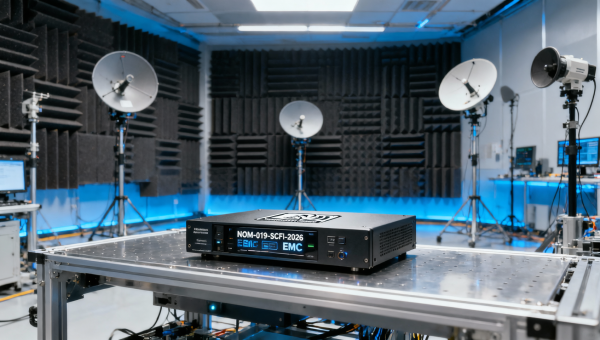
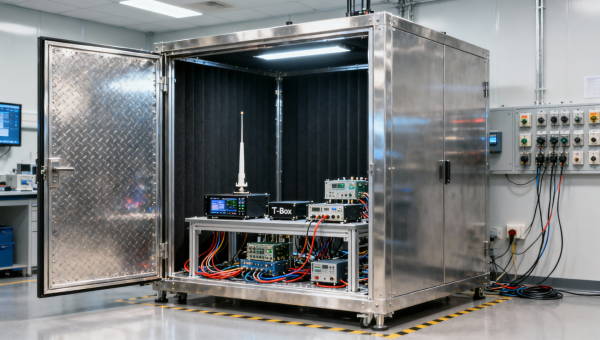
 Mexico NOM-019-SCFI-2026 Effective May 1, 2026: EMC Certification Mandatory for Auto ElectronicsNOM-019-SCFI-2026 EMC certification is now mandatory for auto electronics in Mexico—effective May 1, 2026. Ensure compliance for infotainment, ADAS, OBD-II & more.
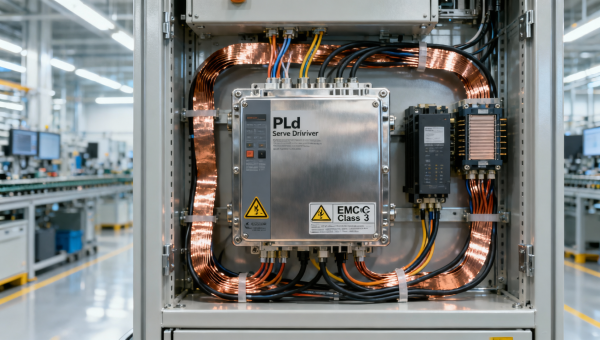
") TÜV Rheinland Updates CE Requirements for Servo Drives (PLd + EMC Class 3)TÜV Rheinland updates CE requirements for servo drives: PLd + EMC Class 3 joint validation mandatory from Q3 2026. Act now to avoid delays, rejections, or compliance risks.
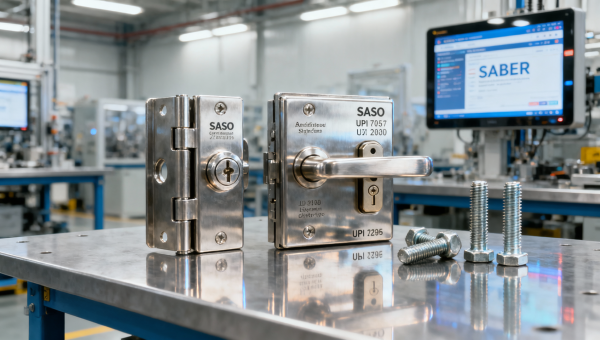
TÜV Rheinland Updates CE Requirements for Servo Drives (PLd + EMC Class 3)TÜV Rheinland updates CE requirements for servo drives: PLd + EMC Class 3 joint validation mandatory from Q3 2026. Act now to avoid delays, rejections, or compliance risks. SABER Phase II Launch: Building Hardware Must Submit Digital e-CoC & UPISABER Phase II mandates digital e-CoC & UPI for building hardware imports to Saudi Arabia—act now to ensure customs clearance and market access.
 FDA AI Diagnostic Device Draft Rules: Bias Assessment for ImportsFDA AI diagnostic device draft rules mandate bias assessment for imports — discover how algorithmic fairness impacts 510(k)/De Novo submissions and what to do now.
 RCEP Green Packaging Mutual Recognition Starts June 1, 2026RCEP Green Packaging Mutual Recognition starts June 1, 2026 — unlock faster exports to Australia, NZ, Japan & Korea with GB/T 37572-2025 certification.
 Vietnam Suspends SASO Mutual Recognition for Chinese Irrigation EquipmentVietnam suspends SASO mutual recognition for Chinese irrigation equipment—impacting exporters, testers & suppliers. Act now to avoid 6–8 week delays & 35% cost hikes.
 IMDG Code 41-24 Enforces UN3480 Class 9 Labeling for Li-ion Battery Sea FreightIMDG Code 41-24 enforces UN3480 Class 9 labeling for Li-ion battery sea freight—learn mandatory QR labels, compliance actions & port enforcement risks.
 EU CBAM Enters Enforcement Phase on April 1, 2026EU CBAM enforcement starts April 1, 2026 — critical for Chinese battery materials, construction profiles & industrial coatings exporters. Act now to avoid customs delays.
 Mexico Enforces NOM-019-SCFI-2026 EMC Certification for Auto Electronics from May 2026Mexico enforces NOM-019-SCFI-2026 EMC certification for auto electronics from May 2026 — mandatory local testing, stricter standards, and urgent compliance action required.
 Global Port Congestion Eases, but Red Sea Rerouting PersistsRed Sea rerouting persists amid easing port congestion—Shanghai–Rotterdam freight rates surge 4.2% to $5,280/TEU. Critical insights for exporters, importers & logistics leaders.
 RCEP Green Packaging Mutual Recognition Starts June 2026RCEP Green Packaging Mutual Recognition starts June 2026 — streamline exports to Australia, NZ, Japan & SK with GB/T 37572-2025 certification. Save time & costs!
 FDA AI Diagnostic Device Rules: ABIA Required from Q3 2026FDA AI diagnostic device rules now require ABIA reports from Q3 2026 — essential for 510(k)/De Novo submissions. Stay compliant, avoid delays & secure U.S. market access.
 Vietnam Suspends SASO Mutual Recognition for Chinese Irrigation EquipmentVietnam suspends SASO mutual recognition for Chinese irrigation equipment—sprinkler systems, drip controllers & irrigation systems now require local QUATEST 3 testing. Act now to avoid 12-week delays & 35% cost hikes.
") TÜV Rheinland Updates CE Certification for Industrial Robot Drives (2026 Q3)TÜV Rheinland’s 2026 Q3 CE certification update for industrial robot drives mandates PLd safety + EN 61800-3 EMC — act now to avoid EU market delays.
TÜV Rheinland Updates CE Certification for Industrial Robot Drives (2026 Q3)TÜV Rheinland’s 2026 Q3 CE certification update for industrial robot drives mandates PLd safety + EN 61800-3 EMC — act now to avoid EU market delays. IMDG Code Amendment 41-24 Takes Effect for Lithium Battery Sea FreightIMDG Code Amendment 41-24 is live: New QR labels, bilingual handling tags & SOC disclosure required for UN3480 lithium battery sea freight—act now to avoid delays.
 SASO SABER Phase II: Digital Type Test Reports Required for Building Hardware from Jun 2026SASO SABER Phase II requires digital type test reports & unique product IDs for building hardware exports to Saudi Arabia — effective June 2026. Act now to ensure compliance and avoid customs delays.
 CPSC Updates 16 CFR Part 1236: New Suffocation Test for Children's Sleep Sacks Effective July 2026CPSC Updates 16 CFR Part 1236: New suffocation test for children's sleep sacks takes effect July 2026 — ensure compliance, avoid delays & protect your U.S. market access.
 EN IEC 62471-2:2026 Effective Oct 2026 for EU LED Lighting ExportsEN IEC 62471-2:2026 mandates full-spectrum photobiological safety testing (200–3000 nm) for all EU-bound LED lighting — effective 1 Oct 2026. Act now to secure CE marking & avoid market access delays.
 AI Patent Tools Security Flaw Triggers Compliance ReviewAI Patent Tools security flaw exposed—triggering urgent compliance reviews for medical device, semiconductor & AI firms. Act now to secure submissions.
















Popular Tags
Global Trade Insights & Industry
Our mission is to empower global exporters and importers with data-driven insights that foster strategic growth.
Search News
Popular Tags
Industry Overview
The global commercial kitchen equipment market is projected to reach $112 billion by 2027. Driven by urbanization, the rise of e-commerce food delivery, and strict hygiene regulations.