

MIIT Launches Space-Based Computing & Power-Compute Coordination
On April 27, 2026, China’s Ministry of Industry and Information Technology (MIIT) issued the Three-Year Action Plan for High-Quality Development of the Computing Power Industry, introducing two novel strategic initiatives: forward-looking research on ‘space-based computing’ and pilot implementation of ‘power-compute coordination’. This development signals implications for data center infrastructure exporters, green energy integrators, and modular IDC solution providers—particularly those targeting arid, high-temperature regions such as the Middle East and Central Asia.
Event Overview
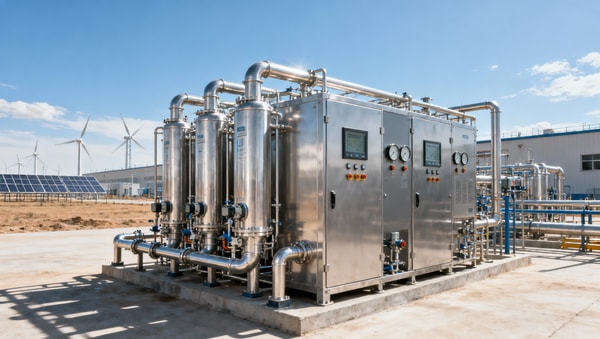
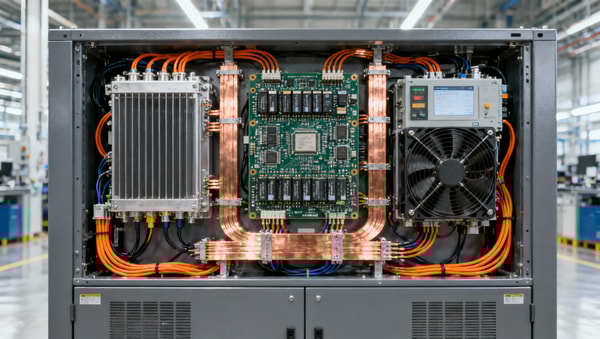
On April 27, 2026, MIIT released the Three-Year Action Plan for High-Quality Development of the Computing Power Industry. The document formally proposes: (1) preliminary research on ‘space-based computing’ as a long-term strategic direction; and (2) demonstration projects for ‘power-compute coordination’, focusing on wind-solar-storage-integrated intelligent computing centers designed for modular export. Two pilot deployments have been completed—in Kazakhstan and the United Arab Emirates—using Chinese-standard liquid-cooled servers coupled with photovoltaic microgrids. Measured PUE is 1.08, representing a 41% energy saving versus conventional data center solutions. The architecture is explicitly targeted at high-heat, water-scarce regions.
Industries Affected by Segment
Direct Exporters of Modular Data Center Solutions
These firms supply prefabricated, containerized, or skid-mounted intelligent computing infrastructure—including integrated cooling, power, and IT modules. They are affected because MIIT’s plan designates ‘modular export’ as a policy-supported pathway, with technical specifications (e.g., liquid-cooling + PV microgrid) now codified in national guidance. Impact manifests in shifting tender requirements abroad: overseas clients in target markets may begin referencing China’s PUE benchmark (1.08) and system-level integration standards—not just component specs.
Manufacturers of Liquid-Cooled Servers and Thermal Management Systems
Suppliers of immersion or direct-to-chip liquid cooling hardware face increased demand alignment, as the Kazakhstan and UAE pilots rely on China-standard liquid-cooled servers. Impact includes tighter specification adherence (e.g., interface protocols, maintenance access, thermal dissipation thresholds) and potential consolidation around vendors already qualified for MIIT-backed deployments. No new certifications are mandated yet, but interoperability with PV microgrid control systems is now a de facto functional requirement.
Renewable Energy Integration Providers (PV + Storage + Grid Control)
Firms specializing in distributed solar generation, battery storage, and smart microgrid controllers are directly engaged in the ‘power-compute coordination’ pillar. The pilots demonstrate co-location and real-time load matching between compute workloads and local PV output. Impact lies in accelerated adoption of dynamic load-shifting logic and DC-coupled architectures—moving beyond simple ‘solar-powered IDC’ toward true power-aware computing scheduling.
Supply Chain and Logistics Service Providers for Cross-Border Infrastructure Projects
Companies offering customs-compliant packaging, climate-resilient transport, and on-site commissioning support for modular data centers face evolving service scope. The Kazakhstan and UAE deployments require logistics adapted to extreme ambient temperatures (>45°C) and dust exposure—conditions not typical for standard IT equipment shipping. Impact includes higher demand for pre-deployment environmental hardening verification and localized after-sales technical staffing aligned with Chinese technical documentation and maintenance protocols.
What Enterprises and Practitioners Should Focus On Now
Monitor official technical annexes and pilot evaluation reports
The Action Plan is high-level; its operational impact hinges on forthcoming supporting documents—including standardized interfaces for liquid-cooled server–PV microgrid communication, and performance validation criteria for ‘power-compute coordination’. These are expected in Q3–Q4 2026. Until then, current pilots remain reference cases—not binding templates.
Track procurement patterns in Kazakhstan and UAE—and watch for replication signals in Saudi Arabia and Uzbekistan
The two live pilots serve as proof-of-concept sites. Early procurement decisions there (e.g., second-phase expansions, vendor diversification, or localization of spare parts inventory) will indicate whether this model gains traction beyond initial demonstration. Saudi Arabia and Uzbekistan have publicly expressed interest in similar deployments; their upcoming RFPs should be scanned for language echoing MIIT’s ‘PUE ≤1.08’ and ‘wind/solar/storage co-location’ requirements.
Distinguish between policy signal and near-term commercial viability
‘Space-based computing’ remains a conceptual research item with no defined timeline, budget, or technical roadmap in the published plan. It should be interpreted as a horizon-scanning exercise—not an immediate product development trigger. In contrast, ‘power-compute coordination’ has active pilots, measurable KPIs (PUE), and export-ready modules; it warrants dedicated cross-functional review (sales, engineering, compliance).
Prepare for system-level qualification—not just component certification
Future tenders influenced by this plan will likely require validation of full stack performance: e.g., server thermal behavior under variable PV input, microgrid stability during compute load spikes, and failover behavior during partial solar outage. Firms should begin internal testing against these combined scenarios—even without formal certification mandates yet.
Editorial Perspective / Industry Observation
Observably, this initiative is best understood as a coordinated infrastructure export strategy—not a pure technology advancement announcement. The pairing of ‘space-based computing’ (a symbolic, future-facing term) with concrete, field-tested ‘power-compute coordination’ pilots suggests deliberate framing: one element builds long-term narrative credibility, while the other delivers immediate, bankable differentiators for overseas infrastructure bids. Analysis shows that the PUE-1.08 benchmark and liquid-cooling + PV microgrid configuration are technically achievable today—but scalability depends less on innovation and more on harmonizing procurement, financing, and regulatory approval across host countries. From an industry perspective, this is currently a strong policy signal—not yet an established market outcome—but one that shifts competitive benchmarks in emerging-market IDC development.
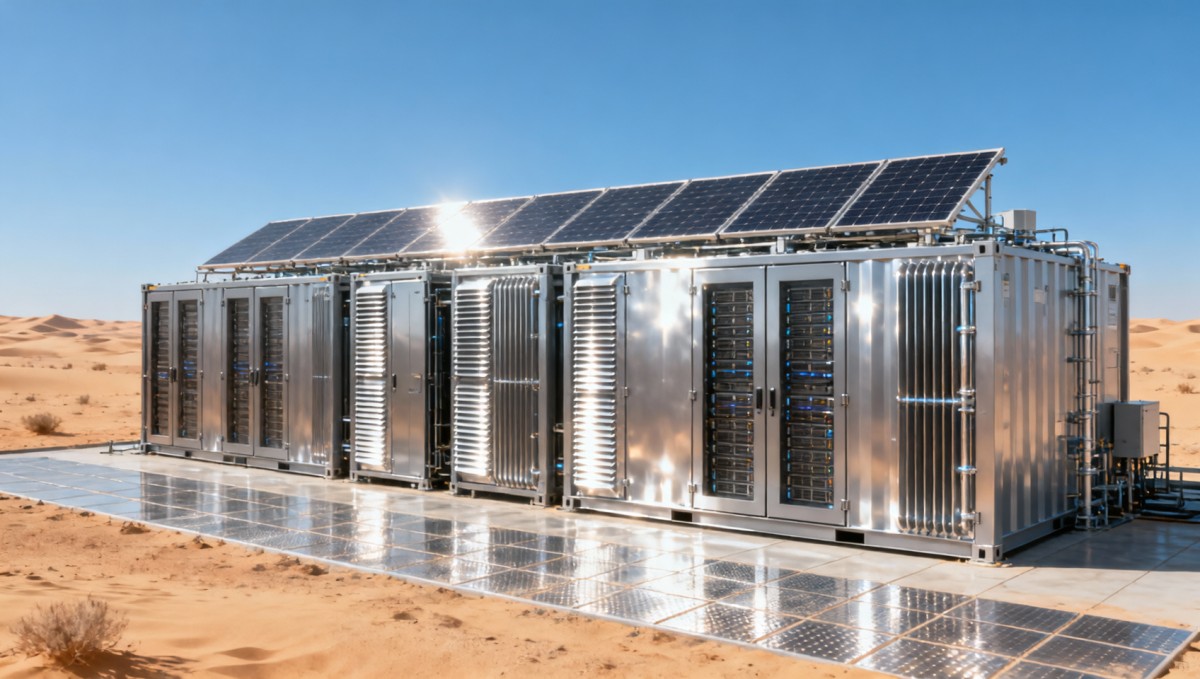
This development marks a structural pivot toward system-integrated, climate-adapted computing infrastructure as a definable export category—distinct from generic server or energy hardware sales. It reflects growing alignment between domestic green computing policy and overseas infrastructure demand in heat-stressed geographies. For stakeholders, the most rational interpretation is not that ‘space-based computing’ is imminent, but that China is institutionalizing a replicable, low-PUE, off-grid-capable IDC blueprint—with tangible early deployments serving as reference anchors.
Source: Ministry of Industry and Information Technology (MIIT) of the People’s Republic of China — Three-Year Action Plan for High-Quality Development of the Computing Power Industry, issued April 27, 2026. Note: Technical annexes, pilot evaluation metrics, and expansion timelines remain pending official release and are subject to ongoing observation.
Recommended News
 MIIT Launches Space-Based Computing & Power-Compute CoordinationMIIT launches space-based computing & power-compute coordination—boosting modular IDC exports, liquid-cooled servers, and solar-powered data centers for arid regions.
 Tangshan Iron Tower Smart Base Processes 600K Tons Steel AnnuallyTangshan Iron Tower Smart Base processes 600K tons steel annually—42× faster angle steel marking, API-enabled traceability for Belt and Road infrastructure projects.
 Q1 2026 Lithium Battery Export Prices Rise 11.3% for ESSQ1 2026 Lithium Battery Export Prices Rise 11.3% for ESS — $128/kWh amid UL 9540A costs, freight normalization & surging demand in Vietnam, Germany, Australia.
 China Launches 'Model-Data Resonance' Initiative for AI+Manufacturing InteroperabilityChina's 'Model-Data Resonance' initiative launches AI+Manufacturing interoperability standard—key for global buyers, OEMs & integrators seeking seamless smart factory integration.
 China's First Embodied AI Robot Export Liability Insurance Launched in GuangxiChina's first Embodied AI Robot Export Liability Insurance launched in Guangxi—covers AI decision errors, data breaches & third-party harm for robotics, medtech & security exporters.
 State Grid’s $680M Embodied AI Equipment Procurement LaunchesState Grid’s $680M embodied AI equipment procurement demands IEC 62443 & GB/T 38925 compliance—unlock global infrastructure bids now.
 RCEP Green Packaging Mutual Recognition Extended to AU, NZ, JP, KRRCEP green packaging mutual recognition now extends to AU, NZ, JP, KR — unlock faster customs clearance & 22% lower inspection costs for GB/T 38727-2020-compliant sustainable food packaging exports from China.
 Tangshan Beijiao Thermal Power Unit 1 A-Check StartsTangshan Beijiao Thermal Power Unit 1 A-Check starts Apr 2026 — urgent demand for domestic industrial valves, high-temp sensors & fire-resistant cables. Act now to secure Q3 2026 supply.
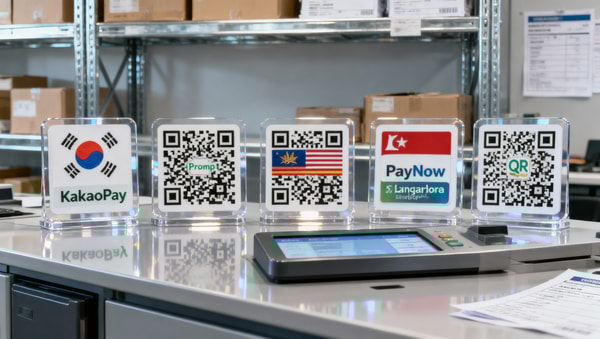
 WeChat Pay Integrates QR Codes from 5 Countries for Cross-Border B2B PaymentsWeChat Pay integrates QR codes from 5 countries for cross-border B2B payments—faster T+0 settlement, 35% lower fees, and seamless USD 50K transactions.
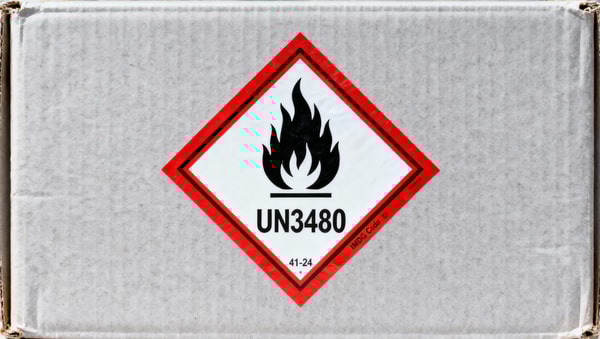
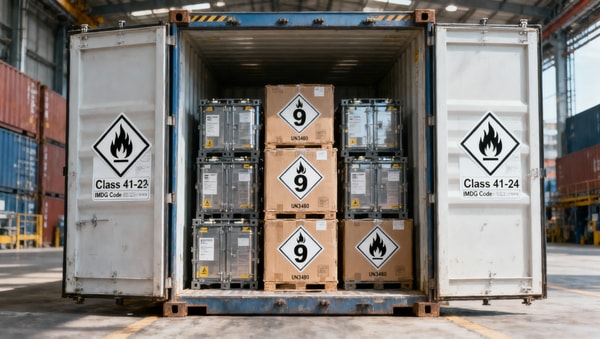
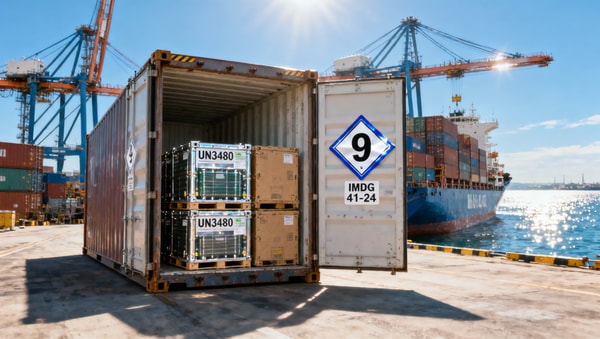
 IMDG Code 41-24 Enforces New UN3480 Labeling for Lithium BatteriesIMDG Code 41-24 mandates new UN3480 labeling for lithium batteries from 29 April 2026 — avoid shipment rejection. Act now to ensure compliance.
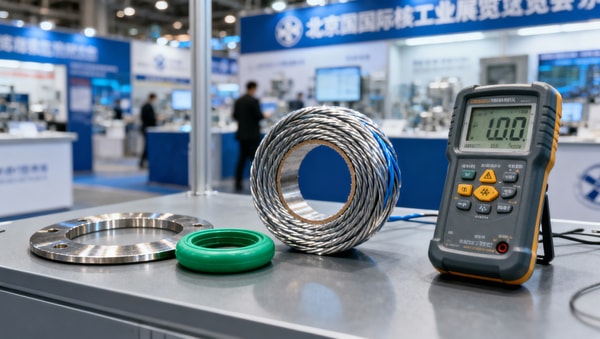
 China-France Nuclear Cooperation Advances at Beijing ExpoChina-France nuclear cooperation advances: mutual recognition for nuclear-grade seals, cables & radiation monitors boosts export readiness for suppliers targeting EU and BRI projects.
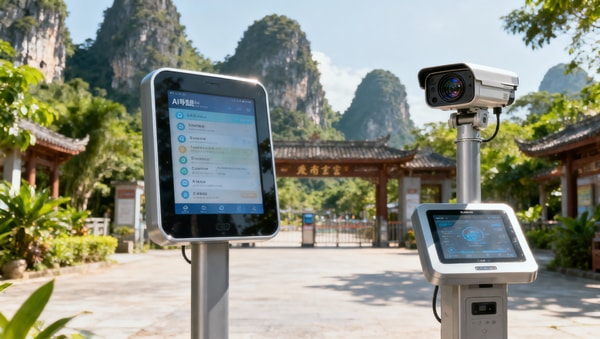
 Vietnam’s 4 Provinces Seek AI Tourism Tech in NanningAI tourism tech in demand: Vietnam’s 4 provinces seek AI-guided terminals, multilingual interpretation, AI-CCTV & smart ticketing in Nanning—key opportunity for B2G exporters.
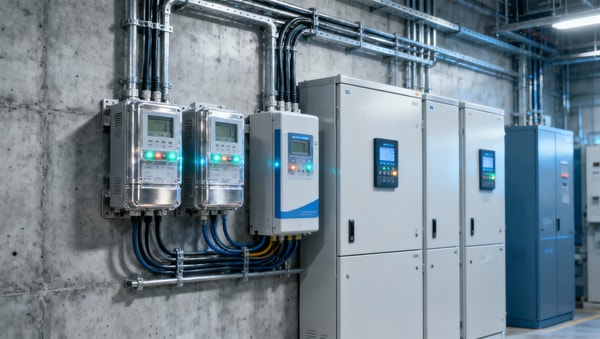
 Q1 2026 China Power Market Trading Up 25.6%: Smart Meters, Storage Export Demand RisesSmart meters, energy storage exports surge as China’s Q1 2026 power market trading jumps 25.6% — key signal for global manufacturers & channel partners.
 China First Country with 5M+ Active Invention PatentsChina first country with 5M+ active invention patents—key for buyers in AI, solar, lithium battery & energy storage. Discover IP implications for sourcing, compliance & supplier vetting.
 Shenneng Etorkeqi Green Ammonia Project: Deionized Water Station OperationalShenneng Etorkeqi Green Ammonia Project’s deionized water station is now operational—ISO 8502-3 compliant, fully integrated, and a key milestone for global green hydrogen developers and exporters.
 China Launches 'Model-Data Resonance' Initiative for AI+Manufacturing InteroperabilityModel-Data Resonance initiative boosts AI+manufacturing interoperability—learn how GB/T XXXX–2026 aligns with VDI 2182 & ISA-95 for smoother global factory deployments.
 China’s First Embodied AI Robot Insurance Launched in GuangxiChina’s first embodied AI robot insurance launched in Guangxi—key for robotics exporters, AI hardware makers & global compliance teams. CE-recognized, EU/UK/AU-ready.
 IMDG Code 41-24 Enforced: UN3480 Lithium Battery Labeling Now MandatoryIMDG Code 41-24 is now mandatory: UN3480 lithium battery labeling, documentation & packaging rules are enforced globally as of 28 April 2026 — avoid port rejections!
 State Grid’s $680M Embodied AI Procurement Signals Export OpportunityEmbodied AI, IEC 61850 & IEC 62443: State Grid’s $680M procurement unlocks export opportunities for compliant industrial robots and smart vision systems in emerging markets.
 IMDG Code 41-24 Enforces UN3480 Class 9 Labeling for Lithium Battery Sea FreightIMDG Code 41-24 mandates UN3480 lithium battery sea freight to display durable Class 9 labels from April 27, 2026—avoid delays & port rejections.
 ESS Key Component Prices Drop ~80%: Quality & Compliance RiseESS key component prices dropped ~80%—but quality & compliance demands surged. Discover how UL 9540A, AS/NZS 5139, and certified BMS/inverters now define market access.








Popular Tags
Global Trade Insights & Industry
Our mission is to empower global exporters and importers with data-driven insights that foster strategic growth.
Search News
Popular Tags
Industry Overview
The global commercial kitchen equipment market is projected to reach $112 billion by 2027. Driven by urbanization, the rise of e-commerce food delivery, and strict hygiene regulations.