

CNC Machining Manufacturer or Trader: Which Fits Better?
Choosing between a CNC machining manufacturer and a trader can directly affect CNC machining cost, quality control, lead time, and long-term sourcing efficiency. For buyers comparing a CNC machines manufacturer with supply intermediaries, this guide explains the key differences, hidden risks, and strategic advantages to help procurement teams, distributors, and market researchers make smarter global sourcing decisions.
If your priority is better process control, technical transparency, and stable long-term production, working directly with a CNC machining manufacturer is usually the better fit. If your priority is supplier access, communication convenience, mixed sourcing, or lower coordination effort for smaller or more fragmented orders, a trader may be more suitable. The right choice depends less on labels and more on your order complexity, quality requirements, internal purchasing capability, and risk tolerance.
What buyers are really trying to decide
Most searchers looking up “CNC machining manufacturer or trader” are not looking for a textbook definition. They want to know which option is safer, more cost-effective, and easier to manage in real procurement scenarios. Procurement teams, sourcing analysts, distributors, and commercial evaluators typically want answers to a few practical questions:
- Will buying direct from a CNC machines manufacturer really reduce cost?
- Who gives better quality consistency and faster issue resolution?
- Does a trader add value or just markup?
- Which model is better for prototypes, low-volume orders, or multi-part sourcing?
- How can I verify whether a supplier is a real manufacturer or only acting as one?
That is the real decision framework. In most cases, the choice is not about who sounds more credible in sales communication. It is about who can deliver the right balance of price, process capability, accountability, and supply chain stability.
CNC machining manufacturer vs trader: the practical difference
A CNC machining manufacturer owns or directly controls the machining process. That usually means they have their own workshops, machines, engineers, quality systems, operators, and production planning. They can discuss tolerances, tooling, material selection, process routes, and scrap control with greater depth because they are managing production at the source.
A trader, by contrast, usually does not perform the machining work in-house. Instead, they source from one or more factories and manage customer communication, quotation, project coordination, documentation, and delivery. Some traders specialize in industrial categories and can be highly effective, especially when buyers need multiple processes or do not want to manage several factories at once.
In simple terms:
- Manufacturer: stronger production control, deeper technical visibility, often better for repeat orders and engineering-sensitive parts.
- Trader: stronger sourcing flexibility, broader supplier access, often useful for consolidated procurement or buyers needing service support.
The confusion is that many companies position themselves as a CNC machines manufacturer even when they outsource most or all orders. That is why verification matters more than website wording.
When a CNC machining manufacturer is usually the better choice
Buying direct from a manufacturer is often the best option when the project requires technical precision and long-term control. This is especially true in the following situations:
- Tight tolerances or complex geometry: Direct communication with process engineers reduces misinterpretation and improves manufacturability feedback.
- Repeat production: Stable process control, fixture optimization, and continuous improvement are easier when the same factory owns the process.
- Strict quality requirements: A real manufacturer can usually provide clearer in-process inspection data, root cause analysis, and corrective actions.
- Cost-sensitive medium or high volumes: Removing extra layers may reduce markup and improve price transparency.
- Confidential designs: Fewer intermediaries can reduce IP exposure.
For professional buyers, the biggest advantage is not just lower unit price. It is better control over the full production chain. That often leads to fewer hidden costs from rework, delay, scrap, and communication mistakes.
When a trader may fit better
Traders are not automatically a worse choice. In some cases, they are the more efficient sourcing model.
A capable trader may be the better fit when:
- You need several processes in one project: machining, casting, sheet metal, surface treatment, assembly, and packaging may be easier to coordinate through one source.
- Your order volume is small: some manufacturers prioritize larger accounts, while traders may be more flexible with low-volume or mixed orders.
- You are entering a new supply market: traders with established factory networks can shorten supplier search time.
- Your internal sourcing team is limited: traders can reduce the burden of managing multiple vendors, follow-ups, and logistics.
- You need backup sourcing: some traders can switch production among partner factories if one supplier faces delays.
The best traders do more than forward emails. They add value by screening factories, handling communication, consolidating orders, solving cross-supplier issues, and reducing coordination costs. In those cases, their markup may be justified.
Cost: where buyers often misjudge the real difference
Many buyers assume that a manufacturer always offers the lowest CNC machining cost. That can be true, but not always. A lower quoted price does not necessarily mean lower total procurement cost.
Here is how the economics really work:
- Manufacturer direct pricing may reduce intermediary margin, but buyers may need to spend more internal time on technical clarification, follow-up, inspection management, and logistics coordination.
- Trader pricing may include markup, but can lower sourcing friction, reduce supplier search costs, and bundle services that prevent expensive errors.
The better question is: What is the total landed and managed cost?
That should include:
- Unit price
- Tooling or setup cost
- Sampling and revision cost
- Inspection cost
- Communication and coordination time
- Logistics and packaging
- Cost of delays or rejected parts
- After-sales issue handling
For standardized and repeatable parts, manufacturers often win on total cost. For fragmented sourcing tasks or low-complexity projects involving several suppliers, traders can sometimes deliver better operational efficiency despite a higher headline quote.
Quality control and accountability: the biggest dividing line
If quality risk is your main concern, this is usually the most important section of the decision.
With a real CNC machining manufacturer, quality accountability is often more direct. The same organization that quotes the part is usually responsible for process planning, machining, inspection, and corrective action. That can make problem-solving faster and more evidence-based.
With a trader, quality depends heavily on how well they manage factory selection and process oversight. A professional trader may have strong supplier qualification systems and independent QC procedures. A weak trader may simply pass quality claims back and forth, causing delay and ambiguity.
Ask yourself these questions:
- Who owns the quality plan?
- Who approves first article samples?
- Who performs in-process inspection?
- Who handles nonconformance analysis?
- Can the supplier provide traceable measurement records?
If the answers are vague, the sourcing model may be adding risk. For precision parts, medical components, industrial equipment parts, and mission-critical applications, direct manufacturer control is usually safer unless the trader has a clearly proven quality management system.
Lead time, communication, and engineering response
Lead time is not only about machine availability. It is also about how quickly technical questions are answered and how efficiently issues are resolved.
A CNC machines manufacturer often has an advantage when parts require engineering discussion. Design-for-manufacturing feedback, tolerance review, material substitution analysis, and process adjustments can move faster when the buyer speaks directly with the production side.
However, some buyers experience smoother communication with traders, especially when:
- the trader has stronger English or multilingual support,
- the buyer is sourcing from a region with communication barriers,
- the project involves multiple factories and consolidated scheduling.
So the right comparison is not just “factory vs middleman.” It is “direct technical access vs managed communication convenience.” If your drawings are complex and revisions are frequent, direct factory access usually matters more. If your project is straightforward but supplier coordination is messy, a trader can reduce operational friction.
How to verify whether a supplier is a real manufacturer or just presenting as one
This is one of the most useful steps for procurement due diligence. Many sourcing mistakes happen because buyers assume they are dealing directly with a manufacturer when they are not.
Use the following checks:
- Request workshop photos and videos showing CNC machines, inspection equipment, operators, and production flow.
- Ask about machine list and capacity including machine types, spindle ranges, part size limits, and monthly output.
- Discuss process details such as tolerance capability, fixture design, deburring methods, and material machining experience.
- Request quality documentation such as inspection reports, calibration records, PPAP-style files where applicable, or sample control plans.
- Arrange a video audit or on-site audit if order value or risk level justifies it.
- Check business scope consistency across website, certificates, export records, and company registration information where available.
- Evaluate response depth because real manufacturers usually answer technical questions more specifically than pure traders.
It is also important to note that some hybrid suppliers operate both as manufacturer and trader. They may machine some parts in-house and outsource overflow or special processes. That is not necessarily a problem, as long as they disclose it clearly and manage it well.
Which option fits different buyer scenarios?
Here is a practical way to match sourcing model to need:
- Prototype with frequent drawing changes: usually better with a responsive manufacturer that can give direct engineering feedback.
- Low-volume mixed parts from multiple process categories: often better with a capable trader or sourcing integrator.
- Long-term repeat production of precision machined parts: usually better with a CNC machining manufacturer.
- Buyer with limited technical staff: a trader can help, but only if they have strong project management and QC discipline.
- Cost-down sourcing for mature parts: compare both models, but focus on total cost and defect risk, not quote alone.
- Distributor or agent expanding product range: traders may help accelerate catalog expansion, while direct manufacturers may improve margin on core SKUs.
In short, the more technical, repetitive, and quality-sensitive the part is, the more direct manufacturer sourcing tends to make sense. The more fragmented, multi-supplier, or coordination-heavy the purchase is, the more a trader may add value.
A simple evaluation checklist for procurement teams
Before choosing between a manufacturer and trader, score each option on these criteria:
- Technical understanding of the part
- Speed and clarity of quotation
- Evidence of process capability
- Quality documentation and traceability
- Ability to handle revisions and engineering changes
- Price transparency
- Lead time reliability
- Communication efficiency
- Risk of hidden outsourcing
- Long-term scalability
This approach helps buyers avoid a common mistake: choosing only by price or only by presentation quality. Good sourcing decisions come from comparing operational reality, not sales claims.
Final verdict: which fits better?
There is no one-size-fits-all answer, but there is a clear pattern. If you need precision, traceability, engineering depth, and stable long-term supply, a CNC machining manufacturer is usually the stronger choice. If you need sourcing flexibility, easier coordination, access to multiple factories, or support for fragmented procurement, a trader may fit better.
The smartest buyers do not just ask, “Manufacturer or trader?” They ask:
- What level of process control do we need?
- How much internal sourcing and engineering capability do we have?
- What are the hidden risks in quality, communication, and delivery?
- Which model gives the best total procurement outcome over time?
For procurement professionals, distributors, and market researchers, the best decision comes from matching sourcing model to business objective. In CNC machining, the right partner is not simply the one closest to production or closest to the customer. It is the one that can consistently deliver the right combination of cost, capability, accountability, and supply chain reliability.
Recommended News
 US CPSC Updates Child Sleep Sack Standard Effective July 2026US CPSC updates child sleep sack standard with new DSST test—mandatory for all U.S.-bound infant sleep sacks from July 2026. Act now to ensure compliance and market access.
 Red Sea Rerouting Pushes Asia-Europe Freight Premium to $1,850/TEURed Sea rerouting pushes Asia-Europe freight premium to $1,850/TEU—impacting importers, manufacturers & logistics providers. Act now to reassess costs, lead times & contracts.
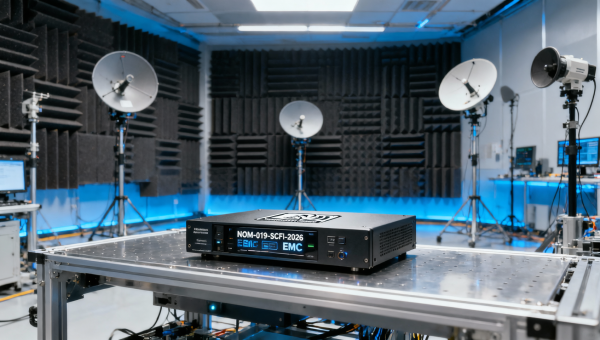
 Mexico NOM-019-SCFI-2026 Effective May 1, 2026: EMC Certification Mandatory for Auto ElectronicsNOM-019-SCFI-2026 EMC certification is now mandatory for auto electronics in Mexico—effective May 1, 2026. Ensure compliance for infotainment, ADAS, OBD-II & more.
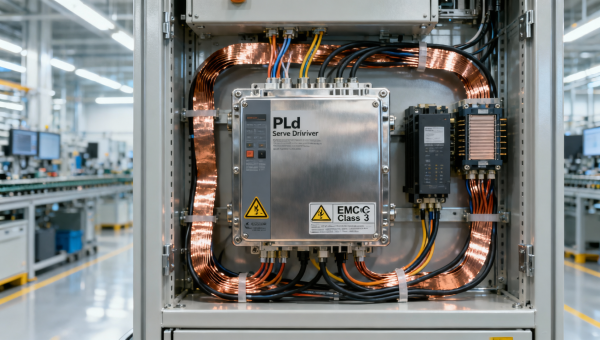
") TÜV Rheinland Updates CE Requirements for Servo Drives (PLd + EMC Class 3)TÜV Rheinland updates CE requirements for servo drives: PLd + EMC Class 3 joint validation mandatory from Q3 2026. Act now to avoid delays, rejections, or compliance risks.
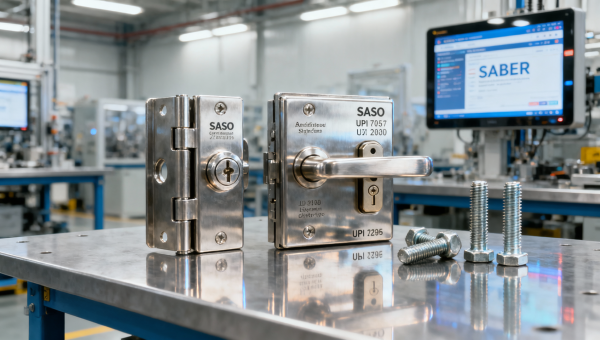
TÜV Rheinland Updates CE Requirements for Servo Drives (PLd + EMC Class 3)TÜV Rheinland updates CE requirements for servo drives: PLd + EMC Class 3 joint validation mandatory from Q3 2026. Act now to avoid delays, rejections, or compliance risks. SABER Phase II Launch: Building Hardware Must Submit Digital e-CoC & UPISABER Phase II mandates digital e-CoC & UPI for building hardware imports to Saudi Arabia—act now to ensure customs clearance and market access.
 FDA AI Diagnostic Device Draft Rules: Bias Assessment for ImportsFDA AI diagnostic device draft rules mandate bias assessment for imports — discover how algorithmic fairness impacts 510(k)/De Novo submissions and what to do now.
 RCEP Green Packaging Mutual Recognition Starts June 1, 2026RCEP Green Packaging Mutual Recognition starts June 1, 2026 — unlock faster exports to Australia, NZ, Japan & Korea with GB/T 37572-2025 certification.
 Vietnam Suspends SASO Mutual Recognition for Chinese Irrigation EquipmentVietnam suspends SASO mutual recognition for Chinese irrigation equipment—impacting exporters, testers & suppliers. Act now to avoid 6–8 week delays & 35% cost hikes.
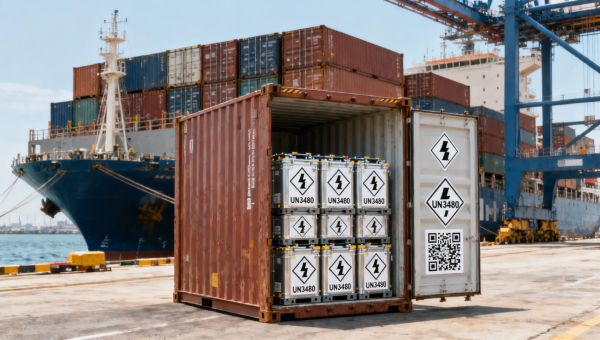
 IMDG Code 41-24 Enforces UN3480 Class 9 Labeling for Li-ion Battery Sea FreightIMDG Code 41-24 enforces UN3480 Class 9 labeling for Li-ion battery sea freight—learn mandatory QR labels, compliance actions & port enforcement risks.
 EU CBAM Enters Enforcement Phase on April 1, 2026EU CBAM enforcement starts April 1, 2026 — critical for Chinese battery materials, construction profiles & industrial coatings exporters. Act now to avoid customs delays.
 Mexico Enforces NOM-019-SCFI-2026 EMC Certification for Auto Electronics from May 2026Mexico enforces NOM-019-SCFI-2026 EMC certification for auto electronics from May 2026 — mandatory local testing, stricter standards, and urgent compliance action required.
 Global Port Congestion Eases, but Red Sea Rerouting PersistsRed Sea rerouting persists amid easing port congestion—Shanghai–Rotterdam freight rates surge 4.2% to $5,280/TEU. Critical insights for exporters, importers & logistics leaders.
 RCEP Green Packaging Mutual Recognition Starts June 2026RCEP Green Packaging Mutual Recognition starts June 2026 — streamline exports to Australia, NZ, Japan & SK with GB/T 37572-2025 certification. Save time & costs!
 FDA AI Diagnostic Device Rules: ABIA Required from Q3 2026FDA AI diagnostic device rules now require ABIA reports from Q3 2026 — essential for 510(k)/De Novo submissions. Stay compliant, avoid delays & secure U.S. market access.
 Vietnam Suspends SASO Mutual Recognition for Chinese Irrigation EquipmentVietnam suspends SASO mutual recognition for Chinese irrigation equipment—sprinkler systems, drip controllers & irrigation systems now require local QUATEST 3 testing. Act now to avoid 12-week delays & 35% cost hikes.
") TÜV Rheinland Updates CE Certification for Industrial Robot Drives (2026 Q3)TÜV Rheinland’s 2026 Q3 CE certification update for industrial robot drives mandates PLd safety + EN 61800-3 EMC — act now to avoid EU market delays.
TÜV Rheinland Updates CE Certification for Industrial Robot Drives (2026 Q3)TÜV Rheinland’s 2026 Q3 CE certification update for industrial robot drives mandates PLd safety + EN 61800-3 EMC — act now to avoid EU market delays. IMDG Code Amendment 41-24 Takes Effect for Lithium Battery Sea FreightIMDG Code Amendment 41-24 is live: New QR labels, bilingual handling tags & SOC disclosure required for UN3480 lithium battery sea freight—act now to avoid delays.
 SASO SABER Phase II: Digital Type Test Reports Required for Building Hardware from Jun 2026SASO SABER Phase II requires digital type test reports & unique product IDs for building hardware exports to Saudi Arabia — effective June 2026. Act now to ensure compliance and avoid customs delays.
 CPSC Updates 16 CFR Part 1236: New Suffocation Test for Children's Sleep Sacks Effective July 2026CPSC Updates 16 CFR Part 1236: New suffocation test for children's sleep sacks takes effect July 2026 — ensure compliance, avoid delays & protect your U.S. market access.
 EN IEC 62471-2:2026 Effective Oct 2026 for EU LED Lighting ExportsEN IEC 62471-2:2026 mandates full-spectrum photobiological safety testing (200–3000 nm) for all EU-bound LED lighting — effective 1 Oct 2026. Act now to secure CE marking & avoid market access delays.
 AI Patent Tools Security Flaw Triggers Compliance ReviewAI Patent Tools security flaw exposed—triggering urgent compliance reviews for medical device, semiconductor & AI firms. Act now to secure submissions.













Popular Tags
Global Trade Insights & Industry
Our mission is to empower global exporters and importers with data-driven insights that foster strategic growth.
Search News
Popular Tags
Industry Overview
The global commercial kitchen equipment market is projected to reach $112 billion by 2027. Driven by urbanization, the rise of e-commerce food delivery, and strict hygiene regulations.