

How to Cut CNC Machining Cost Without Lowering Quality
For buyers comparing CNC machining cost, the biggest savings rarely come from choosing the lowest quote. In most cases, the best cost reduction comes from better part design, smarter process planning, realistic tolerances, and selecting a supplier that can control waste, cycle time, and rework. If you work with a CNC machining manufacturer, a CNC machines manufacturer, or source related services such as sheet metal forming and sheet metal welding, the real goal is not just a lower unit price—it is lower total cost without sacrificing performance, delivery stability, or product consistency.
This guide explains where CNC machining cost really comes from, what buyers and sourcing teams should ask suppliers, and which actions can reduce CNC machines cost while protecting quality.
What buyers really want to know before trying to reduce CNC machining cost
The core search intent behind this topic is practical and commercial: buyers want to know how to cut CNC machining cost without creating quality issues, delivery risks, or hidden downstream expenses. They are not looking for theory alone. They want a decision framework they can apply when comparing suppliers, reviewing drawings, or negotiating production plans.
For procurement teams, distributors, and business evaluators, the main concerns are usually:
- Which cost factors can be reduced safely, and which ones should not be touched
- How part design affects machining time, scrap rate, and tooling expense
- How to compare quotes from different CNC machining manufacturers fairly
- When a lower price actually leads to higher total cost
- How to maintain tolerance, repeatability, and surface finish while reducing spend
That means the most useful content is not broad industry background. It is specific guidance on design-for-manufacturing, quote analysis, batch sizing, material selection, supplier capability, and quality risk control.
Where CNC machining cost actually comes from
Before reducing cost, it helps to understand what you are paying for. CNC machining pricing is usually driven by a combination of:
- Material cost: raw stock type, grade, size, and waste rate
- Machine time: spindle time, setup time, and changeover time
- Part complexity: number of features, deep cavities, thin walls, tight corners, and difficult access areas
- Tolerance and surface requirements: tighter tolerances often mean slower machining and more inspection
- Tooling wear: especially with hard metals or abrasive materials
- Secondary operations: deburring, anodizing, heat treatment, plating, assembly, sheet metal welding, or sheet metal forming
- Inspection and quality control: CMM checks, first article inspection, documentation, and traceability
- Logistics and packaging: especially for export orders or fragile precision parts
Many buyers focus only on per-piece price, but the more important metric is total delivered value. A cheaper supplier that causes scrap, delays, or unstable dimensions can quickly become more expensive than a supplier with a slightly higher quoted price.
Start with design optimization, because this is often the biggest cost lever
If you want to reduce CNC machining cost without lowering quality, design optimization is usually the first and most effective place to act. Small drawing changes can significantly reduce machine time while preserving the part’s functional performance.
Key opportunities include:
- Relax unnecessary tight tolerances: not every feature needs extreme precision. Apply tight tolerances only where function truly requires them.
- Use standard hole sizes and thread sizes: standardization reduces tooling changes and programming complexity.
- Avoid deep narrow pockets: they require longer tools, slower feeds, and higher vibration risk.
- Increase internal corner radii where possible: sharp internal corners are expensive in CNC machining.
- Reduce excessive wall thinness: thin walls deform easily and take more careful machining.
- Limit cosmetic-only features: decorative contours, unnecessary chamfers, and non-functional detailing increase cycle time.
- Design around stock material sizes: this reduces material waste and machining removal volume.
For sourcing teams, one of the best questions to ask a CNC machining manufacturer is: “Can you suggest any design changes that reduce cost without changing function?” A capable supplier should be able to answer this clearly.
Review tolerances feature by feature, not as a blanket requirement
One of the most common reasons CNC machines cost becomes unnecessarily high is over-specified tolerance. Buyers sometimes apply a very tight tolerance range to an entire drawing, even though only a few critical dimensions affect assembly or performance.
A better approach is to classify features into three groups:
- Critical functional dimensions: maintain tight control
- Mating or assembly dimensions: define practical precision based on fit requirements
- Non-critical dimensions: allow wider tolerance to reduce machining time and inspection cost
This approach protects quality where it matters while removing cost from areas that do not add business value. It also helps suppliers quote more accurately and avoid building excess process margin into the price.
Choose the right material, not just the familiar one
Material choice has a major influence on CNC machining cost. Some materials are much more expensive to machine because of hardness, cutting speed limitations, or high tool wear. In other cases, the material itself may be costly even if machinability is acceptable.
When evaluating materials, buyers should look at:
- Functional requirements such as strength, corrosion resistance, weight, and thermal performance
- Machinability and expected cycle time
- Raw material availability and lead time
- Whether a more standard grade could achieve the same result
- The possibility of combining machining with sheet metal forming or fabrication for lower total cost
For example, some parts designed as fully machined components may be more economical if part of the geometry is produced through sheet metal forming, with only key surfaces finished by machining. That kind of hybrid manufacturing strategy can lower cost significantly while maintaining performance.
Reduce setups and operations to lower cost without changing the end result
Every setup adds labor, alignment time, inspection work, and risk of variation. A part that requires multiple repositioning steps is usually more expensive than one designed for efficient fixturing and fewer operations.
Ways to reduce setup-related cost include:
- Design features that can be machined from fewer orientations
- Standardize part families to reuse fixtures and programs
- Combine operations where practical
- Use consistent datums and clear drawing references
- Minimize unnecessary secondary finishing steps
This is especially important in medium-volume production, where setup efficiency has a large impact on unit economics. A skilled CNC machining manufacturer will often identify opportunities to simplify routing without weakening quality control.
Order quantity and batch planning matter more than many buyers expect
CNC machining cost is not only about geometry. It is also about how production is scheduled. Small prototype quantities naturally carry higher setup cost per unit, while well-planned batch production can spread setup and programming costs across more parts.
Buyers can improve cost efficiency by:
- Separating prototype pricing from repeat production pricing
- Consolidating orders into more efficient batch sizes when demand is predictable
- Using annual forecast agreements to secure better capacity planning
- Reducing urgent order patterns that create overtime or priority scheduling charges
If your organization frequently places low-volume rush orders, your quoted CNC machines cost may reflect instability rather than true manufacturing inefficiency. Better purchasing discipline can lower cost without touching part quality at all.
Do not compare quotes only by price—compare process assumptions
When sourcing teams request quotations from different suppliers, the lowest number may not represent the best offer. Two CNC machining manufacturers may quote the same part using completely different assumptions about tolerances, inspection depth, material source, surface treatment, or scrap allowance.
To compare quotations effectively, ask suppliers to clarify:
- Included material grade and source
- Machining process route
- Tolerance assumptions and inspection method
- Surface finish standards
- Secondary operations included or excluded
- Packaging and shipping terms
- Lead time and production capacity
- Expected yield and quality controls
This helps buyers avoid false savings. A low quote that excludes key inspections or post-processing can lead to unexpected add-on charges or field performance risk later.
Supplier capability is a cost factor, not just a quality factor
A capable supplier does more than make accurate parts. They help control overall cost through better programming, fixture design, machine utilization, process consistency, and defect prevention.
When evaluating a CNC machining manufacturer or CNC machines manufacturer, look for evidence of:
- Experience with similar materials and part geometry
- DFM feedback before production
- Stable quality systems and documented inspection procedures
- Equipment suited to your tolerance and volume requirements
- Transparent communication on lead times, risks, and change management
- Ability to integrate related processes such as sheet metal welding or finishing
A supplier with strong process control may quote slightly higher at first, but often lowers your total cost through fewer non-conformities, smoother ramp-up, and more reliable repeat orders.
Cut hidden costs by preventing rework, scrap, and supply disruption
Many companies try to reduce CNC machining cost through unit-price pressure, yet overlook the biggest hidden costs:
- Incoming quality failures
- Rework and sorting labor
- Assembly downtime caused by dimensional issues
- Replacement shipments and expedited freight
- Customer complaints and warranty exposure
- Internal engineering time spent resolving preventable issues
If a supplier can consistently deliver conforming parts with stable lead times, that reliability has measurable financial value. For procurement professionals, this is the clearest reason not to equate “low cost” with “low price.”
Practical questions buyers should ask suppliers to lower CNC machines cost safely
If your goal is cost reduction without quality loss, use supplier discussions strategically. These questions often lead to meaningful savings:
- Which features on this drawing are the main cost drivers?
- Are any tolerances tighter than necessary for function?
- Can the part be redesigned for fewer setups?
- Would another material or stock size reduce waste?
- Can any machined features be replaced by sheet metal forming or another lower-cost process?
- What batch size gives the best balance between price and inventory risk?
- Which quality checks are essential, and which are optional?
- How can lead time planning reduce premium charges?
These questions move the conversation away from simple price bargaining and toward total-value sourcing.
When it is worth paying more
There are situations where paying a little more is the smarter commercial choice. For example:
- Critical components where failure risk is costly
- Programs requiring repeatable tolerances across multiple batches
- Export supply chains where delays create downstream penalties
- Products that need documentation, traceability, or compliance support
- Projects where supplier engineering input can improve future product cost
In these cases, a supplier’s technical depth, process maturity, and communication quality may be more valuable than a lower initial quote.
Conclusion: lower CNC machining cost by improving decisions, not lowering standards
The most effective way to reduce CNC machining cost is not to cut corners. It is to remove waste from design, planning, quoting, and supplier management. Buyers who focus on feature-level tolerances, manufacturable design, realistic batch planning, and supplier capability can often reduce spend while maintaining or even improving part quality.
For information researchers, procurement teams, business evaluators, and distribution partners, the key takeaway is simple: the best CNC machines cost strategy is based on total production value. A smart sourcing decision considers quality stability, manufacturing efficiency, and long-term supply performance—not just the lowest number on the quotation sheet.
Recommended News
 US CPSC Updates Child Sleep Sack Standard Effective July 2026US CPSC updates child sleep sack standard with new DSST test—mandatory for all U.S.-bound infant sleep sacks from July 2026. Act now to ensure compliance and market access.
 Red Sea Rerouting Pushes Asia-Europe Freight Premium to $1,850/TEURed Sea rerouting pushes Asia-Europe freight premium to $1,850/TEU—impacting importers, manufacturers & logistics providers. Act now to reassess costs, lead times & contracts.
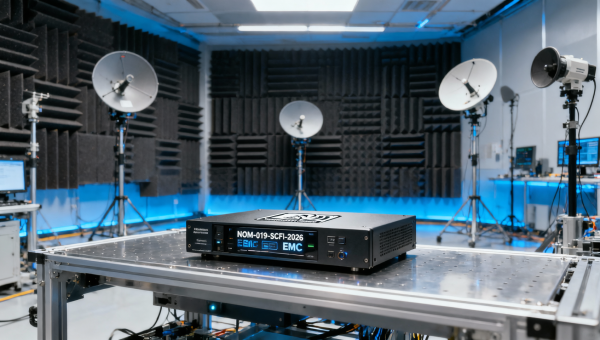
 Mexico NOM-019-SCFI-2026 Effective May 1, 2026: EMC Certification Mandatory for Auto ElectronicsNOM-019-SCFI-2026 EMC certification is now mandatory for auto electronics in Mexico—effective May 1, 2026. Ensure compliance for infotainment, ADAS, OBD-II & more.
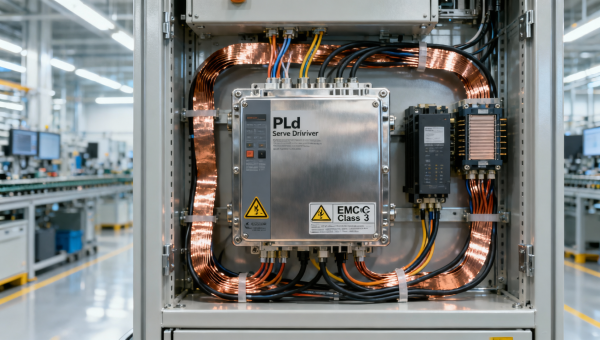
") TÜV Rheinland Updates CE Requirements for Servo Drives (PLd + EMC Class 3)TÜV Rheinland updates CE requirements for servo drives: PLd + EMC Class 3 joint validation mandatory from Q3 2026. Act now to avoid delays, rejections, or compliance risks.
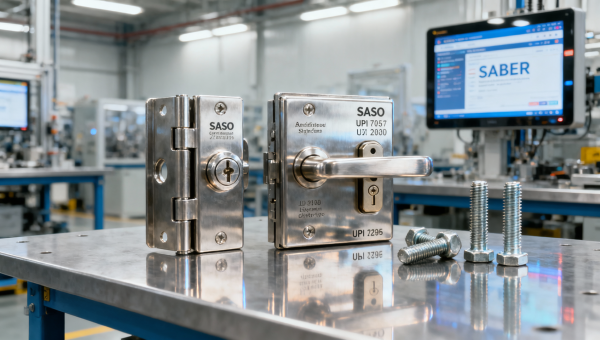
TÜV Rheinland Updates CE Requirements for Servo Drives (PLd + EMC Class 3)TÜV Rheinland updates CE requirements for servo drives: PLd + EMC Class 3 joint validation mandatory from Q3 2026. Act now to avoid delays, rejections, or compliance risks. SABER Phase II Launch: Building Hardware Must Submit Digital e-CoC & UPISABER Phase II mandates digital e-CoC & UPI for building hardware imports to Saudi Arabia—act now to ensure customs clearance and market access.
 FDA AI Diagnostic Device Draft Rules: Bias Assessment for ImportsFDA AI diagnostic device draft rules mandate bias assessment for imports — discover how algorithmic fairness impacts 510(k)/De Novo submissions and what to do now.
 RCEP Green Packaging Mutual Recognition Starts June 1, 2026RCEP Green Packaging Mutual Recognition starts June 1, 2026 — unlock faster exports to Australia, NZ, Japan & Korea with GB/T 37572-2025 certification.
 Vietnam Suspends SASO Mutual Recognition for Chinese Irrigation EquipmentVietnam suspends SASO mutual recognition for Chinese irrigation equipment—impacting exporters, testers & suppliers. Act now to avoid 6–8 week delays & 35% cost hikes.
 IMDG Code 41-24 Enforces UN3480 Class 9 Labeling for Li-ion Battery Sea FreightIMDG Code 41-24 enforces UN3480 Class 9 labeling for Li-ion battery sea freight—learn mandatory QR labels, compliance actions & port enforcement risks.
 EU CBAM Enters Enforcement Phase on April 1, 2026EU CBAM enforcement starts April 1, 2026 — critical for Chinese battery materials, construction profiles & industrial coatings exporters. Act now to avoid customs delays.
 Mexico Enforces NOM-019-SCFI-2026 EMC Certification for Auto Electronics from May 2026Mexico enforces NOM-019-SCFI-2026 EMC certification for auto electronics from May 2026 — mandatory local testing, stricter standards, and urgent compliance action required.
 Global Port Congestion Eases, but Red Sea Rerouting PersistsRed Sea rerouting persists amid easing port congestion—Shanghai–Rotterdam freight rates surge 4.2% to $5,280/TEU. Critical insights for exporters, importers & logistics leaders.
 RCEP Green Packaging Mutual Recognition Starts June 2026RCEP Green Packaging Mutual Recognition starts June 2026 — streamline exports to Australia, NZ, Japan & SK with GB/T 37572-2025 certification. Save time & costs!
 FDA AI Diagnostic Device Rules: ABIA Required from Q3 2026FDA AI diagnostic device rules now require ABIA reports from Q3 2026 — essential for 510(k)/De Novo submissions. Stay compliant, avoid delays & secure U.S. market access.
 Vietnam Suspends SASO Mutual Recognition for Chinese Irrigation EquipmentVietnam suspends SASO mutual recognition for Chinese irrigation equipment—sprinkler systems, drip controllers & irrigation systems now require local QUATEST 3 testing. Act now to avoid 12-week delays & 35% cost hikes.
") TÜV Rheinland Updates CE Certification for Industrial Robot Drives (2026 Q3)TÜV Rheinland’s 2026 Q3 CE certification update for industrial robot drives mandates PLd safety + EN 61800-3 EMC — act now to avoid EU market delays.
TÜV Rheinland Updates CE Certification for Industrial Robot Drives (2026 Q3)TÜV Rheinland’s 2026 Q3 CE certification update for industrial robot drives mandates PLd safety + EN 61800-3 EMC — act now to avoid EU market delays. IMDG Code Amendment 41-24 Takes Effect for Lithium Battery Sea FreightIMDG Code Amendment 41-24 is live: New QR labels, bilingual handling tags & SOC disclosure required for UN3480 lithium battery sea freight—act now to avoid delays.
 SASO SABER Phase II: Digital Type Test Reports Required for Building Hardware from Jun 2026SASO SABER Phase II requires digital type test reports & unique product IDs for building hardware exports to Saudi Arabia — effective June 2026. Act now to ensure compliance and avoid customs delays.
 CPSC Updates 16 CFR Part 1236: New Suffocation Test for Children's Sleep Sacks Effective July 2026CPSC Updates 16 CFR Part 1236: New suffocation test for children's sleep sacks takes effect July 2026 — ensure compliance, avoid delays & protect your U.S. market access.
 EN IEC 62471-2:2026 Effective Oct 2026 for EU LED Lighting ExportsEN IEC 62471-2:2026 mandates full-spectrum photobiological safety testing (200–3000 nm) for all EU-bound LED lighting — effective 1 Oct 2026. Act now to secure CE marking & avoid market access delays.
 AI Patent Tools Security Flaw Triggers Compliance ReviewAI Patent Tools security flaw exposed—triggering urgent compliance reviews for medical device, semiconductor & AI firms. Act now to secure submissions.
















Popular Tags
Global Trade Insights & Industry
Our mission is to empower global exporters and importers with data-driven insights that foster strategic growth.
Search News
Popular Tags
Industry Overview
The global commercial kitchen equipment market is projected to reach $112 billion by 2027. Driven by urbanization, the rise of e-commerce food delivery, and strict hygiene regulations.