

China’s 10-Dept AI Ethics Review Rule for Exported AI Devices
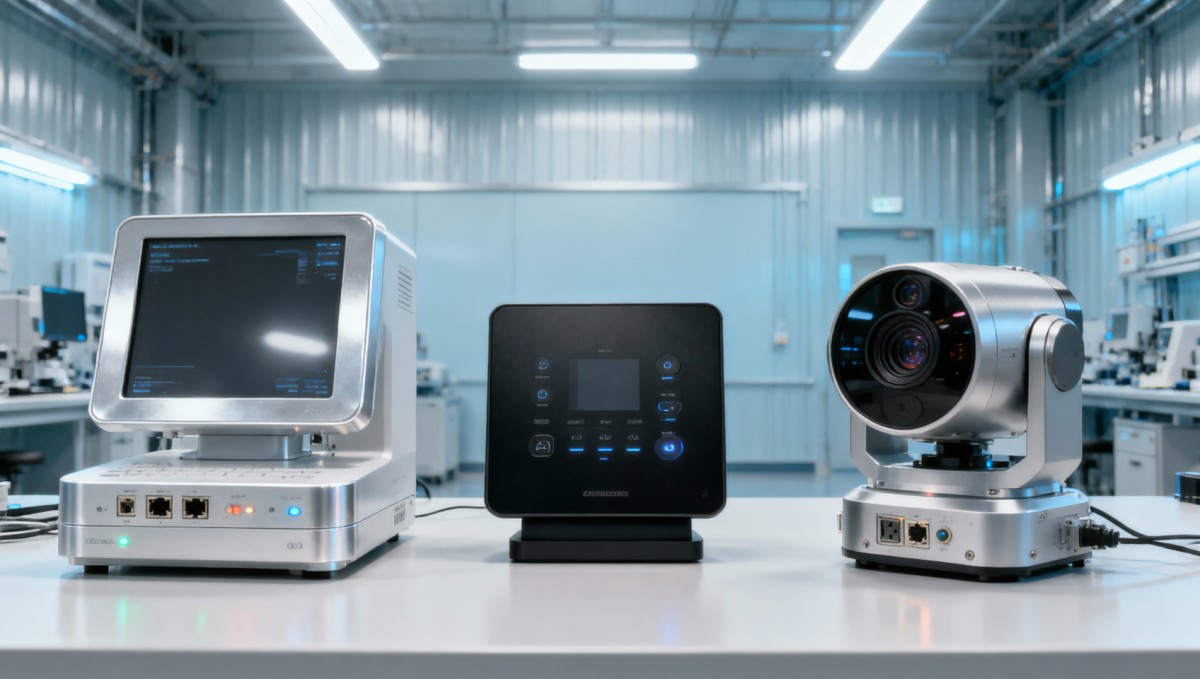
On April 21, 2026, ten Chinese government departments—including the Ministry of Industry and Information Technology—jointly issued the Interim Measures for Artificial Intelligence Science and Technology Ethics Review and Services. The regulation introduces mandatory algorithmic bias impact assessments for AI application devices (e.g., medical equipment, smart home systems, CCTV systems, and AI software applications) intended for export. This development directly affects exporters targeting markets including the EU, Middle East, and Southeast Asia—and warrants close attention from hardware manufacturers, compliance officers, and international trade service providers.
Event Overview
On April 21, 2026, China’s Ministry of Industry and Information Technology and nine other departments officially released the Interim Measures for Artificial Intelligence Science and Technology Ethics Review and Services. The document establishes a tiered ethics review framework for AI-related scientific and technological activities. It explicitly requires that AI application devices destined for overseas markets undergo algorithmic bias impact assessment and submit an ethics compliance statement prior to export. The rule applies to categories including medical equipment, smart home devices, CCTV systems, and AI applications. No further implementation details or enforcement timelines beyond the issuance date have been publicly confirmed.
Industries Affected by the Regulation
Direct Exporters of AI Application Devices
Exporters placing AI-enabled hardware into overseas markets are directly subject to the new requirement. Their export clearance now depends on completing both the algorithmic bias assessment and formal ethics compliance declaration—adding a pre-shipment regulatory step not previously mandated at the national level. This may extend lead times, require engagement with qualified third-party assessors, and trigger documentation updates for customs and foreign import authorities.
AI Hardware Manufacturers (OEM/ODM)
Manufacturers producing AI-integrated devices—even if they do not handle export logistics directly—face upstream compliance pressure. Buyers and export partners will increasingly demand evidence of bias assessment readiness, including model documentation, training data provenance summaries, and fairness metrics. Production contracts and quality agreements may soon incorporate ethics verification clauses.
Supply Chain & Certification Service Providers
Third-party testing labs, certification bodies, and ethics advisory firms supporting AI hardware exports may see rising demand for bias evaluation services. However, no official list of accredited institutions has been published, and standardized methodologies for algorithmic bias assessment in cross-border contexts remain undefined. Service providers must monitor for forthcoming technical guidance or accreditation frameworks.
What Enterprises and Practitioners Should Monitor and Do Now
Track official implementation guidance and definitions
Current language in the Interim Measures is high-level. Enterprises should closely follow announcements from MIIT and the National Standardization Administration regarding assessment scope, acceptable methodologies, reporting formats, and recognized evaluation entities—none of which are yet specified.
Identify priority product categories and target markets
Not all exported AI devices face equal scrutiny. Companies should map their export portfolio against the listed categories (medical equipment, smart home, CCTV, AI applications) and prioritize preparation for high-regulation destinations—particularly the EU, where the AI Act already mandates similar risk-based conformity requirements.
Distinguish policy signal from operational mandate
This is an interim measure—not yet codified into law or supported by detailed enforcement protocols. While it signals stronger alignment between China’s domestic AI governance and international market expectations, actual customs or port-level enforcement mechanisms have not been confirmed. Companies should treat this as a forward-looking compliance signal rather than an immediately executable checklist.
Begin internal documentation and cross-functional coordination
Firms should initiate internal reviews of AI system documentation: data sourcing practices, model versioning logs, fairness testing records (if any), and user-facing transparency statements. Cross-departmental alignment among R&D, legal, quality assurance, and export operations will be essential ahead of formal assessment requirements.
Editorial Perspective / Industry Observation
From an industry perspective, this regulation is best understood as a structural signal—not yet an operational constraint. It reflects a deliberate effort to harmonize China’s AI export governance with emerging global norms, particularly around algorithmic accountability. Analysis来看, its primary function appears to be preparatory: building domestic capacity for ethics review while signaling regulatory intent to foreign trade partners and standard-setting bodies. Observation来看, the timing coincides with intensified bilateral dialogues on AI governance between China and key trading regions, suggesting coordinated timing rather than unilateral action. Current more appropriate interpretation is that this marks the beginning of a multi-year alignment process—not the activation of a fully enforceable regime.
Conclusion
This regulation does not introduce immediate export bans or certification deadlines, but it formalizes ethics review as a structural component of China’s AI hardware trade infrastructure. Its significance lies less in near-term enforcement and more in its role as a policy anchor—shaping future standards, influencing buyer expectations, and guiding enterprise-level investment in responsible AI practices. For now, it is more accurately read as a directional marker than a binding operational requirement.
Information Sources
Primary source: Official notice issued jointly by the Ministry of Industry and Information Technology and nine other departments on April 21, 2026, titled Interim Measures for Artificial Intelligence Science and Technology Ethics Review and Services.
Note: Implementation guidelines, accredited assessment bodies, standardized bias evaluation protocols, and enforcement mechanisms remain unconfirmed and are under active observation.
Recommended News
 US CPSC Updates Child Sleep Sack Standard Effective July 2026US CPSC updates child sleep sack standard with new DSST test—mandatory for all U.S.-bound infant sleep sacks from July 2026. Act now to ensure compliance and market access.
 Red Sea Rerouting Pushes Asia-Europe Freight Premium to $1,850/TEURed Sea rerouting pushes Asia-Europe freight premium to $1,850/TEU—impacting importers, manufacturers & logistics providers. Act now to reassess costs, lead times & contracts.
 Mexico NOM-019-SCFI-2026 Effective May 1, 2026: EMC Certification Mandatory for Auto ElectronicsNOM-019-SCFI-2026 EMC certification is now mandatory for auto electronics in Mexico—effective May 1, 2026. Ensure compliance for infotainment, ADAS, OBD-II & more.
") TÜV Rheinland Updates CE Requirements for Servo Drives (PLd + EMC Class 3)TÜV Rheinland updates CE requirements for servo drives: PLd + EMC Class 3 joint validation mandatory from Q3 2026. Act now to avoid delays, rejections, or compliance risks.
TÜV Rheinland Updates CE Requirements for Servo Drives (PLd + EMC Class 3)TÜV Rheinland updates CE requirements for servo drives: PLd + EMC Class 3 joint validation mandatory from Q3 2026. Act now to avoid delays, rejections, or compliance risks. SABER Phase II Launch: Building Hardware Must Submit Digital e-CoC & UPISABER Phase II mandates digital e-CoC & UPI for building hardware imports to Saudi Arabia—act now to ensure customs clearance and market access.
 FDA AI Diagnostic Device Draft Rules: Bias Assessment for ImportsFDA AI diagnostic device draft rules mandate bias assessment for imports — discover how algorithmic fairness impacts 510(k)/De Novo submissions and what to do now.
 RCEP Green Packaging Mutual Recognition Starts June 1, 2026RCEP Green Packaging Mutual Recognition starts June 1, 2026 — unlock faster exports to Australia, NZ, Japan & Korea with GB/T 37572-2025 certification.
 Vietnam Suspends SASO Mutual Recognition for Chinese Irrigation EquipmentVietnam suspends SASO mutual recognition for Chinese irrigation equipment—impacting exporters, testers & suppliers. Act now to avoid 6–8 week delays & 35% cost hikes.
 IMDG Code 41-24 Enforces UN3480 Class 9 Labeling for Li-ion Battery Sea FreightIMDG Code 41-24 enforces UN3480 Class 9 labeling for Li-ion battery sea freight—learn mandatory QR labels, compliance actions & port enforcement risks.
 EU CBAM Enters Enforcement Phase on April 1, 2026EU CBAM enforcement starts April 1, 2026 — critical for Chinese battery materials, construction profiles & industrial coatings exporters. Act now to avoid customs delays.
 Mexico Enforces NOM-019-SCFI-2026 EMC Certification for Auto Electronics from May 2026Mexico enforces NOM-019-SCFI-2026 EMC certification for auto electronics from May 2026 — mandatory local testing, stricter standards, and urgent compliance action required.
 Global Port Congestion Eases, but Red Sea Rerouting PersistsRed Sea rerouting persists amid easing port congestion—Shanghai–Rotterdam freight rates surge 4.2% to $5,280/TEU. Critical insights for exporters, importers & logistics leaders.
 RCEP Green Packaging Mutual Recognition Starts June 2026RCEP Green Packaging Mutual Recognition starts June 2026 — streamline exports to Australia, NZ, Japan & SK with GB/T 37572-2025 certification. Save time & costs!
 FDA AI Diagnostic Device Rules: ABIA Required from Q3 2026FDA AI diagnostic device rules now require ABIA reports from Q3 2026 — essential for 510(k)/De Novo submissions. Stay compliant, avoid delays & secure U.S. market access.
 Vietnam Suspends SASO Mutual Recognition for Chinese Irrigation EquipmentVietnam suspends SASO mutual recognition for Chinese irrigation equipment—sprinkler systems, drip controllers & irrigation systems now require local QUATEST 3 testing. Act now to avoid 12-week delays & 35% cost hikes.
") TÜV Rheinland Updates CE Certification for Industrial Robot Drives (2026 Q3)TÜV Rheinland’s 2026 Q3 CE certification update for industrial robot drives mandates PLd safety + EN 61800-3 EMC — act now to avoid EU market delays.
TÜV Rheinland Updates CE Certification for Industrial Robot Drives (2026 Q3)TÜV Rheinland’s 2026 Q3 CE certification update for industrial robot drives mandates PLd safety + EN 61800-3 EMC — act now to avoid EU market delays. IMDG Code Amendment 41-24 Takes Effect for Lithium Battery Sea FreightIMDG Code Amendment 41-24 is live: New QR labels, bilingual handling tags & SOC disclosure required for UN3480 lithium battery sea freight—act now to avoid delays.
 SASO SABER Phase II: Digital Type Test Reports Required for Building Hardware from Jun 2026SASO SABER Phase II requires digital type test reports & unique product IDs for building hardware exports to Saudi Arabia — effective June 2026. Act now to ensure compliance and avoid customs delays.
 CPSC Updates 16 CFR Part 1236: New Suffocation Test for Children's Sleep Sacks Effective July 2026CPSC Updates 16 CFR Part 1236: New suffocation test for children's sleep sacks takes effect July 2026 — ensure compliance, avoid delays & protect your U.S. market access.
 EN IEC 62471-2:2026 Effective Oct 2026 for EU LED Lighting ExportsEN IEC 62471-2:2026 mandates full-spectrum photobiological safety testing (200–3000 nm) for all EU-bound LED lighting — effective 1 Oct 2026. Act now to secure CE marking & avoid market access delays.
 AI Patent Tools Security Flaw Triggers Compliance ReviewAI Patent Tools security flaw exposed—triggering urgent compliance reviews for medical device, semiconductor & AI firms. Act now to secure submissions.


















Popular Tags
Global Trade Insights & Industry
Our mission is to empower global exporters and importers with data-driven insights that foster strategic growth.
Search News
Popular Tags
Industry Overview
The global commercial kitchen equipment market is projected to reach $112 billion by 2027. Driven by urbanization, the rise of e-commerce food delivery, and strict hygiene regulations.