

IMDG Code 41-24 Enforces New UN3480 Lithium Battery Labels Globally
As of 1 May 2026, the International Maritime Organization’s (IMO) International Maritime Dangerous Goods Code (IMDG Code) Amendment 41-24 enters mandatory global force—introducing revised compliance requirements for the maritime transport of UN3480 lithium-ion batteries. Exporters in China’s lithium battery, energy storage systems, electric vehicle components, and power tool sectors must now align with updated packaging, marking, documentation, and handling protocols—making this a critical operational threshold for international shipments.
Event Overview
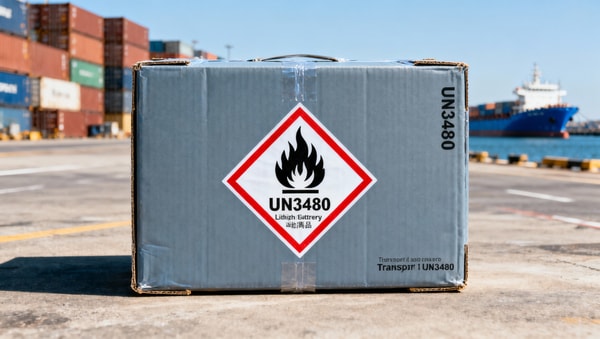
The IMO’s IMDG Code Amendment 41-24 becomes globally enforceable on 1 May 2026. It mandates new labeling requirements for UN3480 lithium-ion batteries, including compulsory use of the updated diamond-shaped hazard label, dual application of the ‘Lithium Battery Mark’ and ‘Cargo Aircraft Only’ mark, and stricter controls over packaging integrity and transport documentation. These changes apply to all seaborne shipments worldwide, regardless of origin or destination port.
Industries Affected by Segment
Direct Exporters (e.g., lithium battery OEMs, EV component manufacturers)
These entities are directly responsible for ensuring shipment-level compliance—including correct labeling, declaration forms, and container loading practices. Non-compliant consignments risk rejection at foreign ports, detention fees, customs delays, and potential return or destruction of cargo.
Contract Manufacturers & EMS Providers
Manufacturers producing finished goods containing UN3480 cells (e.g., portable power stations, e-bike battery packs) must verify label placement, outer carton markings, and accompanying transport documents—even when batteries are integrated—not just shipped as standalone items.
Logistics & Freight Forwarding Service Providers
Forwarders and NVOCCs handling lithium battery shipments face heightened liability. They must validate client-submitted documentation, confirm physical label adherence prior to vessel booking, and retain audit-ready records—failure may trigger carrier refusal or contractual penalties.
Distribution & Channel Partners (e.g., regional importers, brand distributors)
Partners receiving UN3480-containing products from Chinese suppliers must verify incoming shipments meet the new labeling and documentation standards before accepting delivery—otherwise they assume downstream compliance risk upon unloading or warehousing.
Key Compliance Focus Areas and Recommended Actions
Monitor official implementation guidance from national maritime authorities
While IMDG Code 41-24 is globally effective as of 1 May 2026, national administrations (e.g., China MSA, US Coast Guard, UK MCA) may issue clarifications or transitional notes. Analysis shows that early-adopter jurisdictions may begin enforcement audits within Q3 2026—especially at major transshipment hubs like Singapore, Rotterdam, and Los Angeles.
Review high-volume SKUs and key export markets for label and documentation readiness
Focus verification efforts on top-selling UN3480-dependent products (e.g., 10–100 Wh power banks, LFP-based home storage units, cordless drill battery packs) destined for EU, US, Japan, and ASEAN markets—where customs scrutiny and carrier vetting are most stringent.
Distinguish between regulatory signal and operational execution
Observably, many forwarders and carriers began requesting pre-shipment label checks as early as Q4 2025. However, formal enforcement—and associated penalties—only commence on 1 May 2026. Current preparation should prioritize internal SOP updates, not speculative over-compliance.
Update packaging specifications, train warehouse staff, and revise commercial invoices
Current more appropriate action includes revising print templates for outer cartons and pallet labels; training logistics personnel on dual-mark placement logic (Lithium Battery Mark + Cargo Aircraft Only); and updating commercial invoices and dangerous goods declarations to reflect updated UN number references and packing group classifications.
Editorial Perspective / Industry Observation
This update is better understood as an enforcement milestone—not a policy shift. The core classification and hazard communication principles for UN3480 have remained consistent since IMDG Code 39-18. What changes in 41-24 is the rigor of application: standardized visual labeling, explicit stacking rules for dual marks, and tighter alignment between documentation and physical presentation. From an industry perspective, it signals a maturing global framework where procedural discipline—not just technical knowledge—now defines compliance. Continued attention is warranted because enforcement consistency across ports remains uneven, and interpretation variance may persist through 2026–2027.

Conclusion: IMDG Code 41-24 does not alter the fundamental hazard profile of lithium-ion batteries—but it significantly raises the bar for demonstrable, auditable compliance in day-to-day export operations. It is best interpreted not as a new regulation, but as the formalization of long-anticipated operational expectations. Companies should treat it as a process control checkpoint—not a one-time filing requirement.
Source: International Maritime Organization (IMO), IMDG Code Amendment 41-24, adopted 2024, effective 1 May 2026. Note: National implementation guidance (e.g., from China MSA or EU Member State maritime authorities) remains under active monitoring and may be updated through mid-2026.
Recommended News
 CMDE Adds 74 External Experts to Boost Med Device Export RegistrationCMDE Adds 74 External Experts to Boost Med Device Export Registration — accelerate FDA/EU/GCC submissions for medical equipment & rehab devices.
 MIIT Launches Space-Ground Compute & Power CoordinationMIIT Launches Space-Ground Compute & Power Coordination—unlocking export opportunities in liquid cooling, optical modules & high-efficiency servers for hot-humid markets.
 2026 Bio-based Raw Material Supplier Guide Released2026 Bio-based Raw Material Supplier Guide: Discover the official White List for PLA, PHA, bamboo fiber & more — boost EU/US compliance and procurement efficiency now.
 China Launches 'Model-Data Resonance' Initiative for AI+Manufacturing StandardsChina's 'Model-Data Resonance' initiative launches AI+Manufacturing standards — CESI/AI-MFG-2026 ensures plug-and-play interoperability for CNC, AGVs, MES & more across global smart factories.
 China’s First Embodied AI Robot Export Liability Insurance Launched in GuangxiChina’s first Embodied AI Robot Export Liability Insurance launched in Guangxi—key for robot exporters targeting EU, US & Saudi markets. Secure compliance-backed coverage now.
 State Grid’s $680M Embodied AI Procurement Opens Export PathState Grid’s $680M embodied AI procurement sets global safety standards — IEC 62061 SIL2 & GB/T 38851 compliance unlocks EU/UK/NA export opportunities.
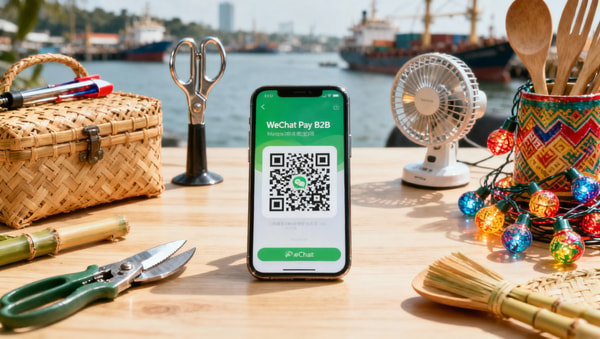
 WeChat Pay Cross-Border B2B QR Code Access in 5 ASEAN CountriesWeChat Pay Cross-Border B2B QR Code Access now live in 5 ASEAN countries — enabling real-time, local-currency settlements up to USD 50,000. Boost your hardware, garden & appliance exports today!
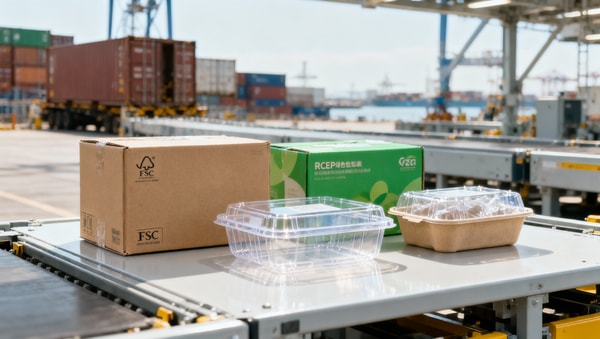
 RCEP Green Packaging Mutual Recognition Extended to AU, NZ, JP, KRRCEP Green Packaging Mutual Recognition now extends to AU, NZ, JP, KR — enabling customs-exempt clearance for certified Chinese food, infant & supplement packaging. Act now.
 IMDG Code 41-24 Enforces New UN3480 Lithium Battery Labels GloballyIMDG Code 41-24 mandates new UN3480 lithium battery labels globally from 1 May 2026—ensure compliance now to avoid shipment delays, rejections & penalties.
 CDE Adds 74 International Experts to Accelerate MedTech Export RegistrationCDE adds 74 international experts to accelerate MedTech export registration—key for IVD, imaging & rehab device exporters targeting FDA, EU MDR, Health Canada.
 MIIT Launches Space-Ground Computing & Green Data Center Export PlanMIIT's Space-Ground Computing & Green Data Center Export Plan unlocks global opportunities for liquid-cooled servers, PV direct-drive power, and satellite-ground scheduling—learn key impacts now.
 2026 Bio-based Raw Material Supplier Guide ReleasedBio-based raw material supplier guide 2026: Discover 47 ISO 16128-certified Chinese PLA, PBAT & PHA suppliers trusted by CBL, BPI & JIS.
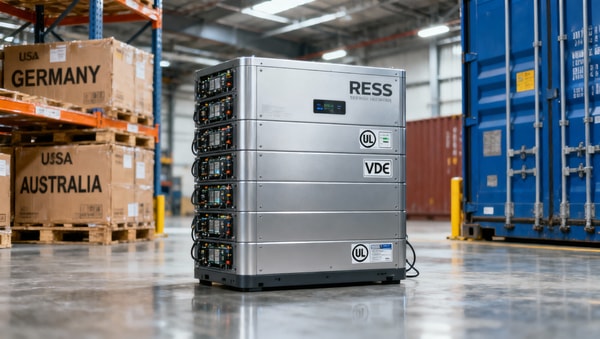
 Q1 2026 Lithium Battery Export Prices Rise 11.3% YoYQ1 2026 Lithium Battery Export Prices Rise 11.3% YoY — discover why residential energy storage systems (RESS) drove the surge and what it means for exporters, suppliers & integrators.
 ‘Modular-Data Resonance’ Initiative Launches AI+Manufacturing Interface StandardModular-Data Resonance standard GB/T 45288-2026 launches AI+manufacturing interoperability—key for smart equipment exporters, MES/SCADA & AI model developers targeting EU/US markets.
 China's First Embodied AI Robot Export Liability Insurance Launched in GuangxiChina's first Embodied AI Robot Export Liability Insurance launched in Guangxi—key for robotics exporters targeting EU & SEA markets. Get compliant, certified, and covered.
 State Grid Launches $682M Embodied AI Inspection Equipment ProcurementState Grid’s $940M embodied AI inspection tender mandates IEC 62443-4-2 & ISO 13482 certs—key for robotics makers and global compliance teams. Act now.
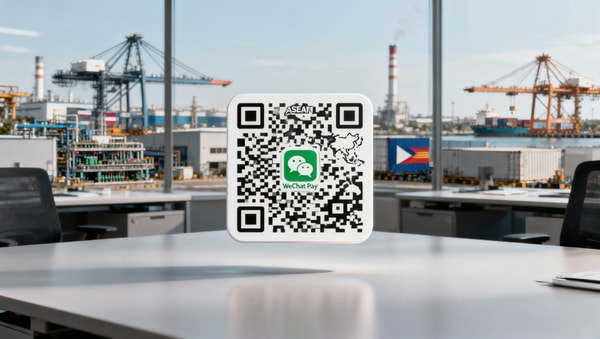
 WeChat Pay Cross-Border B2B QR Code Live in 5 ASEAN CountriesWeChat Pay Cross-Border B2B QR Code is now live in 5 ASEAN countries — enabling fast, low-cost, local-currency settlements for SMEs and trade firms. Discover how it cuts costs by 47% and accelerates procurement.
 RCEP Green Packaging Mutual Recognition Extended to AU, NZ, JP, KRRCEP Green Packaging Mutual Recognition now extends to AU, NZ, JP, KR — unlock faster customs clearance & zero on-site inspection for compliant Chinese food packaging exports.
 IMDG Code 41-24 Enforces UN3480 Lithium Battery Labeling GloballyIMDG Code 41-24 enforces global UN3480 lithium battery labeling, packaging & e-CMR rules from 1 May 2026—act now to avoid port rejections and delays.
 Medical diagnostic equipment buying mistakes often start with workflowMedical diagnostic equipment buying mistakes often begin with workflow gaps. Learn how to compare systems, uncover hidden costs, and choose suppliers that fit real clinical operations.
 Interactive whiteboards are improving, but teacher adoption is unevenInteractive whiteboards are improving fast, but teacher adoption remains uneven. Explore what drives classroom success, ROI, and smarter edtech implementation.














Popular Tags
Global Trade Insights & Industry
Our mission is to empower global exporters and importers with data-driven insights that foster strategic growth.
Search News
Popular Tags
Industry Overview
The global commercial kitchen equipment market is projected to reach $112 billion by 2027. Driven by urbanization, the rise of e-commerce food delivery, and strict hygiene regulations.