

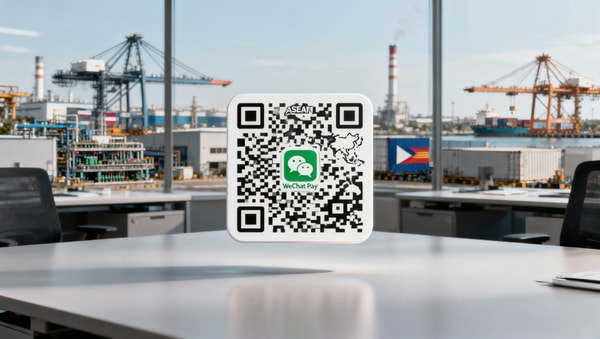
WeChat Pay Cross-Border B2B QR Code Access in 5 ASEAN Countries
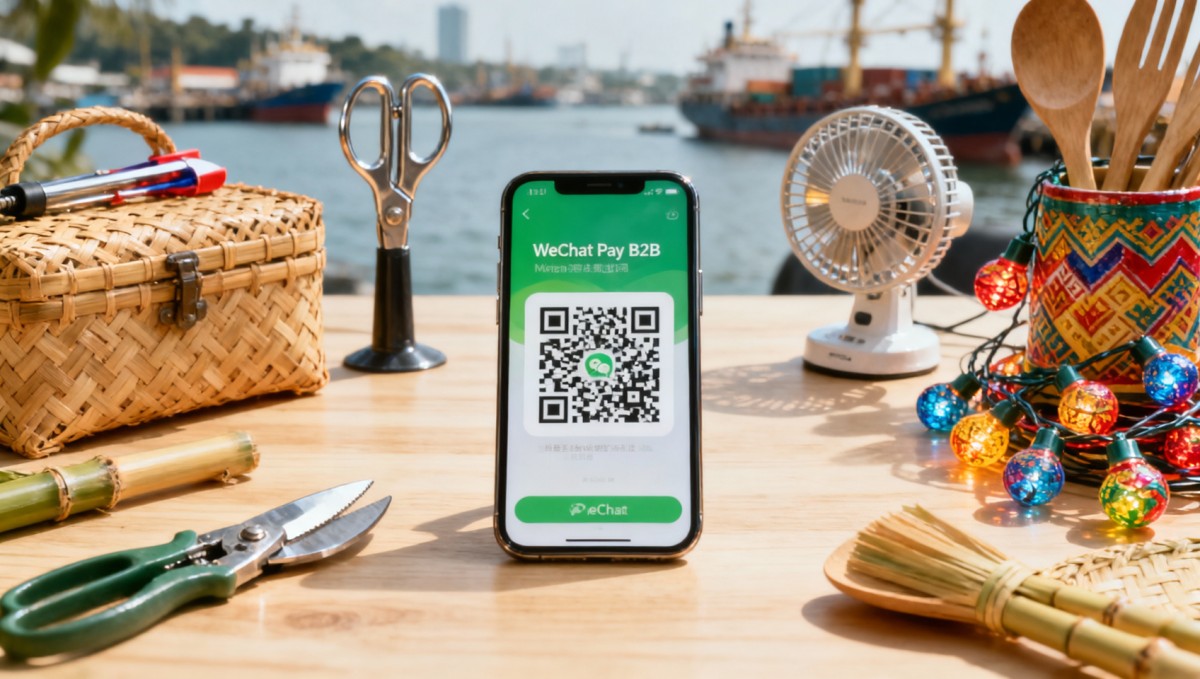
Starting May 1, 2026, central banks of Thailand, Vietnam, Malaysia, Indonesia, and the Philippines have approved local banking systems to fully connect with WeChat Pay’s cross-border B2B payment channel — enabling real-time, local-currency settlement for orders up to USD 50,000 per transaction. This development is particularly relevant for exporters of hardware tools, gardening supplies, small household appliances, and festive decorations — sectors characterized by high-frequency, low-value B2B transactions with Southeast Asian buyers.
Event Overview
Effective May 1, 2026, national central banks in Thailand, Vietnam, Malaysia, Indonesia, and the Philippines authorized domestic banks to integrate with WeChat Pay’s cross-border B2B payment infrastructure. The integration supports real-time settlement in local currencies for individual B2B transactions valued at or below USD 50,000. It eliminates reliance on SWIFT-based correspondent banking and associated intermediary fees, and enables ‘exchange rate lock upon order placement’ and ‘funds arrival upon payment confirmation’.
Industries Affected
Direct Exporting Enterprises
These enterprises — especially SMEs exporting hardware tools, garden supplies, small appliances, and seasonal décor — face shortened cash conversion cycles. With faster settlement and no SWIFT delays or middle-agent charges, working capital turnover improves directly. Impact manifests most clearly in reduced time-to-receipt (from days to seconds) and lower per-transaction FX and transfer costs.
Supply Chain & Logistics Service Providers
Firms offering integrated trade services (e.g., export documentation, customs brokerage, logistics coordination) may see shifting demand patterns. As payment finality moves earlier in the order lifecycle, clients may require tighter alignment between shipment scheduling, invoice issuance, and fund reconciliation — increasing expectations for synchronized digital workflows.
Manufacturers with Direct B2B Sales Channels
Domestic manufacturers selling directly to overseas SME buyers — rather than through distributors — gain a streamlined settlement option. This reduces dependency on third-party platforms or bank-led LC arrangements, potentially lowering entry barriers for smaller-scale international sales.
Channel Distributors & Regional Wholesalers
Entities acting as intermediaries between Chinese suppliers and end-buyers in ASEAN may experience margin pressure or renegotiation of payment terms. Buyers now hold greater leverage to request faster delivery–payment linkages, which could compress traditional credit windows or prompt re-evaluation of value-added service bundling.
What Enterprises and Practitioners Should Monitor and Do Now
Track official implementation timelines per country
While approval was granted effective May 1, 2026, rollout depends on individual banks’ technical readiness. Enterprises should verify which local banks in each of the five countries have activated the interface — and whether their buyer’s bank is among them — before committing to WeChat Pay as a primary settlement method.
Assess exposure to priority export categories
Focus attention on hardware tools, garden supplies, small appliances, and festive decorations — the four product groups explicitly cited in the event summary as benefiting from accelerated delivery–collection loops. Review current order volumes, average ticket size, and buyer geography to gauge potential impact magnitude.
Distinguish policy approval from operational readiness
The central bank approvals represent regulatory green lights, not guaranteed system uptime or universal merchant onboarding. Businesses should treat this as an infrastructure upgrade signal — not an immediate switch — and continue validating payment options case-by-case until confirmed live usage data emerges.
Prepare for updated invoicing and reconciliation protocols
Real-time settlement implies near-instantaneous fund recognition. Accounting and ERP systems must support rapid reconciliation of payments against invoices — including handling multi-currency FX locks and timestamped settlement confirmations. Firms lacking automated reconciliation may need to adjust internal controls or reporting cadence.
Editorial Perspective / Industry Observation
Observably, this development signals a structural shift toward localized, low-friction settlement infrastructures for micro- and small-ticket B2B trade — not merely a feature expansion. Analysis shows it reflects growing coordination between Chinese digital payment platforms and ASEAN monetary authorities to reduce systemic friction in regional supply chains. However, it remains more of an enabling signal than a fully scaled outcome: adoption will depend on bank-level integration speed, merchant enrollment, and buyer-side familiarity. From an industry perspective, sustained monitoring of transaction volume data — rather than just policy announcements — will be essential to assess actual traction.
Conclusion
For cross-border B2B exporters serving Southeast Asia, this update represents a meaningful step toward shortening financial cycles in low-value, high-volume trade — but one requiring careful operational calibration. It is better understood as a foundational infrastructure upgrade than an immediate revenue catalyst. Enterprises are advised to treat it as a new option to test and scale gradually — not a wholesale replacement for existing settlement methods — while prioritizing clarity on bank-level availability and system readiness across markets.
Information Sources
Main source: Official announcement regarding central bank approvals in Thailand, Vietnam, Malaysia, Indonesia, and the Philippines, effective May 1, 2026.
Note: Ongoing observation is required for country-specific bank activation status, merchant onboarding rates, and real-world transaction volume trends — none of which are confirmed in the original information.
Recommended News
 CMDE Adds 74 External Experts to Boost Med Device Export RegistrationCMDE Adds 74 External Experts to Boost Med Device Export Registration — accelerate FDA/EU/GCC submissions for medical equipment & rehab devices.
 MIIT Launches Space-Ground Compute & Power CoordinationMIIT Launches Space-Ground Compute & Power Coordination—unlocking export opportunities in liquid cooling, optical modules & high-efficiency servers for hot-humid markets.
 2026 Bio-based Raw Material Supplier Guide Released2026 Bio-based Raw Material Supplier Guide: Discover the official White List for PLA, PHA, bamboo fiber & more — boost EU/US compliance and procurement efficiency now.
 China Launches 'Model-Data Resonance' Initiative for AI+Manufacturing StandardsChina's 'Model-Data Resonance' initiative launches AI+Manufacturing standards — CESI/AI-MFG-2026 ensures plug-and-play interoperability for CNC, AGVs, MES & more across global smart factories.
 China’s First Embodied AI Robot Export Liability Insurance Launched in GuangxiChina’s first Embodied AI Robot Export Liability Insurance launched in Guangxi—key for robot exporters targeting EU, US & Saudi markets. Secure compliance-backed coverage now.
 State Grid’s $680M Embodied AI Procurement Opens Export PathState Grid’s $680M embodied AI procurement sets global safety standards — IEC 62061 SIL2 & GB/T 38851 compliance unlocks EU/UK/NA export opportunities.
 WeChat Pay Cross-Border B2B QR Code Access in 5 ASEAN CountriesWeChat Pay Cross-Border B2B QR Code Access now live in 5 ASEAN countries — enabling real-time, local-currency settlements up to USD 50,000. Boost your hardware, garden & appliance exports today!
 RCEP Green Packaging Mutual Recognition Extended to AU, NZ, JP, KRRCEP Green Packaging Mutual Recognition now extends to AU, NZ, JP, KR — enabling customs-exempt clearance for certified Chinese food, infant & supplement packaging. Act now.
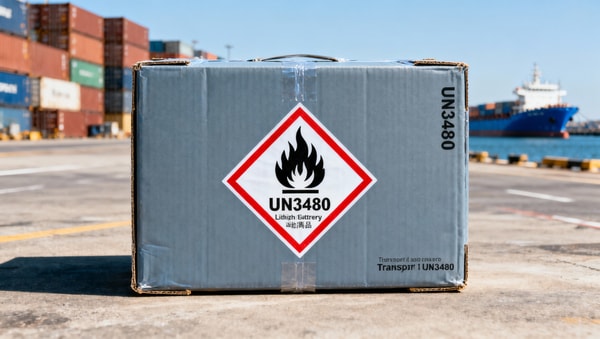
 IMDG Code 41-24 Enforces New UN3480 Lithium Battery Labels GloballyIMDG Code 41-24 mandates new UN3480 lithium battery labels globally from 1 May 2026—ensure compliance now to avoid shipment delays, rejections & penalties.
 CDE Adds 74 International Experts to Accelerate MedTech Export RegistrationCDE adds 74 international experts to accelerate MedTech export registration—key for IVD, imaging & rehab device exporters targeting FDA, EU MDR, Health Canada.
 MIIT Launches Space-Ground Computing & Green Data Center Export PlanMIIT's Space-Ground Computing & Green Data Center Export Plan unlocks global opportunities for liquid-cooled servers, PV direct-drive power, and satellite-ground scheduling—learn key impacts now.
 2026 Bio-based Raw Material Supplier Guide ReleasedBio-based raw material supplier guide 2026: Discover 47 ISO 16128-certified Chinese PLA, PBAT & PHA suppliers trusted by CBL, BPI & JIS.
 Q1 2026 Lithium Battery Export Prices Rise 11.3% YoYQ1 2026 Lithium Battery Export Prices Rise 11.3% YoY — discover why residential energy storage systems (RESS) drove the surge and what it means for exporters, suppliers & integrators.
 ‘Modular-Data Resonance’ Initiative Launches AI+Manufacturing Interface StandardModular-Data Resonance standard GB/T 45288-2026 launches AI+manufacturing interoperability—key for smart equipment exporters, MES/SCADA & AI model developers targeting EU/US markets.
 China's First Embodied AI Robot Export Liability Insurance Launched in GuangxiChina's first Embodied AI Robot Export Liability Insurance launched in Guangxi—key for robotics exporters targeting EU & SEA markets. Get compliant, certified, and covered.
 State Grid Launches $682M Embodied AI Inspection Equipment ProcurementState Grid’s $940M embodied AI inspection tender mandates IEC 62443-4-2 & ISO 13482 certs—key for robotics makers and global compliance teams. Act now.
 WeChat Pay Cross-Border B2B QR Code Live in 5 ASEAN CountriesWeChat Pay Cross-Border B2B QR Code is now live in 5 ASEAN countries — enabling fast, low-cost, local-currency settlements for SMEs and trade firms. Discover how it cuts costs by 47% and accelerates procurement.
 RCEP Green Packaging Mutual Recognition Extended to AU, NZ, JP, KRRCEP Green Packaging Mutual Recognition now extends to AU, NZ, JP, KR — unlock faster customs clearance & zero on-site inspection for compliant Chinese food packaging exports.
 IMDG Code 41-24 Enforces UN3480 Lithium Battery Labeling GloballyIMDG Code 41-24 enforces global UN3480 lithium battery labeling, packaging & e-CMR rules from 1 May 2026—act now to avoid port rejections and delays.
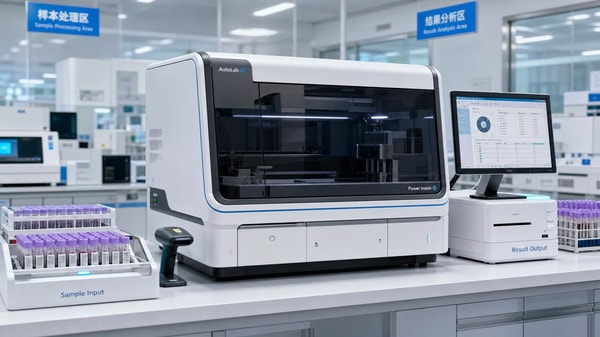
 Medical diagnostic equipment buying mistakes often start with workflowMedical diagnostic equipment buying mistakes often begin with workflow gaps. Learn how to compare systems, uncover hidden costs, and choose suppliers that fit real clinical operations.
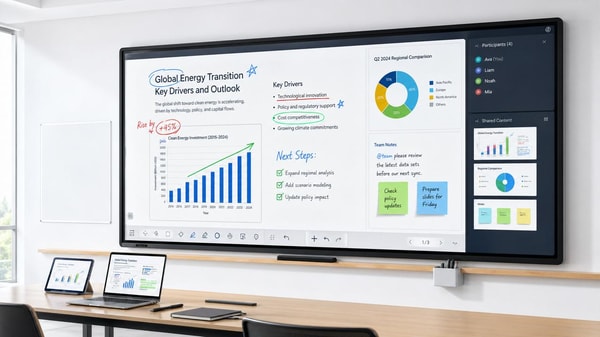
 Interactive whiteboards are improving, but teacher adoption is unevenInteractive whiteboards are improving fast, but teacher adoption remains uneven. Explore what drives classroom success, ROI, and smarter edtech implementation.







Popular Tags
Global Trade Insights & Industry
Our mission is to empower global exporters and importers with data-driven insights that foster strategic growth.
Search News
Popular Tags
Industry Overview
The global commercial kitchen equipment market is projected to reach $112 billion by 2027. Driven by urbanization, the rise of e-commerce food delivery, and strict hygiene regulations.