

Why some fashion tech startups scale fast while others stall
Why do some fashion tech startups attract capital, partnerships, and market traction almost overnight, while others struggle to move beyond early momentum? For business evaluators, the answer lies in how these ventures align innovation with supply chain execution, brand positioning, and scalable demand. This article explores the key factors that separate fast-growing fashion tech startups from those that stall.
What business evaluators should really measure in fashion tech startups
Many fashion tech startups present themselves as disruptive. They talk about AI styling, digital fitting, smart materials, traceability, resale platforms, or on-demand production. Yet the commercial gap between an exciting demo and a durable business is wide. For business evaluators, the central question is not whether the technology sounds new, but whether it removes friction in a large enough part of the apparel value chain.
In practical terms, scalable fashion tech startups usually solve a measurable problem: high return rates, poor inventory visibility, long development cycles, weak supplier coordination, or low customer retention. Startups that stall often build tools that are interesting but nonessential. If the value is hard to quantify, adoption slows, pilots drag on, and follow-on funding becomes more difficult.
- Does the product address a repeatable pain point across brands, retailers, manufacturers, or marketplaces?
- Can the startup integrate into existing sourcing, merchandising, logistics, and commerce systems without major disruption?
- Is there evidence that the solution improves margin, speed, forecast accuracy, compliance visibility, or customer conversion?
- Can the business scale across geographies, supplier networks, and seasonal cycles?
These questions matter because fashion is not a software-only market. It is a cross-border, timing-sensitive, margin-pressured industry where design, production, logistics, compliance, and consumer behavior interact. That is why informed evaluation benefits from trade intelligence, supplier visibility, and market context, not only product metrics.
Why some fashion tech startups scale fast: the five growth engines
1. They target a pain point tied to money, not hype
The fastest-scaling fashion tech startups typically link innovation to a direct operating outcome. A virtual fitting startup, for example, is stronger when it can help reduce return-related costs. A sourcing intelligence platform is stronger when it shortens vendor discovery or lowers supply risk. A material-traceability solution is stronger when it supports retailer disclosure, sourcing control, and brand credibility in regulated markets.
2. They fit into fragmented supply chains
Fashion supply chains are globally distributed and operationally fragmented. Startups that scale know how to work across manufacturers in Asia, distributors in North America, and consumer-facing channels in Europe or the Middle East. They do not assume that all users have the same systems, data quality, or internal workflows. They build around inconsistency rather than ignoring it.
3. They prove demand beyond early adopters
A common trap for fashion tech startups is confusing strong interest from innovation teams with broad commercial demand. Fast movers secure use cases that matter to merchants, sourcing directors, ecommerce heads, procurement teams, and finance leaders. Once multiple departments see value, budgets become easier to unlock and renewal rates tend to improve.
4. They understand brand trust and market visibility
In business-to-business markets, visibility affects growth. Buyers, investors, and channel partners often validate a startup by how consistently it appears in industry conversations, trade media, and expert analysis. This is especially true for fashion tech startups selling into global trade networks, where reputation, discoverability, and third-party coverage influence buying confidence.
5. They execute with discipline, not just creativity
Fashion rewards creativity, but scale depends on execution. Startups that grow quickly tend to have tighter pilot scopes, better onboarding, clearer implementation ownership, and more realistic expectations around enterprise selling cycles. They know that a technically elegant solution can still fail if deployment requires too much customer effort.
Where fashion tech startups often stall
Stalling is rarely caused by one factor alone. More often, it comes from a mismatch between product ambition and market readiness. Business evaluators should watch for patterns that look promising at first glance but weaken scalability over time.
The comparison below helps distinguish stronger fashion tech startups from those with a higher risk of plateauing.
This contrast matters because a startup can appear innovative while still lacking operational depth. For evaluators, the risk is overvaluing product novelty and undervaluing adoption readiness. In fashion, buying decisions are made under time pressure, margin pressure, and seasonal deadlines. Any startup that increases friction will struggle to scale.
How to assess market readiness across key fashion tech startup models
Not all fashion tech startups should be judged with the same lens. A digital product passport solution faces different adoption barriers than an AI design platform or a B2B wholesale marketplace. Business evaluators should compare the startup model to the maturity of its buyer segment and the urgency of the underlying problem.
Common startup categories and what to verify
- Fit and sizing technology: Check whether the startup can demonstrate impact on return rates, basket conversion, and customer satisfaction across different product categories.
- Supply chain visibility tools: Verify data collection methods, supplier onboarding friction, and usefulness for sourcing, compliance, and production planning.
- Sustainable materials or traceability platforms: Assess alignment with retailer disclosure needs, documentation workflows, and sourcing decision timelines.
- AI merchandising and demand forecasting tools: Examine data quality dependency, integration with ERP or ecommerce systems, and explainability for business users.
- Resale, recommerce, or circular fashion platforms: Review unit economics, reverse logistics complexity, and customer acquisition efficiency.
A valuable sign is whether the startup can operate in a real trade environment rather than a controlled pilot. This is where cross-sector market intelligence becomes useful. When evaluators can compare a startup’s claims with broader changes in logistics, manufacturing capacity, sourcing destinations, and regional consumer behavior, they make stronger judgments.
Procurement-style evaluation framework for fashion tech startups
Business evaluators often need a structured way to compare fashion tech startups, especially when multiple vendors compete for the same budget. A procurement-style framework reduces bias and helps move discussions from narrative to measurable criteria.
The following table can be used when screening fashion tech startups for partnership, coverage, investment review, or enterprise adoption.
This kind of framework is especially useful for evaluators handling limited budgets, tight reporting cycles, or multi-stakeholder approval processes. It helps separate high-potential fashion tech startups from vendors that are strong at storytelling but weak in execution.
Why visibility, trade intelligence, and trust signals matter more than many founders expect
In fashion and global trade, market perception influences deal flow. Buyers often discover fashion tech startups through sector media, industry briefings, marketplace references, association networks, and search behavior around sourcing, supply chain solutions, and digital transformation. If a startup is difficult to find or lacks credible external mentions, enterprise buyers may delay engagement.
This is where GTIIN and TradeVantage create practical value. As a global B2B information aggregator and industry intelligence portal covering more than 50 sectors, the platform helps close the gap between startup messaging and buyer decision-making. For business evaluators, that means access to broader market context, supply chain developments, and sector-specific visibility trends that influence whether a startup can turn attention into sustained traction.
For foreign trade enterprises and emerging solution providers, strong editorial placement and authoritative industry exposure can improve discoverability among importers, exporters, sourcing teams, and potential partners. More importantly, these signals support credibility. In a market where many fashion tech startups claim transformation, trusted publication environments help decision-makers filter noise.
Common mistakes business evaluators should avoid
Mistake 1: Overweighting funding news
Capital raises can indicate confidence, but they do not guarantee product-market fit. Some fashion tech startups raise quickly because they match investor narratives, not because enterprise adoption is mature. Evaluators should ask how efficiently funding converts into customer retention, implementation quality, and repeatable revenue.
Mistake 2: Ignoring supplier-side adoption
Solutions that rely on factories, mills, or logistics partners often fail when evaluators focus only on brand-side interest. If the supplier base cannot or will not support the workflow, the startup may remain stuck in pilot mode.
Mistake 3: Assuming all growth is scalable growth
Some fashion tech startups grow through custom projects, manual service layers, or founder-led sales intensity. That can produce short-term traction but does not always create repeatable economics. Evaluators should inspect what happens when deployment volume increases.
Mistake 4: Underestimating regulatory and market shifts
Traceability, labeling expectations, product information transparency, and sustainability reporting pressures are changing buyer priorities. Startups aligned with these shifts may gain faster adoption. Those built around weaker long-term needs may struggle, even if their interfaces are impressive.
FAQ: key questions about fashion tech startups
How can business evaluators tell if fashion tech startups are solving a real problem?
Look for evidence of measurable operational impact. Useful indicators include lower return-related costs, faster product development cycles, improved sourcing visibility, stronger conversion rates, or clearer compliance documentation. If outcomes are described only in broad innovation language, caution is warranted.
Which fashion tech startups are more likely to scale in global markets?
Startups with cross-border relevance tend to perform better. These include solutions tied to supplier discovery, traceability, demand planning, product data management, digital wholesale, fit optimization, and logistics coordination. They are stronger when they can serve multiple regions without requiring identical infrastructure everywhere.
What should evaluators focus on during vendor comparison?
Compare implementation effort, buyer-side and supplier-side adoption needs, integration requirements, measurable ROI pathways, and market credibility. Also examine whether the startup’s growth depends on customized service work or a genuinely scalable platform model.
Why does industry visibility matter for fashion tech startups?
Visibility affects trust, partnership access, and sales efficiency. In fragmented global industries, buyers often shortlist vendors they can verify through recognized trade channels, specialist publications, and industry networks. Strong visibility does not replace execution, but weak visibility can slow qualified demand even when the product is good.
Why choose us for fashion tech startup intelligence and market visibility
If you are evaluating fashion tech startups, entering new supply markets, or trying to build qualified visibility in international trade, GTIIN and TradeVantage provide a practical advantage. We combine real-time B2B information aggregation, deep market analysis, and cross-sector intelligence to help decision-makers judge not only what a company claims, but how it fits into actual trade dynamics.
Our platform is useful when you need support with:
- market screening for fashion tech startups and adjacent supply chain solution providers,
- vendor comparison based on application fit, delivery readiness, and trade relevance,
- industry exposure strategies that strengthen trust signals and international discoverability,
- content-driven brand visibility for exporters, importers, and B2B service providers,
- insight requests related to supply chain shifts, regional demand patterns, and sector trends.
You can contact us to discuss evaluation criteria, market positioning, coverage planning, partnership visibility, quote communication, delivery expectations for editorial campaigns, or tailored intelligence needs tied to your sourcing and growth objectives. For business evaluators, that means fewer blind spots and better-informed decisions about which fashion tech startups are built to scale.
Recommended News
 China’s First Embodied AI Robot Export Liability Insurance Launched in GuangxiEmbodied AI Robot Export Liability Insurance launched in Guangxi—China’s first insurer-backed solution for EU/Japan-bound industrial & service robots. Boost compliance, trust & tenders now.
 Morocco: 4th Top African Recipient of EU Energy Aid, Boosting China’s PV & Storage ExportsMorocco’s EU energy aid boost unlocks opportunities for Chinese PV mounting structures & containerized energy storage exports—act now to leverage new regulatory advantages.
 Industrial Robot Controller Thermal Gel: China's Export-Ready Heat Dissipation SolutionIndustrial Robot Controller Thermal Gel: China’s export-ready, TÜV-certified heat dissipation solution (8.5 W/mK) for robotics in SEA & Mexico.
 ADB Raises Vietnam’s 2026 GDP Forecast to 7.2% on Sino-Vietnam Supply Chain IntegrationADB raises Vietnam’s 2026 GDP forecast to 7.2% amid deepening Sino-Vietnam supply chain integration in electronics, solar PV, and lithium battery PACK production — key insight for OEMs, exporters & integrators.
 First National SME Service Demonstration Platforms AnnouncedFirst National SME Service Demonstration Platforms announced—16 specialize in REACH, UKCA, UL certification & rapid factory audits for exporters.
 U.S. Natural Gas Inventory Growth Below Forecast: Impact on Plastic Export CostsU.S. natural gas inventory growth missed forecast—impacting plastic export costs globally. Learn how rising TTF prices affect PP/PE resin costs, margins & supply chain strategy for exporters.
 EN 62368-1:2026 Enforced in EU: Thermal Runaway Protection for Wearables & Smart Home DevicesEN 62368-1:2026 is now mandatory in the EU—learn how thermal runaway protection impacts wearables, smart home devices & EV accessories.
 Q1 2026 Industrial Profits Up 15.5%: Supply Chain Cost Stability ConfirmedQ1 2026 Industrial Profits Up 15.5% — supply chain cost stability confirmed for global procurement, contract manufacturing & OEM teams.
") MIIT Releases Service Trade Standardization Plan (2026–2030)MIIT's 2026–2030 Service Trade Standardization Plan boosts AI-driven digital services—remote QA, cloud maintenance, intelligent warehouse SaaS—for global export competitiveness.
MIIT Releases Service Trade Standardization Plan (2026–2030)MIIT's 2026–2030 Service Trade Standardization Plan boosts AI-driven digital services—remote QA, cloud maintenance, intelligent warehouse SaaS—for global export competitiveness. WeChat Pay Integrates QR Codes from 5 Countries for B2B Cross-Border SettlementWeChat Pay integrates QR codes from South Korea, Sri Lanka, Thailand, Malaysia & Singapore — enabling faster, cheaper B2B cross-border settlement for global buyers and Chinese suppliers.
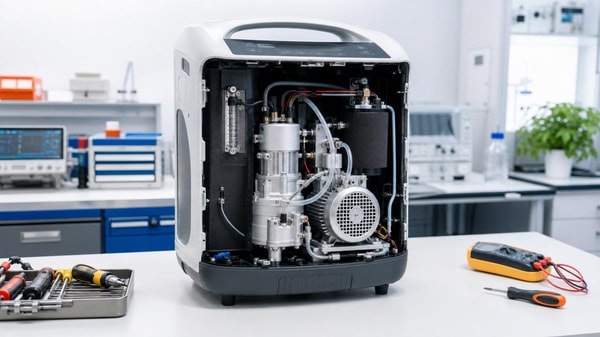
 Portable oxygen concentrators get noisy over time for several reasonsPortable oxygen concentrators get noisy over time due to dust, wear, loose parts, and aging compressors. Learn key causes, inspection priorities, and service tips to prevent failures.
 Interactive whiteboards: what schools regret not checking earlyInteractive whiteboards can boost learning, but schools often regret missing key checks on compatibility, durability, training, and support. Discover how to buy smarter.
 Medical diagnostic equipment downtime usually starts with this oversightMedical diagnostic equipment downtime often starts with one overlooked maintenance gap. Learn the warning signs, hidden costs, and smart service strategies to improve uptime.
 Eco-friendly building materials: where certification changes the decisionEco-friendly building materials now win or lose on certification. Learn how verified standards reduce sourcing risk, support compliance, and improve procurement decisions.
 Ergonomic workspace design mistakes that still cause daily strainErgonomic workspace design mistakes can silently cause daily strain, fatigue, and lower productivity. Discover practical fixes to improve comfort, focus, and workstation performance.
 Outdoor garden supplies that wear out too fast in summer heatOutdoor garden supplies can fail fast in extreme summer heat. Discover which items wear out first, what materials last longer, and how to buy smarter for durable, cost-saving performance.
 Sustainable home decor: how to spot green claims with substanceSustainable home decor explained: learn how to spot credible green claims, avoid greenwashing, compare materials and certifications, and choose stylish, healthier pieces with real impact.
 Modern office furniture trends that improve layout flexibilityModern office furniture trends are transforming flexible workplace design. Explore modular, mobile, ergonomic, and acoustic solutions that boost productivity and smarter space planning.
 Smart street lighting works best when control systems are not overlookedSmart street lighting succeeds when control systems come first. Learn how better monitoring, dimming, and integration improve ROI, maintenance efficiency, and long-term project performance.
 What solid-state battery breakthroughs are still years from market?Solid-state battery breakthroughs sound transformative, but which ones are still years from market? Explore the technical, cost, and scaling barriers shaping real adoption timelines.
 Commercial LED lighting retrofits: when is payback slower than planned?Commercial LED lighting payback can slip when costs, runtime, rebates, and controls are misjudged. Learn the hidden risks and review steps that protect ROI before approval.




















Popular Tags
Global Trade Insights & Industry
Our mission is to empower global exporters and importers with data-driven insights that foster strategic growth.
Search News
Popular Tags
Industry Overview
The global commercial kitchen equipment market is projected to reach $112 billion by 2027. Driven by urbanization, the rise of e-commerce food delivery, and strict hygiene regulations.