

How to Compare an Online Trade Platform Before Signing Up?
Choosing an online trade platform is not just about interface or price. For most buyers, sourcing teams, distributors, and business decision-makers, the real question is simpler: Will this platform help us find reliable partners, reduce research time, improve market visibility, and lower trade risk? Before signing up, you should compare platforms based on data quality, supplier credibility, market intelligence depth, search usefulness, industry coverage, and the actual business outcomes they support. A strong platform should help you move from scattered information to faster and more confident decisions.
Whether you are tracking sustainable fashion brands, evaluating smart home automation devices, reviewing water treatment plant suppliers, monitoring cement price trends, or comparing MRI scanners cost, the right online trade platform should do more than list companies. It should help you validate markets, assess suppliers, identify trends, and support procurement or expansion decisions with usable intelligence.
What should you compare first before joining an online trade platform?
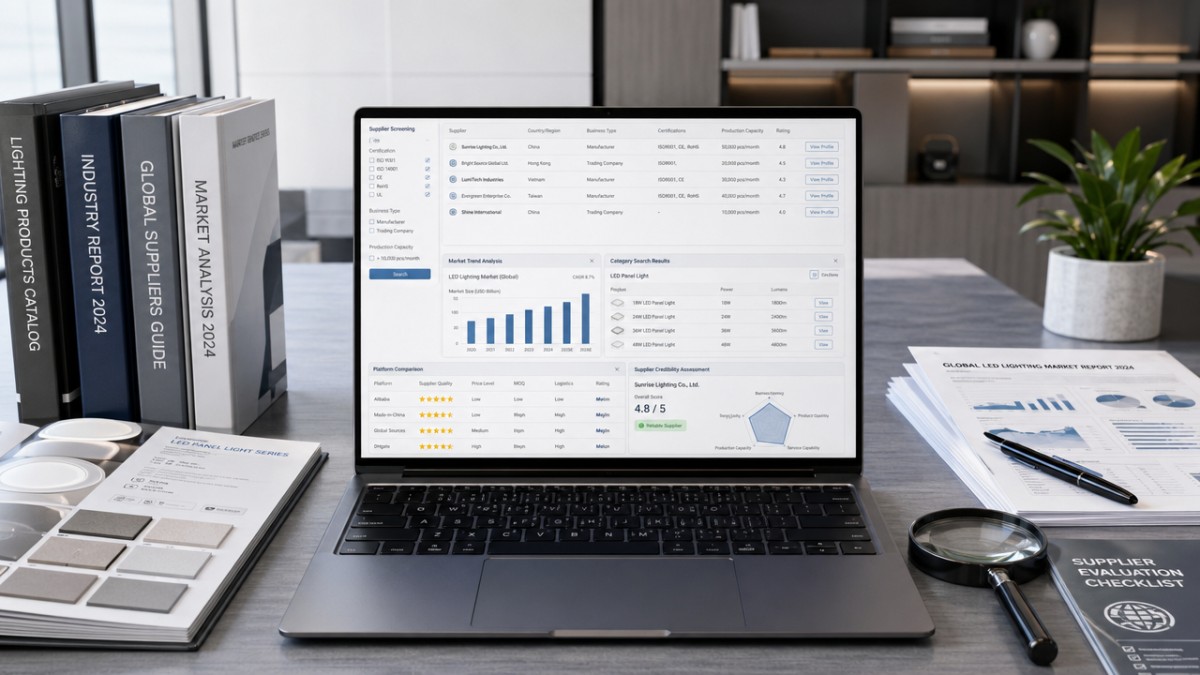
The fastest way to compare an online trade platform is to start with your business objective, not the platform’s marketing claims. Different users need different value:
- Procurement teams need reliable supplier discovery, specification transparency, and sourcing efficiency.
- Technical evaluators need product data, industrial detail, and category-specific insights.
- Business managers and decision-makers need market visibility, ROI, risk control, and strategic intelligence.
- Distributors and agents need demand signals, competitive landscape insight, and partnership opportunities.
Before you sign up, compare these six essentials:
- Supplier and company information quality
- Industry coverage and category depth
- Market intelligence and trend reporting
- Search, filtering, and research usability
- Trust signals and verification standards
- Commercial value relative to cost
If a platform looks large but cannot help you answer real business questions quickly, it may generate more noise than value.
How do you judge whether the data is reliable enough for business decisions?
Data quality is often the most important factor, especially for sourcing, compliance review, and strategic planning. Many platforms appear comprehensive at first glance, but the actual value depends on how current, structured, and decision-ready the information is.
Look for the following signs of reliable platform data:
- Regularly updated listings and news, rather than static company pages that have not changed in months or years
- Detailed company profiles with product categories, export regions, capabilities, and contact transparency
- Industry-specific reporting that goes beyond surface-level content
- Cross-market coverage that helps users compare suppliers or trends across regions
- Editorial curation or analyst-supported intelligence instead of fully unfiltered submissions
A useful trade intelligence platform should help users answer questions such as:
- Which supplier clusters are growing in a category?
- What price or demand trends are changing in this market?
- Which regions show stronger export activity?
- Are there supply chain risks or regulatory changes affecting sourcing decisions?
For example, if you are sourcing equipment or materials, trend accuracy matters as much as supplier count. A platform that helps you interpret cement price trends or regional manufacturing shifts may be more valuable than one with a larger but less usable database.
Does the platform cover your industry deeply or only broadly?
Broad coverage is useful, but depth is what makes a platform practical. Many B2B users work across complex categories where a simple buyer-seller directory is not enough. If your work includes comparing industrial machinery, medical equipment, smart devices, textile suppliers, or treatment systems, you need a platform with category-level understanding.
When comparing platforms, ask:
- Does it cover your target sectors in detail?
- Are the articles, listings, and insights useful for your actual procurement or market research workflow?
- Can you track both product trends and upstream market changes?
- Does the platform connect commercial listings with industry context?
A platform with stronger industrial depth is especially helpful when purchases are technical, high-value, regulated, or long-cycle. For instance:
- Those researching water treatment plant solutions need process, capacity, and compliance context.
- Those reviewing MRI scanners cost need more than equipment names; they need pricing factors, technology segmentation, and sourcing landscape insight.
- Those evaluating smart home automation devices need supplier, certification, and trend visibility.
The more complex the buying decision, the more valuable deep market intelligence becomes.
How important are search tools, filters, and workflow efficiency?
For many users, a platform succeeds or fails based on how quickly it turns information into action. A large database is not useful if teams cannot narrow results efficiently or compare options in a structured way.
Good search usability should include:
- Precise keyword search for products, industries, and business topics
- Region, category, and capability filters
- Easy navigation between news, company data, and market analysis
- Clear content structure for procurement, supplier screening, and business research
- Fast access to relevant insights without excessive promotional clutter
This matters because research time is a real cost. Procurement teams and project managers often compare multiple suppliers under deadline pressure. If the platform reduces time spent searching, validating, and organizing information, it creates measurable operational value.
A helpful question to ask during evaluation is: Can our team complete a typical sourcing or market research task faster here than with our current tools? If not, the subscription may not deliver practical return.
What trust signals should buyers and decision-makers look for?
In cross-border trade, trust is not optional. Platforms can support better decisions only if they help users judge credibility. This is especially important for importers, distributors, quality teams, and enterprise buyers trying to reduce supplier or market-entry risk.
Compare platforms based on whether they provide or support:
- Business identity transparency
- Consistent company information
- Editorial quality and authority
- Reliable publication standards
- Signals of market reputation or industry activity
For companies also using a trade platform for visibility, trust signals matter in another way. High-authority publication environments can strengthen digital credibility, improve discoverability, and support backlink acquisition. In global B2B marketing, these factors can influence both lead generation and search engine performance.
This is where an intelligence-driven platform has an advantage over a basic listing site. It does not only display names; it helps businesses build context and authority around those names.
How do you compare cost against actual business value?
The lowest-cost platform is rarely the best choice if your team depends on accurate market intelligence or high-quality exposure. Instead of comparing subscription prices alone, compare what each platform helps you achieve.
Key value questions include:
- Will it reduce supplier discovery time?
- Will it improve sourcing confidence?
- Will it help identify market shifts earlier?
- Will it support business development or brand visibility?
- Will it reduce poor-fit outreach or low-value leads?
For exporters and manufacturers, a platform may create value through visibility and SEO authority. For buyers and sourcing teams, value may come from better partner shortlists and faster market analysis. For executives, value often comes from stronger strategic clarity and lower information risk.
If possible, evaluate ROI through a short test framework:
- Define 2 to 3 real research tasks your team performs regularly.
- Run those tasks on each shortlisted platform.
- Measure relevance, speed, depth, and confidence of results.
- Compare the findings with platform pricing and contract terms.
This approach reveals actual usefulness far better than feature lists alone.
Which type of online trade platform is best for long-term use?
The best platform is usually the one that aligns with both immediate tasks and long-term business goals. A company sourcing one category today may need broader market intelligence, supplier benchmarking, and brand exposure tomorrow.
For long-term value, prioritize platforms that offer:
- Multi-sector visibility if your business spans several product lines or regions
- Ongoing market intelligence rather than one-time supplier access
- Strong editorial and SEO authority for businesses seeking visibility
- Scalability for different users, from operational teams to executives
- A balance of information breadth and analytical depth
Platforms positioned as industry intelligence hubs can be especially useful because they serve multiple stakeholders at once. A sourcing manager may use them for supplier research, while leadership uses the same ecosystem for market tracking, and marketing teams benefit from enhanced brand exposure.
Final checklist before you sign up
Before committing to any online trade platform, use this practical checklist:
- Is the platform designed for your actual sourcing, research, or market expansion needs?
- Does it provide reliable, current, and structured information?
- Can it support decisions across your industry or product categories?
- Are search and filtering tools efficient enough for daily use?
- Does it provide meaningful trust signals?
- Is the value clear for procurement, technical review, and business strategy?
- Can the platform deliver both short-term usability and long-term growth support?
In the end, the best comparison is not about which platform claims the most features. It is about which one helps your team make better decisions with less uncertainty. A strong B2B trade intelligence platform should combine discoverability, credibility, market insight, and practical workflow support. If it can do that consistently, it is worth serious consideration before you sign up.
Recommended News
 IMDG Code 41-24 Enforces UN3480 Class 9 Labeling for Lithium Battery Sea FreightIMDG Code 41-24 mandates UN3480 lithium battery sea freight to display durable Class 9 labels from April 27, 2026—avoid delays & port rejections.
 ESS Key Component Prices Drop ~80%: Quality & Compliance RiseESS key component prices dropped ~80%—but quality & compliance demands surged. Discover how UL 9540A, AS/NZS 5139, and certified BMS/inverters now define market access.
 Mexico NOM-019-SCFI-2026 Effective July 2026: EMC Certification Mandatory for Auto ElectronicsMexico NOM-019-SCFI-2026 mandates EMC certification for auto electronics from July 2026 — ensure compliance now to avoid supply chain disruption & customs delays.
 Red Sea Rerouting Normalized, ECA Surcharge Hits $1,850/TEURed Sea rerouting normalized: ECA surcharge hits $1,850/TEU — 47% of total freight cost. Impacting hand tools, building materials & furniture exporters to Europe. Act now.
 RCEP Green Packaging Mutual Recognition Takes EffectRCEP Green Packaging Mutual Recognition is live—GB/T 37537-2025–certified packaging now enjoys fast-track clearance in Australia, NZ, Japan & Korea. Save time, cut costs, and boost export efficiency.
 Vietnam Suspends SASO Mutual Recognition for Chinese Irrigation EquipmentVietnam suspends SASO mutual recognition for Chinese irrigation equipment—drip tapes, PE fittings, auto valves now require VINAQ-IR certification. Act now to avoid delays & customs hold.
 Key Energy Storage Equipment Prices Drop ~80% in ChinaKey energy storage equipment prices in China dropped ~80% — PCS, BMS & liquid cooling units. Discover implications for compliance, margins & standards enforcement.
") China Releases Green Design Guidelines for Industrial Products (2026)China's 2026 Green Design Guidelines for industrial products—covering PV modules, lithium batteries & smart appliances—link eco-design to green factory certification and export tax rebates starting 2027.
China Releases Green Design Guidelines for Industrial Products (2026)China's 2026 Green Design Guidelines for industrial products—covering PV modules, lithium batteries & smart appliances—link eco-design to green factory certification and export tax rebates starting 2027. Mexico NOM-019-SCFI-2026 Effective: Automotive Electronics Require New EMC CertificationMexico NOM-019-SCFI-2026 is live: Automotive electronics (infotainment, ADAS, domain controllers) now require mandatory EMC certification by July 31, 2026 — act now to avoid customs delays.
 Red Sea Detour Premium Rises to $1,850/TEU Amid Port Congestion ReliefRed Sea Detour Premium hits $1,850/TEU — now 43% of FE–NE freight rates. Discover why this structural surcharge demands urgent supply chain action.
 TÜV Rheinland Updates PLd Certification: EMC Immunity Now Mandatory for Servo DrivesTÜV Rheinland now mandates EN IEC 61000-6-2:2024 EMC immunity testing for PLd certification of servo drives—act before May 26, 2026 to avoid EU market delays.
 RCEP Green Packaging Mutual Recognition Effective Apr 26, 2026RCEP Green Packaging Mutual Recognition takes effect Apr 26, 2026—unlock faster customs clearance & cost savings for eco-friendly packaging exporters to AU, NZ, JP, KR.
 FDA Final Rule: AI Diagnostic Devices Must Submit Bias Impact ReportsFDA mandates AI diagnostic devices submit third-party-verified bias impact reports—key for 510(k)/De Novo submissions. Act now to ensure compliance & market access.
 Vietnam Suspends SASO Mutual Recognition for Chinese Irrigation EquipmentVietnam suspends SASO mutual recognition for Chinese irrigation equipment—urgent QCVN certification now required for drip tapes, sprinklers, valves & smart controllers.
 SABER Phase II Launch: Building Hardware Must Submit Digital Type Test Reports & PIDSABER Phase II now requires digital type test reports & PID for building hardware — fasteners, door/window, bathroom fixtures. Avoid port rejection: ensure PID-bound compliance before shipment.
 IMDG Code 41-24 Enforced: UN3480 Lithium Batteries Require Class 9 LabelsUN3480 lithium batteries now require ISO 7225-compliant Class 9 labels under IMDG Code 41-24 — enforceable globally from 26 April 2026. Act now to avoid shipment delays!
 How to Compare an Online Trade Platform Before Signing Up?Compare an online trade platform with confidence—evaluate data quality, supplier trust, market insights, and search tools for smarter sourcing across cement price, MRI scanners cost, and more.
 Which Smart Home Automation Devices Are Easiest to Use?Smart home automation devices made simple: compare easy-to-use smart home automation devices, home improvement tools integration, and buyer tips from a business intelligence platform.
 Are Auto Detailing Services Worth the Cost?Auto detailing services: discover if the cost is justified, how pricing varies, and how a business intelligence platform helps buyers compare value, quality, and long-term ROI.
 What Makes Sustainable Fashion Brands Worth Buying?Sustainable fashion brands deliver transparency, quality, and lower risk. See how a business intelligence platform helps buyers verify value, avoid greenwashing, and source smarter.
 How to Choose a Business Intelligence Platform in 2026?Business intelligence platform selection in 2026: compare data coverage, pricing insights, online trade platform signals, Cement price trends, and MRI scanners cost to choose smarter, faster.


















Popular Tags
Global Trade Insights & Industry
Our mission is to empower global exporters and importers with data-driven insights that foster strategic growth.
Search News
Popular Tags
Industry Overview
The global commercial kitchen equipment market is projected to reach $112 billion by 2027. Driven by urbanization, the rise of e-commerce food delivery, and strict hygiene regulations.