

Key Energy Storage Equipment Prices Drop ~80% in China
China’s energy storage system key equipment prices — including power conversion systems (PCS), battery management systems (BMS), and liquid cooling units — have fallen 78%–82% cumulatively over the past three years, according to monitoring data from China Industrial Economics Information Network released on April 26, 2026. This sharp decline signals a structural correction in the domestic electrochemical energy storage supply chain and warrants close attention from manufacturers, integrators, grid operators, and certification service providers.
Event Overview
Per China Industrial Economics Information Network’s April 26, 2026 report, the ex-factory average prices of PCS, BMS, and liquid cooling units for energy storage systems in China declined by 78%–82% over the preceding three-year period. In some bidding rounds, quoted prices have fallen more than 15% below industry-averaged production costs. Concurrently, Chinese authorities are accelerating the standardization process: the mandatory national standard for electrochemical energy storage systems has entered the立项 (project initiation) phase and is scheduled for issuance in Q3 2026. The draft standard emphasizes thermal runaway prevention, cybersecurity safeguards, and full-lifecycle traceability requirements.
Impact on Specific Industry Segments
Equipment manufacturing enterprises: As price compression intensifies, margins for PCS, BMS, and liquid cooling unit producers have narrowed significantly. This affects not only profitability but also R&D investment capacity and long-term product iteration cycles. Some manufacturers may face pressure to consolidate or exit lower-tier segments.
System integration and EPC contractors: Lower component costs improve short-term project gross margins, yet increased compliance requirements — especially around thermal safety and traceability — raise engineering, testing, and documentation overhead. Integration timelines may extend as new verification steps become mandatory.
Certification and testing service providers: The upcoming mandatory standard creates near-term demand for third-party validation services focused on thermal runaway resistance, firmware security, and data logging integrity. However, capacity constraints and evolving test protocols may delay certification turnarounds.
Grid-side and commercial & industrial (C&I) energy storage developers: While capex per MWh declines, procurement decisions now require deeper technical due diligence beyond price — particularly regarding vendor compliance roadmaps and evidence of design adherence to upcoming regulatory thresholds.
What Relevant Enterprises or Practitioners Should Focus On
Monitor official standard drafts and implementation timelines closely
The draft mandatory national standard is expected to be published for public comment prior to Q3 2026 finalization. Enterprises should track revisions related to thermal runaway test conditions (e.g., propagation time thresholds), cybersecurity architecture requirements (e.g., secure boot, OTA update signing), and data retention periods for BMS logs.
Reassess procurement criteria for PCS, BMS, and cooling units
Price alone is no longer a sufficient selection criterion. Buyers should begin requesting documented evidence of thermal safety validation (e.g., UN 38.3 thermal propagation test reports), firmware security certifications (e.g., IEC 62443 alignment), and serial-level traceability capabilities — even ahead of formal enforcement.
Distinguish between policy signal and operational readiness
The standard’s Q3 2026 issuance date does not imply immediate enforcement. Transitional arrangements and phased implementation are typical for mandatory standards in China. Enterprises should verify whether grandfathering clauses apply to projects under contract before the effective date.
Prepare technical documentation and supply chain traceability infrastructure
Manufacturers and integrators should initiate internal audits of bill-of-materials (BOM) traceability systems, firmware version control workflows, and thermal test reporting templates — aligning with anticipated standard annexes rather than waiting for final publication.
Editorial Perspective / Industry Observation
Analysis来看, this price correction is less a sign of market collapse and more a structural recalibration: it reflects the maturation of domestic manufacturing capacity, intensified competition among second- and third-tier suppliers, and growing buyer sophistication. From industry角度看, the concurrent push for mandatory standards suggests regulators view cost-driven quality erosion as a systemic risk — particularly for grid-connected and high-density C&I applications. Current更值得关注的是 how quickly certification bodies scale test capacity and whether early adopters gain competitive advantage in tender scoring via pre-compliance demonstration. It is更适合理解为一个 coordinated policy-and-market inflection point — where price discipline and technical rigor are becoming mutually reinforcing, not opposing, forces.
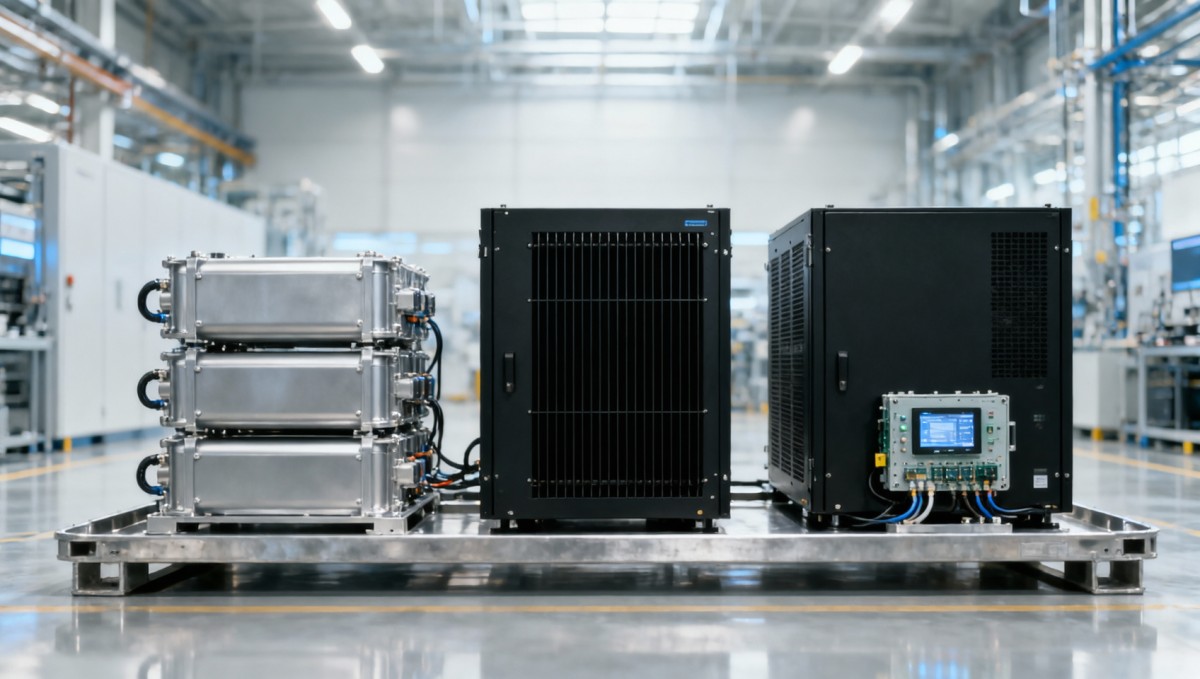
In summary, the steep decline in key energy storage equipment pricing is not merely a cost headline — it marks the beginning of a transition toward stricter technical governance in China’s electrochemical storage sector. For stakeholders, the priority shifts from optimizing unit economics to ensuring verifiable compliance, traceable design, and resilient supply chain documentation. This is not a temporary adjustment but a foundational realignment aligned with grid safety and long-term asset reliability expectations.
Source: China Industrial Economics Information Network (data released April 26, 2026).
Note: The timeline for mandatory standard enforcement, including potential transitional provisions, remains subject to official confirmation and requires ongoing observation.
Recommended News
 Key Energy Storage Equipment Prices Drop ~80% in ChinaKey energy storage equipment prices in China dropped ~80% — PCS, BMS & liquid cooling units. Discover implications for compliance, margins & standards enforcement.
") China Releases Green Design Guidelines for Industrial Products (2026)China's 2026 Green Design Guidelines for industrial products—covering PV modules, lithium batteries & smart appliances—link eco-design to green factory certification and export tax rebates starting 2027.
China Releases Green Design Guidelines for Industrial Products (2026)China's 2026 Green Design Guidelines for industrial products—covering PV modules, lithium batteries & smart appliances—link eco-design to green factory certification and export tax rebates starting 2027. Mexico NOM-019-SCFI-2026 Effective: Automotive Electronics Require New EMC CertificationMexico NOM-019-SCFI-2026 is live: Automotive electronics (infotainment, ADAS, domain controllers) now require mandatory EMC certification by July 31, 2026 — act now to avoid customs delays.
 Red Sea Detour Premium Rises to $1,850/TEU Amid Port Congestion ReliefRed Sea Detour Premium hits $1,850/TEU — now 43% of FE–NE freight rates. Discover why this structural surcharge demands urgent supply chain action.
 TÜV Rheinland Updates PLd Certification: EMC Immunity Now Mandatory for Servo DrivesTÜV Rheinland now mandates EN IEC 61000-6-2:2024 EMC immunity testing for PLd certification of servo drives—act before May 26, 2026 to avoid EU market delays.
 RCEP Green Packaging Mutual Recognition Effective Apr 26, 2026RCEP Green Packaging Mutual Recognition takes effect Apr 26, 2026—unlock faster customs clearance & cost savings for eco-friendly packaging exporters to AU, NZ, JP, KR.
 FDA Final Rule: AI Diagnostic Devices Must Submit Bias Impact ReportsFDA mandates AI diagnostic devices submit third-party-verified bias impact reports—key for 510(k)/De Novo submissions. Act now to ensure compliance & market access.
 Vietnam Suspends SASO Mutual Recognition for Chinese Irrigation EquipmentVietnam suspends SASO mutual recognition for Chinese irrigation equipment—urgent QCVN certification now required for drip tapes, sprinklers, valves & smart controllers.
 SABER Phase II Launch: Building Hardware Must Submit Digital Type Test Reports & PIDSABER Phase II now requires digital type test reports & PID for building hardware — fasteners, door/window, bathroom fixtures. Avoid port rejection: ensure PID-bound compliance before shipment.
 IMDG Code 41-24 Enforced: UN3480 Lithium Batteries Require Class 9 LabelsUN3480 lithium batteries now require ISO 7225-compliant Class 9 labels under IMDG Code 41-24 — enforceable globally from 26 April 2026. Act now to avoid shipment delays!
 Are Auto Detailing Services Worth the Cost?Auto detailing services: discover if the cost is justified, how pricing varies, and how a business intelligence platform helps buyers compare value, quality, and long-term ROI.
 What Makes Sustainable Fashion Brands Worth Buying?Sustainable fashion brands deliver transparency, quality, and lower risk. See how a business intelligence platform helps buyers verify value, avoid greenwashing, and source smarter.
 How to Choose a Business Intelligence Platform in 2026?Business intelligence platform selection in 2026: compare data coverage, pricing insights, online trade platform signals, Cement price trends, and MRI scanners cost to choose smarter, faster.
 IMDG Code 41-24 Enforces UN3480 Class 9 Labeling for Lithium Battery Sea FreightIMDG Code 41-24 mandates UN3480 Class 9 labeling for lithium battery sea freight—avoid auto-rejection by DHL, Kuehne+Nagel & Sinotrans. Act now.
 ESS Key Equipment Prices Drop ~80%: Quality & Compliance RiseESS key equipment prices dropped ~80%—but quality & compliance are now critical. Discover how UL 9540A and IEC 62933-5-2 standards reshape global market access.
") China Releases Green Design Guide for Industrial Products (2026)China's new Green Design Guide (2026) offers 126 actionable solutions for solar, batteries & robotics—key for EU ESG compliance and export readiness.
China Releases Green Design Guide for Industrial Products (2026)China's new Green Design Guide (2026) offers 126 actionable solutions for solar, batteries & robotics—key for EU ESG compliance and export readiness. Vietnam Suspends SASO Mutual Recognition for Chinese Irrigation EquipmentVietnam suspends SASO mutual recognition for Chinese irrigation equipment—impacting spray controllers, fertigation systems & PE pipes. Act now to meet new local testing mandates.
 Mexico NOM-019-SCFI-2026 Effective: Automotive EMC Certification RequiredMexico NOM-019-SCFI-2026 is live: Automotive EMC certification now mandatory for all car electronics entering Mexico—avoid customs rejection. Act now!
 Red Sea Rerouting Now Normalized: Asia-Europe Freight Premium at $1,850/TEURed Sea rerouting is now normalized—Asia-Europe freight premium holds at $1,850/TEU. Critical for CNC, solar PV & EV accessory exporters. Read the strategic implications.
 SABER Phase II Launch: Building Hardware Must Submit Digital Type Test Reports & UPIDSABER Phase II is live: Building hardware exporters must now submit digital type test reports & UPID—avoid Jeddah port delays. Act now!
 FDA Final Rule: AI Diagnostic Devices Require Bias Assessment for US MarketFDA mandates bias assessment for AI diagnostic devices—key for portable ultrasound, dermatoscopes & fundus analyzers entering the US market. Act now to comply.

















Popular Tags
Global Trade Insights & Industry
Our mission is to empower global exporters and importers with data-driven insights that foster strategic growth.
Search News
Popular Tags
Industry Overview
The global commercial kitchen equipment market is projected to reach $112 billion by 2027. Driven by urbanization, the rise of e-commerce food delivery, and strict hygiene regulations.