

China Releases Green Design Guidelines for Industrial Products (2026)
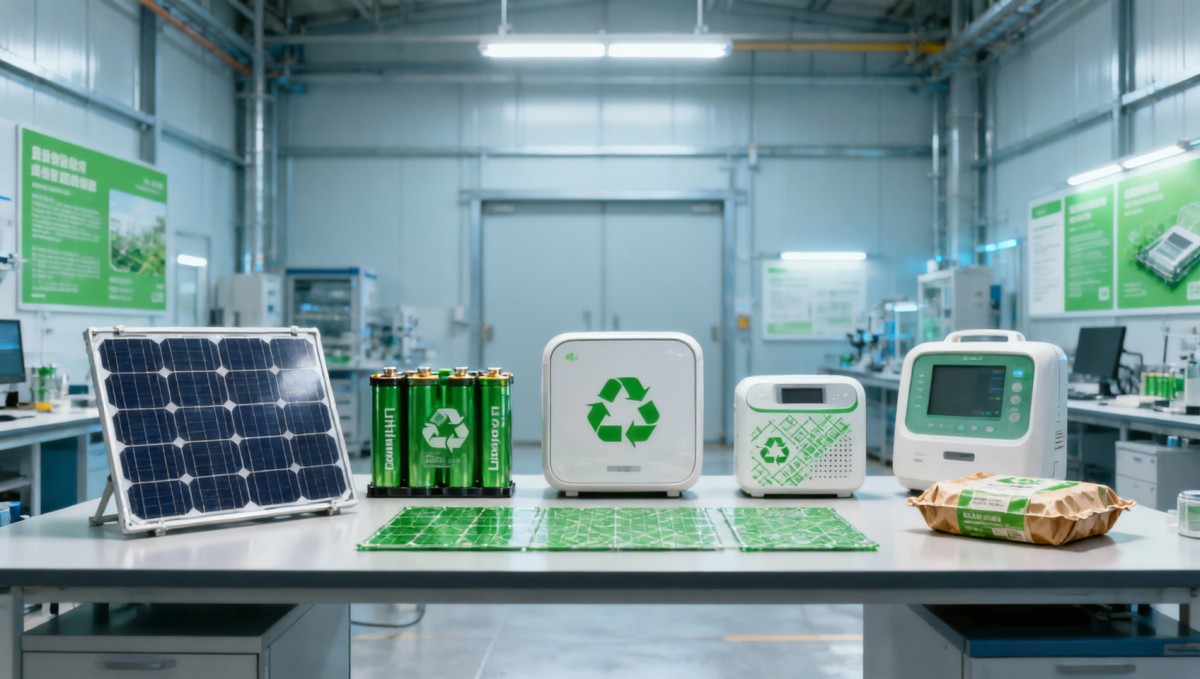
On April 26, 2026, China’s Ministry of Industry and Information Technology (MIIT) and four other national departments jointly issued the Industrial Products Green Design Guidelines (2026 Edition), introducing 126 actionable design schemes across 15 key export-oriented sectors—including photovoltaic modules, lithium batteries, smart home appliances, medical devices, building materials, textiles, and food packaging. The guidelines formalize green design requirements as criteria for green factory evaluations and export tax rebate incentives starting in 2027, making them immediately relevant for exporters, manufacturers, and supply chain stakeholders.
Event Overview
On April 26, 2026, the Ministry of Industry and Information Technology (MIIT), National Development and Reform Commission (NDRC), Ministry of Education, Ministry of Ecology and Environment, and State Administration for Market Regulation jointly issued the Industrial Products Green Design Guidelines (2026 Edition). The document specifies 126 executable design schemes under 11 thematic directions—including ‘zero-carbon design’, ‘design for easy recycling and regeneration’, and ‘lightweighting design’. These schemes apply to 15 categories of priority export products. The guidelines state that compliance will serve as a basis for green factory certification and as a bonus factor in export tax rebate assessments beginning in 2027.
Which Subsectors Are Affected
Direct Exporters
Exporters of the 15 listed product categories—including PV modules, lithium batteries, smart appliances, and medical devices—will face new design-related documentation and verification requirements when applying for green factory recognition or export tax rebates. Their product specifications, technical dossiers, and environmental declarations may need revision to align with the 126 schemes.
Raw Material Suppliers
Suppliers providing inputs for covered products—such as battery cathode/anode materials, PV encapsulants, textile fibers, or food-grade packaging resins—may see increased demand for low-carbon, recyclable, or lightweight-compatible materials. Buyers may begin requesting material-level environmental data (e.g., carbon footprint, recyclability rate) earlier in procurement cycles.
Contract Manufacturers & OEMs
Manufacturers producing under brand-owner specifications—especially those serving global brands with ESG commitments—may be asked to implement specific design features (e.g., modular disassembly, standardized fasteners, reduced glue use) outlined in the 126 schemes. This could affect tooling, assembly line setup, and quality control protocols.
Supply Chain Service Providers
Logistics, certification, and testing service providers supporting export compliance may see rising demand for green design verification services—including recyclability testing, life-cycle assessment (LCA) support, and zero-carbon design validation—particularly ahead of the 2027 implementation deadline.
What Enterprises and Practitioners Should Focus On Now
Monitor official implementation guidance and sector-specific interpretations
The 126 schemes are published at the framework level. Analysis来看, detailed technical specifications, evaluation methods, and third-party verification requirements are expected to follow in subsequent notices or industry standards. Enterprises should track announcements from MIIT, SAMR, and provincial industrial authorities over the next 6–12 months.
Prioritize review of top-5 export categories by revenue or volume
Not all 15 categories carry equal weight for every enterprise. From industry perspective, companies should first map their top export SKUs against the listed categories—e.g., lithium battery pack exporters should focus on the ‘zero-carbon design’ and ‘design for recycling’ schemes applicable to energy storage systems—and assess current design alignment.
Distinguish between policy signal and operational mandate
The guidelines take effect in 2027 for green factory reviews and export tax rebates. Current more appropriately understood as a preparatory phase—not an immediate compliance requirement. Companies should treat 2026 as a window for internal capability assessment, not urgent retrofitting.
Initiate cross-functional alignment on design documentation and supplier engagement
Product development, procurement, and sustainability teams should jointly identify which of the 126 schemes apply to existing or planned products. Where applicable, initiate early dialogue with Tier-1 suppliers on material traceability, recyclability data, and lightweighting feasibility—especially for components where redesign lead times exceed 12 months.
Editorial Perspective / Industry Observation
Observation来看, the 2026 Guidelines represent a structural shift—not just a procedural update—from voluntary green initiatives toward codified, incentive-linked design expectations. It signals growing integration of environmental performance into core industrial policy levers: factory certification and fiscal benefits. However, it remains a framework-level instrument; its real-world impact hinges on how rigorously—and uniformly—it is implemented across regions and product categories. From industry angle, this is currently best interpreted as a forward-looking alignment signal rather than an enforceable standard. Sustained attention is warranted because the 2027 timeline coincides with tightening EU CBAM and Ecodesign regulations—making coordinated domestic and export-facing green design strategies increasingly strategic.
In summary, the Industrial Products Green Design Guidelines (2026 Edition) establishes a formal linkage between product-level environmental design and two high-impact policy instruments: green factory evaluation and export tax incentives. Its significance lies less in immediate enforcement and more in signaling a long-term institutionalization of green design criteria across China’s industrial export ecosystem. Currently, it is more accurately understood as a preparation milestone—setting expectations and timelines—rather than a fully operational regulatory regime.
Source: Joint notice issued on April 26, 2026, by the Ministry of Industry and Information Technology (MIIT), National Development and Reform Commission (NDRC), Ministry of Education, Ministry of Ecology and Environment, and State Administration for Market Regulation. Implementation details—including evaluation procedures, third-party verification protocols, and sector-specific annexes—remain pending and are subject to further official release.
Recommended News
 Key Energy Storage Equipment Prices Drop ~80% in ChinaKey energy storage equipment prices in China dropped ~80% — PCS, BMS & liquid cooling units. Discover implications for compliance, margins & standards enforcement.
") China Releases Green Design Guidelines for Industrial Products (2026)China's 2026 Green Design Guidelines for industrial products—covering PV modules, lithium batteries & smart appliances—link eco-design to green factory certification and export tax rebates starting 2027.
China Releases Green Design Guidelines for Industrial Products (2026)China's 2026 Green Design Guidelines for industrial products—covering PV modules, lithium batteries & smart appliances—link eco-design to green factory certification and export tax rebates starting 2027. Mexico NOM-019-SCFI-2026 Effective: Automotive Electronics Require New EMC CertificationMexico NOM-019-SCFI-2026 is live: Automotive electronics (infotainment, ADAS, domain controllers) now require mandatory EMC certification by July 31, 2026 — act now to avoid customs delays.
 Red Sea Detour Premium Rises to $1,850/TEU Amid Port Congestion ReliefRed Sea Detour Premium hits $1,850/TEU — now 43% of FE–NE freight rates. Discover why this structural surcharge demands urgent supply chain action.
 TÜV Rheinland Updates PLd Certification: EMC Immunity Now Mandatory for Servo DrivesTÜV Rheinland now mandates EN IEC 61000-6-2:2024 EMC immunity testing for PLd certification of servo drives—act before May 26, 2026 to avoid EU market delays.
 RCEP Green Packaging Mutual Recognition Effective Apr 26, 2026RCEP Green Packaging Mutual Recognition takes effect Apr 26, 2026—unlock faster customs clearance & cost savings for eco-friendly packaging exporters to AU, NZ, JP, KR.
 FDA Final Rule: AI Diagnostic Devices Must Submit Bias Impact ReportsFDA mandates AI diagnostic devices submit third-party-verified bias impact reports—key for 510(k)/De Novo submissions. Act now to ensure compliance & market access.
 Vietnam Suspends SASO Mutual Recognition for Chinese Irrigation EquipmentVietnam suspends SASO mutual recognition for Chinese irrigation equipment—urgent QCVN certification now required for drip tapes, sprinklers, valves & smart controllers.
 SABER Phase II Launch: Building Hardware Must Submit Digital Type Test Reports & PIDSABER Phase II now requires digital type test reports & PID for building hardware — fasteners, door/window, bathroom fixtures. Avoid port rejection: ensure PID-bound compliance before shipment.
 IMDG Code 41-24 Enforced: UN3480 Lithium Batteries Require Class 9 LabelsUN3480 lithium batteries now require ISO 7225-compliant Class 9 labels under IMDG Code 41-24 — enforceable globally from 26 April 2026. Act now to avoid shipment delays!
 Are Auto Detailing Services Worth the Cost?Auto detailing services: discover if the cost is justified, how pricing varies, and how a business intelligence platform helps buyers compare value, quality, and long-term ROI.
 What Makes Sustainable Fashion Brands Worth Buying?Sustainable fashion brands deliver transparency, quality, and lower risk. See how a business intelligence platform helps buyers verify value, avoid greenwashing, and source smarter.
 How to Choose a Business Intelligence Platform in 2026?Business intelligence platform selection in 2026: compare data coverage, pricing insights, online trade platform signals, Cement price trends, and MRI scanners cost to choose smarter, faster.
 IMDG Code 41-24 Enforces UN3480 Class 9 Labeling for Lithium Battery Sea FreightIMDG Code 41-24 mandates UN3480 Class 9 labeling for lithium battery sea freight—avoid auto-rejection by DHL, Kuehne+Nagel & Sinotrans. Act now.
 ESS Key Equipment Prices Drop ~80%: Quality & Compliance RiseESS key equipment prices dropped ~80%—but quality & compliance are now critical. Discover how UL 9540A and IEC 62933-5-2 standards reshape global market access.
") China Releases Green Design Guide for Industrial Products (2026)China's new Green Design Guide (2026) offers 126 actionable solutions for solar, batteries & robotics—key for EU ESG compliance and export readiness.
China Releases Green Design Guide for Industrial Products (2026)China's new Green Design Guide (2026) offers 126 actionable solutions for solar, batteries & robotics—key for EU ESG compliance and export readiness. Vietnam Suspends SASO Mutual Recognition for Chinese Irrigation EquipmentVietnam suspends SASO mutual recognition for Chinese irrigation equipment—impacting spray controllers, fertigation systems & PE pipes. Act now to meet new local testing mandates.
 Mexico NOM-019-SCFI-2026 Effective: Automotive EMC Certification RequiredMexico NOM-019-SCFI-2026 is live: Automotive EMC certification now mandatory for all car electronics entering Mexico—avoid customs rejection. Act now!
 Red Sea Rerouting Now Normalized: Asia-Europe Freight Premium at $1,850/TEURed Sea rerouting is now normalized—Asia-Europe freight premium holds at $1,850/TEU. Critical for CNC, solar PV & EV accessory exporters. Read the strategic implications.
 SABER Phase II Launch: Building Hardware Must Submit Digital Type Test Reports & UPIDSABER Phase II is live: Building hardware exporters must now submit digital type test reports & UPID—avoid Jeddah port delays. Act now!
 FDA Final Rule: AI Diagnostic Devices Require Bias Assessment for US MarketFDA mandates bias assessment for AI diagnostic devices—key for portable ultrasound, dermatoscopes & fundus analyzers entering the US market. Act now to comply.




















Popular Tags
Global Trade Insights & Industry
Our mission is to empower global exporters and importers with data-driven insights that foster strategic growth.
Search News
Popular Tags
Industry Overview
The global commercial kitchen equipment market is projected to reach $112 billion by 2027. Driven by urbanization, the rise of e-commerce food delivery, and strict hygiene regulations.