

Red Sea Detour Premium Rises to $1,850/TEU Amid Port Congestion Relief
Global container shipping dynamics shifted in late April 2026: while port congestion at major Chinese hubs has eased significantly, the Red Sea bypass surcharge on Far East–North Europe routes has solidified at $1,850/TEU — now constituting 43% of the total spot freight rate. This development warrants close attention from international trade, manufacturing, and logistics stakeholders due to its structural implications for cost allocation, lead time predictability, and supply chain resilience.
Event Overview
According to Drewry’s World Container Index published on 26 April 2026, the spot freight rate for the Far East–North Europe (FE–NE) lane stood at $4,280/TEU. The Red Sea ECA (Emergency Cost Adjustment) remained stable at $1,850/TEU. Concurrently, average vessel waiting times at Shanghai and Ningbo ports fell to 2.1 days — a 68% year-on-year decline. However, carrier capacity utilization on the Cape of Good Hope route remains tight, indicating sustained operational pressure despite improved port fluidity.
Industries Affected by Segment
Direct Exporters & Importers
These firms face direct exposure to the $1,850/TEU ECA, which now forms nearly half of their ocean freight cost. Since this charge is applied per TEU regardless of cargo value or weight, it disproportionately affects low-margin, high-volume commodity shipments — such as consumer electronics components, home appliances, and textile goods — where freight cost represents a meaningful share of landed cost.
Raw Material Procurement Teams
Procurement functions sourcing inputs from Asia for European production facilities must now factor in persistent transit time extensions (10–14 days longer via Cape route) alongside elevated freight premiums. This impacts inventory planning cycles, safety stock requirements, and working capital efficiency — particularly for just-in-time (JIT) manufacturing models reliant on predictable inbound schedules.
Contract Manufacturers & OEMs
Manufacturers fulfilling export orders under fixed-price contracts bear margin compression risk when ocean freight costs rise but cannot be passed through to end buyers. With the ECA no longer a temporary spike but a stabilized line item, pricing strategies for new tenders and contract renewals require explicit freight cost modeling — including scenario-based assumptions for ECA continuity beyond Q2 2026.
Distribution & Wholesale Channel Operators
Wholesalers and regional distributors managing multi-country EU fulfillment networks face increased landed cost volatility. Longer transits reduce shelf-life availability for time-sensitive categories (e.g., seasonal apparel, promotional goods), while the ECA adds unpredictability to landed cost calculations — complicating margin forecasting and promotional calendar alignment across markets.
Supply Chain Service Providers
Freight forwarders, NVOCCs, and 3PLs must revise quoting templates to reflect the ECA as a non-negotiable, baseline surcharge — not an optional add-on. Their risk management frameworks also need updating: clauses addressing force majeure, delay liability, and fuel/ECO surcharge pass-through mechanisms require review, given that the Cape route premium reflects geopolitical risk institutionalization rather than transient market imbalance.
What Stakeholders Should Monitor & Act On Now
Track carrier announcements and alliance deployment updates
While the ECA level is currently stable, its persistence hinges on fleet repositioning decisions and charter market activity. Monitor weekly updates from major carriers (e.g., Maersk, MSC, Hapag-Lloyd) and alliances (2M, THE Alliance) regarding vessel redeployment, blank sailings, and slot allocations on Cape-of-Good-Hope services — these signal whether capacity constraints will ease or tighten further.
Review contractual terms for ECA pass-through language
Assess existing shipping contracts, Incoterms® usage (especially FOB vs. CIF), and service-level agreements with forwarders. Determine whether ECA is explicitly defined, how frequently it can be adjusted, and whether documentation (e.g., carrier invoice references) is required for verification — critical for audit readiness and cost recovery claims.
Map exposure by product category and destination market
Identify SKUs with highest freight-to-CIF ratio and longest Cape-route dwell times (e.g., refrigerated containers, oversized units). Prioritize rerouting feasibility studies for high-impact lanes — including potential modal shifts (e.g., rail via China-Europe Express) or regional consolidation hubs — rather than applying blanket mitigation strategies.
Update internal cost models to treat ECA as structural, not cyclical
Finance and procurement teams should revise budgeting templates and TCO (total cost of ownership) calculators to embed the $1,850/TEU ECA as a base assumption for FE–NE shipments through at least Q4 2026. Avoid treating it as a ‘temporary’ cost requiring quarterly reassessment unless official guidance from Drewry or carrier consortia indicates otherwise.
Editorial Perspective / Industry Observation
This data point is better understood as confirmation of structural recalibration — not a short-term anomaly. Analysis来看, the stabilization of the ECA at $1,850/TEU while port delays recede signals that the cost driver has shifted from physical bottlenecks (e.g., Suez Canal closure) to systemic capacity reallocation and risk premium institutionalization. From industry角度看, this reflects a broader trend: maritime risk pricing is increasingly decoupled from port metrics and tied instead to geopolitical insurance layers and long-haul voyage economics. Current more appropriate interpretation is that the ECA has transitioned from an emergency surcharge to a de facto tariff component — one that will likely persist until alternative routing infrastructure (e.g., enhanced Suez Canal security protocols or expanded Middle East transshipment capacity) demonstrably reduces perceived risk exposure.
Consequently, the event is less a ‘signal’ and more an early-stage outcome — already embedded in current commercial terms and financial forecasts. Continuous monitoring is warranted not for reversal likelihood, but for magnitude adjustments and secondary effects (e.g., inland transport inflation, warehousing demand shifts).
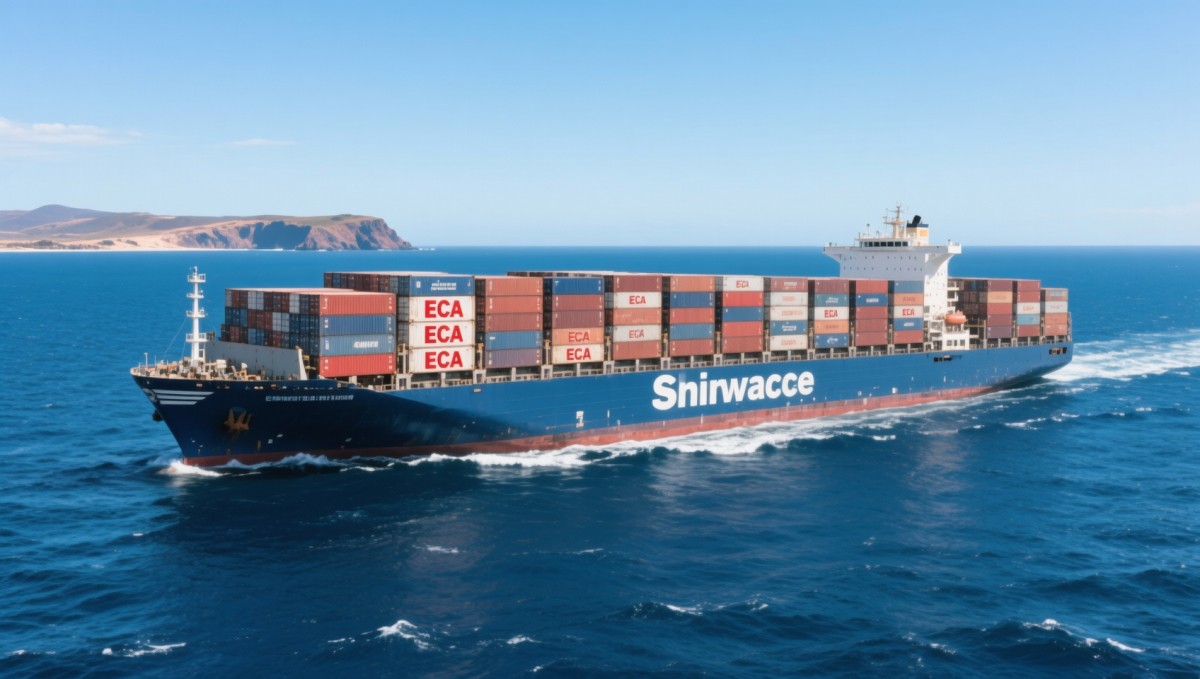
In summary, the $1,850/TEU Red Sea ECA reflects a durable shift in transcontinental shipping economics — one that reshapes cost structures, renegotiates risk allocation across supply chain tiers, and demands updated operational assumptions. It is not a transient cost spike to be weathered, but a foundational element of current Far East–North Europe trade economics requiring systematic integration into procurement, finance, and logistics planning.
Source: Drewry, World Container Index, 26 April 2026. Note: Ongoing observation is recommended for future ECA adjustments and carrier capacity announcements — no further official revision has been issued as of publication date.
Recommended News
 Key Energy Storage Equipment Prices Drop ~80% in ChinaKey energy storage equipment prices in China dropped ~80% — PCS, BMS & liquid cooling units. Discover implications for compliance, margins & standards enforcement.
") China Releases Green Design Guidelines for Industrial Products (2026)China's 2026 Green Design Guidelines for industrial products—covering PV modules, lithium batteries & smart appliances—link eco-design to green factory certification and export tax rebates starting 2027.
China Releases Green Design Guidelines for Industrial Products (2026)China's 2026 Green Design Guidelines for industrial products—covering PV modules, lithium batteries & smart appliances—link eco-design to green factory certification and export tax rebates starting 2027. Mexico NOM-019-SCFI-2026 Effective: Automotive Electronics Require New EMC CertificationMexico NOM-019-SCFI-2026 is live: Automotive electronics (infotainment, ADAS, domain controllers) now require mandatory EMC certification by July 31, 2026 — act now to avoid customs delays.
 Red Sea Detour Premium Rises to $1,850/TEU Amid Port Congestion ReliefRed Sea Detour Premium hits $1,850/TEU — now 43% of FE–NE freight rates. Discover why this structural surcharge demands urgent supply chain action.
 TÜV Rheinland Updates PLd Certification: EMC Immunity Now Mandatory for Servo DrivesTÜV Rheinland now mandates EN IEC 61000-6-2:2024 EMC immunity testing for PLd certification of servo drives—act before May 26, 2026 to avoid EU market delays.
 RCEP Green Packaging Mutual Recognition Effective Apr 26, 2026RCEP Green Packaging Mutual Recognition takes effect Apr 26, 2026—unlock faster customs clearance & cost savings for eco-friendly packaging exporters to AU, NZ, JP, KR.
 FDA Final Rule: AI Diagnostic Devices Must Submit Bias Impact ReportsFDA mandates AI diagnostic devices submit third-party-verified bias impact reports—key for 510(k)/De Novo submissions. Act now to ensure compliance & market access.
 Vietnam Suspends SASO Mutual Recognition for Chinese Irrigation EquipmentVietnam suspends SASO mutual recognition for Chinese irrigation equipment—urgent QCVN certification now required for drip tapes, sprinklers, valves & smart controllers.
 SABER Phase II Launch: Building Hardware Must Submit Digital Type Test Reports & PIDSABER Phase II now requires digital type test reports & PID for building hardware — fasteners, door/window, bathroom fixtures. Avoid port rejection: ensure PID-bound compliance before shipment.
 IMDG Code 41-24 Enforced: UN3480 Lithium Batteries Require Class 9 LabelsUN3480 lithium batteries now require ISO 7225-compliant Class 9 labels under IMDG Code 41-24 — enforceable globally from 26 April 2026. Act now to avoid shipment delays!
 Are Auto Detailing Services Worth the Cost?Auto detailing services: discover if the cost is justified, how pricing varies, and how a business intelligence platform helps buyers compare value, quality, and long-term ROI.
 What Makes Sustainable Fashion Brands Worth Buying?Sustainable fashion brands deliver transparency, quality, and lower risk. See how a business intelligence platform helps buyers verify value, avoid greenwashing, and source smarter.
 How to Choose a Business Intelligence Platform in 2026?Business intelligence platform selection in 2026: compare data coverage, pricing insights, online trade platform signals, Cement price trends, and MRI scanners cost to choose smarter, faster.
 IMDG Code 41-24 Enforces UN3480 Class 9 Labeling for Lithium Battery Sea FreightIMDG Code 41-24 mandates UN3480 Class 9 labeling for lithium battery sea freight—avoid auto-rejection by DHL, Kuehne+Nagel & Sinotrans. Act now.
 ESS Key Equipment Prices Drop ~80%: Quality & Compliance RiseESS key equipment prices dropped ~80%—but quality & compliance are now critical. Discover how UL 9540A and IEC 62933-5-2 standards reshape global market access.
") China Releases Green Design Guide for Industrial Products (2026)China's new Green Design Guide (2026) offers 126 actionable solutions for solar, batteries & robotics—key for EU ESG compliance and export readiness.
China Releases Green Design Guide for Industrial Products (2026)China's new Green Design Guide (2026) offers 126 actionable solutions for solar, batteries & robotics—key for EU ESG compliance and export readiness. Vietnam Suspends SASO Mutual Recognition for Chinese Irrigation EquipmentVietnam suspends SASO mutual recognition for Chinese irrigation equipment—impacting spray controllers, fertigation systems & PE pipes. Act now to meet new local testing mandates.
 Mexico NOM-019-SCFI-2026 Effective: Automotive EMC Certification RequiredMexico NOM-019-SCFI-2026 is live: Automotive EMC certification now mandatory for all car electronics entering Mexico—avoid customs rejection. Act now!
 Red Sea Rerouting Now Normalized: Asia-Europe Freight Premium at $1,850/TEURed Sea rerouting is now normalized—Asia-Europe freight premium holds at $1,850/TEU. Critical for CNC, solar PV & EV accessory exporters. Read the strategic implications.
 SABER Phase II Launch: Building Hardware Must Submit Digital Type Test Reports & UPIDSABER Phase II is live: Building hardware exporters must now submit digital type test reports & UPID—avoid Jeddah port delays. Act now!
 FDA Final Rule: AI Diagnostic Devices Require Bias Assessment for US MarketFDA mandates bias assessment for AI diagnostic devices—key for portable ultrasound, dermatoscopes & fundus analyzers entering the US market. Act now to comply.




















Popular Tags
Global Trade Insights & Industry
Our mission is to empower global exporters and importers with data-driven insights that foster strategic growth.
Search News
Popular Tags
Industry Overview
The global commercial kitchen equipment market is projected to reach $112 billion by 2027. Driven by urbanization, the rise of e-commerce food delivery, and strict hygiene regulations.