

Mexico NOM-019-SCFI-2026 Effective: Automotive Electronics Require New EMC Certification
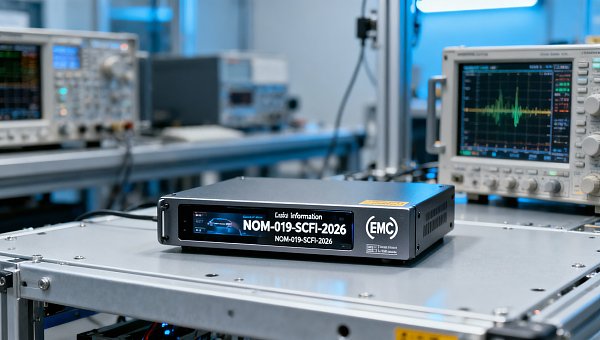
Mexico’s National Standards Bureau (DGN) implemented the updated mandatory electromagnetic compatibility standard NOM-019-SCFI-2026 on April 26, 2026. This regulation introduces new radiated emission limits (30–1000 MHz) and transient immunity requirements (ISO 7637-2 Pulse 5a) for in-vehicle infotainment head units, ADAS camera modules, and domain controllers. Exporters of automotive electronic components to Mexico must complete certification by July 31, 2026 — failure to do so will result in customs clearance denial. Automotive electronics suppliers, Tier 1 integrators, and export compliance teams should treat this as a near-term operational priority.
Event Overview
The Mexican National Standards Bureau (DGN) officially published and enforced NOM-019-SCFI-2026 on April 26, 2026. The standard mandates electromagnetic compatibility (EMC) certification for specific automotive electronic components intended for the Mexican market, including in-vehicle infotainment hosts, ADAS camera modules, and domain controllers. It specifies radiated emission limits in the 30–1000 MHz frequency band and transient immunity testing per ISO 7637-2 Pulse 5a. All affected products must obtain certification by July 31, 2026, to be eligible for customs clearance into Mexico.
Industries Affected
Direct Exporters of Automotive Electronics
Companies shipping automotive electronic components directly to Mexico are subject to immediate regulatory enforcement. Non-compliant shipments after July 31, 2026, will be rejected at customs — impacting delivery schedules, contractual obligations, and inventory turnover.
Automotive Tier 1 Suppliers and System Integrators
Tier 1 firms supplying assembled subsystems (e.g., ADAS camera subassemblies or infotainment systems) must ensure all embedded electronic modules meet NOM-019-SCFI-2026. Component-level non-compliance may invalidate system-level certification, requiring retesting or redesign.
EMC Testing Laboratories and Certification Bodies
Laboratories accredited for ISO/IEC 17025 testing — particularly those with capabilities in automotive EMC, ISO 7637-2 transient immunity, and radiated emissions in the 30–1000 MHz range — face increased demand for validation services. Capacity constraints may emerge ahead of the July deadline.
Supply Chain and Logistics Service Providers
Freight forwarders and customs brokers handling automotive electronics exports to Mexico must verify certification documentation prior to shipment. Absence of valid NOM-019-SCFI-2026 certification may trigger delays or refusal of entry — increasing documentation verification workload and liability exposure.
What Relevant Enterprises or Practitioners Should Focus On
Confirm product scope alignment with official NOM-019-SCFI-2026 annexes
While the announcement identifies in-vehicle infotainment hosts, ADAS camera modules, and domain controllers, the full scope is defined in the standard’s annexes. Exporters should obtain and review the official DGN-published text to confirm whether other related components (e.g., display panels, sensor signal conditioners) fall under mandatory coverage.
Prioritize testing and certification for high-volume or lead-time-sensitive SKUs
Given typical EMC test cycle durations (4–8 weeks), manufacturers should identify priority items based on shipment volume, customer deadlines, and component complexity. Radiated emission testing across 30–1000 MHz and Pulse 5a immunity validation require specialized facilities and scheduling — early booking is advisable.
Verify certification body accreditation status with Mexican authorities
Only laboratories and certifiers recognized by Mexico’s National Accreditation Entity (EMA) or designated by DGN may issue valid NOM-019-SCFI-2026 certificates. Firms should cross-check their chosen certification partner against EMA’s current list before initiating assessment.
Update technical documentation and labeling for Mexican market submissions
Certification requires submission of technical files, including schematics, PCB layouts, test reports, and user manuals in Spanish. Manufacturers should allocate time for translation, internal review, and format compliance — especially for transient immunity test setup descriptions and emission measurement configurations.
Editorial Perspective / Industry Observation
From an industry perspective, NOM-019-SCFI-2026 signals Mexico’s continued alignment with international automotive EMC frameworks — particularly ISO 11452 and ISO 7637 — while introducing localized enforcement timelines and scope definitions. Analysis来看, this is less a technical departure than a formalization of existing best practices into binding national regulation. Observation来看, the tight three-month window between implementation (April 26) and enforcement (July 31) suggests DGN intends rapid compliance uptake — likely reflecting growing domestic vehicle production and import controls. Current more appropriate understanding is that this is an operational compliance milestone rather than a strategic policy shift; however, sustained attention is warranted as future revisions may expand scope to include EV powertrain electronics or OTA-enabled modules.
This update marks a concrete step in Mexico’s regulatory maturation for automotive electronics trade. It does not introduce novel technical thresholds but enforces previously voluntary or de facto expectations through binding customs control. For stakeholders, the immediate implication is procedural — not conceptual. Success hinges on timely documentation, accredited testing, and precise interpretation of scope — not technological overhaul.
Information Source: Official announcement by Mexico’s Dirección General de Normas (DGN), published April 26, 2026. Ongoing monitoring is recommended for any clarifications or guidance documents issued by DGN or the Mexican Ministry of Economy (SE). No further amendments or interpretations have been confirmed as of publication.
Recommended News
 Key Energy Storage Equipment Prices Drop ~80% in ChinaKey energy storage equipment prices in China dropped ~80% — PCS, BMS & liquid cooling units. Discover implications for compliance, margins & standards enforcement.
") China Releases Green Design Guidelines for Industrial Products (2026)China's 2026 Green Design Guidelines for industrial products—covering PV modules, lithium batteries & smart appliances—link eco-design to green factory certification and export tax rebates starting 2027.
China Releases Green Design Guidelines for Industrial Products (2026)China's 2026 Green Design Guidelines for industrial products—covering PV modules, lithium batteries & smart appliances—link eco-design to green factory certification and export tax rebates starting 2027. Mexico NOM-019-SCFI-2026 Effective: Automotive Electronics Require New EMC CertificationMexico NOM-019-SCFI-2026 is live: Automotive electronics (infotainment, ADAS, domain controllers) now require mandatory EMC certification by July 31, 2026 — act now to avoid customs delays.
 Red Sea Detour Premium Rises to $1,850/TEU Amid Port Congestion ReliefRed Sea Detour Premium hits $1,850/TEU — now 43% of FE–NE freight rates. Discover why this structural surcharge demands urgent supply chain action.
 TÜV Rheinland Updates PLd Certification: EMC Immunity Now Mandatory for Servo DrivesTÜV Rheinland now mandates EN IEC 61000-6-2:2024 EMC immunity testing for PLd certification of servo drives—act before May 26, 2026 to avoid EU market delays.
 RCEP Green Packaging Mutual Recognition Effective Apr 26, 2026RCEP Green Packaging Mutual Recognition takes effect Apr 26, 2026—unlock faster customs clearance & cost savings for eco-friendly packaging exporters to AU, NZ, JP, KR.
 FDA Final Rule: AI Diagnostic Devices Must Submit Bias Impact ReportsFDA mandates AI diagnostic devices submit third-party-verified bias impact reports—key for 510(k)/De Novo submissions. Act now to ensure compliance & market access.
 Vietnam Suspends SASO Mutual Recognition for Chinese Irrigation EquipmentVietnam suspends SASO mutual recognition for Chinese irrigation equipment—urgent QCVN certification now required for drip tapes, sprinklers, valves & smart controllers.
 SABER Phase II Launch: Building Hardware Must Submit Digital Type Test Reports & PIDSABER Phase II now requires digital type test reports & PID for building hardware — fasteners, door/window, bathroom fixtures. Avoid port rejection: ensure PID-bound compliance before shipment.
 IMDG Code 41-24 Enforced: UN3480 Lithium Batteries Require Class 9 LabelsUN3480 lithium batteries now require ISO 7225-compliant Class 9 labels under IMDG Code 41-24 — enforceable globally from 26 April 2026. Act now to avoid shipment delays!
 Are Auto Detailing Services Worth the Cost?Auto detailing services: discover if the cost is justified, how pricing varies, and how a business intelligence platform helps buyers compare value, quality, and long-term ROI.
 What Makes Sustainable Fashion Brands Worth Buying?Sustainable fashion brands deliver transparency, quality, and lower risk. See how a business intelligence platform helps buyers verify value, avoid greenwashing, and source smarter.
 How to Choose a Business Intelligence Platform in 2026?Business intelligence platform selection in 2026: compare data coverage, pricing insights, online trade platform signals, Cement price trends, and MRI scanners cost to choose smarter, faster.
 IMDG Code 41-24 Enforces UN3480 Class 9 Labeling for Lithium Battery Sea FreightIMDG Code 41-24 mandates UN3480 Class 9 labeling for lithium battery sea freight—avoid auto-rejection by DHL, Kuehne+Nagel & Sinotrans. Act now.
 ESS Key Equipment Prices Drop ~80%: Quality & Compliance RiseESS key equipment prices dropped ~80%—but quality & compliance are now critical. Discover how UL 9540A and IEC 62933-5-2 standards reshape global market access.
") China Releases Green Design Guide for Industrial Products (2026)China's new Green Design Guide (2026) offers 126 actionable solutions for solar, batteries & robotics—key for EU ESG compliance and export readiness.
China Releases Green Design Guide for Industrial Products (2026)China's new Green Design Guide (2026) offers 126 actionable solutions for solar, batteries & robotics—key for EU ESG compliance and export readiness. Vietnam Suspends SASO Mutual Recognition for Chinese Irrigation EquipmentVietnam suspends SASO mutual recognition for Chinese irrigation equipment—impacting spray controllers, fertigation systems & PE pipes. Act now to meet new local testing mandates.
 Mexico NOM-019-SCFI-2026 Effective: Automotive EMC Certification RequiredMexico NOM-019-SCFI-2026 is live: Automotive EMC certification now mandatory for all car electronics entering Mexico—avoid customs rejection. Act now!
 Red Sea Rerouting Now Normalized: Asia-Europe Freight Premium at $1,850/TEURed Sea rerouting is now normalized—Asia-Europe freight premium holds at $1,850/TEU. Critical for CNC, solar PV & EV accessory exporters. Read the strategic implications.
 SABER Phase II Launch: Building Hardware Must Submit Digital Type Test Reports & UPIDSABER Phase II is live: Building hardware exporters must now submit digital type test reports & UPID—avoid Jeddah port delays. Act now!
 FDA Final Rule: AI Diagnostic Devices Require Bias Assessment for US MarketFDA mandates bias assessment for AI diagnostic devices—key for portable ultrasound, dermatoscopes & fundus analyzers entering the US market. Act now to comply.




















Popular Tags
Global Trade Insights & Industry
Our mission is to empower global exporters and importers with data-driven insights that foster strategic growth.
Search News
Popular Tags
Industry Overview
The global commercial kitchen equipment market is projected to reach $112 billion by 2027. Driven by urbanization, the rise of e-commerce food delivery, and strict hygiene regulations.