

IMDG Code 41-24 Enforced: UN3480 Lithium Batteries Require Class 9 Labels
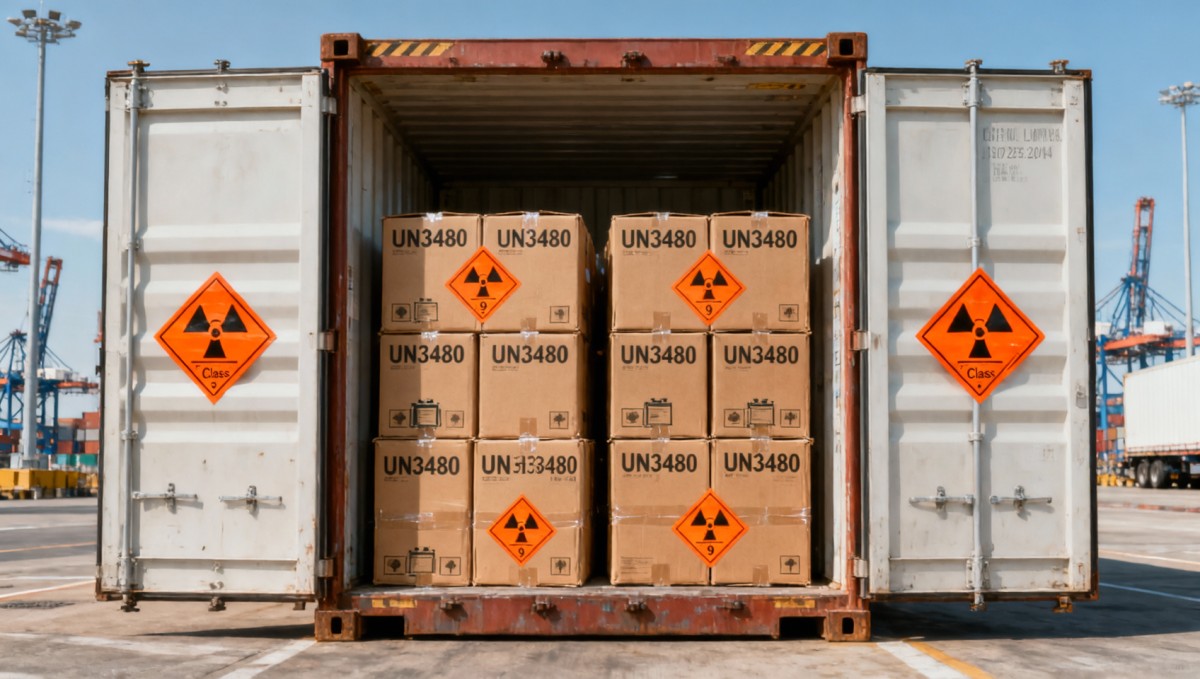
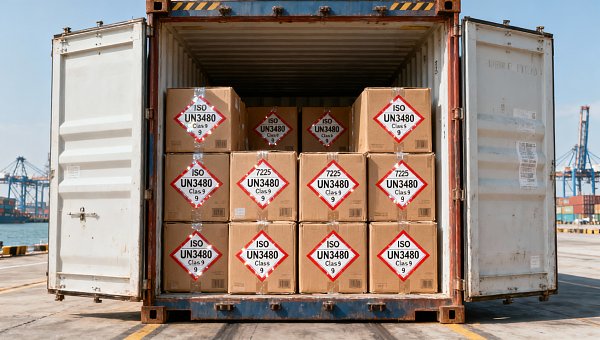
As of 26 April 2026, the International Maritime Organization’s (IMO) updated International Maritime Dangerous Goods Code (IMDG Code 41-24) entered mandatory global force — requiring all lithium-ion battery shipments classified under UN3480 to bear ISO 7225-compliant Class 9 diamond-shaped hazard labels, alongside updated transport documentation and packaging markings. This change directly affects exporters in lithium battery manufacturing, energy storage systems, EV components, and portable electronics across thousands of enterprises — particularly those based in China.
Event Overview
The IMO’s IMDG Code 41-24 revision became globally mandatory on 26 April 2026. It explicitly mandates that all consignments of lithium-ion batteries assigned UN3480 must display the Class 9 hazard label conforming to ISO 7225, and that shipping papers and outer packaging must reflect this labeling requirement. No transitional period applies post-26 April 2026; enforcement is immediate and universal for sea transport.
Industries Affected by Segment
Direct Exporters (OEMs & Contract Manufacturers)
These entities ship finished lithium-ion battery products or integrated devices (e.g., power banks, e-bikes, BESS units). They are directly responsible for compliance with labeling, documentation, and packaging rules at point of origin. Non-compliance may result in port rejection, detention, or refusal of loading — disrupting scheduled deliveries and triggering contractual penalties.
Energy Storage System (ESS) Integrators
Companies assembling battery modules into containerized or rack-mounted ESS solutions must ensure each individual UN3480 battery cell or module carries the required Class 9 label before integration — or apply compliant over-labeling to final packaged units. Label visibility and durability across multi-layered packaging become critical verification points.
EV Component Suppliers
Suppliers of battery packs, BMS units, or high-voltage subassemblies intended for overseas vehicle assembly lines face stricter upstream coordination demands. Their logistics partners and end customers now require documented proof of label conformity prior to acceptance — adding a new checkpoint in quality and compliance handover protocols.
Freight Forwarders & Cargo Consolidators
These service providers must verify Class 9 label presence and correctness before tendering cargo to carriers. Absence or non-conformity may lead to carrier refusal or surcharges. Their internal checklists and pre-booking validation workflows now require explicit UN3480 label verification steps.
What Relevant Enterprises or Practitioners Should Focus On — and How to Respond
Confirm label specifications against ISO 7225:2014 (not older editions)
Class 9 labels must meet precise dimensions, colorimetry (fluorescent orange background), symbol contrast, and durability requirements per ISO 7225:2014. Analysis来看, many existing stock labels printed pre-2026 reference outdated versions — revalidation or replacement is necessary before shipment.
Update internal documentation templates and ERP fields
Shipping declarations, dangerous goods manifests, and packing lists must now include explicit Class 9 label confirmation statements. From industry角度看, ERP or TMS systems used by exporters often lack dedicated fields for label compliance status — prompting urgent configuration or workflow adjustment ahead of booking.
Verify label application timing and location in packaging hierarchy
Labels must be affixed to the *outermost* shipping unit bearing the UN3480 designation — not just on inner cartons or cells. Current more suitable understanding is that label placement is tied to the level at which the UN number is declared, not the physical form of the battery. Misplacement remains a top cause of inspection failure.
Engage with carriers and terminal operators early on verification expectations
While the rule is global, implementation rigor varies by port and carrier. Observation shows some major ocean carriers now require photo evidence of label application during pre-booking. Proactive alignment on evidence formats (e.g., timestamped photos, signed checklists) avoids last-minute delays.
Editorial Perspective / Industry Observation
This mandate is less a standalone regulatory shift and more a formalization of long-anticipated alignment between IMO’s transport rules and ICAO’s air transport standards — both now uniformly requiring Class 9 labeling for UN3480. Analysis来看, it signals tightening harmonization across modal regulations, not merely a one-off update. From industry角度, it reflects growing scrutiny of lithium battery logistics safety — especially following recent incidents involving thermal runaway during maritime transit. It is better understood as an operational checkpoint already in effect, rather than a future signal: compliance is enforceable today, not pending further guidance.
Current more relevant focus is on consistency — ensuring labeling, documentation, and staff training converge across production, warehouse, and logistics functions. The risk is no longer uncertainty about the rule, but fragmentation in its execution.
Conclusion
This enforcement underscores that regulatory compliance for lithium battery exports has shifted from ‘documentation-first’ to ‘label-and-documentation co-dependent’. For affected enterprises, the priority is no longer whether the rule applies, but whether every physical and digital touchpoint in the export chain reflects it — accurately, visibly, and verifiably. A single missing or non-conforming Class 9 label can halt an entire container. The change is procedural, not conceptual — and its impact is immediate, tangible, and distributed across supply chain roles.
Information Sources
Main source: International Maritime Organization (IMO), IMDG Code Amendment 41-24, effective 26 April 2026.
Note: Ongoing monitoring is advised for national maritime authority circulars (e.g., China MSA, USCG, UK MCA) that may issue implementation clarifications or enforcement guidance in coming months.
Recommended News
 Key Energy Storage Equipment Prices Drop ~80% in ChinaKey energy storage equipment prices in China dropped ~80% — PCS, BMS & liquid cooling units. Discover implications for compliance, margins & standards enforcement.
") China Releases Green Design Guidelines for Industrial Products (2026)China's 2026 Green Design Guidelines for industrial products—covering PV modules, lithium batteries & smart appliances—link eco-design to green factory certification and export tax rebates starting 2027.
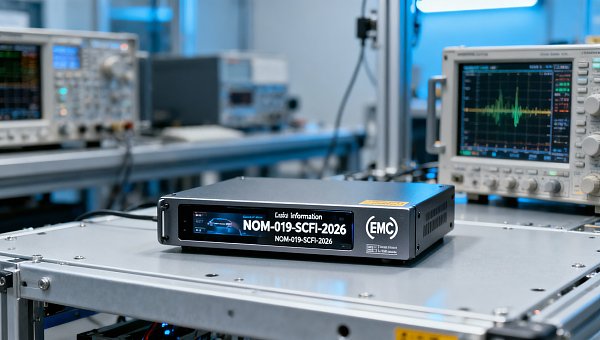
China Releases Green Design Guidelines for Industrial Products (2026)China's 2026 Green Design Guidelines for industrial products—covering PV modules, lithium batteries & smart appliances—link eco-design to green factory certification and export tax rebates starting 2027. Mexico NOM-019-SCFI-2026 Effective: Automotive Electronics Require New EMC CertificationMexico NOM-019-SCFI-2026 is live: Automotive electronics (infotainment, ADAS, domain controllers) now require mandatory EMC certification by July 31, 2026 — act now to avoid customs delays.
 Red Sea Detour Premium Rises to $1,850/TEU Amid Port Congestion ReliefRed Sea Detour Premium hits $1,850/TEU — now 43% of FE–NE freight rates. Discover why this structural surcharge demands urgent supply chain action.
 TÜV Rheinland Updates PLd Certification: EMC Immunity Now Mandatory for Servo DrivesTÜV Rheinland now mandates EN IEC 61000-6-2:2024 EMC immunity testing for PLd certification of servo drives—act before May 26, 2026 to avoid EU market delays.
 RCEP Green Packaging Mutual Recognition Effective Apr 26, 2026RCEP Green Packaging Mutual Recognition takes effect Apr 26, 2026—unlock faster customs clearance & cost savings for eco-friendly packaging exporters to AU, NZ, JP, KR.
 FDA Final Rule: AI Diagnostic Devices Must Submit Bias Impact ReportsFDA mandates AI diagnostic devices submit third-party-verified bias impact reports—key for 510(k)/De Novo submissions. Act now to ensure compliance & market access.
 Vietnam Suspends SASO Mutual Recognition for Chinese Irrigation EquipmentVietnam suspends SASO mutual recognition for Chinese irrigation equipment—urgent QCVN certification now required for drip tapes, sprinklers, valves & smart controllers.
 SABER Phase II Launch: Building Hardware Must Submit Digital Type Test Reports & PIDSABER Phase II now requires digital type test reports & PID for building hardware — fasteners, door/window, bathroom fixtures. Avoid port rejection: ensure PID-bound compliance before shipment.
 IMDG Code 41-24 Enforced: UN3480 Lithium Batteries Require Class 9 LabelsUN3480 lithium batteries now require ISO 7225-compliant Class 9 labels under IMDG Code 41-24 — enforceable globally from 26 April 2026. Act now to avoid shipment delays!
 Are Auto Detailing Services Worth the Cost?Auto detailing services: discover if the cost is justified, how pricing varies, and how a business intelligence platform helps buyers compare value, quality, and long-term ROI.
 What Makes Sustainable Fashion Brands Worth Buying?Sustainable fashion brands deliver transparency, quality, and lower risk. See how a business intelligence platform helps buyers verify value, avoid greenwashing, and source smarter.
 How to Choose a Business Intelligence Platform in 2026?Business intelligence platform selection in 2026: compare data coverage, pricing insights, online trade platform signals, Cement price trends, and MRI scanners cost to choose smarter, faster.
 IMDG Code 41-24 Enforces UN3480 Class 9 Labeling for Lithium Battery Sea FreightIMDG Code 41-24 mandates UN3480 Class 9 labeling for lithium battery sea freight—avoid auto-rejection by DHL, Kuehne+Nagel & Sinotrans. Act now.
 ESS Key Equipment Prices Drop ~80%: Quality & Compliance RiseESS key equipment prices dropped ~80%—but quality & compliance are now critical. Discover how UL 9540A and IEC 62933-5-2 standards reshape global market access.
") China Releases Green Design Guide for Industrial Products (2026)China's new Green Design Guide (2026) offers 126 actionable solutions for solar, batteries & robotics—key for EU ESG compliance and export readiness.
China Releases Green Design Guide for Industrial Products (2026)China's new Green Design Guide (2026) offers 126 actionable solutions for solar, batteries & robotics—key for EU ESG compliance and export readiness. Vietnam Suspends SASO Mutual Recognition for Chinese Irrigation EquipmentVietnam suspends SASO mutual recognition for Chinese irrigation equipment—impacting spray controllers, fertigation systems & PE pipes. Act now to meet new local testing mandates.
 Mexico NOM-019-SCFI-2026 Effective: Automotive EMC Certification RequiredMexico NOM-019-SCFI-2026 is live: Automotive EMC certification now mandatory for all car electronics entering Mexico—avoid customs rejection. Act now!
 Red Sea Rerouting Now Normalized: Asia-Europe Freight Premium at $1,850/TEURed Sea rerouting is now normalized—Asia-Europe freight premium holds at $1,850/TEU. Critical for CNC, solar PV & EV accessory exporters. Read the strategic implications.
 SABER Phase II Launch: Building Hardware Must Submit Digital Type Test Reports & UPIDSABER Phase II is live: Building hardware exporters must now submit digital type test reports & UPID—avoid Jeddah port delays. Act now!
 FDA Final Rule: AI Diagnostic Devices Require Bias Assessment for US MarketFDA mandates bias assessment for AI diagnostic devices—key for portable ultrasound, dermatoscopes & fundus analyzers entering the US market. Act now to comply.


















Popular Tags
Global Trade Insights & Industry
Our mission is to empower global exporters and importers with data-driven insights that foster strategic growth.
Search News
Popular Tags
Industry Overview
The global commercial kitchen equipment market is projected to reach $112 billion by 2027. Driven by urbanization, the rise of e-commerce food delivery, and strict hygiene regulations.