

RCEP Green Packaging Mutual Recognition Takes Effect
On April 27, 2026, the RCEP Secretariat and national authorities—including China’s General Administration of Customs and Australia’s Department of Agriculture, Fisheries and Forestry—jointly signed the Implementation Rules for Green Packaging Mutual Recognition. This agreement grants Chinese products certified to GB/T 37537-2025 (‘Biodegradable Food-Contact Packaging Materials’)免检通关 status at ports in Australia, New Zealand, Japan, and South Korea. The scope covers all categories including carton packaging and eco-friendly packaging, with implications for packaging exporters, food manufacturers, and logistics providers operating across the RCEP region.
Event Overview
On April 27, 2026, the RCEP Secretariat, China’s General Administration of Customs, Australia’s Department of Agriculture, Fisheries and Forestry, New Zealand’s Ministry for Primary Industries, Japan’s Ministry of Health, Labour and Welfare, and South Korea’s Ministry of Food and Drug Safety jointly signed the Implementation Rules for Green Packaging Mutual Recognition. The document confirms that products certified under China’s GB/T 37537-2025 standard for biodegradable food-contact packaging materials are eligible for exemption from duplicate testing, priority inspection, and expedited customs clearance in Australia, New Zealand, Japan, and South Korea. The arrangement applies to all packaging types covered by the standard, including carton packaging and eco-friendly packaging.
Industries Affected
Direct Exporters of Packaging Products
Companies exporting certified eco-friendly packaging from China to Australia, New Zealand, Japan, or South Korea will experience reduced customs delays and lower compliance costs. The exemption from retesting eliminates redundant laboratory assessments, while priority inspection accelerates physical release—especially beneficial for time-sensitive shipments such as fresh food packaging.
Food & Beverage Manufacturers Using Certified Packaging
Brands sourcing GB/T 37537-2025–certified packaging for export to the four RCEP markets may see improved supply chain predictability. Shorter border clearance times reduce inventory holding periods and mitigate risk of shelf-life erosion during transit—particularly relevant for chilled, frozen, or ready-to-eat product lines.
Raw Material Suppliers & Converters
Suppliers of bioplastics, plant-based coatings, or compostable laminates used in certified packaging face increased demand visibility. However, eligibility is tied strictly to final product certification—not upstream inputs—so material suppliers must ensure traceability and documentation alignment with downstream converters’ GB/T 37537-2025 compliance claims.
Logistics & Customs Brokerage Providers
Firms handling cross-border packaging shipments will need to verify and declare GB/T 37537-2025 certification status accurately in customs submissions. Misclassification may result in loss of fast-track treatment; thus, updated internal checklists and staff training on RCEP green packaging documentation requirements are now operationally relevant.
What Enterprises and Practitioners Should Monitor and Do Now
Track official implementation guidance from each country’s competent authority
The agreement entered into force on April 27, 2026, but national customs or food safety agencies may issue supplementary notices on acceptable certificate formats, declaration fields, or audit procedures. Monitoring updates from Australia’s DAFF, NZ’s MPI, Japan’s MHLW, and Korea’s MFDS remains essential before first shipment.
Confirm certification validity and scope alignment for target markets
GB/T 37537-2025 specifies technical requirements for biodegradability under defined conditions (e.g., industrial composting). Some RCEP markets maintain additional environmental labelling or disposal claims rules (e.g., Japan’s JIS Z 7271, Korea’s KOLAS accreditation). Exporters should verify whether their current certification covers all functional and regulatory expectations per destination.
Distinguish between policy signal and operational readiness
While the mutual recognition framework is now formalized, port-level execution depends on local system integration—such as customs IT platforms recognizing GB/T 37537-2025 as a valid standard code. Early adopters may encounter transitional inconsistencies; therefore, pilot shipments with full documentation tracking are advisable before scaling volume.
Prepare documentation workflows and supplier coordination protocols
Certification records, test reports, and declarations must be retained for potential post-clearance verification. Companies should align internal SOPs with the requirement to provide these documents upon request—and ensure converters or subcontractors can supply compliant records without delay.
Editorial Perspective / Industry Observation
Observably, this development represents an early-stage institutionalization of sustainability-linked trade facilitation under RCEP—not a broad regulatory harmonization. It applies narrowly to one Chinese standard, one material category (food-contact packaging), and four specific markets. Analysis shows it functions less as an automatic ‘green lane’ and more as a conditional procedural concession: eligibility hinges entirely on verifiable, up-to-date GB/T 37537-2025 certification, not general environmental claims. From an industry perspective, its significance lies in precedent-setting: it signals growing willingness among RCEP members to treat third-country sustainability standards as interoperable—provided they meet defined technical thresholds and administrative transparency. Continued observation is warranted on whether similar arrangements extend to other standards (e.g., ISO 14001, EN 13432) or product categories (e.g., non-food packaging, reusable systems) in future RCEP working group outcomes.
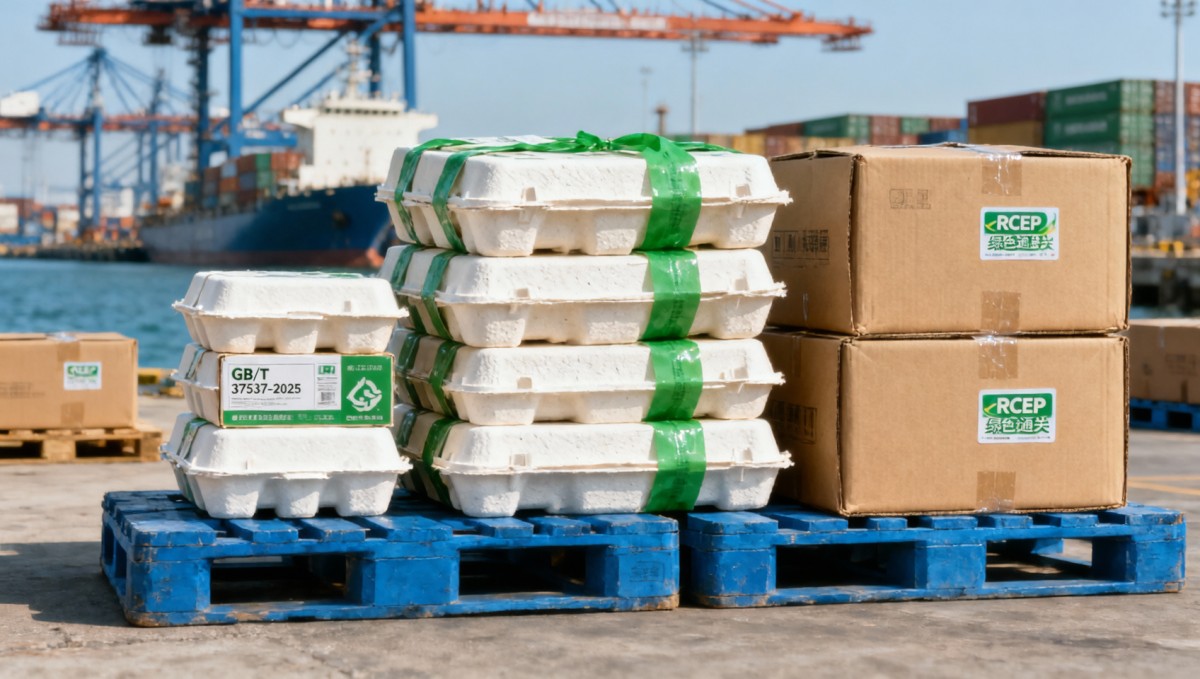
In summary, the RCEP green packaging mutual recognition framework introduces a targeted, certification-dependent efficiency gain for a defined segment of China–RCEP packaging trade. Its immediate value is procedural—not strategic—and its utility depends on disciplined documentation, market-specific validation, and responsiveness to national implementation nuances. It is better understood as an operational enabler within existing compliance infrastructure, rather than a transformative shift in market access conditions.
Source: Joint announcement by the RCEP Secretariat, China’s General Administration of Customs, Australia’s Department of Agriculture, Fisheries and Forestry, New Zealand’s Ministry for Primary Industries, Japan’s Ministry of Health, Labour and Welfare, and South Korea’s Ministry of Food and Drug Safety, dated April 27, 2026. Implementation status and national guidance remain subject to ongoing monitoring.
Recommended News
 IMDG Code 41-24 Enforces UN3480 Class 9 Labeling for Lithium Battery Sea FreightIMDG Code 41-24 mandates UN3480 lithium battery sea freight to display durable Class 9 labels from April 27, 2026—avoid delays & port rejections.
 ESS Key Component Prices Drop ~80%: Quality & Compliance RiseESS key component prices dropped ~80%—but quality & compliance demands surged. Discover how UL 9540A, AS/NZS 5139, and certified BMS/inverters now define market access.
 Mexico NOM-019-SCFI-2026 Effective July 2026: EMC Certification Mandatory for Auto ElectronicsMexico NOM-019-SCFI-2026 mandates EMC certification for auto electronics from July 2026 — ensure compliance now to avoid supply chain disruption & customs delays.
 Red Sea Rerouting Normalized, ECA Surcharge Hits $1,850/TEURed Sea rerouting normalized: ECA surcharge hits $1,850/TEU — 47% of total freight cost. Impacting hand tools, building materials & furniture exporters to Europe. Act now.
 RCEP Green Packaging Mutual Recognition Takes EffectRCEP Green Packaging Mutual Recognition is live—GB/T 37537-2025–certified packaging now enjoys fast-track clearance in Australia, NZ, Japan & Korea. Save time, cut costs, and boost export efficiency.
 Vietnam Suspends SASO Mutual Recognition for Chinese Irrigation EquipmentVietnam suspends SASO mutual recognition for Chinese irrigation equipment—drip tapes, PE fittings, auto valves now require VINAQ-IR certification. Act now to avoid delays & customs hold.
 Key Energy Storage Equipment Prices Drop ~80% in ChinaKey energy storage equipment prices in China dropped ~80% — PCS, BMS & liquid cooling units. Discover implications for compliance, margins & standards enforcement.
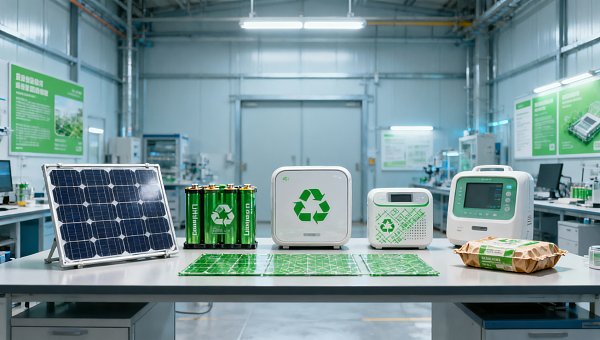
") China Releases Green Design Guidelines for Industrial Products (2026)China's 2026 Green Design Guidelines for industrial products—covering PV modules, lithium batteries & smart appliances—link eco-design to green factory certification and export tax rebates starting 2027.
China Releases Green Design Guidelines for Industrial Products (2026)China's 2026 Green Design Guidelines for industrial products—covering PV modules, lithium batteries & smart appliances—link eco-design to green factory certification and export tax rebates starting 2027. Mexico NOM-019-SCFI-2026 Effective: Automotive Electronics Require New EMC CertificationMexico NOM-019-SCFI-2026 is live: Automotive electronics (infotainment, ADAS, domain controllers) now require mandatory EMC certification by July 31, 2026 — act now to avoid customs delays.
 Red Sea Detour Premium Rises to $1,850/TEU Amid Port Congestion ReliefRed Sea Detour Premium hits $1,850/TEU — now 43% of FE–NE freight rates. Discover why this structural surcharge demands urgent supply chain action.
 TÜV Rheinland Updates PLd Certification: EMC Immunity Now Mandatory for Servo DrivesTÜV Rheinland now mandates EN IEC 61000-6-2:2024 EMC immunity testing for PLd certification of servo drives—act before May 26, 2026 to avoid EU market delays.
 RCEP Green Packaging Mutual Recognition Effective Apr 26, 2026RCEP Green Packaging Mutual Recognition takes effect Apr 26, 2026—unlock faster customs clearance & cost savings for eco-friendly packaging exporters to AU, NZ, JP, KR.
 FDA Final Rule: AI Diagnostic Devices Must Submit Bias Impact ReportsFDA mandates AI diagnostic devices submit third-party-verified bias impact reports—key for 510(k)/De Novo submissions. Act now to ensure compliance & market access.
 Vietnam Suspends SASO Mutual Recognition for Chinese Irrigation EquipmentVietnam suspends SASO mutual recognition for Chinese irrigation equipment—urgent QCVN certification now required for drip tapes, sprinklers, valves & smart controllers.
 SABER Phase II Launch: Building Hardware Must Submit Digital Type Test Reports & PIDSABER Phase II now requires digital type test reports & PID for building hardware — fasteners, door/window, bathroom fixtures. Avoid port rejection: ensure PID-bound compliance before shipment.
 IMDG Code 41-24 Enforced: UN3480 Lithium Batteries Require Class 9 LabelsUN3480 lithium batteries now require ISO 7225-compliant Class 9 labels under IMDG Code 41-24 — enforceable globally from 26 April 2026. Act now to avoid shipment delays!
 Which Home Improvement Tools Do You Really Need First?Home improvement tools guide: discover the first essentials to buy, compare smart home automation devices and online trade platform sourcing tips, and make safer, smarter purchases.
 How to Compare an Online Trade Platform Before Signing Up?Compare an online trade platform with confidence—evaluate data quality, supplier trust, market insights, and search tools for smarter sourcing across cement price, MRI scanners cost, and more.
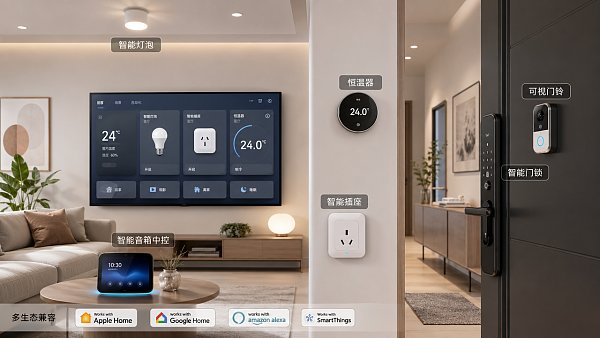
 Which Smart Home Automation Devices Are Easiest to Use?Smart home automation devices made simple: compare easy-to-use smart home automation devices, home improvement tools integration, and buyer tips from a business intelligence platform.
 Are Auto Detailing Services Worth the Cost?Auto detailing services: discover if the cost is justified, how pricing varies, and how a business intelligence platform helps buyers compare value, quality, and long-term ROI.
 What Makes Sustainable Fashion Brands Worth Buying?Sustainable fashion brands deliver transparency, quality, and lower risk. See how a business intelligence platform helps buyers verify value, avoid greenwashing, and source smarter.


















Popular Tags
Global Trade Insights & Industry
Our mission is to empower global exporters and importers with data-driven insights that foster strategic growth.
Search News
Popular Tags
Industry Overview
The global commercial kitchen equipment market is projected to reach $112 billion by 2027. Driven by urbanization, the rise of e-commerce food delivery, and strict hygiene regulations.