

CNC Machining in 2026: Trends in Precision Engineering
The global industrial manufacturing landscape is undergoing a rigorous transformation. By 2026, the CNC machining market is projected to surpass previous economic forecasts, driven by an insatiable demand for microscopic tolerances in the aerospace, medical, and electric vehicle (EV) sectors. Procurement managers and supply chain directors are currently navigating an environment where capacity alone is insufficient. The modern sourcing paradigm demands intelligent manufacturing systems capable of adapting to rapid design iterations while maintaining stringent quality control. As geopolitical shifts continue to influence global trade routes, the intersection of advanced metallurgy, artificial intelligence, and automated subtractive manufacturing is redefining what is possible on the factory floor.
Technological Advancements Driving Precision Engineering
The defining characteristic of industrial production in 2026 is the widespread maturity of closed-loop, data-driven machining systems. Precision engineering has evolved significantly beyond standard 3-axis and 4-axis setups. Today’s state-of-the-art equipment utilizes real-time sensor feedback coupled with machine learning algorithms to dynamically adjust cutting feeds, speeds, and tool paths mid-cycle. This micro-adjustment capability drastically reduces material waste and tool wear, ensuring that critical geometric dimensioning and tolerancing (GD&T) are maintained across high-volume production runs without human intervention.
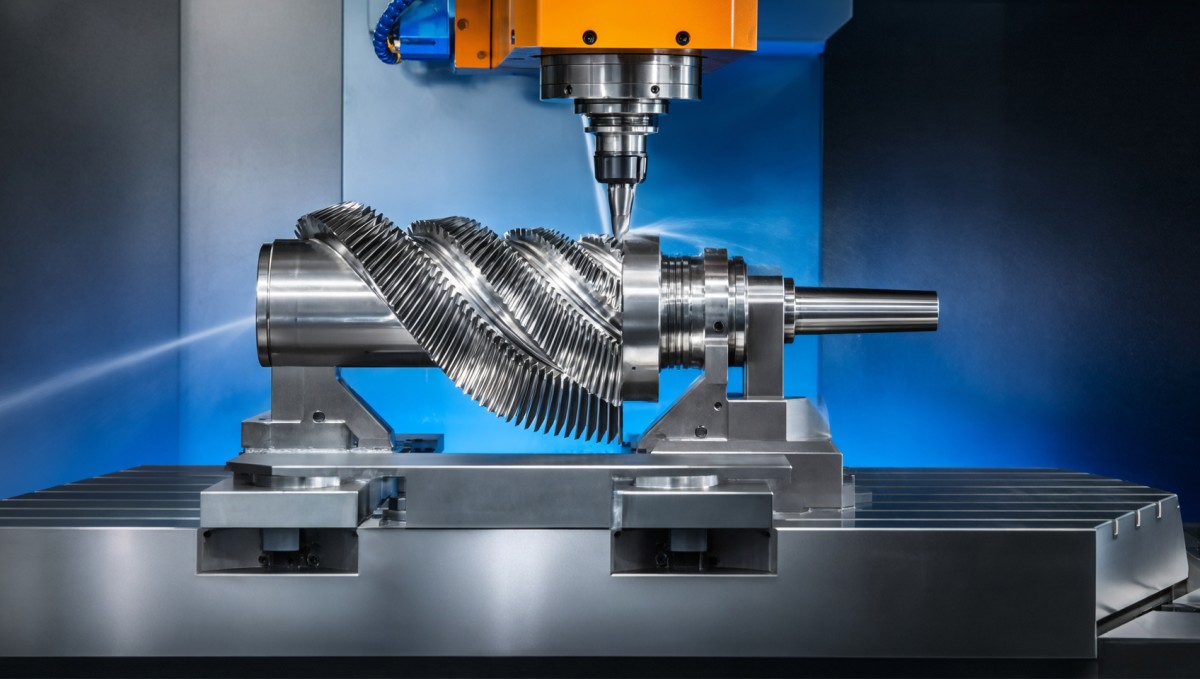
Furthermore, the adoption of digital twin technology has become a baseline requirement for complex projects. Engineers can now simulate the entire subtractive process in a virtual environment before a single billet of metal is secured in the chuck. This eliminates the traditional trial-and-error phases, prevents catastrophic tool crashes, and accelerates the time-to-market for highly complex, multi-faceted components.
Material Innovations in Custom Metal Fabrication
The scope of custom metal fabrication has expanded concurrently with advancements in cutting tool technology. While aluminum alloys and standard austenitic stainless steels remain industry staples, 2026 has seen a marked shift toward the utilization of superalloys and advanced metal-matrix composites (MMCs). Industries such as commercial aerospace and advanced renewable energy demand components that offer exceptional strength-to-weight ratios and extreme thermal resistance.
Machining these notoriously difficult-to-cut materials requires highly specialized tooling setups. Polycrystalline diamond (PCD) cutters, cubic boron nitride (CBN) inserts, and cryogenic cooling systems are now standard deployments for processing Inconel, titanium alloys, and hardened tool steels. The ability to efficiently evacuate chips and manage localized heat generation at the cutting zone dictates the surface finish and structural integrity of the final part. Facilities that have mastered these material-specific parameters hold a significant competitive advantage in the current market.
The Role of Automation and Hybrid Manufacturing
Automation has transcended simple robotic pallet loading. In modern machining centers, collaborative robots (cobots) seamlessly handle secondary operations, including automated deburring, ultrasonic cleaning, and optical inspection. This high level of automation allows skilled machinists to transition from machine operators to process optimization specialists, focusing on complex CAM (Computer-Aided Manufacturing) programming and workflow efficiency.

Additionally, hybrid manufacturing—the integration of additive manufacturing (3D printing) and subtractive CNC machining within the same machine envelope—is gaining rapid commercial traction. This approach allows for the creation of near-net-shape parts using laser metal deposition, which are subsequently machined to tight tolerances. This hybrid methodology significantly reduces raw material consumption and enables the fabrication of internal cooling channels and complex geometries that were previously impossible to manufacture using traditional methods alone.
Supply Chain Resilience and Strategic Sourcing
The global supply chain volatility experienced earlier in the decade has forced a fundamental restructuring of corporate procurement strategies. Relying on single-source suppliers for highly critical machined components is widely recognized as a severe operational vulnerability. Consequently, enterprises are actively transitioning toward diversified sourcing, regionalized manufacturing hubs, and nearshoring initiatives to mitigate logistical risks.
Consider the recent operational shifts within the medical device sector, where original equipment manufacturers (OEMs) are localizing the production of complex orthopedic implants. By integrating a reliable CNC machining partner directly into their digital supply network via ERP (Enterprise Resource Planning) and MES (Manufacturing Execution Systems) connectivity, these enterprises can trigger automated production runs based strictly on real-time inventory depletion data. This level of synchronization minimizes warehousing costs, reduces lead times, and ensures the continuous availability of critical components. The focus has shifted from mere transactional outsourcing to establishing highly integrated, data-transparent relationships that buffer against external economic shocks.
Selection Criteria for High-Volume Production Partners
As the complexity of machined parts increases, evaluating a manufacturing facility requires stringent auditing that goes far beyond basic unit cost analysis. Procurement directors must assess technical depth, automation integration, and quality assurance frameworks. Key selection criteria include:
Spindle Uptime and Automation Integration: Evaluating the facility's implementation of robotic pallet changers and automated part loading to ensure reliable, 24/7 "lights-out" production capabilities.
Advanced Metrology Capabilities: Verifying the presence of in-house Coordinate Measuring Machines (CMM), laser scanning tools, and automated optical inspection (AOI) to guarantee GD&T compliance to the micron level.
Stringent Quality Certifications: Ensuring strict adherence to industry-specific standards such as ISO 9001, AS9100 (aerospace), or ISO 13485 (medical), coupled with comprehensive digital material trace records.
Predictive Maintenance Protocols: Assessing the supplier's use of AI-driven predictive maintenance to monitor spindle health and tool life, which prevents unexpected machine downtime and ensures consistent surface finishes across production batches.
Digital Integration Capacity: The ability of the supplier to securely integrate with the buyer's procurement software for real-time order tracking, quality reporting, and inventory management.
By prioritizing these criteria, enterprises can build robust manufacturing networks capable of meeting the rigorous engineering demands of 2026 and beyond.
 When an export market analysis platform can validate demand in a new marketExport market analysis platform insights help validate new-market demand through buyer fit, regulations, logistics, competition, and profitable entry conditions.
 What is driving the beauty and personal care market in the USA?Beauty and personal care in USA is driven by targeted solutions, selective premiumization, digital discovery, clean-label trust, diverse needs, and compliance. Explore key growth opportunities.
 How trade flow monitoring reports reveal changing regional demandTrade flow monitoring reports reveal changing regional demand through import volumes, sourcing shifts, product mix, logistics signals, and regulatory trends. Explore actionable market insights.
 How international market intelligence for investors reduces market-entry riskInternational market intelligence for investors reduces market-entry risk by validating demand, regulations, logistics, and competition before capital is committed.
 How international sourcing intelligence helps identify supplier risk earlyInternational sourcing intelligence helps businesses spot supplier risks early, protect supply continuity, and make smarter global procurement decisions.
 How trade data aggregation analytics reveals emerging supplier marketsTrade data aggregation analytics reveals emerging supplier markets through export trends, input flows, logistics, and regulatory signals. Discover smarter sourcing insights.
 What industrial cluster monitoring in Vietnam reveals about site riskIndustrial cluster monitoring Vietnam reveals hidden site risks across labor, utilities, logistics, compliance, and supplier dependencies. Make smarter sourcing and expansion decisions.
 Food Technology Trends Reshaping Shelf Life, Safety, and Product InnovationFood technology is reshaping shelf life, safety, and innovation. Discover the trends helping food businesses cut risk, improve compliance, and unlock stronger global market growth.
 How electronics manufacturing services are changing with low-volume demandElectronics manufacturing services are evolving fast with low-volume demand. Learn how agile EMS partners improve flexibility, compliance, sourcing resilience, and speed to market.
 How Can Buyers Reduce Procurement Risks for Electronic Components?How to reduce procurement risks for electronic components: learn how buyers assess traceability, lead times, compliance, and supplier types to avoid costly sourcing mistakes.
 What Sourcing Intelligence India Reveals About Supplier Risk and Cost ShiftsSourcing intelligence India reveals hidden supplier risk, compliance gaps, logistics pressure, and real cost shifts—helping buyers compare vendors smarter and source with more confidence.
 Fashion Trends 2026: Which Materials, Colors, and Silhouettes Are Gaining Ground?Fashion trends 2026 spotlight tactile fabrics, mineral colors, and controlled volume. Explore the materials, shades, and silhouettes shaping smarter, more wearable style.
 Smart Device Market Outlook: Key Growth Drivers, Segments, and Business OpportunitiesSmart device market trends are shifting toward system value, industrial demand, and resilient supply chains. Explore key growth drivers, high-potential segments, and business opportunities.
 How Global Trade Intelligence Services Help B2B Firms Evaluate Markets and SuppliersGlobal trade intelligence services help B2B firms compare suppliers, assess market potential, and uncover compliance, logistics, and pricing risks before costly decisions are made.
 Manufacturing Sector Updates for Investors: What Signals Matter Most in 2025?Manufacturing sector updates for investors in 2025: track orders, margins, supply chains, regulation, and exports to spot resilient manufacturers and smarter investment signals.
 How Energy Market Intelligence Helps Businesses Track Price Risks and Demand ShiftsEnergy market intelligence helps businesses spot price risks, demand shifts, and supply pressure early—improving procurement, resilience, and faster strategic decisions.
 Precision Hardware Tools Market: Key Demand Drivers, Segments, and Growth OutlookPrecision hardware tools market trends are reshaping sourcing, compliance, and automation. Explore key demand drivers, segment shifts, regional supply patterns, and growth opportunities.
 How to Use Customs Import Data to Find Buyers, Track Competitors, and Spot Demand?Customs import data helps you find real buyers, track competitors, and spot demand shifts early. Learn practical ways to turn trade records into smarter global business decisions.
 Manufacturing Cost Analysis: 8 Cost Drivers That Change Your Unit PriceManufacturing cost analysis explained through 8 key cost drivers that impact unit price, supplier stability, and margins—learn how to compare quotes smarter and reduce sourcing risk.
 Industrial Market Realities: What Buyers Should Check Before Comparing Supplier QuotesIndustrial market realities shape every supplier quote beyond unit price. Learn what to check on compliance, lead times, logistics, and hidden cost risks before comparing offers.
 Beverage Production Line Planning: Key Equipment, Capacity, and Hygiene RequirementsBeverage production line planning made practical: discover key equipment, real capacity sizing, and hygiene requirements to improve efficiency, safety, and long-term plant performance.





















Global Trade Insights & Industry
Our mission is to empower global exporters and importers with data-driven insights that foster strategic growth.
Search News
Popular Tags
Industry Overview
The global commercial kitchen equipment market is projected to reach $112 billion by 2027. Driven by urbanization, the rise of e-commerce food delivery, and strict hygiene regulations.