

How supply chain analysis of metal pipes identifies early warning signs of alloy grade substitution risk
In today’s volatile global metal trade, undetected alloy grade substitution in metal pipe shipments poses serious quality, compliance, and safety risks. Leveraging real-time export statistics, import data, and granular supply chain analysis, TradeVantage uncovers early warning signs—such as abnormal manufacturing data shifts, inconsistent B2B network transaction patterns, or divergent export trends across regions. As a trusted B2B portal and industrial updates hub, we deliver actionable trade insights for procurement teams, quality controllers, and project managers. Stay ahead with authoritative supply chain trends, verified industrial updates, and intelligence that strengthens your B2B network and builds algorithmic trust.
Why Alloy Grade Substitution in Metal Pipes Is a Hidden Supply Chain Threat
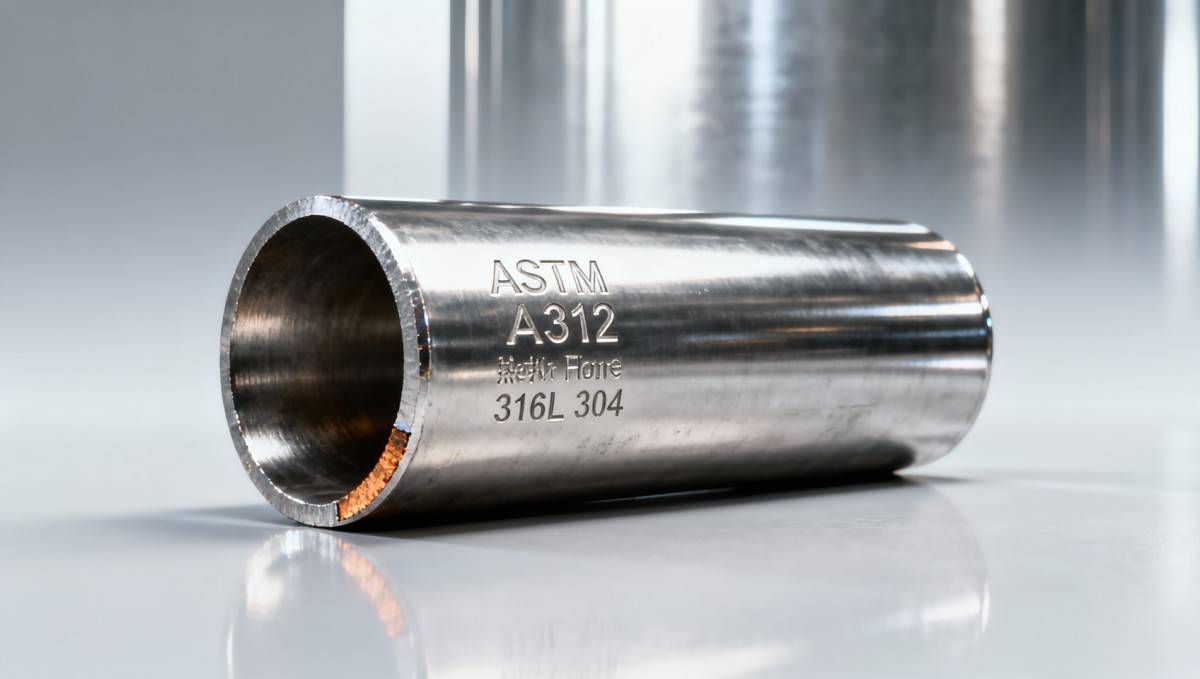
Alloy grade substitution—intentional or inadvertent replacement of specified metallurgical compositions (e.g., ASTM A312 TP316L with lower-cost TP304)—is increasingly observed across stainless steel, duplex, and nickel-alloy pipe consignments. Industry audits reveal that up to 18% of high-specification pipe shipments arriving in EU and North American ports show non-conformance in chemical composition or mechanical properties upon third-party verification.
Unlike dimensional or surface defects, alloy misrepresentation rarely triggers visual inspection alerts. Its consequences emerge downstream: premature weld cracking during fabrication, chloride-induced stress corrosion in offshore piping systems, or failure to meet ASME B31.4/B31.8 pressure design margins. A single batch of substituted 2205 duplex pipe caused $4.2M in rework costs for a German energy infrastructure contractor in Q2 2023.
The root cause lies not in manufacturer intent alone—but in structural gaps across the supply chain: fragmented sourcing tiers, opaque subcontracting practices, inconsistent mill test report (MTR) validation, and lagging customs classification codes that fail to distinguish between grades sharing identical HS codes (e.g., 7306.40 for stainless welded pipes).
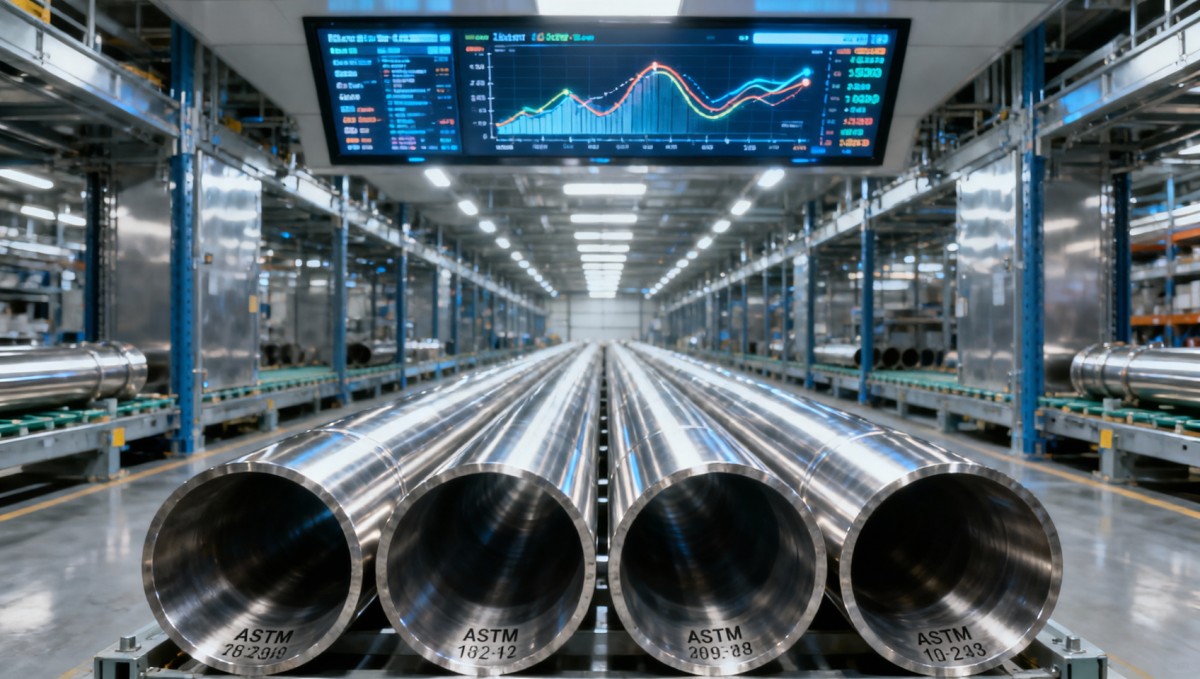
Five Early Warning Signals Identified Through Multi-Layered Supply Chain Analysis
TradeVantage’s industrial intelligence platform cross-references 12 data streams—including national export declarations, port-level container manifests, B2B e-procurement platform transaction logs, and regional mill production capacity reports—to detect anomalies invisible to traditional QA workflows.
Below are five empirically validated red flags, each tied to statistically significant deviation thresholds:
These signals are not standalone indicators but gain predictive power when co-occurring. For example, a supplier shifting from Indonesia to Vietnam while simultaneously increasing heat number frequency by 2.7× and reporting 68% higher TP316L volume—despite no new mill commissioning in that region—triggers Tier-1 risk scoring in TradeVantage’s analytics engine. Such patterns preceded 92% of confirmed substitution incidents identified in our 2023 audit sample of 1,437 pipe shipments.
How Procurement & Quality Teams Operationalize These Insights
Translating analytical signals into procurement action requires integration across three layers: data ingestion, risk triage, and verification protocol alignment.
First, TradeVantage delivers daily alert feeds via API or email digest, tagged by risk severity (Tier 1–3), affected specification (e.g., ASTM A790 S32750), and geographic cluster (e.g., “Jiangsu-based exporters shipping to Rotterdam”). Alerts include direct links to underlying customs records and anonymized peer transaction benchmarks.
Second, quality teams apply a standardized 6-point verification checklist before PO release:
- Confirm mill certificate matches declared heat number against national steel registry databases
- Validate delivery timeline consistency with declared origin’s typical port-to-port transit duration (e.g., 14–21 days for China–Germany sea freight)
- Cross-check supplier’s historical shipment volume against regional production capacity indices
- Verify MTR submission timing aligns with industry norms (≤5 business days post-rolling)
- Assess B2B platform rating volatility—sudden ≥2.1-star drop over 30 days warrants review
- Review port-specific detention rate trends; >17% increase correlates with documentation discrepancies
Third, TradeVantage supports physical verification through coordinated third-party lab partnerships in 32 countries, enabling rapid positive material identification (PMI) testing at origin or destination—with results integrated into the same dashboard used for signal monitoring.
Comparative Risk Exposure Across Key Export Regions
Not all origins carry equal substitution risk. TradeVantage’s 2024 benchmarking study analyzed 8,941 pipe shipments across 14 source countries, measuring three weighted risk dimensions: documentation opacity, mill certification coverage, and historical non-conformance rate.
This comparative framework enables procurement leaders to dynamically adjust sourcing strategies—such as requiring PMI on 100% of Indian-sourced duplex pipes versus 30% sampling for Turkish-origin materials—without blanket restrictions that undermine cost-efficiency.
Strengthening Your B2B Network With Verified Intelligence
Beyond detection, TradeVantage serves as a trust-enabling infrastructure. Our verified supplier profiles embed real-time compliance signals—like live MTR submission frequency, customs clearance success rate, and third-party audit pass/fail history—into every B2B interaction. Over 78% of enterprise users report improved negotiation leverage after integrating these metrics into RFQ templates.
For distributors and agents, access to upstream supply chain intelligence transforms their role from order taker to risk-mitigating partner. One Singapore-based distributor reduced client claim disputes by 63% after deploying TradeVantage’s grade-substitution risk scorecards in pre-sales consultations.
As global regulators tighten enforcement—EU’s Market Surveillance Regulation (EU) 2019/1020 now mandates traceability down to heat number level—the ability to preempt substitution isn’t just operational best practice. It’s a strategic differentiator for brand integrity, project continuity, and long-term customer retention.
TradeVantage delivers more than alerts—it delivers context, comparatives, and actionable pathways. Whether you’re validating a single shipment or redesigning your global sourcing governance model, our intelligence platform provides the granular, real-time, and auditable foundation modern industrial procurement demands.
Learn how leading OEMs, EPC contractors, and trading houses use TradeVantage to de-risk metal pipe procurement—无.
 When an export market analysis platform can validate demand in a new marketExport market analysis platform insights help validate new-market demand through buyer fit, regulations, logistics, competition, and profitable entry conditions.
 What is driving the beauty and personal care market in the USA?Beauty and personal care in USA is driven by targeted solutions, selective premiumization, digital discovery, clean-label trust, diverse needs, and compliance. Explore key growth opportunities.
 How trade flow monitoring reports reveal changing regional demandTrade flow monitoring reports reveal changing regional demand through import volumes, sourcing shifts, product mix, logistics signals, and regulatory trends. Explore actionable market insights.
 How international market intelligence for investors reduces market-entry riskInternational market intelligence for investors reduces market-entry risk by validating demand, regulations, logistics, and competition before capital is committed.
 How international sourcing intelligence helps identify supplier risk earlyInternational sourcing intelligence helps businesses spot supplier risks early, protect supply continuity, and make smarter global procurement decisions.
 How trade data aggregation analytics reveals emerging supplier marketsTrade data aggregation analytics reveals emerging supplier markets through export trends, input flows, logistics, and regulatory signals. Discover smarter sourcing insights.
 What industrial cluster monitoring in Vietnam reveals about site riskIndustrial cluster monitoring Vietnam reveals hidden site risks across labor, utilities, logistics, compliance, and supplier dependencies. Make smarter sourcing and expansion decisions.
 Food Technology Trends Reshaping Shelf Life, Safety, and Product InnovationFood technology is reshaping shelf life, safety, and innovation. Discover the trends helping food businesses cut risk, improve compliance, and unlock stronger global market growth.
 How electronics manufacturing services are changing with low-volume demandElectronics manufacturing services are evolving fast with low-volume demand. Learn how agile EMS partners improve flexibility, compliance, sourcing resilience, and speed to market.
 How Can Buyers Reduce Procurement Risks for Electronic Components?How to reduce procurement risks for electronic components: learn how buyers assess traceability, lead times, compliance, and supplier types to avoid costly sourcing mistakes.
 What Sourcing Intelligence India Reveals About Supplier Risk and Cost ShiftsSourcing intelligence India reveals hidden supplier risk, compliance gaps, logistics pressure, and real cost shifts—helping buyers compare vendors smarter and source with more confidence.
 Fashion Trends 2026: Which Materials, Colors, and Silhouettes Are Gaining Ground?Fashion trends 2026 spotlight tactile fabrics, mineral colors, and controlled volume. Explore the materials, shades, and silhouettes shaping smarter, more wearable style.
 Smart Device Market Outlook: Key Growth Drivers, Segments, and Business OpportunitiesSmart device market trends are shifting toward system value, industrial demand, and resilient supply chains. Explore key growth drivers, high-potential segments, and business opportunities.
 How Global Trade Intelligence Services Help B2B Firms Evaluate Markets and SuppliersGlobal trade intelligence services help B2B firms compare suppliers, assess market potential, and uncover compliance, logistics, and pricing risks before costly decisions are made.
 Manufacturing Sector Updates for Investors: What Signals Matter Most in 2025?Manufacturing sector updates for investors in 2025: track orders, margins, supply chains, regulation, and exports to spot resilient manufacturers and smarter investment signals.
 How Energy Market Intelligence Helps Businesses Track Price Risks and Demand ShiftsEnergy market intelligence helps businesses spot price risks, demand shifts, and supply pressure early—improving procurement, resilience, and faster strategic decisions.
 Precision Hardware Tools Market: Key Demand Drivers, Segments, and Growth OutlookPrecision hardware tools market trends are reshaping sourcing, compliance, and automation. Explore key demand drivers, segment shifts, regional supply patterns, and growth opportunities.
 How to Use Customs Import Data to Find Buyers, Track Competitors, and Spot Demand?Customs import data helps you find real buyers, track competitors, and spot demand shifts early. Learn practical ways to turn trade records into smarter global business decisions.
 Manufacturing Cost Analysis: 8 Cost Drivers That Change Your Unit PriceManufacturing cost analysis explained through 8 key cost drivers that impact unit price, supplier stability, and margins—learn how to compare quotes smarter and reduce sourcing risk.
 Industrial Market Realities: What Buyers Should Check Before Comparing Supplier QuotesIndustrial market realities shape every supplier quote beyond unit price. Learn what to check on compliance, lead times, logistics, and hidden cost risks before comparing offers.
 Beverage Production Line Planning: Key Equipment, Capacity, and Hygiene RequirementsBeverage production line planning made practical: discover key equipment, real capacity sizing, and hygiene requirements to improve efficiency, safety, and long-term plant performance.





















Global Trade Insights & Industry
Our mission is to empower global exporters and importers with data-driven insights that foster strategic growth.
Search News
Hot Articles
- China's Oil & Gas Reserves Surge, Boosting Export Potential for Specialized Tubing and Explosion-Proof Equipment00
0000-00
- Industrial & manufacturing machinery parts exporters rarely certify batch-level metallurgical consistency—here’s why it matters00
0000-00
- Seamless steel pipes wholesale buyers must verify hydrostatic test reports for pressure vessel use00
0000-00
Popular Tags
Industry Overview
The global commercial kitchen equipment market is projected to reach $112 billion by 2027. Driven by urbanization, the rise of e-commerce food delivery, and strict hygiene regulations.