

Vertical farming technology trends that actually change yield
Vertical farming technology is moving beyond hype and into measurable business impact. For decision-makers evaluating resilient food supply strategies, the latest innovations in lighting, climate control, automation, and data analytics are directly influencing yield, cost efficiency, and scalability. This article explores the technology trends that matter most—and how they can reshape operational performance in a rapidly evolving market.
Why scenario differences matter more than generic trend lists
For enterprise buyers, growers, distributors, and investors, the value of Vertical farming technology does not come from novelty alone. It comes from fit. A lighting upgrade that raises yield in a leafy greens facility may add little value in a seedling nursery. A robotics package that improves consistency in a large urban farm may be excessive for a pilot project focused on premium herbs. The same core technologies can produce very different outcomes depending on crop type, throughput goals, power cost, labor availability, retail commitments, and capital structure.
That is why strategic evaluation should begin with business context. Decision-makers need to ask which operating scenario they are in, what yield means in that scenario, and which performance bottleneck matters most. In practice, some facilities are constrained by climate uniformity, some by labor, some by energy intensity, and others by post-harvest loss. The most useful Vertical farming technology trends are the ones that remove the actual bottleneck rather than improve a metric that does not meaningfully affect profit.
Across sectors, this scenario-based approach also supports better procurement and partnership decisions. Companies using industry intelligence platforms such as GTIIN and TradeVantage increasingly compare technology vendors by operational fit, not just by marketing claims. In a market where trust signals, traceable performance data, and supply chain resilience matter, matching technology to scenario is becoming a core competitive advantage.
Where Vertical farming technology is actually being deployed
The current market is not one single vertical farming use case. It is a set of business scenarios with different economics and performance priorities. The most common include urban leafy green production, premium herb cultivation, seedling propagation for greenhouse transfer, pharmaceutical or nutraceutical plant growth, and food security projects in regions with weak agricultural infrastructure. Each scenario values yield differently. Some prioritize kilograms per square meter, others uniformity, predictable cycle time, lower contamination risk, or reduced labor dependence.
This matters because technology trends often get presented as universal solutions. In reality, spectrum-tunable LEDs, AI-driven fertigation, autonomous harvesting systems, and digital twins are not equally valuable in every setting. The strongest outcomes occur when the technology stack is aligned with the crop, the route to market, and the operational maturity of the enterprise.
Scenario comparison: what changes the buying decision
Scenario 1: Urban farms focused on retail contracts and local supply
For operators serving supermarkets, foodservice chains, and regional distributors, the most important Vertical farming technology trends are the ones that stabilize high-frequency production. In this scenario, yield is not only about total biomass. It is also about reliable scheduling, shelf-ready quality, and the ability to deliver consistent volumes week after week. Missed delivery windows can erase the value of high nominal productivity.
Three trends matter most here. First, next-generation LED systems are reducing energy per unit of output through improved efficacy and more crop-specific light recipes. Second, microclimate control is becoming more granular, allowing operators to manage temperature, humidity, airflow, and CO2 by zone rather than by whole room. Third, workflow automation is cutting labor volatility in seeding, transplanting, harvesting, and packaging.
The best fit for this scenario is often a balanced technology stack rather than the most advanced single component. A company may gain more yield from improving air movement uniformity and irrigation timing than from purchasing premium robotics too early. Decision-makers should prioritize technologies that reduce variability because variability is what disrupts contract fulfillment, labor planning, and retail confidence.
Scenario 2: Premium crop programs where quality drives margin
In premium herbs, edible flowers, and specialty greens, quality can matter more than absolute volume. Here, Vertical farming technology creates value by shaping morphology, taste, color, aroma, and post-harvest performance. Yield still matters, but the commercial question is whether technology can increase sellable yield at a premium price, not simply gross biomass.
Spectrum tuning, precise nutrient delivery, and better crop monitoring are especially relevant in this scenario. Businesses can use lighting recipes to influence compactness or pigment expression, while sensor-driven fertigation reduces inconsistency between batches. Machine vision is also becoming more useful for quality grading, especially where visual consistency affects hospitality and retail positioning.
However, this is also a scenario where overinvestment is common. Enterprises sometimes adopt complex systems without validating whether the market will pay enough to justify them. The right question is not whether the technology is impressive, but whether it strengthens the premium proposition in a measurable way: longer shelf life, lower rejection rates, stronger brand differentiation, or better compliance with buyer specifications.
Scenario 3: Seedling and propagation systems where uniformity beats headline output
A less publicized but highly practical use of Vertical farming technology is propagation. In this scenario, the goal is not final-harvest volume inside the vertical farm. It is producing strong, uniform seedlings that perform better after transfer to greenhouses or field systems. Yield improvement appears later in the chain through better survival rates, more consistent growth, and tighter harvest planning downstream.
For propagation, early-stage environmental control, root-zone management, and disease prevention matter more than full automation of mature crop handling. Compact LED arrays, high-precision irrigation, and low-cost sensor networks often provide a stronger return than expensive harvest robotics. This is a good example of why scenario fit is essential. The same Vertical farming technology portfolio should be evaluated differently when the business objective is transplant quality rather than direct indoor sale.
Companies in this category should also pay close attention to integration with downstream operations. A propagation facility that produces uniform plants but does not align tray formats, timing, or logistics with greenhouse schedules may fail to capture the expected yield gains.
Scenario 4: High-control production where compliance and traceability shape technology choice
In specialty applications such as pharmaceutical plants, nutraceutical ingredients, or R&D-intensive crop programs, yield is only one layer of the value equation. Stability, documentation, and reproducibility are often just as important. In these environments, Vertical farming technology is selected not only for performance but also for data integrity and process control.
This is where integrated software platforms, continuous sensor logging, and digital twins become more relevant. Operators need to show how environmental inputs connect to crop outcomes over time. Technologies that support auditing, recipe replication, and exception alerts can change business performance by reducing batch failures and supporting regulatory confidence. The yield benefit comes through lower variance and more predictable quality, which can be commercially more important than raw throughput.
Technology trends that matter across scenarios
Although every scenario has different priorities, several Vertical farming technology trends are broadly changing yield economics across the market.
- Higher-efficiency lighting: Better photon efficacy lowers energy cost per kilogram and enables more refined crop steering.
- AI-assisted climate control: Predictive adjustments reduce stress events, improve uniformity, and support repeatable outcomes.
- Automation of repetitive tasks: Labor savings matter, but so does reduced human variability in seeding, transplanting, and harvesting.
- Machine vision and crop sensing: Earlier detection of growth deviations supports intervention before yield loss becomes visible.
- Integrated data platforms: A single operational view improves decision speed and makes multi-site scaling more realistic.
What unites these trends is not sophistication for its own sake. It is the shift from reactive farming to controlled, measurable production. That shift is what helps enterprises convert Vertical farming technology into yield gains that lenders, buyers, and internal stakeholders can trust.
How to judge fit by enterprise size and operating maturity
Not every business should adopt the same technology at the same stage. A pilot facility, a regional operator, and a large multi-site enterprise face different decision logic.
Common misjudgments that weaken yield outcomes
One common mistake is treating all yield gains as equal. A 10% increase in biomass may be less valuable than a 5% reduction in crop loss if the enterprise sells into strict retail channels. Another mistake is underestimating utility economics. Vertical farming technology can improve output, but if local power tariffs are unfavorable, the commercial result may still disappoint.
A third misjudgment is buying isolated technologies without operational integration. Better lighting, sensors, and automation deliver stronger results when data flows between them. Siloed systems often make troubleshooting slower and scaling harder. Finally, some businesses evaluate technology based on showcase facilities rather than on conditions that match their own labor market, crop mix, and customer commitments.
Practical selection questions before investment
Before approving a new Vertical farming technology roadmap, decision-makers should confirm a few critical points:
- Which constraint is limiting yield today: light, climate, labor, disease risk, or process inconsistency?
- Is the target metric total output, sellable output, cycle speed, or downstream transplant performance?
- Can the new system be measured against a clear baseline within one or two crop cycles?
- Does the vendor provide evidence from a scenario similar to yours?
- Will the data generated improve future procurement, financing, or customer trust?
FAQ: scenario-based questions enterprises often ask
Is Vertical farming technology best suited only for leafy greens?
No. Leafy greens remain a leading commercial use case, but propagation, premium herbs, specialty crops, and high-control research environments can also benefit. The key is matching the technology stack to the business model and value driver.
Which technology trend usually changes yield fastest?
In many facilities, improved environmental consistency drives the fastest measurable gains. That may come from better LEDs, tighter climate zoning, or more responsive irrigation rather than from the most visible automation system.
When should a company delay investment?
Delay is reasonable when the operating model is still unclear, the target crop mix keeps changing, or no baseline data exists. Without a stable scenario, it is difficult to judge whether a Vertical farming technology investment is solving the right problem.
A smarter next step for decision-makers
The most important shift in Vertical farming technology is not simply that systems are becoming more advanced. It is that yield improvement is becoming more scenario-specific, measurable, and commercially accountable. Enterprises that evaluate technology through the lens of application fit are more likely to identify the upgrades that truly improve output, resilience, and unit economics.
For decision-makers, the next step is to map your operating scenario clearly: crop type, target customer, utility profile, labor model, compliance needs, and scale ambition. From there, compare technologies by the bottleneck they remove and the business evidence they provide. With the right market intelligence and a disciplined selection process, Vertical farming technology can move from an experimental idea to a reliable driver of yield and strategic growth.
Recommended News
 China’s First Embodied AI Robot Export Liability Insurance Launched in GuangxiEmbodied AI Robot Export Liability Insurance launched in Guangxi—China’s first insurer-backed solution for EU/Japan-bound industrial & service robots. Boost compliance, trust & tenders now.
 Morocco: 4th Top African Recipient of EU Energy Aid, Boosting China’s PV & Storage ExportsMorocco’s EU energy aid boost unlocks opportunities for Chinese PV mounting structures & containerized energy storage exports—act now to leverage new regulatory advantages.
 Industrial Robot Controller Thermal Gel: China's Export-Ready Heat Dissipation SolutionIndustrial Robot Controller Thermal Gel: China’s export-ready, TÜV-certified heat dissipation solution (8.5 W/mK) for robotics in SEA & Mexico.
 ADB Raises Vietnam’s 2026 GDP Forecast to 7.2% on Sino-Vietnam Supply Chain IntegrationADB raises Vietnam’s 2026 GDP forecast to 7.2% amid deepening Sino-Vietnam supply chain integration in electronics, solar PV, and lithium battery PACK production — key insight for OEMs, exporters & integrators.
 First National SME Service Demonstration Platforms AnnouncedFirst National SME Service Demonstration Platforms announced—16 specialize in REACH, UKCA, UL certification & rapid factory audits for exporters.
 U.S. Natural Gas Inventory Growth Below Forecast: Impact on Plastic Export CostsU.S. natural gas inventory growth missed forecast—impacting plastic export costs globally. Learn how rising TTF prices affect PP/PE resin costs, margins & supply chain strategy for exporters.
 EN 62368-1:2026 Enforced in EU: Thermal Runaway Protection for Wearables & Smart Home DevicesEN 62368-1:2026 is now mandatory in the EU—learn how thermal runaway protection impacts wearables, smart home devices & EV accessories.
 Q1 2026 Industrial Profits Up 15.5%: Supply Chain Cost Stability ConfirmedQ1 2026 Industrial Profits Up 15.5% — supply chain cost stability confirmed for global procurement, contract manufacturing & OEM teams.
") MIIT Releases Service Trade Standardization Plan (2026–2030)MIIT's 2026–2030 Service Trade Standardization Plan boosts AI-driven digital services—remote QA, cloud maintenance, intelligent warehouse SaaS—for global export competitiveness.
MIIT Releases Service Trade Standardization Plan (2026–2030)MIIT's 2026–2030 Service Trade Standardization Plan boosts AI-driven digital services—remote QA, cloud maintenance, intelligent warehouse SaaS—for global export competitiveness. WeChat Pay Integrates QR Codes from 5 Countries for B2B Cross-Border SettlementWeChat Pay integrates QR codes from South Korea, Sri Lanka, Thailand, Malaysia & Singapore — enabling faster, cheaper B2B cross-border settlement for global buyers and Chinese suppliers.
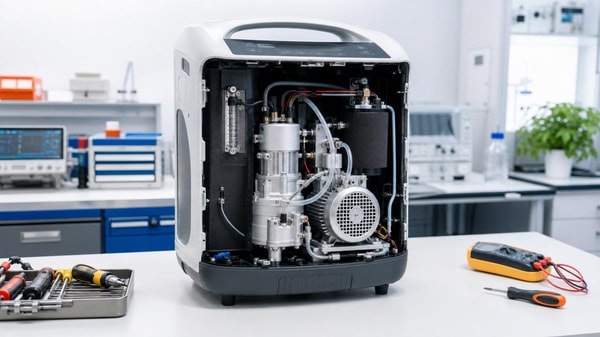
 Portable oxygen concentrators get noisy over time for several reasonsPortable oxygen concentrators get noisy over time due to dust, wear, loose parts, and aging compressors. Learn key causes, inspection priorities, and service tips to prevent failures.
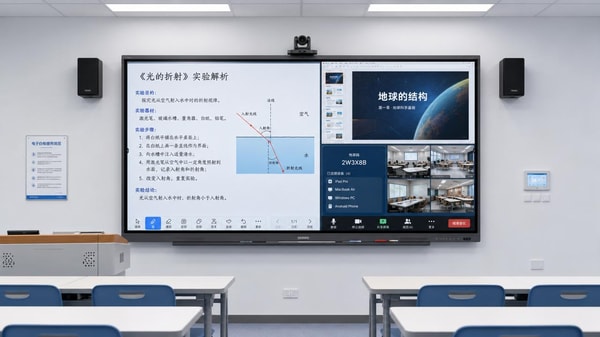
 Interactive whiteboards: what schools regret not checking earlyInteractive whiteboards can boost learning, but schools often regret missing key checks on compatibility, durability, training, and support. Discover how to buy smarter.
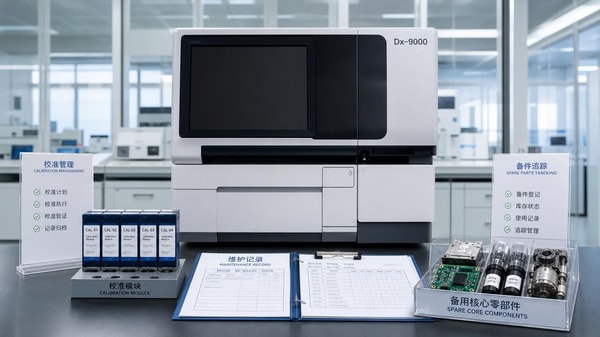
 Medical diagnostic equipment downtime usually starts with this oversightMedical diagnostic equipment downtime often starts with one overlooked maintenance gap. Learn the warning signs, hidden costs, and smart service strategies to improve uptime.
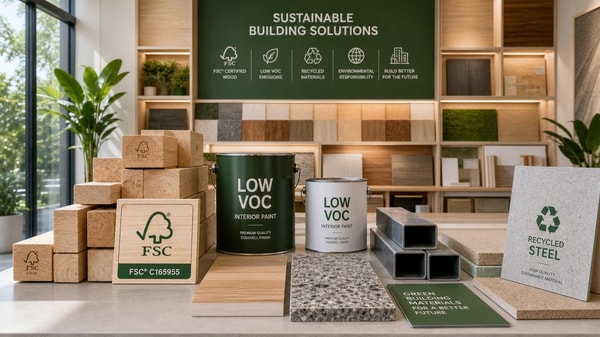
 Eco-friendly building materials: where certification changes the decisionEco-friendly building materials now win or lose on certification. Learn how verified standards reduce sourcing risk, support compliance, and improve procurement decisions.
 Ergonomic workspace design mistakes that still cause daily strainErgonomic workspace design mistakes can silently cause daily strain, fatigue, and lower productivity. Discover practical fixes to improve comfort, focus, and workstation performance.
 Outdoor garden supplies that wear out too fast in summer heatOutdoor garden supplies can fail fast in extreme summer heat. Discover which items wear out first, what materials last longer, and how to buy smarter for durable, cost-saving performance.
 Sustainable home decor: how to spot green claims with substanceSustainable home decor explained: learn how to spot credible green claims, avoid greenwashing, compare materials and certifications, and choose stylish, healthier pieces with real impact.
 Modern office furniture trends that improve layout flexibilityModern office furniture trends are transforming flexible workplace design. Explore modular, mobile, ergonomic, and acoustic solutions that boost productivity and smarter space planning.
 Smart street lighting works best when control systems are not overlookedSmart street lighting succeeds when control systems come first. Learn how better monitoring, dimming, and integration improve ROI, maintenance efficiency, and long-term project performance.
 What solid-state battery breakthroughs are still years from market?Solid-state battery breakthroughs sound transformative, but which ones are still years from market? Explore the technical, cost, and scaling barriers shaping real adoption timelines.
 Commercial LED lighting retrofits: when is payback slower than planned?Commercial LED lighting payback can slip when costs, runtime, rebates, and controls are misjudged. Learn the hidden risks and review steps that protect ROI before approval.













Popular Tags
Global Trade Insights & Industry
Our mission is to empower global exporters and importers with data-driven insights that foster strategic growth.
Search News
Popular Tags
Industry Overview
The global commercial kitchen equipment market is projected to reach $112 billion by 2027. Driven by urbanization, the rise of e-commerce food delivery, and strict hygiene regulations.