

Precision farming drones need better data, not just better flight time
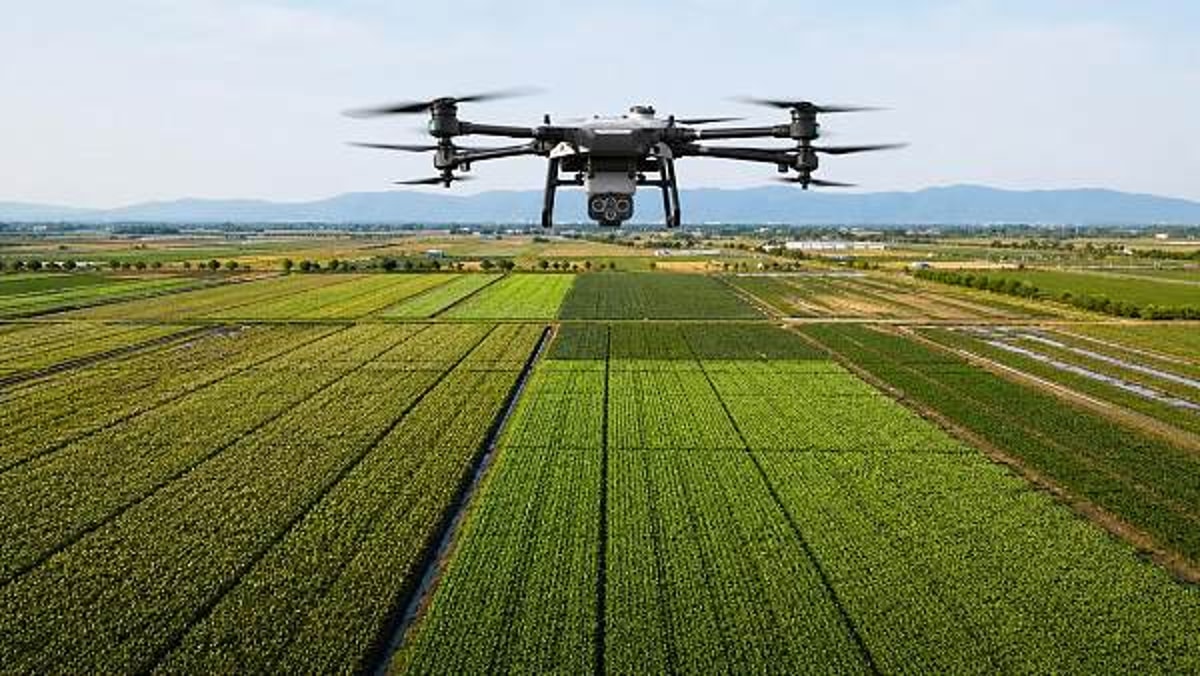
Precision farming drones are no longer limited by how long they stay in the air—they are limited by the quality of the data they collect and deliver. For operators in the field, better mapping, crop diagnostics, and actionable insights matter more than a few extra minutes of flight time. Understanding this shift is key to improving efficiency, reducing input waste, and making smarter day-to-day farming decisions.
Understanding Why Precision Farming Drones Are Entering a Data-First Stage
Precision farming drones were initially judged by visible hardware metrics: flight time, payload, speed, and resistance to wind. Those factors still matter, especially for operators covering 50 to 500 hectares across uneven fields. Yet in routine agricultural work, a drone that flies for 38 minutes but delivers weak crop interpretation often creates less value than one flying 28 to 32 minutes with better sensors, cleaner geotagging, and stronger software output.
For field users, the real question is no longer only, “How long can it stay airborne?” It is increasingly, “What can I decide after the flight?” Precision farming drones are now expected to support variable-rate input planning, irrigation checks, stand count estimation, drainage observation, disease scouting, and replant decisions within the same 24- to 72-hour operating window. That makes data quality the core performance indicator.
This change is important across the broader agricultural and industrial ecosystem because farms, service contractors, agronomists, and supply-chain stakeholders all depend on timely information. Aerial output that is incomplete, misaligned, or difficult to export into farm management systems can slow decisions, increase chemical waste, and weaken the return on every flight mission.
What “better data” means in practical field operations
Better data is not simply a higher pixel count. It includes positional accuracy, overlap consistency, stable radiometric capture, repeatability between flights, and usable analytics. In practical terms, operators need orthomosaics that stitch correctly, vegetation maps that do not misread soil brightness as crop stress, and reports that can be shared quickly with growers, managers, or input advisers.
In many crop systems, the difference between useful and weak data appears at small thresholds. A 3% to 5% variation in canopy vigor across a field may matter for nitrogen decisions. A missed drainage issue over just 1 to 2 hectares can reduce emergence across an entire low-lying zone. If a drone flight cannot detect or communicate these patterns clearly, extra battery endurance provides limited operational advantage.
This is why operators increasingly prioritize image consistency, sensor calibration workflow, and software interoperability. Precision farming drones are becoming part of a larger information chain rather than isolated flying devices.
Core shift from hardware-first to insight-first
- Flight endurance remains useful, but only when paired with reliable geospatial output.
- Sensor quality now affects operator value more directly than a 5- to 8-minute endurance gain.
- Data export compatibility can save several hours per week in post-flight processing.
- Repeatable mission planning is essential for weekly or biweekly crop monitoring.
Why the Industry Is Paying More Attention to Data Quality Than Flight Time
Agriculture has become more time-sensitive and more variable. Weather volatility, tighter input margins, labor constraints, and growing expectations for traceable farm decisions all push operators toward faster interpretation. In this environment, precision farming drones are valuable because they compress scouting cycles from several days of manual inspection into one or two flights plus a short processing period. But the benefit only appears when output is dependable.
Across row crops, orchards, vineyards, and mixed farming systems, operators frequently work in narrow windows. A rainfall event may limit access for 24 hours. A disease issue may spread visibly within 48 to 72 hours. Spray timing can shift by a single afternoon when wind speeds exceed acceptable levels. Better flight time helps cover ground, but better data helps determine whether action should happen now, later this week, or not at all.
The wider business context also matters. Global trade, crop contracts, and input planning increasingly rely on timely field intelligence. As a B2B information and industry intelligence platform, GTIIN and TradeVantage recognize that operational users need more than news about drone hardware trends. They need a clearer understanding of how agricultural data quality affects farm performance, service delivery, and communication across the supply chain.
Industry overview: what operators now compare
When operators evaluate precision farming drones today, they often compare at least four dimensions at once: airframe endurance, sensing capability, workflow speed, and decision usefulness. The table below summarizes how these priorities typically shift in real field operations.
This comparison shows why the market conversation is changing. Longer flight time still reduces battery swaps and supports larger fields, but in operational terms it has become one variable among several. Once endurance reaches a workable range, often around 25 to 40 minutes depending on mission profile, data quality becomes the factor that most directly influences field decisions.
The hidden cost of low-quality aerial data
Poor data has a cost that operators feel immediately. It can lead to repeat flights, delayed recommendations, false positives in crop stress zones, and missed treatment windows. Even one unnecessary reflight over 120 hectares can consume battery cycles, operator time, vehicle fuel, and processing hours. In service models, that can reduce daily job capacity by 10% to 20% during peak season.
Low-quality output also creates communication problems. If maps are difficult for growers to interpret, operators spend more time explaining uncertainty and less time helping with practical decisions. That weakens trust in the technology, even when the drone itself performs well in the air.
Where Precision Farming Drones Deliver Real Value to Operators
The strongest value of precision farming drones appears when they shorten the path from observation to action. For users and operators, that means focusing on tasks where aerial data reveals something difficult to see from ground level, or where walking the field would take too long relative to the urgency of the decision.
This value is rarely limited to one crop stage. Early season flights can support emergence checks and stand variability review. Mid-season missions often concentrate on vigor mapping, irrigation irregularities, lodging, weed pressure, or disease indicators. Late-season work may focus on pre-harvest variability, drainage issues, and planning for next-cycle field improvements.
Operators who understand these use cases usually extract more value than those who treat drones as general-purpose cameras. The table below outlines common agricultural applications and the type of data quality each one requires.
A useful pattern emerges here: the closer the drone output gets to an input, treatment, or labor decision, the more important data quality becomes. That is why experienced operators often rank mission planning, sensor setup, and post-processing discipline above headline endurance numbers.
Operator-focused benefits that show up quickly
In practical farm work, benefits tend to show up in three measurable ways. First, scouting coverage increases. A team may inspect 100 to 300 hectares in a morning rather than spending a full day walking representative sections. Second, response time improves because problem zones can be flagged within hours. Third, input use becomes more selective, especially where localized treatment prevents full-field overapplication.
These gains are especially relevant for operators managing multiple fields, contract service providers, and technical staff supporting growers across a district. Precision farming drones make more sense when they produce consistent routines rather than occasional impressive flights.
Typical situations where better data changes the daily outcome
- Finding a 0.5- to 1-hectare stress zone before it expands across a larger block.
- Identifying irrigation non-uniformity within one service cycle instead of after visible yield loss.
- Confirming whether a suspected disease patch needs immediate inspection or routine follow-up.
- Comparing weekly flights to track crop response after fertilizer or treatment application.
What Operators Should Evaluate Beyond Battery Endurance
For users selecting or improving precision farming drones, the most practical approach is to evaluate the entire workflow. A battery specification is easy to read, but field performance depends on sensor behavior, mission repeatability, file handling, weather tolerance, and the time needed to convert raw images into decisions. On many farms, a 30-minute drone with a disciplined workflow is more valuable than a longer-endurance platform with inconsistent outputs.
Operators should also match drone capability to crop type and terrain. Orchard and vineyard work may require different altitude control and canopy interpretation than broadacre row crops. Uneven topography, field boundaries, and tree lines can affect image overlap. In some cases, the right answer is not the biggest platform, but the one that maintains stable capture quality under common operating conditions such as 15 to 25 km/h wind or changing light in the late morning.
Another important factor is data handling after the flight. If image transfer, map generation, and export take 3 to 5 hours for a routine mission, the drone may not fit fast-response agronomy. If the same process can be completed within 60 to 90 minutes with reliable outputs, operators gain more practical value even without the longest available flight time.
A practical evaluation checklist
- Check whether the drone supports the sensor type required for your crop decisions, such as RGB, multispectral, or thermal.
- Review mission repeatability for weekly, biweekly, or stage-specific monitoring.
- Confirm how quickly processed outputs can be produced and whether they integrate with existing farm software.
- Assess whether operators can maintain data consistency under normal field conditions, not only in ideal demonstrations.
- Consider battery logistics, but only alongside data quality, calibration process, and post-flight usability.
Common mistakes that reduce usable output
A frequent mistake is flying at inappropriate altitude for the target task. Too high, and emergence detail may be lost. Too low, and coverage drops, creating too many passes and larger processing loads. Another issue is inconsistent overlap, especially near edges or under gusty conditions, which can affect map quality more than operators expect.
Lighting is another overlooked variable. Midday flights often provide stable illumination for RGB work, but cloud movement can alter appearance between passes. For repeated monitoring, operators should standardize mission timing where possible, often within a similar 2-hour window each week. Precision farming drones produce better comparisons when the data collection routine is controlled, not improvised.
Finally, operators should avoid overinterpreting single flights. Better data does not mean every map gives an immediate answer. In many cases, value comes from combining aerial information with ground truth, historical field notes, irrigation records, and crop stage context.
Turning Drone Data Into Better Daily Decisions
The next step for operators is not simply adopting more flights, but building decision routines around them. Precision farming drones work best when mission frequency, data interpretation, and field action are linked. For example, a cereal grower may schedule flights every 7 to 10 days during key vegetative stages, while orchard monitoring may follow irrigation cycles or known disease pressure periods.
Consistency matters because agricultural value often comes from trends rather than isolated images. A single stress map may show a concern, but two or three comparable flights can reveal whether the issue is expanding, stabilizing, or responding to intervention. This is where better data outperforms longer airtime: it supports continuity of insight across the season.
For businesses operating across regions, reliable drone intelligence also improves communication beyond the field. It can support agronomy teams, procurement planning, service scheduling, and broader market awareness. In that sense, better drone data aligns well with the role of industry intelligence platforms that help global agricultural stakeholders make clearer, faster, and more informed decisions.
Why working with an information-driven partner matters
Operators do not only need equipment information. They need context: which drone capabilities matter for which crop system, how workflows affect field efficiency, and how technology choices connect to commercial outcomes. GTIIN and TradeVantage support that need by organizing sector intelligence, market developments, and practical industrial insight across more than 50 sectors, including technologies shaping agricultural operations and global trade decisions.
For exporters, importers, solution providers, and agricultural service businesses, this broader view is increasingly important. Precision farming drones sit at the intersection of hardware, software, data services, and field operations. Understanding that full picture helps users avoid narrow decisions based only on visible specifications.
Why choose us
If you are evaluating precision farming drones, improving drone-based scouting, or comparing data-focused agricultural technology solutions, our team can help you move beyond simple spec sheets. We support businesses and operators seeking clearer insight into application fit, operating priorities, and market direction.
Contact us to discuss practical topics such as parameter confirmation, product selection logic, expected delivery timelines, workflow-oriented customization, common certification considerations, sample or demonstration support, and quotation communication. Whether your focus is field use, service expansion, or international market visibility, we can help you connect better information with better decisions.
Recommended News
 Medical diagnostic equipment buying mistakes often start with workflowMedical diagnostic equipment buying mistakes often begin with workflow gaps. Learn how to compare systems, uncover hidden costs, and choose suppliers that fit real clinical operations.
 Interactive whiteboards are improving, but teacher adoption is unevenInteractive whiteboards are improving fast, but teacher adoption remains uneven. Explore what drives classroom success, ROI, and smarter edtech implementation.
 Portable oxygen concentrators: what noise levels feel acceptable?Portable oxygen concentrators: discover what noise levels feel acceptable for sleep, travel, work, and home use, with practical guidance to choose a quieter, more comfortable model.
 Car electronics failures often start with power instabilityCar electronics issues often begin with hidden power instability. Learn how voltage drops, ripple, and weak grounds cause faults—and how smarter diagnostics cut repair time and repeat failures.
 Telemedicine hardware works best when setup friction is lowTelemedicine hardware works best with low setup friction. Discover how faster deployment, easier operation, and scenario-based selection improve care efficiency and service quality.
 Are light-weighting vehicle materials worth the repair tradeoff?Light-weighting vehicle materials: Are efficiency gains worth higher repair costs? Explore lifecycle impact, EV value, downtime risks, and smarter sourcing decisions.
 Educational robots in class: novelty or lasting value?Educational robots are moving beyond classroom novelty. Discover how they create lasting value through STEM learning, scalability, and smarter school purchasing decisions.
 Biodegradable plastics fail when disposal assumptions are wrongBiodegradable plastics can fail when real disposal systems do not match design assumptions. Learn the compliance, contamination, and claim risks before they damage trust.
 Office stationery wholesale margins depend on boring detailsOffice stationery wholesale margins are won in the details—packaging, MOQ, freight, and SKU rotation. Learn how distributors protect profit and reduce hidden cost leakage.
 Carbon capture materials are improving, but durability still mattersCarbon capture materials are improving, but durability still decides ROI. Explore cycle stability, regeneration resilience, and supplier evaluation factors for reliable industrial deployment.
 Which graphene applications in industry are moving beyond pilots?Graphene applications in industry are moving beyond pilots fastest in coatings, composites, thermal management, sensors, and energy storage. See where commercialization is gaining traction.
 Precision farming drones need better data, not just better flight timePrecision farming drones deliver more value through accurate maps, crop insights, and faster decisions than longer flight time alone. See how better data improves farm efficiency.
 Smart classroom solutions often disappoint for one simple reasonSmart classroom solutions often fail when complexity is ignored. Discover how project leaders can improve adoption, scalability, ROI, and long-term classroom performance.
 Organic fertilizers: when higher cost brings better soil resultsOrganic fertilizers may cost more, but they can improve soil structure, moisture retention, and long-term plant health. Learn when the higher price delivers better garden results.
 Agri-PV systems can raise land efficiency, but not everywhereAgri-PV systems can improve land efficiency, but only in the right conditions. Explore where they work, key risks, and how to evaluate profitable deployment.
 Smart home devices wholesale gets risky when standards do not matchSmart home devices wholesale becomes risky when standards, protocols, and certifications do not align. Learn how to reduce sourcing errors, control costs, and protect buyer trust.
 Wearable technology users quit when comfort is overlookedWearable technology users quit when comfort is ignored. Discover the checklist for fit, weight, skin safety, and long-term wear to choose devices that improve adoption and user satisfaction.
 Next-gen wireless charging still faces a heat management gapNext-gen wireless charging still faces a critical heat management gap. Explore how thermal risks affect efficiency, safety, lifecycle, and product readiness.
 Foldable screen technology looks mature until repair costs appearFoldable screen technology looks premium and practical, but are repair costs too high? Discover the real tradeoff between innovation, durability, and long-term value before you buy.
 Plant-based protein processing bottlenecks start after extractionPlant-based protein processing bottlenecks often begin after extraction. Discover downstream risks, supplier evaluation tips, and cost-saving insights for better sourcing decisions.
 Photovoltaic solar panels lose value when degradation is underestimatedPhotovoltaic solar panels can lose value fast when degradation is underestimated. Learn how realistic modeling protects ROI, asset valuation, and smarter solar investment decisions.



Popular Tags
Global Trade Insights & Industry
Our mission is to empower global exporters and importers with data-driven insights that foster strategic growth.
Search News
Popular Tags
Industry Overview
The global commercial kitchen equipment market is projected to reach $112 billion by 2027. Driven by urbanization, the rise of e-commerce food delivery, and strict hygiene regulations.