

China’s First Embodied AI Robot Insurance Launched in Guangxi
On April 7, 2026, Guangxi issued China’s first dedicated liability insurance policy for embodied intelligent robots — a milestone with implications for robotics exporters, AI hardware manufacturers, and international trade service providers. The policy covers third-party property damage and bodily injury arising from AI decision errors, mechanical failure, or abnormal human-robot interaction during overseas use. Its recognition by EU CE certification bodies makes it a verifiable compliance supplement for exports to the EU, UK, and Australia — elevating risk transparency for global procurement teams.
Event Overview
On April 7, 2026, Guangxi formally signed and issued China’s first ‘Dedicated Liability Insurance for Embodied Intelligent Robots’. The policy explicitly covers third-party property loss and personal injury caused abroad by AI decision-making errors, mechanical faults, or abnormal human-robot interaction. It has been recognized by an EU CE certification body and may serve as an additional compliance credential for exports to the EU, UK, and Australia. For overseas buyers, the existence of such insurance is now positioned as a key indicator of a Chinese AI equipment supplier’s risk management capability and long-term service commitment.
Industries Affected by This Development
Robotics Exporters & OEMs Serving Global Markets: These firms face heightened buyer expectations regarding risk documentation. Insurability is no longer optional background assurance but increasingly treated as part of technical compliance packaging — especially when tendering for public-sector or safety-sensitive deployments in regulated markets.
AI Hardware Integrators & System Builders: As end-to-end solution providers, they bear upstream liability exposure. If their embedded AI logic or integration layer contributes to a covered incident abroad, the absence of this insurance may weaken contractual defenses and delay claims resolution under international commercial terms.
Supply Chain Compliance & Certification Service Providers: Third-party certifiers, conformity assessment bodies, and export compliance consultants must now assess whether robotic products carry not only CE/UKCA marks but also recognized risk-transfer instruments. This adds a new dimension to pre-market readiness reviews.
Distribution & After-Sales Service Networks Abroad: Local partners responsible for installation, maintenance, or user training in target markets may be contractually required to verify or co-sign on insurance validity — increasing operational due diligence before deployment.
What Relevant Enterprises or Practitioners Should Monitor and Do Now
Track official guidance on scope and eligibility criteria
Analysis shows the current policy framework is newly launched and narrowly defined. Enterprises should monitor whether regulatory authorities (e.g., China Banking and Insurance Regulatory Commission or local financial bureaus) issue clarifications on eligible robot categories, minimum coverage thresholds, or exclusions — particularly around LLM-driven autonomy or real-time edge inference.
Assess exposure in priority export markets and high-risk use cases
Observably, EU, UK, and Australian importers are most likely to request proof of such insurance in tenders involving healthcare assistance robots, logistics automation systems, or public-space service units. Firms exporting to these jurisdictions — especially in sectors with strict product liability regimes — should prioritize internal gap analysis against this requirement.
Distinguish between policy availability and contractual enforceability
Current more accurately reflects early-stage adoption: while the insurance is now available and CE-recognized, it does not yet constitute a mandatory export condition under national law or WTO frameworks. Companies should avoid conflating its existence with legal obligation — instead treating it as a competitive differentiator and procurement expectation signal.
Prepare documentation workflows for cross-border verification
From industry perspective, insurers and exporters should align on standardized formats for policy certificates — including multilingual summaries, CE body reference numbers, and clear jurisdictional applicability statements. Early coordination avoids delays during customs clearance or buyer audit cycles.
Editorial Perspective / Industry Observation
This development is best understood not as an immediate regulatory mandate, but as an institutional response to de facto market demand for verifiable risk governance in AI-enabled physical systems. Analysis shows it formalizes what many advanced procurement teams already assess informally: whether a supplier demonstrates structured accountability beyond technical specifications. It signals growing convergence between insurance underwriting standards and AI system safety evaluation — a trend likely to influence future harmonization efforts in ISO/IEC AI standards. Observably, its traction will depend less on policy issuance volume and more on how frequently global buyers cite it in RFP language or contractual annexes over the next 12–18 months.

Guangxi Financial Supervision Bureau, official press release dated April 7, 2026; CE certification body statement referenced in same announcement. Note: Ongoing observation is warranted for updates on insurer participation, claim handling precedents, and potential expansion to other Asian or Latin American markets.
Conclusion: This initiative represents an early but concrete step toward embedding risk transparency into the global trade infrastructure for AI robotics. It does not replace existing regulatory pathways (e.g., CE marking), but adds a parallel, commercially grounded layer of accountability. For stakeholders, it is currently more appropriately interpreted as a procurement readiness benchmark than a compliance gate — one that rewards proactive alignment between product development, insurance strategy, and international market engagement.
Recommended News
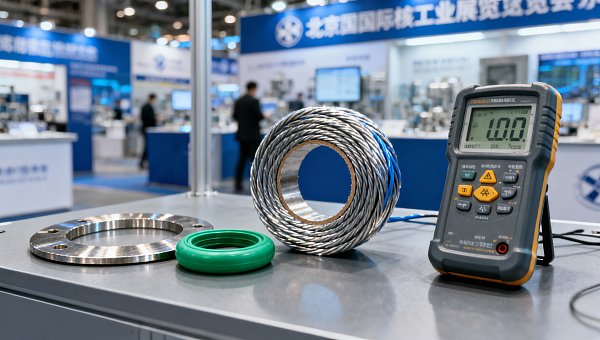
 China-France Nuclear Cooperation Advances at Beijing ExpoChina-France nuclear cooperation advances: mutual recognition for nuclear-grade seals, cables & radiation monitors boosts export readiness for suppliers targeting EU and BRI projects.
 Vietnam’s 4 Provinces Seek AI Tourism Tech in NanningAI tourism tech in demand: Vietnam’s 4 provinces seek AI-guided terminals, multilingual interpretation, AI-CCTV & smart ticketing in Nanning—key opportunity for B2G exporters.
 Q1 2026 China Power Market Trading Up 25.6%: Smart Meters, Storage Export Demand RisesSmart meters, energy storage exports surge as China’s Q1 2026 power market trading jumps 25.6% — key signal for global manufacturers & channel partners.
 China First Country with 5M+ Active Invention PatentsChina first country with 5M+ active invention patents—key for buyers in AI, solar, lithium battery & energy storage. Discover IP implications for sourcing, compliance & supplier vetting.
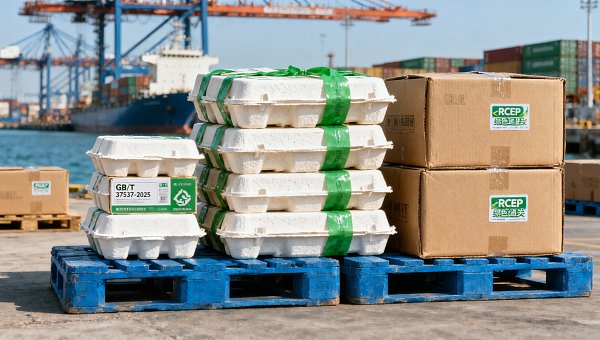
![]() RCEP Green Packaging Mutual Recognition: China Food Packaging Exempt from Testing in AU/NZ/JP/KRRCEP Green Packaging Mutual Recognition now exempts China's food packaging from retesting in AU/NZ/JP/KR — faster clearance, 30% cost savings, and streamlined exports for brands & manufacturers.
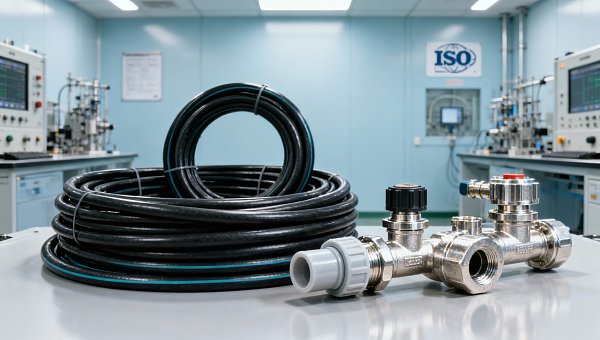
RCEP Green Packaging Mutual Recognition: China Food Packaging Exempt from Testing in AU/NZ/JP/KRRCEP Green Packaging Mutual Recognition now exempts China's food packaging from retesting in AU/NZ/JP/KR — faster clearance, 30% cost savings, and streamlined exports for brands & manufacturers. Shenneng Etorkeqi Green Ammonia Project: Deionized Water Station OperationalShenneng Etorkeqi Green Ammonia Project’s deionized water station is now operational—ISO 8502-3 compliant, fully integrated, and a key milestone for global green hydrogen developers and exporters.
 China Launches 'Model-Data Resonance' Initiative for AI+Manufacturing InteroperabilityModel-Data Resonance initiative boosts AI+manufacturing interoperability—learn how GB/T XXXX–2026 aligns with VDI 2182 & ISA-95 for smoother global factory deployments.
 China’s First Embodied AI Robot Insurance Launched in GuangxiChina’s first embodied AI robot insurance launched in Guangxi—key for robotics exporters, AI hardware makers & global compliance teams. CE-recognized, EU/UK/AU-ready.
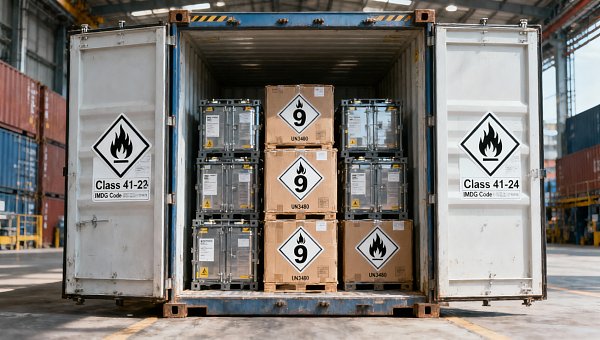
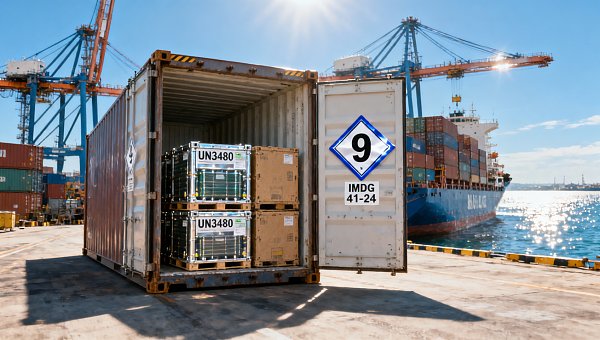
 IMDG Code 41-24 Enforced: UN3480 Lithium Battery Labeling Now MandatoryIMDG Code 41-24 is now mandatory: UN3480 lithium battery labeling, documentation & packaging rules are enforced globally as of 28 April 2026 — avoid port rejections!
 State Grid’s $680M Embodied AI Procurement Signals Export OpportunityEmbodied AI, IEC 61850 & IEC 62443: State Grid’s $680M procurement unlocks export opportunities for compliant industrial robots and smart vision systems in emerging markets.
 IMDG Code 41-24 Enforces UN3480 Class 9 Labeling for Lithium Battery Sea FreightIMDG Code 41-24 mandates UN3480 lithium battery sea freight to display durable Class 9 labels from April 27, 2026—avoid delays & port rejections.
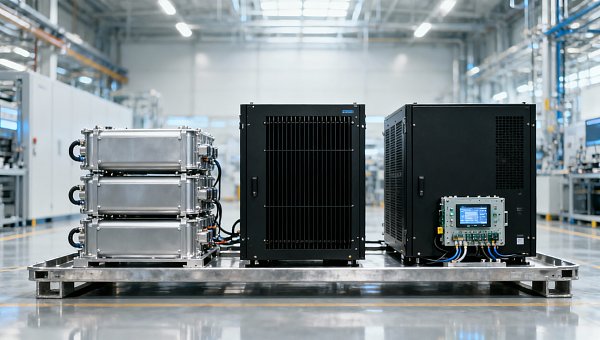
 ESS Key Component Prices Drop ~80%: Quality & Compliance RiseESS key component prices dropped ~80%—but quality & compliance demands surged. Discover how UL 9540A, AS/NZS 5139, and certified BMS/inverters now define market access.
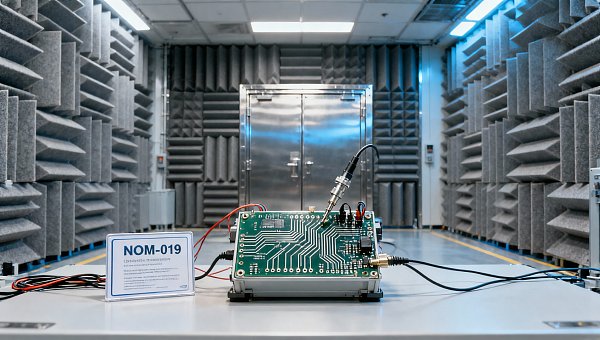
 Mexico NOM-019-SCFI-2026 Effective July 2026: EMC Certification Mandatory for Auto ElectronicsMexico NOM-019-SCFI-2026 mandates EMC certification for auto electronics from July 2026 — ensure compliance now to avoid supply chain disruption & customs delays.
 Red Sea Rerouting Normalized, ECA Surcharge Hits $1,850/TEURed Sea rerouting normalized: ECA surcharge hits $1,850/TEU — 47% of total freight cost. Impacting hand tools, building materials & furniture exporters to Europe. Act now.
 RCEP Green Packaging Mutual Recognition Takes EffectRCEP Green Packaging Mutual Recognition is live—GB/T 37537-2025–certified packaging now enjoys fast-track clearance in Australia, NZ, Japan & Korea. Save time, cut costs, and boost export efficiency.
 Vietnam Suspends SASO Mutual Recognition for Chinese Irrigation EquipmentVietnam suspends SASO mutual recognition for Chinese irrigation equipment—drip tapes, PE fittings, auto valves now require VINAQ-IR certification. Act now to avoid delays & customs hold.
 Key Energy Storage Equipment Prices Drop ~80% in ChinaKey energy storage equipment prices in China dropped ~80% — PCS, BMS & liquid cooling units. Discover implications for compliance, margins & standards enforcement.
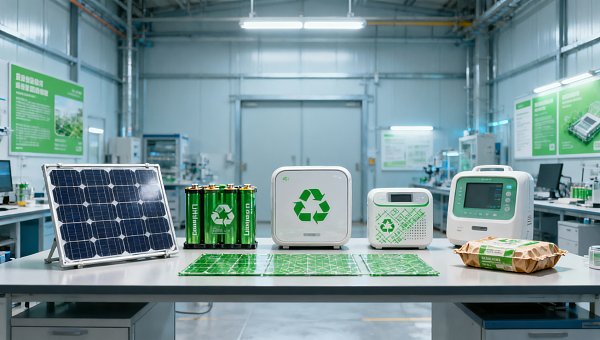
") China Releases Green Design Guidelines for Industrial Products (2026)China's 2026 Green Design Guidelines for industrial products—covering PV modules, lithium batteries & smart appliances—link eco-design to green factory certification and export tax rebates starting 2027.
China Releases Green Design Guidelines for Industrial Products (2026)China's 2026 Green Design Guidelines for industrial products—covering PV modules, lithium batteries & smart appliances—link eco-design to green factory certification and export tax rebates starting 2027. Mexico NOM-019-SCFI-2026 Effective: Automotive Electronics Require New EMC CertificationMexico NOM-019-SCFI-2026 is live: Automotive electronics (infotainment, ADAS, domain controllers) now require mandatory EMC certification by July 31, 2026 — act now to avoid customs delays.
 Red Sea Detour Premium Rises to $1,850/TEU Amid Port Congestion ReliefRed Sea Detour Premium hits $1,850/TEU — now 43% of FE–NE freight rates. Discover why this structural surcharge demands urgent supply chain action.
 TÜV Rheinland Updates PLd Certification: EMC Immunity Now Mandatory for Servo DrivesTÜV Rheinland now mandates EN IEC 61000-6-2:2024 EMC immunity testing for PLd certification of servo drives—act before May 26, 2026 to avoid EU market delays.












Popular Tags
Global Trade Insights & Industry
Our mission is to empower global exporters and importers with data-driven insights that foster strategic growth.
Search News
Popular Tags
Industry Overview
The global commercial kitchen equipment market is projected to reach $112 billion by 2027. Driven by urbanization, the rise of e-commerce food delivery, and strict hygiene regulations.