

IMDG Code 41-24 Enforces UN3480 Class 9 Labeling for Lithium Battery Sea Freight
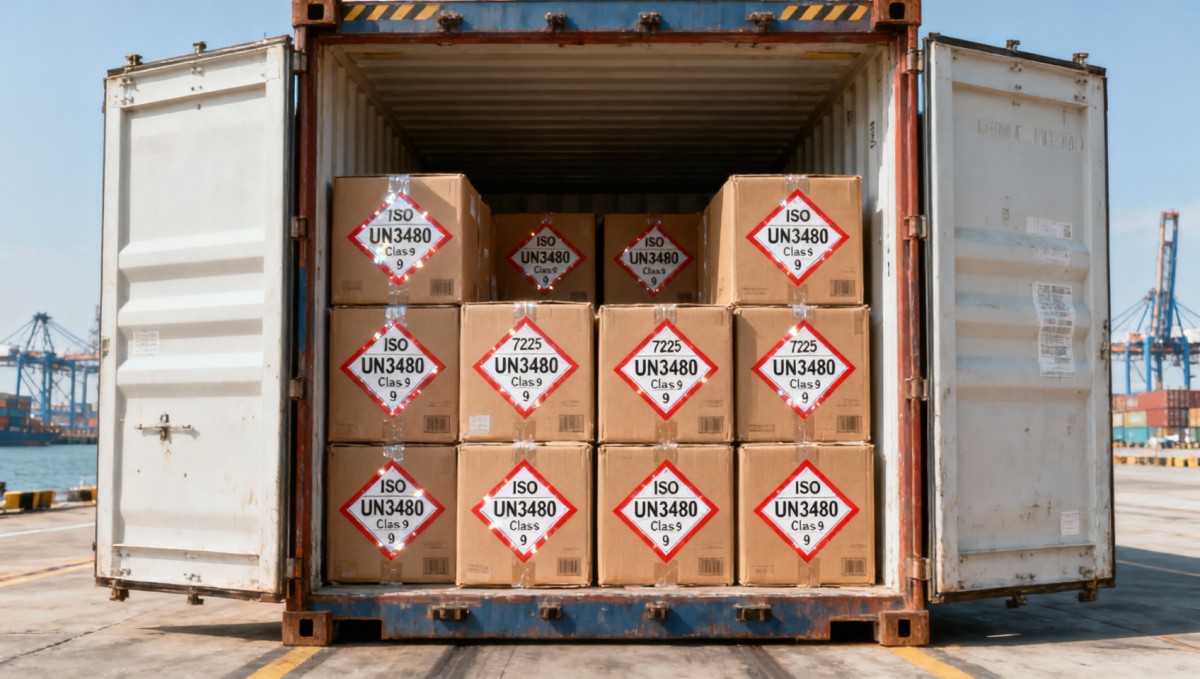
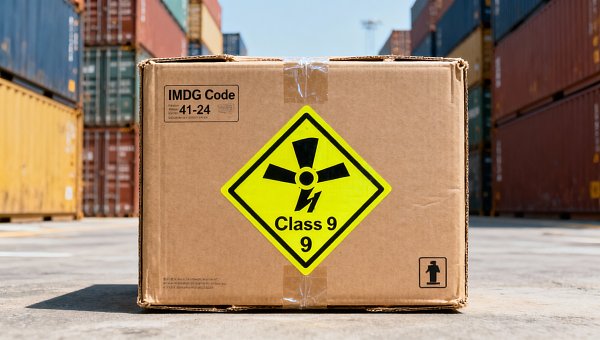
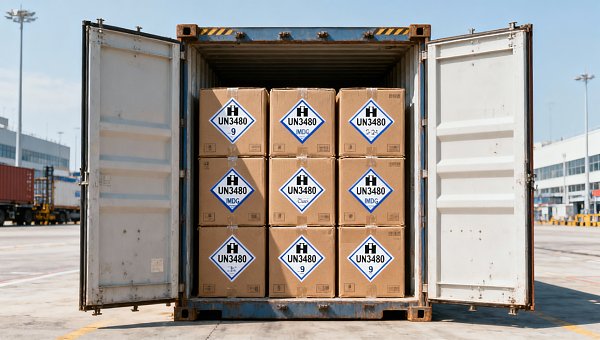
Effective April 24, 2026, the International Maritime Organization (IMO) has confirmed the global mandatory implementation of the IMDG Code 41-24 amendment — requiring all lithium battery shipments by sea (including those used in EV accessories, power tools, and mobile accessories) to bear ISO 7225-compliant UN3480 Class 9 diamond-shaped hazard labels. Non-labeled consignments will be automatically rejected by major global freight forwarders’ systems (e.g., DHL, Kuehne+Nagel, Sinotrans), with reports of full-container rejections already emerging among Chinese battery manufacturers. Exporters, logistics providers, and OEM suppliers across electrified equipment supply chains must now reassess labeling compliance and documentation workflows.
Event Overview
The International Maritime Organization (IMO) confirmed on April 24, 2026, that the IMDG Code 41-24 amendment enters into mandatory global force. Under this amendment, all seaborne shipments of lithium batteries — including those integrated into electric vehicle accessories, power tools, and mobile device accessories — must display a UN3480 Class 9 diamond-shaped hazard label conforming to ISO 7225. The requirement applies to outer packaging. Major international freight forwarders (DHL, Kuehne+Nagel, Sinotrans) have implemented automated system-level interception of unlabeled cargo. Several Chinese lithium battery manufacturers have reported full-container rejections at origin ports.
Which Sub-Sectors Are Affected
Direct Exporters & OEMs
Manufacturers shipping finished goods containing lithium batteries (e.g., cordless power tools, portable EV chargers, Bluetooth earbuds) are directly affected because the labeling obligation applies to the outer shipping carton — not just the battery cell itself. Non-compliance results in cargo hold or rejection before vessel loading, disrupting delivery schedules and triggering contractual penalties.
Battery Component Suppliers
Suppliers of standalone lithium cells or packs (e.g., cylindrical, prismatic, or pouch cells) face new packaging and labeling responsibilities when their products are exported as spare parts or replacement units. Previously exempted under certain ‘excepted quantity’ provisions, such shipments now require full Class 9 labeling if shipped via sea freight — regardless of state of charge or internal configuration.
Logistics & Freight Forwarding Providers
Forwarders and NVOCCs must verify label presence, format, and placement against ISO 7225 prior to booking acceptance. System-level auto-rejection means manual override is unlikely; failure to validate labels at intake increases operational risk and liability exposure for delayed or stranded cargo.
Retail & E-commerce Fulfillment Operators
Third-party logistics (3PL) providers handling cross-border e-commerce fulfillment for battery-powered consumer electronics must ensure label compliance on master cartons — especially for consolidated LCL (Less than Container Load) shipments where mixed SKUs may include labeled and unlabeled items. A single unlabeled unit can compromise an entire shipment’s clearance.
What Relevant Enterprises or Practitioners Should Focus On — And How to Respond Now
Monitor official IMDG Code 41-24 implementation guidance from national maritime authorities
While IMO confirms global enforcement, national administrations (e.g., U.S. PHMSA, UK MCA, China MSA) may issue supplementary notices on enforcement timelines, transitional allowances, or verification protocols. These documents determine whether pre-April 2026 bookings remain subject to grandfather clauses — a point currently unconfirmed.
Identify high-risk SKUs and trade lanes requiring immediate label retrofitting
Focus first on sea-freighted lithium battery shipments destined for markets served by DHL, Kuehne+Nagel, or Sinotrans — particularly EU, North America, and ASEAN routes. Prioritize SKUs where current packaging lacks space, durability, or print resolution for ISO 7225-compliant labels (e.g., small cartons, shrink-wrapped bundles, or corrugated boxes with low ink adhesion).
Distinguish between regulatory signal and operational readiness
The April 24, 2026 date marks mandatory enforcement — not a consultation phase. However, actual port-level enforcement consistency may vary during Q2–Q3 2026. Companies should treat the date as binding for internal planning but remain prepared for phased ramp-up in inspection rigor across different terminals.
Update labeling procurement, warehouse SOPs, and carrier onboarding checklists
Procure ISO 7225-certified label stock (size: minimum 100 mm × 100 mm; red border ≥ 5 mm; black UN3480 text; white background) well ahead of Q1 2026. Revise warehouse receiving procedures to include label verification for inbound battery stock. Add label compliance as a mandatory field in carrier booking forms and EDI transmissions.
Editorial Perspective / Industry Observation
From industry perspective, this amendment signals a structural tightening of lithium battery transport governance — moving beyond cell-level classification to enforce consistent, visible hazard communication at the shipment level. Analysis来看, it reflects growing alignment between IMO’s maritime safety framework and IATA’s air transport rules (which already require UN3480 labeling), suggesting future harmonization pressure across modal regulations. Current more appropriate understanding is that IMDG Code 41-24 is not merely procedural refinement but an operational inflection point: labeling is now a gatekeeping requirement, not a documentation footnote. Observation来看, the speed of forwarder system integration (e.g., DHL’s auto-rejection rollout) indicates that enforcement will be highly automated — reducing human discretion but increasing dependency on upstream labeling accuracy.
Conclusion
This mandate underscores that lithium battery compliance is no longer confined to technical data sheets or UN test summaries — it now governs physical packaging execution at scale. Its significance lies less in novelty and more in enforceability: automated rejection shifts liability upstream, making label verification a non-delegable function across export operations. It is more accurate to view this as a settled operational requirement than a pending policy development — and one that demands concrete, pre-emptive action rather than reactive interpretation.
Information Sources
Main source: International Maritime Organization (IMO) — Official confirmation of IMDG Code 41-24 mandatory entry into force on April 24, 2026. Additional inputs: Public service notices issued by DHL Global Forwarding, Kuehne+Nagel, and Sinotrans Logistics regarding system-level cargo screening for UN3480 labeling. Note: National maritime authority implementation guidelines (e.g., China MSA, U.S. PHMSA) remain under observation and are not yet publicly finalized as of the date of publication.
Recommended News
 China’s 10-Dept AI Export Ethics Review Rule Takes EffectChina’s new 10-dept AI export ethics rule mandates algorithmic bias review for AI hardware bound for the EU, US, Canada, Japan & SK—key for smart cameras, voice assistants & industrial vision exporters.
 Red Sea Detour Now Standard: $1,850 TEU Premium on Asia-Europe RoutesRed Sea detour premium now standard: $1,850/TEU surcharge embedded in Asia-Europe freight rates — vital intel for exporters, importers & logistics teams.
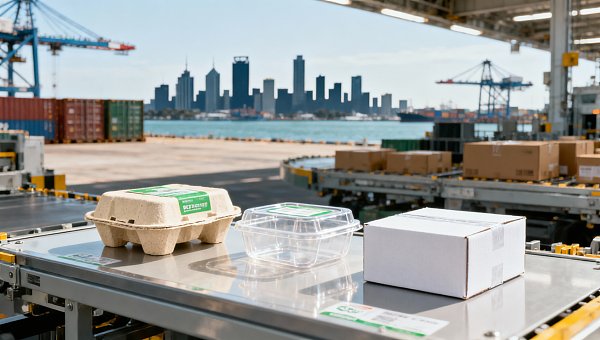
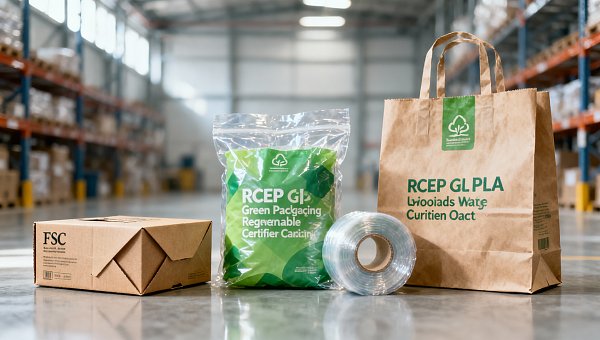
 RCEP Green Packaging Mutual Recognition Takes EffectRCEP Green Packaging Mutual Recognition takes effect Apr 22, 2026—streamline exports to AU, NZ, JP, KR with GB/T 37629–2019 certified molded fiber & PLA packaging.
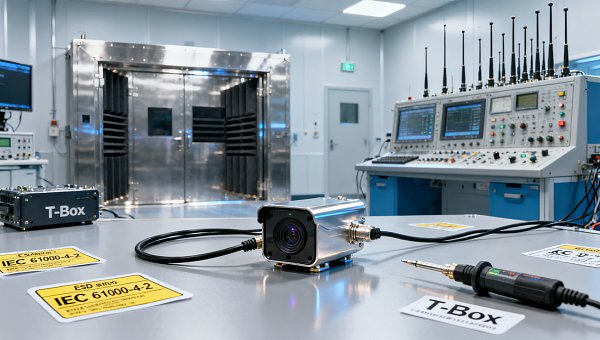
 Mexico NOM-019-SCFI-2026 Effective: EMC Certification Required for Auto Electronics ExportsEMC certification is now mandatory for auto electronics exports to Mexico under NOM-019-SCFI-2026. Ensure compliance for rearview mirrors, radar sensors & T-Box units—avoid shipment delays and order cancellations.
") TÜV Rheinland Updates CE Requirements for Servo Drives (PLd + EMC Joint Validation)TÜV Rheinland now mandates joint PLd + EMC validation for servo drives under CE marking—learn how this impacts certification timelines, lab selection, and EU market access.
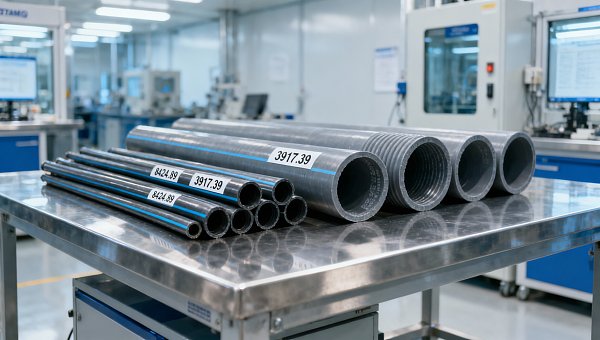
TÜV Rheinland Updates CE Requirements for Servo Drives (PLd + EMC Joint Validation)TÜV Rheinland now mandates joint PLd + EMC validation for servo drives under CE marking—learn how this impacts certification timelines, lab selection, and EU market access. Vietnam Suspends SASO Mutual Recognition for Chinese Irrigation EquipmentVietnam suspends SASO mutual recognition for Chinese irrigation equipment—urgent compliance updates for drip tapes & PE pipes (HS 8424.89/3917.39). Act now to avoid delays.
 FDA Finalizes AI Diagnostic Device Rules for ImportersFDA finalizes AI diagnostic device rules for importers: New bias assessment mandate impacts ultrasound, glucose analyzers & dermatoscopes. Act now to ensure U.S. market access.
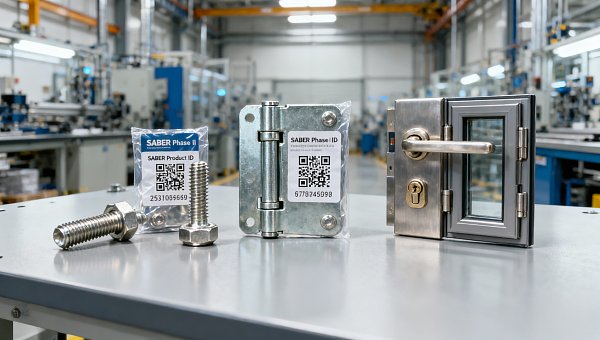
 SABER Phase II Live: Saudi Building Hardware Requires Digital Type Test Reports & PIDSABER Phase II is live: Building hardware exports to Saudi Arabia now require digital type test reports & a mandatory, immutable Product ID (PID). Act now to avoid customs delays!
 IMDG Code 41-24 Enforced: UN3480 Lithium Battery Labeling Mandatory from Apr 2026IMDG Code 41-24 enforcement starts Apr 2026: UN3480 lithium battery labeling & ISO 17363 docs are now mandatory—avoid port rejections!
 CBAM Carbon Tax Launch: Low CBAM Reporting Rate Among Chinese ExportersCBAM Carbon Tax is live—only 36.8% of Chinese exporters reported. Discover why, which industries are at risk, and how to secure EU market access now.
 China’s 10 Agencies Issue AI Export Ethics Review RulesChina’s 10 agencies launch AI export ethics rules—mandating bias reviews for visual inspection, warehouse AI & defect detection systems. Stay compliant & competitive.
 RCEP Green Packaging Mutual Recognition Takes EffectRCEP Green Packaging Mutual Recognition is now in effect—unlock faster customs clearance in Australia, NZ, Japan & Korea for GB/T 37659–2019-certified eco-packaging.
 Mexico NOM-019-SCFI-2026 Effective Apr 10, 2026: EMC Certification Required for Automotive ElectronicsNOM-019-SCFI-2026 EMC certification is now mandatory for automotive electronics entering Mexico — act before the July 1, 2026 customs ban.
 Red Sea Rerouting Normalized, EBA at $1,850/TEURed Sea rerouting normalized with EBA fixed at $1,850/TEU—learn how this structural shift impacts Asia-Europe freight costs, lead times & supply chain strategy.
 FDA AI Diagnostic Device Draft Rules: Bias Assessment for ImportsFDA AI diagnostic device draft rules require bias assessment for imports—learn how portable ultrasound, glucose, and dermatoscopic AI devices are affected & what to do next.
") TÜV Rheinland Updates CE Requirements for Servo Drives (PLd + EMC)TÜV Rheinland updates CE requirements for servo drives: PLd (ISO 13849-1) + EMC immunity (IEC 61000-6-2 Ed.4) now mandatory together — act now to avoid EU market delays!
TÜV Rheinland Updates CE Requirements for Servo Drives (PLd + EMC)TÜV Rheinland updates CE requirements for servo drives: PLd (ISO 13849-1) + EMC immunity (IEC 61000-6-2 Ed.4) now mandatory together — act now to avoid EU market delays! SABER Phase II Launch: Building Hardware Must Submit Digital Type Test Reports & Unique Product IDSABER Phase II now mandates digital type test reports & unique product IDs for building hardware—fasteners, scaffolding, door/window components. Ensure compliance to avoid customs rejection & SCOC delays.
 Vietnam Suspends SASO Mutual Recognition for Chinese Irrigation EquipmentVietnam suspends SASO mutual recognition for Chinese irrigation equipment—TCVN testing now mandatory. Act now to avoid 8–12 week delays and customs holdups.
 IMDG Code 41-24 Enforced: UN3480 Lithium Battery Labeling UpdateIMDG Code 41-24 enforcement starts April 2026: UN3480 lithium battery labeling updates are mandatory for global maritime shipments — avoid port delays, detention & penalties.
 EU CBAM Enters Full Enforcement on Jan 1, 2026EU CBAM full enforcement starts Jan 1, 2026 — mandatory quarterly reporting & certificate purchases for batteries, steel, cement, aluminum, fertilizers & chemicals. Act now to ensure EU market access.
 EU CBAM Carbon Tariff Starts Oct 2026 for Chinese Battery, Cement, Chemical ExportsEU CBAM carbon tariff hits Chinese battery, cement & chemical exports from Oct 2026 — mandatory emissions reporting starts now. Avoid €98/t default fees.














Popular Tags
Global Trade Insights & Industry
Our mission is to empower global exporters and importers with data-driven insights that foster strategic growth.
Search News
Popular Tags
Industry Overview
The global commercial kitchen equipment market is projected to reach $112 billion by 2027. Driven by urbanization, the rise of e-commerce food delivery, and strict hygiene regulations.