

Vietnam Suspends SASO Mutual Recognition for Chinese Irrigation Equipment
Vietnam’s Standardization, Metrology and Quality Control Agency (STAMEQ) announced on April 25, 2026, the immediate suspension of the SASO mutual recognition agreement for agricultural irrigation equipment imported from China. This development directly affects manufacturers, exporters, and distributors of spray controllers, smart fertigation systems, and PE pipes — raising compliance requirements, extending lead times, and increasing supply chain uncertainty in the Vietnam market.
Event Overview
On April 25, 2026, STAMEQ issued an official notice suspending the SASO mutual recognition arrangement applicable to agricultural machinery and irrigation systems from China. As of that date, all such products—including spray irrigation controllers, smart water-fertilizer integration units, and PE piping—must undergo full local type testing in designated Vietnamese laboratories. Required tests include IP68 waterproofing, salt spray corrosion resistance, and pressure pulse endurance. The mandated testing cycle is now 21 working days, and customs clearance is subject to successful test completion.
Industries Affected by This Change
Direct Exporters & Trading Companies
Exporters shipping irrigation equipment from China to Vietnam will face immediate procedural shifts: previously accepted SASO-certified documentation is no longer sufficient. Instead, each shipment or model batch must pass Vietnamese domestic type testing before clearance — introducing delays, added costs, and increased documentation burden.
Manufacturers & OEM/ODM Suppliers
Chinese manufacturers producing for export must now ensure product designs meet Vietnam-specific technical thresholds (e.g., IP68 ingress protection, salt fog resistance). Pre-certification validation in Vietnam becomes essential; prior reliance on GCC/SASO-aligned test reports is no longer valid for this product scope.
Distributors & Local Importers in Vietnam
Local importers and channel partners handling these products must adjust inventory planning and sales timelines. The 21-day testing window introduces new lead-time variability, affecting order fulfillment, warranty registration, and after-sales support coordination.
Supply Chain & Compliance Service Providers
Third-party testing agencies, certification consultants, and logistics firms supporting cross-border agri-tech trade must update service offerings to reflect the new mandatory local testing pathway — including lab coordination, sample logistics, and documentation alignment with STAMEQ’s updated requirements.
What Enterprises and Practitioners Should Monitor and Do Now
Track Official Updates from STAMEQ and Vietnamese Customs
Current guidance is based solely on STAMEQ’s April 25 notice. Further implementation details — such as exemptions, transitional arrangements, or scope clarifications — may follow. Stakeholders should monitor STAMEQ’s official portal and Vietnam’s General Department of Vietnam Customs for updates.
Identify and Prioritize High-Risk Product Categories
The notice explicitly names spray controllers, smart fertigation machines, and PE pipes. Companies exporting related items — even under similar but non-identical HS codes — should verify applicability early, rather than assume exclusion. Product classification against STAMEQ’s technical definitions is now critical.
Distinguish Between Policy Signal and Operational Reality
This suspension is a regulatory enforcement action, not a negotiation stance or temporary measure. It reflects a shift toward localized conformity assessment. Businesses should treat it as binding until formally revised — avoiding assumptions about short-term reversals or informal workarounds.
Adjust Procurement, Testing, and Documentation Timelines Immediately
Importers and exporters should extend internal lead times by at least three weeks for new model introductions or first shipments. Reserve capacity with accredited Vietnamese labs early; current demand may strain turnaround windows. Also revise commercial contracts to allocate responsibility for testing delays and retesting costs.
Editorial Perspective / Industry Observation
From industry perspective, this move signals a broader recalibration of Vietnam’s approach to technical market access for agri-tech imports — particularly those with embedded electronics and long-term outdoor exposure requirements. Analysis来看, it reflects growing emphasis on local verification of durability and environmental resilience, rather than reliance on foreign conformity marks. Observation来看, the timing and specificity suggest targeted scrutiny rather than systemic policy overhaul — but its extension to other product categories cannot be ruled out. Current更值得关注的是 whether this serves as a precedent for future alignment shifts across ASEAN or GCC-linked frameworks.
It is better understood as an operational reset than a temporary disruption: the requirement is active, enforceable, and tied to concrete test protocols. Sustained attention is warranted not only for Vietnam-bound shipments, but also as a potential indicator of evolving regional expectations for irrigation system reliability and lifecycle performance.
Conclusion
This suspension marks a material change in market access conditions for Chinese-made agricultural irrigation equipment entering Vietnam. Its significance lies less in isolation and more in what it reveals about tightening technical gatekeeping for climate-exposed agri-tech hardware. For stakeholders, the appropriate framing is not ‘temporary hurdle’ but ‘revised baseline’ — one requiring proactive adaptation in design validation, supply chain scheduling, and regulatory engagement.
Source Attribution
Main source: Official notice issued by Vietnam’s Standardization, Metrology and Quality Control Agency (STAMEQ), dated April 25, 2026.
Points requiring ongoing observation: Potential scope expansion beyond listed product types; possible issuance of transitional provisions or updated technical specifications by STAMEQ.
Recommended News
 China’s 10-Dept AI Export Ethics Review Rule Takes EffectChina’s new 10-dept AI export ethics rule mandates algorithmic bias review for AI hardware bound for the EU, US, Canada, Japan & SK—key for smart cameras, voice assistants & industrial vision exporters.
 Red Sea Detour Now Standard: $1,850 TEU Premium on Asia-Europe RoutesRed Sea detour premium now standard: $1,850/TEU surcharge embedded in Asia-Europe freight rates — vital intel for exporters, importers & logistics teams.
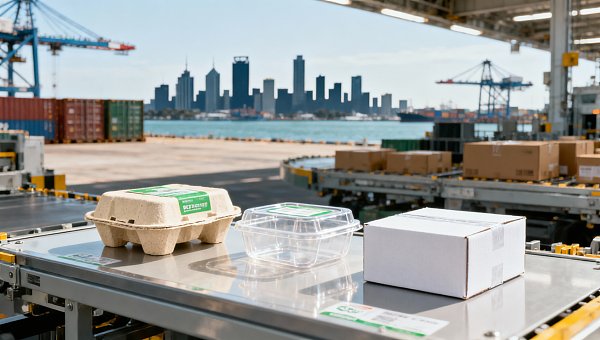
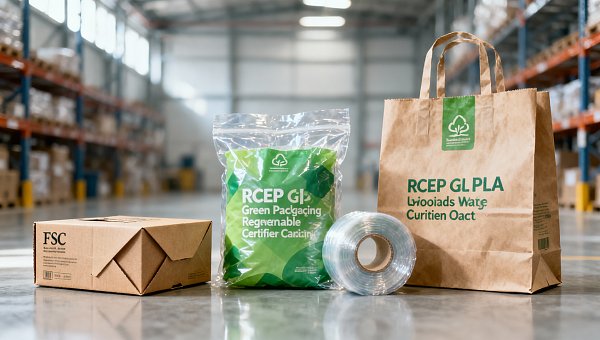
 RCEP Green Packaging Mutual Recognition Takes EffectRCEP Green Packaging Mutual Recognition takes effect Apr 22, 2026—streamline exports to AU, NZ, JP, KR with GB/T 37629–2019 certified molded fiber & PLA packaging.
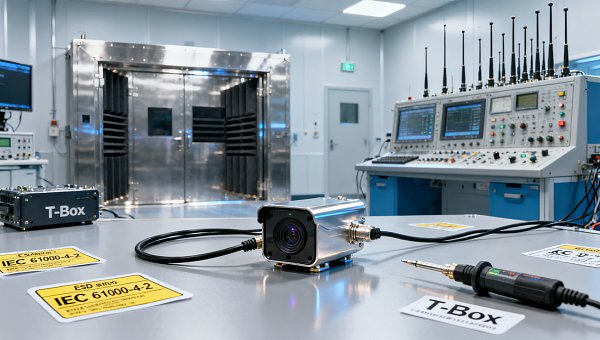
 Mexico NOM-019-SCFI-2026 Effective: EMC Certification Required for Auto Electronics ExportsEMC certification is now mandatory for auto electronics exports to Mexico under NOM-019-SCFI-2026. Ensure compliance for rearview mirrors, radar sensors & T-Box units—avoid shipment delays and order cancellations.
") TÜV Rheinland Updates CE Requirements for Servo Drives (PLd + EMC Joint Validation)TÜV Rheinland now mandates joint PLd + EMC validation for servo drives under CE marking—learn how this impacts certification timelines, lab selection, and EU market access.
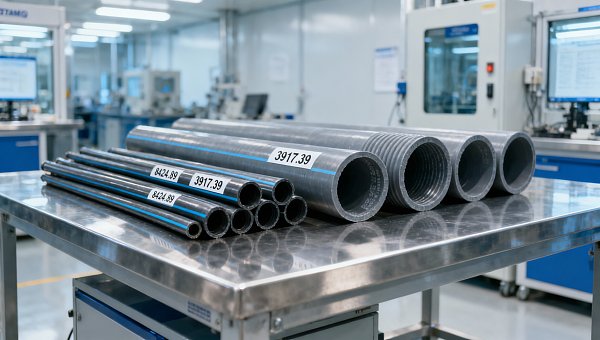
TÜV Rheinland Updates CE Requirements for Servo Drives (PLd + EMC Joint Validation)TÜV Rheinland now mandates joint PLd + EMC validation for servo drives under CE marking—learn how this impacts certification timelines, lab selection, and EU market access. Vietnam Suspends SASO Mutual Recognition for Chinese Irrigation EquipmentVietnam suspends SASO mutual recognition for Chinese irrigation equipment—urgent compliance updates for drip tapes & PE pipes (HS 8424.89/3917.39). Act now to avoid delays.
 FDA Finalizes AI Diagnostic Device Rules for ImportersFDA finalizes AI diagnostic device rules for importers: New bias assessment mandate impacts ultrasound, glucose analyzers & dermatoscopes. Act now to ensure U.S. market access.
 SABER Phase II Live: Saudi Building Hardware Requires Digital Type Test Reports & PIDSABER Phase II is live: Building hardware exports to Saudi Arabia now require digital type test reports & a mandatory, immutable Product ID (PID). Act now to avoid customs delays!
 IMDG Code 41-24 Enforced: UN3480 Lithium Battery Labeling Mandatory from Apr 2026IMDG Code 41-24 enforcement starts Apr 2026: UN3480 lithium battery labeling & ISO 17363 docs are now mandatory—avoid port rejections!
 CBAM Carbon Tax Launch: Low CBAM Reporting Rate Among Chinese ExportersCBAM Carbon Tax is live—only 36.8% of Chinese exporters reported. Discover why, which industries are at risk, and how to secure EU market access now.
 China’s 10 Agencies Issue AI Export Ethics Review RulesChina’s 10 agencies launch AI export ethics rules—mandating bias reviews for visual inspection, warehouse AI & defect detection systems. Stay compliant & competitive.
 RCEP Green Packaging Mutual Recognition Takes EffectRCEP Green Packaging Mutual Recognition is now in effect—unlock faster customs clearance in Australia, NZ, Japan & Korea for GB/T 37659–2019-certified eco-packaging.
 Mexico NOM-019-SCFI-2026 Effective Apr 10, 2026: EMC Certification Required for Automotive ElectronicsNOM-019-SCFI-2026 EMC certification is now mandatory for automotive electronics entering Mexico — act before the July 1, 2026 customs ban.
 Red Sea Rerouting Normalized, EBA at $1,850/TEURed Sea rerouting normalized with EBA fixed at $1,850/TEU—learn how this structural shift impacts Asia-Europe freight costs, lead times & supply chain strategy.
 FDA AI Diagnostic Device Draft Rules: Bias Assessment for ImportsFDA AI diagnostic device draft rules require bias assessment for imports—learn how portable ultrasound, glucose, and dermatoscopic AI devices are affected & what to do next.
") TÜV Rheinland Updates CE Requirements for Servo Drives (PLd + EMC)TÜV Rheinland updates CE requirements for servo drives: PLd (ISO 13849-1) + EMC immunity (IEC 61000-6-2 Ed.4) now mandatory together — act now to avoid EU market delays!
TÜV Rheinland Updates CE Requirements for Servo Drives (PLd + EMC)TÜV Rheinland updates CE requirements for servo drives: PLd (ISO 13849-1) + EMC immunity (IEC 61000-6-2 Ed.4) now mandatory together — act now to avoid EU market delays! SABER Phase II Launch: Building Hardware Must Submit Digital Type Test Reports & Unique Product IDSABER Phase II now mandates digital type test reports & unique product IDs for building hardware—fasteners, scaffolding, door/window components. Ensure compliance to avoid customs rejection & SCOC delays.
 Vietnam Suspends SASO Mutual Recognition for Chinese Irrigation EquipmentVietnam suspends SASO mutual recognition for Chinese irrigation equipment—TCVN testing now mandatory. Act now to avoid 8–12 week delays and customs holdups.
 IMDG Code 41-24 Enforced: UN3480 Lithium Battery Labeling UpdateIMDG Code 41-24 enforcement starts April 2026: UN3480 lithium battery labeling updates are mandatory for global maritime shipments — avoid port delays, detention & penalties.
 EU CBAM Enters Full Enforcement on Jan 1, 2026EU CBAM full enforcement starts Jan 1, 2026 — mandatory quarterly reporting & certificate purchases for batteries, steel, cement, aluminum, fertilizers & chemicals. Act now to ensure EU market access.
 EU CBAM Carbon Tariff Starts Oct 2026 for Chinese Battery, Cement, Chemical ExportsEU CBAM carbon tariff hits Chinese battery, cement & chemical exports from Oct 2026 — mandatory emissions reporting starts now. Avoid €98/t default fees.















Popular Tags
Global Trade Insights & Industry
Our mission is to empower global exporters and importers with data-driven insights that foster strategic growth.
Search News
Popular Tags
Industry Overview
The global commercial kitchen equipment market is projected to reach $112 billion by 2027. Driven by urbanization, the rise of e-commerce food delivery, and strict hygiene regulations.