

SABER Phase II Launch: Building Hardware Must Submit Digital Type Test Reports & UPID
Saudi Arabia’s SASO launched the SABER Phase II system upgrade on April 25, 2026, mandating digital type test reports and unique product ID (UPID) binding for all Building Materials and Hardware & Tools entering the Saudi market—including fasteners, door/window hardware, and sanitary fittings. This change directly affects manufacturers, exporters, and logistics providers engaged in the Saudi construction supply chain, as non-compliant shipments are already experiencing port delays at Jeddah.
Event Overview
On April 25, 2026, the Saudi Standards, Metrology and Quality Organization (SASO) activated the second phase of its SABER electronic conformity assessment platform. Under this update, all Building Materials and Hardware & Tools products—specifically including fasteners, door and window hardware, and bathroom fixtures—must have a digital type test report issued by an SASO-recognized laboratory uploaded to SABER. In addition, each product batch must be assigned a tamper-proof Unique Product ID (UPID). Public reports confirm that average customs clearance time for Chinese exporters has increased by 5.2 days, and some goods lacking pre-registered UPIDs have been detained at Jeddah Islamic Port.
Industries Affected
Direct Exporters & Trading Companies
These entities face immediate operational impact because they are responsible for SABER registration, document submission, and UPID assignment prior to shipment. Delays arise when digital test reports are missing, lab-accredited, or improperly formatted—and UPID generation requires integration with production batch records, not just commercial invoices.
Manufacturers of Construction Hardware (e.g., Fastener, Lock, and Faucet Producers)
Manufacturers must now align internal quality documentation with SASO’s digital reporting requirements. Unlike previous physical or PDF-based test certificates, the new mandate requires structured, machine-readable digital reports from approved labs—meaning manufacturers cannot self-declare compliance or rely on legacy test data unless reissued digitally by an accredited body.
Supply Chain & Logistics Service Providers
Freight forwarders and customs brokers handling Saudi-bound hardware shipments must verify UPID status and digital report validity before cargo release. The 5.2-day average delay signals a shift from document review to system-level validation—requiring new checkpoints in pre-shipment audits and real-time SABER status monitoring.
What Enterprises Should Monitor and Do Now
Track official SASO guidance on UPID implementation timelines and lab accreditation updates
While the April 25, 2026 launch date is confirmed, SASO has not yet published detailed technical specifications for UPID structure, batch traceability depth (e.g., per SKU vs. per production run), or transitional arrangements for pending shipments. Monitoring official SASO bulletins remains essential.
Verify laboratory accreditation status for digital reporting capability—not just general SASO recognition
Not all SASO-recognized labs currently issue reports in the required digital format. Exporters must confirm whether their testing partner supports the SABER Phase II digital schema; otherwise, retesting—even with valid legacy reports—may be necessary.
Integrate UPID assignment into production planning and order management systems
UPID is tied to product batches, not SKUs or invoices. Manufacturers should map UPID generation to actual production lots and ensure ERP or MES systems can export batch-level identifiers compatible with SABER’s API or manual upload interface.
Pre-validate SABER submissions for high-volume or high-value hardware lines before first shipment
Given the observed clearance delays, pilot submissions for critical product categories (e.g., stainless steel anchor bolts or thermostatic shower valves) are advisable to identify formatting errors, lab report mismatches, or UPID duplication issues early—before full container loads are scheduled.
Editorial Observation / Industry Perspective
From industry perspective, this SABER Phase II rollout is less a one-off regulatory update and more a structural shift toward product-level digital traceability in Gulf conformity assessment. Analysis来看, the UPID requirement signals SASO’s intent to link physical goods to verified test data across the import lifecycle—not only for market access but potentially for post-market surveillance. Observation来看, the current port detentions at Jeddah suggest enforcement is active and system-driven, not discretionary. Current更值得关注的是 whether UPID will eventually feed into broader GCC interoperability frameworks—or remain a Saudi-specific layer. It is更适合理解为 a foundational step in digital regulatory infrastructure, rather than a temporary compliance hurdle.
This update underscores how digital documentation mandates—once abstract policy concepts—are now triggering measurable supply chain friction. For hardware exporters, it marks a transition from certificate-based to data-integrated compliance. The priority is no longer just obtaining approval, but ensuring that approval is machine-verifiable, batch-specific, and system-synchronized.
Information Sources: Official SASO announcement (April 2026); Verified port clearance data from Jeddah Islamic Port Authority (Q2 2026 operational bulletin); Confirmed lead times reported by China-Saudi trade facilitation desks (Shenzhen & Ningbo). Note: UPID technical specifications and lab digital reporting protocols remain under continuous observation and are subject to further SASO clarification.

Recommended News
 China’s 10-Dept AI Export Ethics Review Rule Takes EffectChina’s new 10-dept AI export ethics rule mandates algorithmic bias review for AI hardware bound for the EU, US, Canada, Japan & SK—key for smart cameras, voice assistants & industrial vision exporters.
 Red Sea Detour Now Standard: $1,850 TEU Premium on Asia-Europe RoutesRed Sea detour premium now standard: $1,850/TEU surcharge embedded in Asia-Europe freight rates — vital intel for exporters, importers & logistics teams.
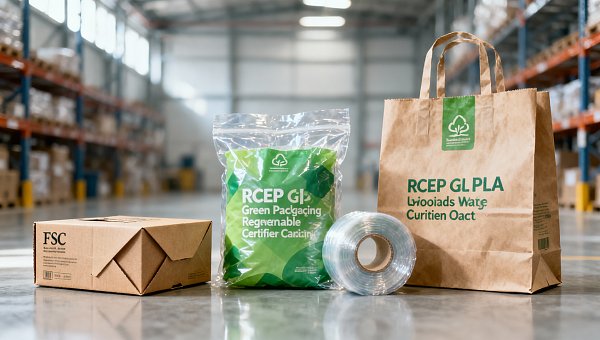
 RCEP Green Packaging Mutual Recognition Takes EffectRCEP Green Packaging Mutual Recognition takes effect Apr 22, 2026—streamline exports to AU, NZ, JP, KR with GB/T 37629–2019 certified molded fiber & PLA packaging.
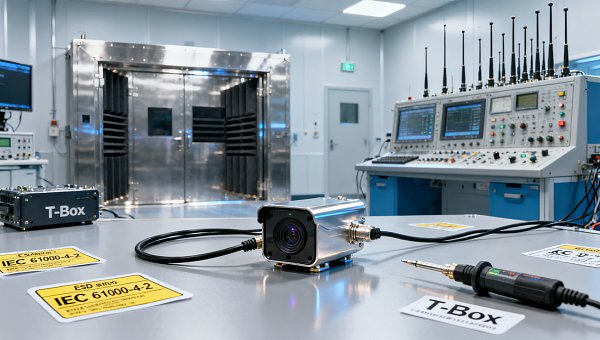
 Mexico NOM-019-SCFI-2026 Effective: EMC Certification Required for Auto Electronics ExportsEMC certification is now mandatory for auto electronics exports to Mexico under NOM-019-SCFI-2026. Ensure compliance for rearview mirrors, radar sensors & T-Box units—avoid shipment delays and order cancellations.
") TÜV Rheinland Updates CE Requirements for Servo Drives (PLd + EMC Joint Validation)TÜV Rheinland now mandates joint PLd + EMC validation for servo drives under CE marking—learn how this impacts certification timelines, lab selection, and EU market access.
TÜV Rheinland Updates CE Requirements for Servo Drives (PLd + EMC Joint Validation)TÜV Rheinland now mandates joint PLd + EMC validation for servo drives under CE marking—learn how this impacts certification timelines, lab selection, and EU market access. Vietnam Suspends SASO Mutual Recognition for Chinese Irrigation EquipmentVietnam suspends SASO mutual recognition for Chinese irrigation equipment—urgent compliance updates for drip tapes & PE pipes (HS 8424.89/3917.39). Act now to avoid delays.
 FDA Finalizes AI Diagnostic Device Rules for ImportersFDA finalizes AI diagnostic device rules for importers: New bias assessment mandate impacts ultrasound, glucose analyzers & dermatoscopes. Act now to ensure U.S. market access.
 SABER Phase II Live: Saudi Building Hardware Requires Digital Type Test Reports & PIDSABER Phase II is live: Building hardware exports to Saudi Arabia now require digital type test reports & a mandatory, immutable Product ID (PID). Act now to avoid customs delays!
 IMDG Code 41-24 Enforced: UN3480 Lithium Battery Labeling Mandatory from Apr 2026IMDG Code 41-24 enforcement starts Apr 2026: UN3480 lithium battery labeling & ISO 17363 docs are now mandatory—avoid port rejections!
 CBAM Carbon Tax Launch: Low CBAM Reporting Rate Among Chinese ExportersCBAM Carbon Tax is live—only 36.8% of Chinese exporters reported. Discover why, which industries are at risk, and how to secure EU market access now.
 China’s 10 Agencies Issue AI Export Ethics Review RulesChina’s 10 agencies launch AI export ethics rules—mandating bias reviews for visual inspection, warehouse AI & defect detection systems. Stay compliant & competitive.
 RCEP Green Packaging Mutual Recognition Takes EffectRCEP Green Packaging Mutual Recognition is now in effect—unlock faster customs clearance in Australia, NZ, Japan & Korea for GB/T 37659–2019-certified eco-packaging.
 Mexico NOM-019-SCFI-2026 Effective Apr 10, 2026: EMC Certification Required for Automotive ElectronicsNOM-019-SCFI-2026 EMC certification is now mandatory for automotive electronics entering Mexico — act before the July 1, 2026 customs ban.
 Red Sea Rerouting Normalized, EBA at $1,850/TEURed Sea rerouting normalized with EBA fixed at $1,850/TEU—learn how this structural shift impacts Asia-Europe freight costs, lead times & supply chain strategy.
 FDA AI Diagnostic Device Draft Rules: Bias Assessment for ImportsFDA AI diagnostic device draft rules require bias assessment for imports—learn how portable ultrasound, glucose, and dermatoscopic AI devices are affected & what to do next.
") TÜV Rheinland Updates CE Requirements for Servo Drives (PLd + EMC)TÜV Rheinland updates CE requirements for servo drives: PLd (ISO 13849-1) + EMC immunity (IEC 61000-6-2 Ed.4) now mandatory together — act now to avoid EU market delays!
TÜV Rheinland Updates CE Requirements for Servo Drives (PLd + EMC)TÜV Rheinland updates CE requirements for servo drives: PLd (ISO 13849-1) + EMC immunity (IEC 61000-6-2 Ed.4) now mandatory together — act now to avoid EU market delays! SABER Phase II Launch: Building Hardware Must Submit Digital Type Test Reports & Unique Product IDSABER Phase II now mandates digital type test reports & unique product IDs for building hardware—fasteners, scaffolding, door/window components. Ensure compliance to avoid customs rejection & SCOC delays.
 Vietnam Suspends SASO Mutual Recognition for Chinese Irrigation EquipmentVietnam suspends SASO mutual recognition for Chinese irrigation equipment—TCVN testing now mandatory. Act now to avoid 8–12 week delays and customs holdups.
 IMDG Code 41-24 Enforced: UN3480 Lithium Battery Labeling UpdateIMDG Code 41-24 enforcement starts April 2026: UN3480 lithium battery labeling updates are mandatory for global maritime shipments — avoid port delays, detention & penalties.
 EU CBAM Enters Full Enforcement on Jan 1, 2026EU CBAM full enforcement starts Jan 1, 2026 — mandatory quarterly reporting & certificate purchases for batteries, steel, cement, aluminum, fertilizers & chemicals. Act now to ensure EU market access.
 EU CBAM Carbon Tariff Starts Oct 2026 for Chinese Battery, Cement, Chemical ExportsEU CBAM carbon tariff hits Chinese battery, cement & chemical exports from Oct 2026 — mandatory emissions reporting starts now. Avoid €98/t default fees.



















Popular Tags
Global Trade Insights & Industry
Our mission is to empower global exporters and importers with data-driven insights that foster strategic growth.
Search News
Popular Tags
Industry Overview
The global commercial kitchen equipment market is projected to reach $112 billion by 2027. Driven by urbanization, the rise of e-commerce food delivery, and strict hygiene regulations.