

Red Sea Rerouting Now Normalized: Asia-Europe Freight Premium at $1,850/TEU
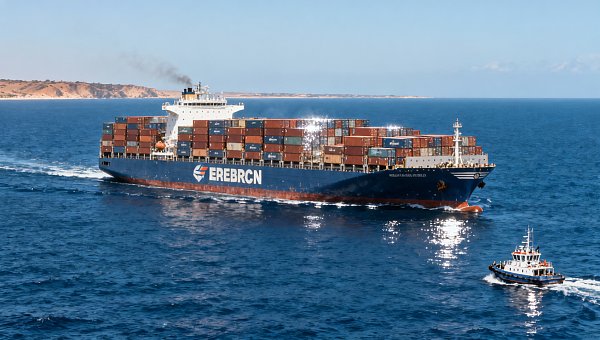
Global port congestion has eased, but rerouting around the Red Sea remains entrenched on Asia–Europe container lanes — with a sustained freight premium of $1,850 per TEU as of April 25, 2026. This development directly affects manufacturers and exporters of CNC-machined parts, solar photovoltaic modules, and EV accessories, whose long-cycle order pricing now reflects this structural cost shift.
Event Overview
According to a joint bulletin issued on April 25, 2026 by Alphaliner and the Shanghai Shipping Exchange, while Suez Canal transit has resumed, red sea rerouting has become常态化 (normalized) for key Asia–Europe routes — including Shanghai–Rotterdam and Ningbo–Hamburg. The persistent $1,850/TEU premium represents a 37% increase over the 2025 average and is attributed to fixed-cost components: war risk insurance surcharges, armed escort fees, and permanent route reconfiguration expenses.
Which Subsectors Are Affected
Direct Trading Enterprises
Exporters and importers engaged in Asia–Europe trade face higher landed costs on time-sensitive or high-value cargo. The premium is no longer a temporary surcharge but embedded in base rate structures, affecting margin calculations and contract renewals — especially for annual tenders or spot-market bookings.
Raw Material Procurement Entities
Buyers sourcing components from China (e.g., aluminum housings, precision castings, or PV mounting structures) are seeing upstream price adjustments. Since many suppliers now quote based on confirmed delivery windows — not just ex-works terms — procurement teams must factor in extended lead times and freight volatility when evaluating total landed cost.
Contract Manufacturing & Assembly Firms
Firms producing CNC-machined parts, solar photovoltaic components, or EV accessories under long-lead contracts are absorbing or passing through the $1,850/TEU uplift. This impacts bid competitiveness, especially where pricing was locked in early 2025 without escalation clauses tied to ocean freight indices.
Supply Chain Service Providers
Freight forwarders, NVOCCs, and logistics integrators must now treat Red Sea rerouting as a baseline operational assumption — not an exception. Rate management systems, customer advisories, and transit-time guarantees require recalibration, particularly for service level agreements covering Europe-bound shipments.
What Relevant Enterprises or Practitioners Should Monitor and Do Now
Track official updates on Suez Canal risk classifications and insurer guidance
While transit has resumed, the International Group of P&I Clubs continues to list the Red Sea as a ‘war risk zone’. Any downgrade in classification could trigger renegotiation of insurance surcharges — a key driver of the current premium.
Review pricing terms for Q2–Q3 2026 orders in affected product categories
Focus specifically on CNC machining, solar PV modules, and EV accessories shipped via Asia–Europe mainlines. Assess whether existing contracts include freight indexation, force majeure triggers, or delay liability clauses that may be activated under prolonged rerouting conditions.
Distinguish between policy announcements and actual vessel deployment patterns
Some carriers publicly cite Suez reopening in marketing materials, yet their published schedules still show >90% of Asia–Europe services avoiding the canal. Cross-check vessel AIS data and service maps — not just press releases — to validate routing reality.
Pre-position buffer stock or adjust production sequencing for critical SKUs
For products with tight European inventory cycles (e.g., EV charging hardware or rooftop solar inverters), consider holding modest safety stock or shifting production batches to align with confirmed sailing windows — reducing exposure to schedule slippage or unplanned transshipment.
Editorial Perspective / Industry Observation
From industry perspective, this $1,850/TEU premium is better understood as a structural adjustment than a transient disruption. Analysis来看, the cost drivers — armed escort mandates, revised hull insurance terms, and fleet-wide routing optimization — are now institutionalized across major carrier alliances. Observation来看, the normalization of Red Sea rerouting signals a de facto redefinition of the ‘standard’ Asia–Europe maritime corridor, with implications extending beyond freight rates into supply chain design, inventory strategy, and contract law. Current more appropriate interpretation is that this is a settled cost layer — not a pending risk to mitigate, but a foundational parameter to plan against.
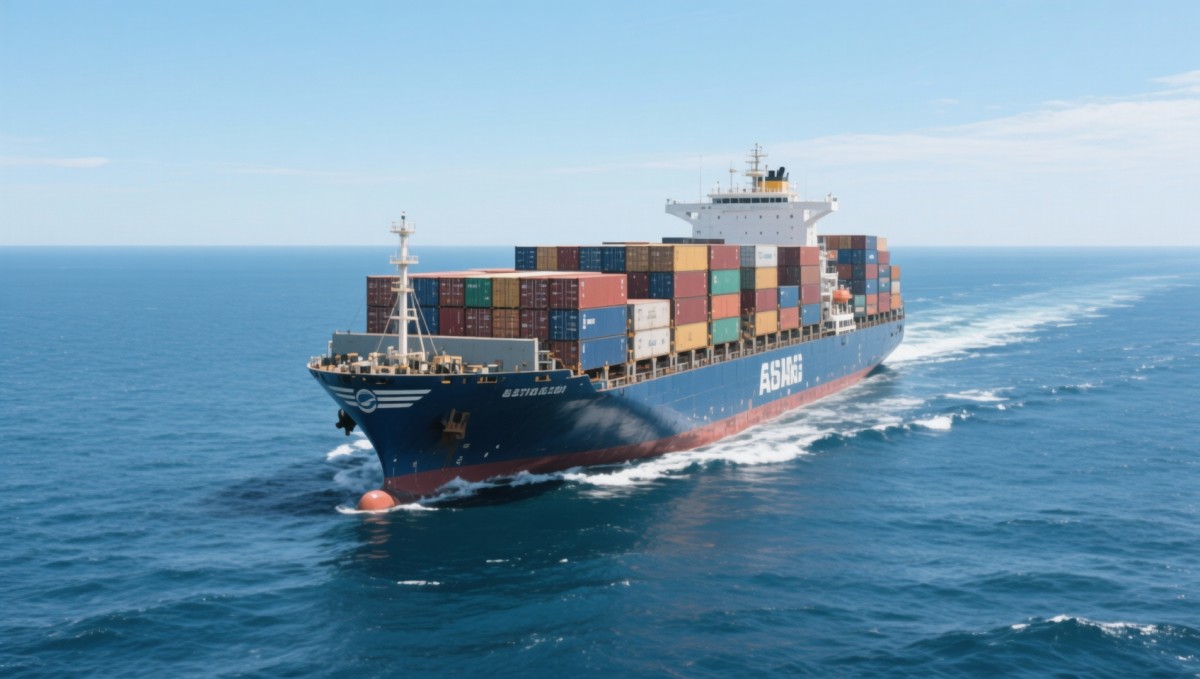
This development marks a pivot point: rather than waiting for ‘return to normal’, stakeholders should treat Red Sea avoidance as the new operational baseline for Asia–Europe containerized trade. Its impact is no longer about delay or uncertainty — it’s about cost predictability, contractual resilience, and strategic adaptation across procurement, manufacturing, and logistics functions.
Source: Joint bulletin by Alphaliner and Shanghai Shipping Exchange, published April 25, 2026.
Noted for ongoing observation: Future revisions to war risk insurance frameworks by the International Group of P&I Clubs and any formal changes to IMO’s Maritime Security Assessment for the Gulf of Aden region.
Recommended News
 China’s 10-Dept AI Export Ethics Review Rule Takes EffectChina’s new 10-dept AI export ethics rule mandates algorithmic bias review for AI hardware bound for the EU, US, Canada, Japan & SK—key for smart cameras, voice assistants & industrial vision exporters.
 Red Sea Detour Now Standard: $1,850 TEU Premium on Asia-Europe RoutesRed Sea detour premium now standard: $1,850/TEU surcharge embedded in Asia-Europe freight rates — vital intel for exporters, importers & logistics teams.
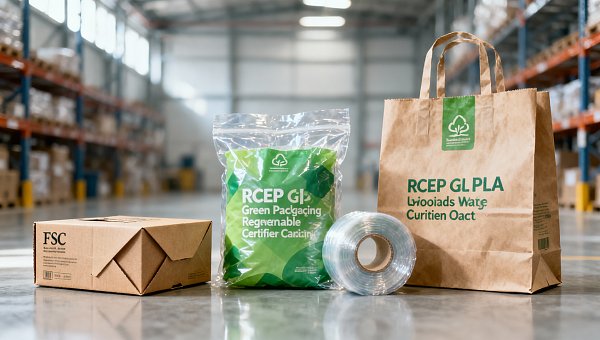
 RCEP Green Packaging Mutual Recognition Takes EffectRCEP Green Packaging Mutual Recognition takes effect Apr 22, 2026—streamline exports to AU, NZ, JP, KR with GB/T 37629–2019 certified molded fiber & PLA packaging.
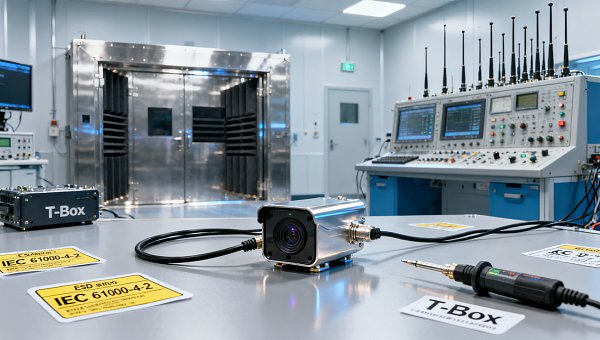
 Mexico NOM-019-SCFI-2026 Effective: EMC Certification Required for Auto Electronics ExportsEMC certification is now mandatory for auto electronics exports to Mexico under NOM-019-SCFI-2026. Ensure compliance for rearview mirrors, radar sensors & T-Box units—avoid shipment delays and order cancellations.
") TÜV Rheinland Updates CE Requirements for Servo Drives (PLd + EMC Joint Validation)TÜV Rheinland now mandates joint PLd + EMC validation for servo drives under CE marking—learn how this impacts certification timelines, lab selection, and EU market access.
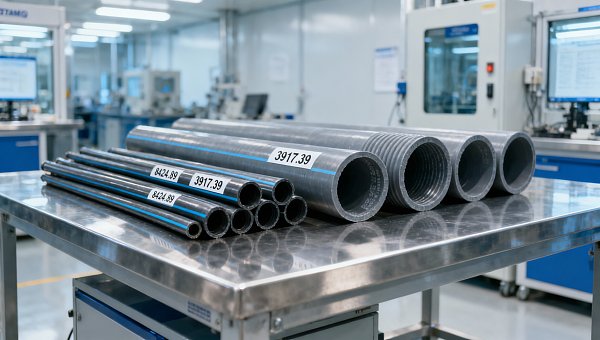
TÜV Rheinland Updates CE Requirements for Servo Drives (PLd + EMC Joint Validation)TÜV Rheinland now mandates joint PLd + EMC validation for servo drives under CE marking—learn how this impacts certification timelines, lab selection, and EU market access. Vietnam Suspends SASO Mutual Recognition for Chinese Irrigation EquipmentVietnam suspends SASO mutual recognition for Chinese irrigation equipment—urgent compliance updates for drip tapes & PE pipes (HS 8424.89/3917.39). Act now to avoid delays.
 FDA Finalizes AI Diagnostic Device Rules for ImportersFDA finalizes AI diagnostic device rules for importers: New bias assessment mandate impacts ultrasound, glucose analyzers & dermatoscopes. Act now to ensure U.S. market access.
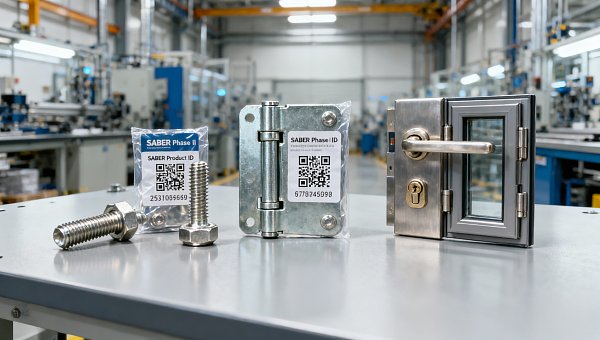
 SABER Phase II Live: Saudi Building Hardware Requires Digital Type Test Reports & PIDSABER Phase II is live: Building hardware exports to Saudi Arabia now require digital type test reports & a mandatory, immutable Product ID (PID). Act now to avoid customs delays!
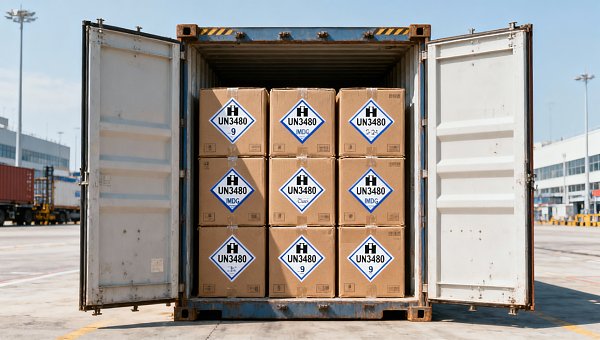
 IMDG Code 41-24 Enforced: UN3480 Lithium Battery Labeling Mandatory from Apr 2026IMDG Code 41-24 enforcement starts Apr 2026: UN3480 lithium battery labeling & ISO 17363 docs are now mandatory—avoid port rejections!
 CBAM Carbon Tax Launch: Low CBAM Reporting Rate Among Chinese ExportersCBAM Carbon Tax is live—only 36.8% of Chinese exporters reported. Discover why, which industries are at risk, and how to secure EU market access now.
 China’s 10 Agencies Issue AI Export Ethics Review RulesChina’s 10 agencies launch AI export ethics rules—mandating bias reviews for visual inspection, warehouse AI & defect detection systems. Stay compliant & competitive.
 RCEP Green Packaging Mutual Recognition Takes EffectRCEP Green Packaging Mutual Recognition is now in effect—unlock faster customs clearance in Australia, NZ, Japan & Korea for GB/T 37659–2019-certified eco-packaging.
 Mexico NOM-019-SCFI-2026 Effective Apr 10, 2026: EMC Certification Required for Automotive ElectronicsNOM-019-SCFI-2026 EMC certification is now mandatory for automotive electronics entering Mexico — act before the July 1, 2026 customs ban.
 Red Sea Rerouting Normalized, EBA at $1,850/TEURed Sea rerouting normalized with EBA fixed at $1,850/TEU—learn how this structural shift impacts Asia-Europe freight costs, lead times & supply chain strategy.
 FDA AI Diagnostic Device Draft Rules: Bias Assessment for ImportsFDA AI diagnostic device draft rules require bias assessment for imports—learn how portable ultrasound, glucose, and dermatoscopic AI devices are affected & what to do next.
") TÜV Rheinland Updates CE Requirements for Servo Drives (PLd + EMC)TÜV Rheinland updates CE requirements for servo drives: PLd (ISO 13849-1) + EMC immunity (IEC 61000-6-2 Ed.4) now mandatory together — act now to avoid EU market delays!
TÜV Rheinland Updates CE Requirements for Servo Drives (PLd + EMC)TÜV Rheinland updates CE requirements for servo drives: PLd (ISO 13849-1) + EMC immunity (IEC 61000-6-2 Ed.4) now mandatory together — act now to avoid EU market delays! SABER Phase II Launch: Building Hardware Must Submit Digital Type Test Reports & Unique Product IDSABER Phase II now mandates digital type test reports & unique product IDs for building hardware—fasteners, scaffolding, door/window components. Ensure compliance to avoid customs rejection & SCOC delays.
 Vietnam Suspends SASO Mutual Recognition for Chinese Irrigation EquipmentVietnam suspends SASO mutual recognition for Chinese irrigation equipment—TCVN testing now mandatory. Act now to avoid 8–12 week delays and customs holdups.
 IMDG Code 41-24 Enforced: UN3480 Lithium Battery Labeling UpdateIMDG Code 41-24 enforcement starts April 2026: UN3480 lithium battery labeling updates are mandatory for global maritime shipments — avoid port delays, detention & penalties.
 EU CBAM Enters Full Enforcement on Jan 1, 2026EU CBAM full enforcement starts Jan 1, 2026 — mandatory quarterly reporting & certificate purchases for batteries, steel, cement, aluminum, fertilizers & chemicals. Act now to ensure EU market access.
 EU CBAM Carbon Tariff Starts Oct 2026 for Chinese Battery, Cement, Chemical ExportsEU CBAM carbon tariff hits Chinese battery, cement & chemical exports from Oct 2026 — mandatory emissions reporting starts now. Avoid €98/t default fees.















Popular Tags
Global Trade Insights & Industry
Our mission is to empower global exporters and importers with data-driven insights that foster strategic growth.
Search News
Popular Tags
Industry Overview
The global commercial kitchen equipment market is projected to reach $112 billion by 2027. Driven by urbanization, the rise of e-commerce food delivery, and strict hygiene regulations.