

China Releases Green Design Guide for Industrial Products (2026)
On April 24, 2026, China’s Ministry of Industry and Information Technology (MIIT) and four other departments jointly issued the Industrial Products Green Design Guide (2026 Edition), introducing 126 actionable solutions across 15 key export-oriented sectors—including solar photovoltaic modules, lithium batteries, eco-friendly packaging, and industrial robots. This marks the first time that concepts such as ‘zero-carbon design’ and ‘design for recyclability’ have been operationalized into sector-specific implementation pathways. The Guide is non-mandatory but has already been cited by the EU EcoDesign Working Group as a ‘key reference for assessing China’s green manufacturing capability’, potentially influencing international buyers’ ESG due diligence outcomes.
Event Overview
On April 24, 2026, MIIT, the National Development and Reform Commission, the Ministry of Ecology and Environment, the State Administration for Market Regulation, and the General Administration of Customs jointly released the Industrial Products Green Design Guide (2026 Edition). The document specifies 126 implementable solutions under 11 green design directions—including zero-carbon design and easy-to-recycle-and-regenerate design—and applies them to 15 priority export industries. It is designated as a recommended (non-binding) technical guidance document. Publicly available information confirms its adoption as a reference by the EU EcoDesign Working Group in evaluating Chinese manufacturers’ green design capacity.
Which Subsectors Are Affected
Direct Exporters
Exporters of solar photovoltaic modules, lithium batteries, and industrial robots face heightened scrutiny during ESG due diligence by EU-based buyers. Since the EU EcoDesign Working Group explicitly references the Guide, compliance alignment—even if voluntary in China—may become an implicit expectation in tender evaluations or contract negotiations.
Raw Material Suppliers
Suppliers providing battery cathode materials, PV encapsulation films, or biodegradable packaging substrates may see upstream demand shift toward traceable low-carbon inputs. The Guide’s emphasis on ‘design for recyclability’ implies downstream OEMs will increasingly require material declarations (e.g., carbon footprint per kg, recycled content share), affecting procurement specifications.
Contract Manufacturers & Tier-1 Assemblers
Firms engaged in final assembly or system integration—such as battery pack integrators or solar inverter producers—must now consider design-stage interventions (e.g., modular disassembly interfaces, standardized fasteners, material labeling). These are not yet regulatory mandates in China, but early alignment supports faster response to future mandatory rules and strengthens EU market access positioning.
Supply Chain Service Providers
Logistics providers, testing labs, and certification bodies may observe rising demand for green design–related verification services—e.g., recyclability assessment reports, embodied carbon calculation for product families, or conformity documentation referencing the Guide’s solution codes (e.g., GD-2026-SOL-07 for PV mounting structures).
What Relevant Enterprises or Practitioners Should Focus On and How to Respond Now
Monitor official implementation notices and sectoral pilot announcements
The Guide is currently recommendatory, but analysis looks at potential follow-up actions: MIIT has historically used such guidance as a precursor to mandatory standards or green product certification schemes. Companies should track provincial MIIT bulletins and pilot programs—especially in Guangdong, Jiangsu, and Zhejiang—for early signals of enforcement scaling.
Map exposure by product category and target market
Not all 15 covered industries face equal pressure. From industry angle, solar PV and lithium battery exporters targeting the EU are most immediately exposed due to existing CBAM-related reporting expectations and upcoming EU Battery Regulation requirements. Prioritize review of products with >30% EU export share or those named in Annex I of the Guide (e.g., ‘lithium-ion traction batteries for EVs’).
Distinguish policy signal from binding obligation
Current status: The Guide sets technical benchmarks—not legal obligations. However, current more appropriately understood as a de facto benchmark for ESG transparency. Buyers may request evidence of alignment (e.g., internal design checklists referencing GD-2026-LIB-12) even without regulatory enforcement. Avoid conflating ‘not mandatory in China’ with ‘irrelevant to commercial terms’.
Initiate cross-functional green design readiness checks
Conduct internal gap assessments covering: (1) Bill-of-materials traceability for high-impact components; (2) Product service life and end-of-life handling instructions in technical documentation; (3) Availability of recyclability test reports aligned with ISO 14021 or EN 45554. No new certifications are required yet—but having baseline data enables faster response if EU importers begin requesting such documentation.
Editorial Perspective / Industry Observation
This Guide is best observed as a strategic signal—not an immediate compliance trigger. Analysis looks at it as part of China’s broader effort to institutionalize green design capabilities ahead of anticipated global tightening on product-level environmental accountability. Its recognition by the EU EcoDesign Working Group suggests growing interoperability between Chinese technical guidance and EU sustainability frameworks. However, the absence of enforcement mechanisms means impact remains contingent on buyer-driven uptake—not top-down regulation. Continued observation is warranted for how quickly multinational procurement teams incorporate its 126 solutions into supplier scorecards or audit protocols.
Conclusion
The Industrial Products Green Design Guide (2026 Edition) does not introduce new legal duties, but it formalizes a set of internationally resonant design expectations that are already shaping ESG due diligence practices among key export markets. For affected enterprises, the current value lies not in compliance per se—but in using the Guide as a structured lens to anticipate near-term commercial expectations, prioritize technical upgrades, and align internal development roadmaps with evolving global green product norms.
Information Sources
Main source: Official joint notice issued by MIIT, NDRC, MEE, SAMR, and GACC on April 24, 2026. EU EcoDesign Working Group reference confirmed via publicly accessible working document (EC-EcoDWG/2026/INF-08). Ongoing developments—including regional pilot rollouts or buyer-led adoption—remain subject to observation.
Recommended News
 China’s 10-Dept AI Export Ethics Review Rule Takes EffectChina’s new 10-dept AI export ethics rule mandates algorithmic bias review for AI hardware bound for the EU, US, Canada, Japan & SK—key for smart cameras, voice assistants & industrial vision exporters.
 Red Sea Detour Now Standard: $1,850 TEU Premium on Asia-Europe RoutesRed Sea detour premium now standard: $1,850/TEU surcharge embedded in Asia-Europe freight rates — vital intel for exporters, importers & logistics teams.
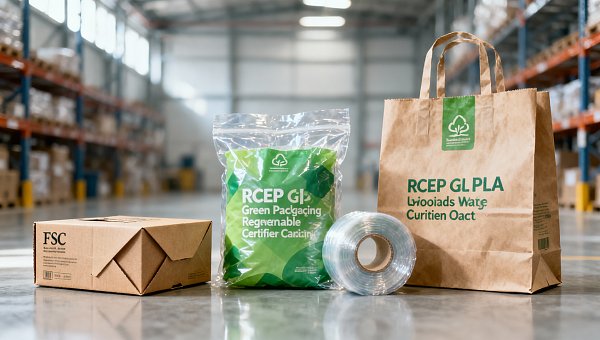
 RCEP Green Packaging Mutual Recognition Takes EffectRCEP Green Packaging Mutual Recognition takes effect Apr 22, 2026—streamline exports to AU, NZ, JP, KR with GB/T 37629–2019 certified molded fiber & PLA packaging.
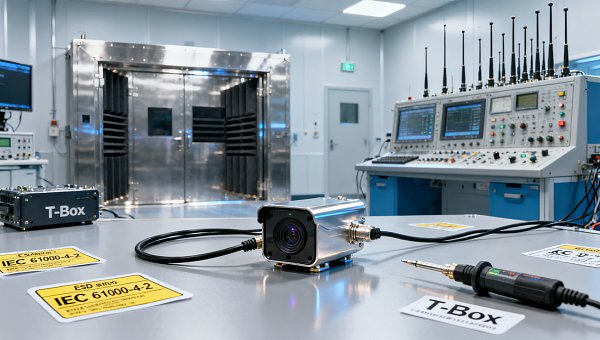
 Mexico NOM-019-SCFI-2026 Effective: EMC Certification Required for Auto Electronics ExportsEMC certification is now mandatory for auto electronics exports to Mexico under NOM-019-SCFI-2026. Ensure compliance for rearview mirrors, radar sensors & T-Box units—avoid shipment delays and order cancellations.
") TÜV Rheinland Updates CE Requirements for Servo Drives (PLd + EMC Joint Validation)TÜV Rheinland now mandates joint PLd + EMC validation for servo drives under CE marking—learn how this impacts certification timelines, lab selection, and EU market access.
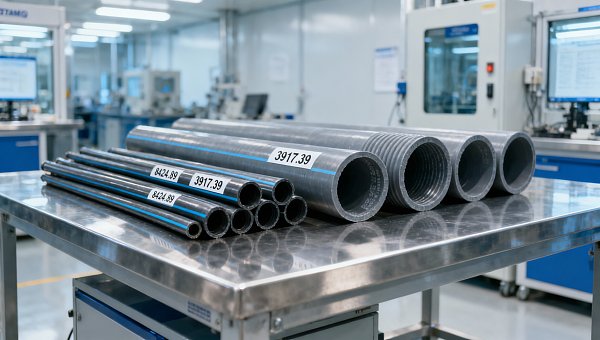
TÜV Rheinland Updates CE Requirements for Servo Drives (PLd + EMC Joint Validation)TÜV Rheinland now mandates joint PLd + EMC validation for servo drives under CE marking—learn how this impacts certification timelines, lab selection, and EU market access. Vietnam Suspends SASO Mutual Recognition for Chinese Irrigation EquipmentVietnam suspends SASO mutual recognition for Chinese irrigation equipment—urgent compliance updates for drip tapes & PE pipes (HS 8424.89/3917.39). Act now to avoid delays.
 FDA Finalizes AI Diagnostic Device Rules for ImportersFDA finalizes AI diagnostic device rules for importers: New bias assessment mandate impacts ultrasound, glucose analyzers & dermatoscopes. Act now to ensure U.S. market access.
 SABER Phase II Live: Saudi Building Hardware Requires Digital Type Test Reports & PIDSABER Phase II is live: Building hardware exports to Saudi Arabia now require digital type test reports & a mandatory, immutable Product ID (PID). Act now to avoid customs delays!
 IMDG Code 41-24 Enforced: UN3480 Lithium Battery Labeling Mandatory from Apr 2026IMDG Code 41-24 enforcement starts Apr 2026: UN3480 lithium battery labeling & ISO 17363 docs are now mandatory—avoid port rejections!
 CBAM Carbon Tax Launch: Low CBAM Reporting Rate Among Chinese ExportersCBAM Carbon Tax is live—only 36.8% of Chinese exporters reported. Discover why, which industries are at risk, and how to secure EU market access now.
 China’s 10 Agencies Issue AI Export Ethics Review RulesChina’s 10 agencies launch AI export ethics rules—mandating bias reviews for visual inspection, warehouse AI & defect detection systems. Stay compliant & competitive.
 RCEP Green Packaging Mutual Recognition Takes EffectRCEP Green Packaging Mutual Recognition is now in effect—unlock faster customs clearance in Australia, NZ, Japan & Korea for GB/T 37659–2019-certified eco-packaging.
 Mexico NOM-019-SCFI-2026 Effective Apr 10, 2026: EMC Certification Required for Automotive ElectronicsNOM-019-SCFI-2026 EMC certification is now mandatory for automotive electronics entering Mexico — act before the July 1, 2026 customs ban.
 Red Sea Rerouting Normalized, EBA at $1,850/TEURed Sea rerouting normalized with EBA fixed at $1,850/TEU—learn how this structural shift impacts Asia-Europe freight costs, lead times & supply chain strategy.
 FDA AI Diagnostic Device Draft Rules: Bias Assessment for ImportsFDA AI diagnostic device draft rules require bias assessment for imports—learn how portable ultrasound, glucose, and dermatoscopic AI devices are affected & what to do next.
") TÜV Rheinland Updates CE Requirements for Servo Drives (PLd + EMC)TÜV Rheinland updates CE requirements for servo drives: PLd (ISO 13849-1) + EMC immunity (IEC 61000-6-2 Ed.4) now mandatory together — act now to avoid EU market delays!
TÜV Rheinland Updates CE Requirements for Servo Drives (PLd + EMC)TÜV Rheinland updates CE requirements for servo drives: PLd (ISO 13849-1) + EMC immunity (IEC 61000-6-2 Ed.4) now mandatory together — act now to avoid EU market delays! SABER Phase II Launch: Building Hardware Must Submit Digital Type Test Reports & Unique Product IDSABER Phase II now mandates digital type test reports & unique product IDs for building hardware—fasteners, scaffolding, door/window components. Ensure compliance to avoid customs rejection & SCOC delays.
 Vietnam Suspends SASO Mutual Recognition for Chinese Irrigation EquipmentVietnam suspends SASO mutual recognition for Chinese irrigation equipment—TCVN testing now mandatory. Act now to avoid 8–12 week delays and customs holdups.
 IMDG Code 41-24 Enforced: UN3480 Lithium Battery Labeling UpdateIMDG Code 41-24 enforcement starts April 2026: UN3480 lithium battery labeling updates are mandatory for global maritime shipments — avoid port delays, detention & penalties.
 EU CBAM Enters Full Enforcement on Jan 1, 2026EU CBAM full enforcement starts Jan 1, 2026 — mandatory quarterly reporting & certificate purchases for batteries, steel, cement, aluminum, fertilizers & chemicals. Act now to ensure EU market access.
 EU CBAM Carbon Tariff Starts Oct 2026 for Chinese Battery, Cement, Chemical ExportsEU CBAM carbon tariff hits Chinese battery, cement & chemical exports from Oct 2026 — mandatory emissions reporting starts now. Avoid €98/t default fees.


















Popular Tags
Global Trade Insights & Industry
Our mission is to empower global exporters and importers with data-driven insights that foster strategic growth.
Search News
Popular Tags
Industry Overview
The global commercial kitchen equipment market is projected to reach $112 billion by 2027. Driven by urbanization, the rise of e-commerce food delivery, and strict hygiene regulations.