

ESS Key Equipment Prices Drop ~80%: Quality & Compliance Rise
Global prices for key energy storage system (ESS) components—including battery clusters, power conversion systems (PCS), and energy management systems (EMS)—have fallen 79%–82% cumulatively over the past three years, according to a joint report released on April 24, 2026, by the China Nonferrous Metals Industry Association and BloombergNEF. This sharp correction is prompting regulatory tightening across multiple markets, with implications for manufacturers, exporters, integrators, and project developers worldwide.
Event Overview
On April 24, 2026, the China Nonferrous Metals Industry Association and BloombergNEF published a joint report confirming that the ex-factory average prices of ESS key equipment—battery clusters, PCS, and EMS—declined by 79%–82% over the preceding three-year period. The report notes that some bid prices have now fallen below established safety margins. Concurrently, regulatory authorities in several countries are accelerating adoption of mandatory standards, including UL 9540A for thermal runaway propagation evaluation and IEC 62933-5-2 for cycle life validation. Products failing these requirements face heightened risks of export rejection or recall.
Which Subsectors Are Affected
Direct Exporters & Trading Firms
These entities face immediate compliance exposure: UL 9540A and IEC 62933-5-2 are becoming de facto entry requirements in North America, the EU, and parts of Southeast Asia. A bid-winning product without validated test reports may trigger customs holds or post-delivery recalls—even if price-competitive.
Cell & Module Manufacturers
Price pressure has cascaded down the supply chain, compressing margins for battery cluster producers. However, the shift toward enforced thermal and cycle-life validation means cell-level design choices—such as separator chemistry, thermal interface materials, and BMS integration—now directly impact market access—not just cost.
PCS & EMS System Integrators
As hardware commoditization deepens, differentiation is shifting from component specs to certified interoperability and system-level validation. Integrators supplying turnkey ESS solutions must now verify not only their own firmware and controls but also upstream battery cluster certifications against UL 9540A and IEC 62933-5-2.
Project Developers & EPC Contractors
Lower equipment costs improve near-term project IRRs—but introduce long-term operational risk if low-cost bids rely on uncertified or borderline-compliant subsystems. Insurance underwriters and lenders are increasingly requesting third-party verification of thermal propagation and lifetime performance before financing close.
What Enterprises and Practitioners Should Monitor and Do Now
Track official standard adoption timelines by jurisdiction
UL 9540A testing is already required for UL 9540 listing in the U.S.; the EU’s upcoming Battery Regulation (EU 2023/1542) references IEC 62933-5-2 for stationary storage. Monitor national implementation schedules—e.g., South Korea’s KTL and Japan’s JIS updates—as they determine effective dates for mandatory conformance.
Verify certification status—not just datasheet claims—for all key subsystems
Procurement teams should request full test reports (not summaries) for UL 9540A (including cell-to-module-to-rack propagation data) and IEC 62933-5-2 (minimum 6,000-cycle validation at rated depth of discharge). Verify lab accreditation (e.g., UL, TÜV SÜD, CSA) and report issue date—older reports may not reflect current test protocols.
Distinguish between policy signals and enforceable requirements
Some markets reference UL 9540A in guidance documents without yet mandating it. Current enforcement is strongest in utility-scale tenders (e.g., California ISO RFPs) and government-backed projects. Commercial-and-industrial (C&I) deployments may lag by 12–24 months—making early alignment strategic, not urgent.
Update technical documentation and supplier agreements now
Revise OEM agreements to require upstream suppliers to maintain valid, jurisdiction-specific certifications—and to bear recall or retesting costs if certifications lapse. Update internal technical datasheets to explicitly state applicable standards and test validity periods.
Editorial Perspective / Industry Observation
This price correction is better understood as a structural recalibration than a cyclical dip. Analysis来看, the 79%–82% decline reflects both genuine manufacturing scale gains and prior overvaluation driven by subsidy-inflated demand and speculative bidding. From industry angle, the concurrent regulatory acceleration signals a deliberate pivot—from volume-driven growth to baseline safety and durability assurance. Observation来看, this is less a ‘crisis’ and more a threshold event: compliance is no longer a differentiator but a prerequisite for market participation. Current more appropriate interpretation is that price floors are now being set by verification costs—not component costs.
It is not yet a fully settled outcome: enforcement rigor varies widely across regions, and standardized test interpretation (e.g., ambient conditions, SoC windows, fault triggers) remains inconsistent. But the direction is unambiguous—technical due diligence is becoming non-negotiable at every tier.
Conclusion
This development marks a maturation inflection point for the global ESS value chain. Rather than signaling distress, the steep price decline—paired with tightening standards—reflects an industry transitioning from early-stage expansion to operational accountability. For stakeholders, the priority shifts from chasing lowest acquisition cost to ensuring verifiable, jurisdiction-aligned compliance across the full system stack. It is best understood not as a barrier, but as a baseline reset defining who remains credibly active in international ESS markets.
Information Sources
Main source: Joint report by the China Nonferrous Metals Industry Association and BloombergNEF, published April 24, 2026.
Areas requiring ongoing observation: National implementation timelines for UL 9540A and IEC 62933-5-2; harmonization of test methodology across accredited labs; evolution of insurance and financing requirements tied to certification validity.
Recommended News
 China’s 10-Dept AI Export Ethics Review Rule Takes EffectChina’s new 10-dept AI export ethics rule mandates algorithmic bias review for AI hardware bound for the EU, US, Canada, Japan & SK—key for smart cameras, voice assistants & industrial vision exporters.
 Red Sea Detour Now Standard: $1,850 TEU Premium on Asia-Europe RoutesRed Sea detour premium now standard: $1,850/TEU surcharge embedded in Asia-Europe freight rates — vital intel for exporters, importers & logistics teams.
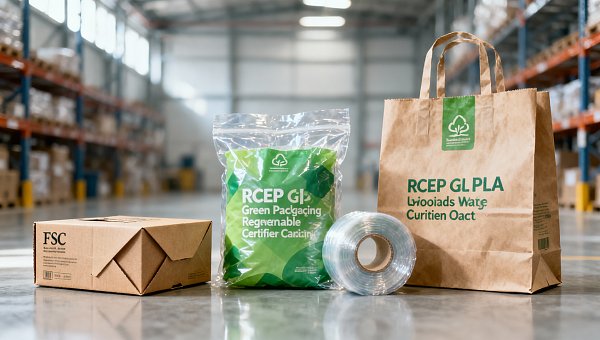
 RCEP Green Packaging Mutual Recognition Takes EffectRCEP Green Packaging Mutual Recognition takes effect Apr 22, 2026—streamline exports to AU, NZ, JP, KR with GB/T 37629–2019 certified molded fiber & PLA packaging.
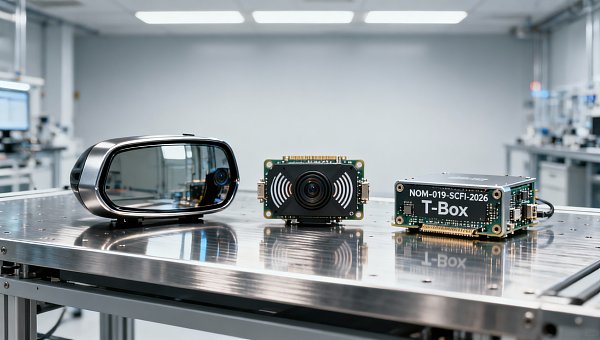
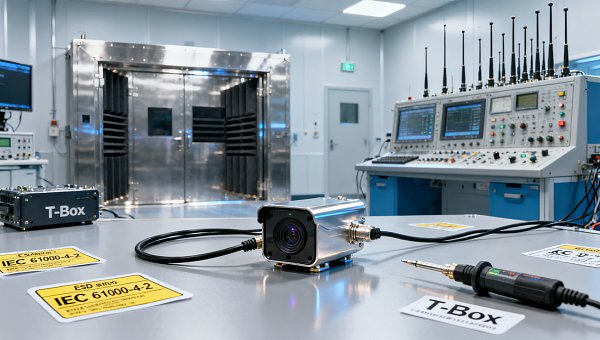
 Mexico NOM-019-SCFI-2026 Effective: EMC Certification Required for Auto Electronics ExportsEMC certification is now mandatory for auto electronics exports to Mexico under NOM-019-SCFI-2026. Ensure compliance for rearview mirrors, radar sensors & T-Box units—avoid shipment delays and order cancellations.
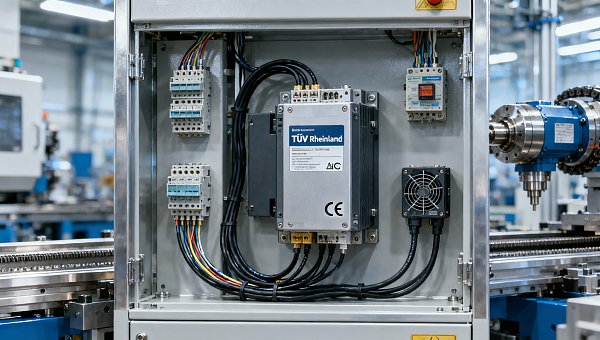
") TÜV Rheinland Updates CE Requirements for Servo Drives (PLd + EMC Joint Validation)TÜV Rheinland now mandates joint PLd + EMC validation for servo drives under CE marking—learn how this impacts certification timelines, lab selection, and EU market access.
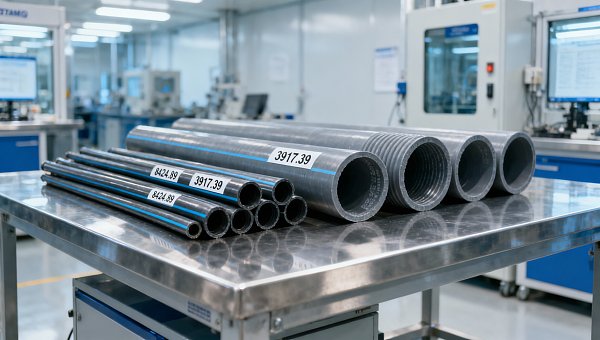
TÜV Rheinland Updates CE Requirements for Servo Drives (PLd + EMC Joint Validation)TÜV Rheinland now mandates joint PLd + EMC validation for servo drives under CE marking—learn how this impacts certification timelines, lab selection, and EU market access. Vietnam Suspends SASO Mutual Recognition for Chinese Irrigation EquipmentVietnam suspends SASO mutual recognition for Chinese irrigation equipment—urgent compliance updates for drip tapes & PE pipes (HS 8424.89/3917.39). Act now to avoid delays.
 FDA Finalizes AI Diagnostic Device Rules for ImportersFDA finalizes AI diagnostic device rules for importers: New bias assessment mandate impacts ultrasound, glucose analyzers & dermatoscopes. Act now to ensure U.S. market access.
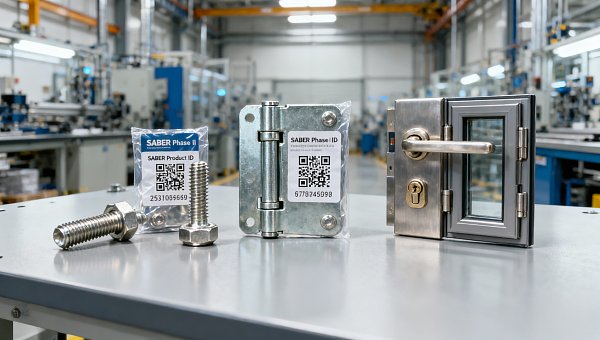
 SABER Phase II Live: Saudi Building Hardware Requires Digital Type Test Reports & PIDSABER Phase II is live: Building hardware exports to Saudi Arabia now require digital type test reports & a mandatory, immutable Product ID (PID). Act now to avoid customs delays!
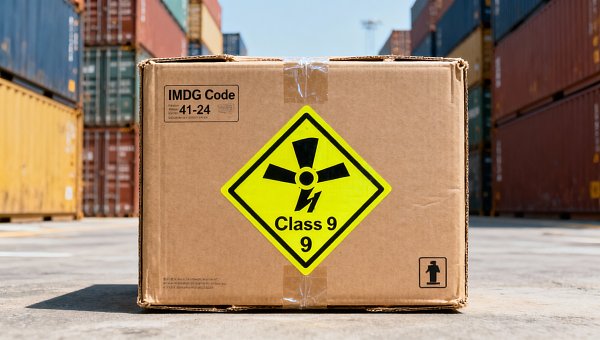
 IMDG Code 41-24 Enforced: UN3480 Lithium Battery Labeling Mandatory from Apr 2026IMDG Code 41-24 enforcement starts Apr 2026: UN3480 lithium battery labeling & ISO 17363 docs are now mandatory—avoid port rejections!
 CBAM Carbon Tax Launch: Low CBAM Reporting Rate Among Chinese ExportersCBAM Carbon Tax is live—only 36.8% of Chinese exporters reported. Discover why, which industries are at risk, and how to secure EU market access now.
 China’s 10 Agencies Issue AI Export Ethics Review RulesChina’s 10 agencies launch AI export ethics rules—mandating bias reviews for visual inspection, warehouse AI & defect detection systems. Stay compliant & competitive.
 RCEP Green Packaging Mutual Recognition Takes EffectRCEP Green Packaging Mutual Recognition is now in effect—unlock faster customs clearance in Australia, NZ, Japan & Korea for GB/T 37659–2019-certified eco-packaging.
 Mexico NOM-019-SCFI-2026 Effective Apr 10, 2026: EMC Certification Required for Automotive ElectronicsNOM-019-SCFI-2026 EMC certification is now mandatory for automotive electronics entering Mexico — act before the July 1, 2026 customs ban.
 Red Sea Rerouting Normalized, EBA at $1,850/TEURed Sea rerouting normalized with EBA fixed at $1,850/TEU—learn how this structural shift impacts Asia-Europe freight costs, lead times & supply chain strategy.
 FDA AI Diagnostic Device Draft Rules: Bias Assessment for ImportsFDA AI diagnostic device draft rules require bias assessment for imports—learn how portable ultrasound, glucose, and dermatoscopic AI devices are affected & what to do next.
") TÜV Rheinland Updates CE Requirements for Servo Drives (PLd + EMC)TÜV Rheinland updates CE requirements for servo drives: PLd (ISO 13849-1) + EMC immunity (IEC 61000-6-2 Ed.4) now mandatory together — act now to avoid EU market delays!
TÜV Rheinland Updates CE Requirements for Servo Drives (PLd + EMC)TÜV Rheinland updates CE requirements for servo drives: PLd (ISO 13849-1) + EMC immunity (IEC 61000-6-2 Ed.4) now mandatory together — act now to avoid EU market delays! SABER Phase II Launch: Building Hardware Must Submit Digital Type Test Reports & Unique Product IDSABER Phase II now mandates digital type test reports & unique product IDs for building hardware—fasteners, scaffolding, door/window components. Ensure compliance to avoid customs rejection & SCOC delays.
 Vietnam Suspends SASO Mutual Recognition for Chinese Irrigation EquipmentVietnam suspends SASO mutual recognition for Chinese irrigation equipment—TCVN testing now mandatory. Act now to avoid 8–12 week delays and customs holdups.
 IMDG Code 41-24 Enforced: UN3480 Lithium Battery Labeling UpdateIMDG Code 41-24 enforcement starts April 2026: UN3480 lithium battery labeling updates are mandatory for global maritime shipments — avoid port delays, detention & penalties.
 EU CBAM Enters Full Enforcement on Jan 1, 2026EU CBAM full enforcement starts Jan 1, 2026 — mandatory quarterly reporting & certificate purchases for batteries, steel, cement, aluminum, fertilizers & chemicals. Act now to ensure EU market access.
 EU CBAM Carbon Tariff Starts Oct 2026 for Chinese Battery, Cement, Chemical ExportsEU CBAM carbon tariff hits Chinese battery, cement & chemical exports from Oct 2026 — mandatory emissions reporting starts now. Avoid €98/t default fees.











Popular Tags
Global Trade Insights & Industry
Our mission is to empower global exporters and importers with data-driven insights that foster strategic growth.
Search News
Popular Tags
Industry Overview
The global commercial kitchen equipment market is projected to reach $112 billion by 2027. Driven by urbanization, the rise of e-commerce food delivery, and strict hygiene regulations.