

Graphene applications in industry that moved beyond the pilot stage
Graphene applications in industry are no longer a story about promise alone. The most important answer for researchers, sourcing teams, and market observers is this: graphene has moved beyond the pilot stage in a limited but meaningful set of use cases where performance gains justify cost, processing complexity, and qualification effort.
That does not mean graphene is now everywhere. It means the market has started to separate real industrial adoption from speculative hype. In practice, the strongest commercial traction today is appearing in conductive additives, thermal management materials, anti-corrosion coatings, selected polymer composites, sensors, and certain energy-storage components.
For information researchers, the key question is not whether graphene is “revolutionary.” It is where graphene solves a specific industrial bottleneck better than incumbent materials such as carbon black, metal fillers, graphite, or conventional additives. The sectors that have moved beyond trials are generally the ones where graphene delivers measurable value in conductivity, barrier performance, weight reduction, durability, or multifunctionality.
This article examines which graphene applications in industry have truly progressed beyond pilots, why those cases succeeded, what limits broader adoption, and what signals readers should watch when evaluating the next wave of commercialization.
What users are really trying to find when they search for graphene applications in industry
When someone searches for “Graphene applications in industry,” especially in a business or research context, they are usually not looking for another broad list of futuristic possibilities. They want to know which applications are commercially real, which industries are buying now, and which claims are still mostly developmental.
That search intent is practical and comparative. Readers want to separate established use cases from laboratory concepts, understand the business case behind adoption, and identify whether graphene is acting as a premium niche material or becoming part of larger industrial supply chains. In short, they are looking for market validation.
For that reason, the most useful discussion focuses less on theory and more on adoption evidence: repeatable manufacturing, product qualification, cost-performance logic, scale-up feasibility, and end-market demand. Those factors determine whether graphene applications in industry remain technical demonstrations or become durable commercial segments.
Where graphene has genuinely moved beyond the pilot stage
The strongest sign that graphene has passed the pilot phase is not media attention. It is repeat order volume, integration into standard production lines, and use in products that must meet performance and reliability requirements over time. On that basis, several sectors now stand out.
First, conductive and antistatic materials are among the most credible areas of adoption. Graphene is being used in plastics, elastomers, coatings, and inks where electrical conductivity is needed without the weight, corrosion risk, or loading levels associated with metallic fillers. In industrial packaging, electronics housings, and specialized components, this is no longer purely experimental.
Second, coatings have emerged as one of the clearest commercial pathways. Anti-corrosion primers, barrier coatings, and protective finishes benefit from graphene’s plate-like structure, which can improve moisture and gas resistance when dispersed correctly. This is especially attractive in marine, infrastructure, energy, and industrial equipment environments where asset life extension has direct economic value.
Third, composites are showing steady progress. In thermoplastics, thermosets, rubber, and fiber-reinforced systems, graphene is being used to improve mechanical strength, wear resistance, conductivity, and weight-performance balance. Adoption is selective rather than universal, but it is real in sporting goods, automotive subcomponents, industrial tooling, and high-performance engineered parts.
Fourth, thermal management is gaining traction. As electronics become denser and power devices run hotter, graphene-enhanced films, pads, and interface materials are being evaluated and increasingly used where lightweight heat spreading offers a design advantage. The market here is still developing, but it has moved beyond simple feasibility studies.
Fifth, sensors and printed electronics represent a commercially active niche. Graphene’s conductivity, surface sensitivity, and compatibility with flexible substrates make it attractive for biosensors, gas sensors, wearable monitoring devices, and conductive inks. Not every application is at mass-market scale, but enough products have reached saleable form to confirm industrial relevance.
Finally, selected energy-storage applications have progressed into practical commercialization, particularly as conductive additives or performance enhancers in batteries and supercapacitors. The role of graphene here is often incremental rather than transformative, but incremental improvements can still be valuable when they improve cycle life, charging behavior, or electrode stability.
Why these applications succeeded while many others remain stuck
The difference between commercial adoption and stalled pilots usually comes down to economics and process compatibility. Graphene succeeds where it can be added into existing formulations or production systems without forcing manufacturers to redesign everything from raw-material handling to certification workflows.
In many successful cases, graphene is not replacing a whole material class. Instead, it acts as a functional additive that improves one or two high-value properties. That is a much easier path to commercialization than trying to build entirely new product architectures around graphene alone.
Another success factor is “enough improvement” rather than perfection. Industrial buyers rarely require a miracle material. They need a measurable gain that matters commercially. If graphene can reduce filler loading, extend coating life, improve conductivity consistency, or cut part weight while maintaining processability, that can be sufficient for adoption.
Supply stability also matters. A manufacturer may be excited by graphene’s technical profile, but if quality varies between batches or if dispersion behavior is inconsistent, scale-up becomes risky. The suppliers that have advanced beyond pilot projects are generally those that can deliver not just graphene, but application-specific grades, processing support, and predictable quality control.
Regulatory and customer qualification cycles are another practical filter. Sectors with shorter qualification timelines and clearer value propositions, such as industrial coatings or specialty compounds, can adopt faster than sectors like aerospace or medical devices, where the burden of testing and approval is far higher.
Coatings: one of the clearest examples of industrial graphene adoption
Among all graphene applications in industry, coatings deserve special attention because they illustrate how commercialization actually happens. The value proposition is easy to understand: if a graphene-enhanced coating can improve barrier properties, corrosion resistance, abrasion resistance, or service life, end users may save on maintenance, downtime, and replacement costs.
This is particularly relevant in offshore structures, pipelines, chemical processing equipment, bridges, storage tanks, and transportation assets. In such applications, even modest durability gains can translate into major lifecycle savings. That makes premium formulation costs easier to justify.
The technical challenge, however, is not simply adding graphene into paint. Performance depends heavily on dispersion quality, concentration, compatibility with the resin system, and the balance between conductivity and barrier behavior. This is why not all “graphene coatings” are equal, and why serious buyers focus on validated formulation performance rather than material labels.
Commercial progress in this segment suggests an important lesson: graphene wins fastest where buyers care about lifecycle economics more than raw-material simplicity. In that environment, a higher-cost additive can still make sense if it reduces corrosion failures, maintenance intervals, or warranty exposure.
Composites and plastics: practical gains, but not a universal replacement story
Graphene in composites and plastics has moved forward, but in a more selective way than headlines once suggested. It is not replacing conventional fillers across the board. Instead, it is finding roles in applications where multifunctional performance is worth paying for.
For example, a polymer component may need mechanical reinforcement, lower weight, and some degree of conductivity or EMI shielding. Achieving all of that at once can be difficult with traditional additives alone. Graphene can help bridge those requirements, especially at lower loading levels than some alternatives.
Automotive and transport are especially relevant here. Lightweighting remains a major industrial priority, but any new material must still satisfy cost, durability, manufacturability, and supply-chain constraints. Graphene-enhanced polymers can make sense in premium or performance-sensitive components before moving into broader-volume applications.
Rubber products are another area to watch. Tires, seals, hoses, and industrial elastomers can benefit from changes in wear resistance, thermal behavior, or conductivity. Yet adoption depends on whether graphene offers a reliable advantage over established fillers such as carbon black, silica, or graphite. That competitive benchmark remains critical.
Energy storage and electronics: real use, but often as an enabling additive
One reason market observers sometimes misunderstand graphene is that they expect it to appear as a dramatic standalone material in batteries or electronics. In reality, much of its practical value today comes as an enabling additive or interface material.
In batteries and supercapacitors, graphene may improve conductive networks, electrode integrity, or charge-transfer behavior. These are meaningful improvements, especially in applications that value power density, thermal stability, or long cycling performance. But many products do not advertise graphene prominently, even when it contributes technically.
The same is true in electronics. Graphene may appear in thermal films, conductive inks, shielding materials, or flexible sensors, where its role is highly specific. This kind of integration is less visible than a headline-grabbing “graphene device,” but it is often more commercially realistic.
For researchers, that means industrial adoption should not be judged only by whether graphene is the central branding message. In many sectors, the most durable applications are the ones where graphene quietly improves a formulation or subsystem without requiring end users to change behavior.
What still limits broader graphene adoption across industry
Despite the progress, several barriers still prevent graphene from becoming a mainstream industrial material at full scale. The first is cost-performance consistency. Buyers do not purchase graphene because it is advanced; they purchase it when it beats the alternatives on total value. In many commodity applications, that threshold has not yet been met.
The second challenge is material definition. “Graphene” covers a wide range of products, from few-layer graphene nanoplatelets to graphene oxide and reduced graphene oxide. Performance can vary significantly depending on thickness, lateral size, purity, defect density, and surface chemistry. That creates confusion for non-specialist buyers.
Third, dispersion remains a persistent engineering challenge. A theoretically excellent nanomaterial can underperform badly if it agglomerates or interacts poorly with the matrix. Many unsuccessful pilot projects were not failures of graphene as a concept, but failures of formulation and process integration.
Fourth, there is still a credibility problem in the market. Years of exaggerated claims created skepticism among industrial buyers. As a result, suppliers must now prove not just technical novelty, but repeatable business value. This favors companies with application data, customer references, and strong technical service capabilities.
Finally, scale itself is not enough. Even if production capacity increases, broad adoption will lag unless end users see clear advantages in real operating conditions. The next phase of growth will depend less on graphene supply announcements and more on documented downstream success.
How to judge whether a graphene application is commercially meaningful
For information researchers and procurement-facing readers, a useful evaluation framework starts with five questions. First, what specific performance problem is graphene solving? If the answer is vague, the application is likely still immature.
Second, is graphene replacing another additive directly, or is it enabling a new performance combination? The strongest business cases often come from multifunctionality, not one-dimensional improvement.
Third, can the application fit within existing manufacturing lines and qualification systems? The lower the disruption, the easier commercialization becomes. Industrial adoption often favors solutions that slot into current workflows.
Fourth, who captures the economic benefit? If the value accrues clearly to the coating owner, component maker, battery producer, or end operator, adoption is easier to justify. If the benefit is diffuse or hard to quantify, purchasing resistance rises.
Fifth, are there repeatable market signals? These include long-term supply agreements, product line extensions, certification progress, integration into large OEM supply chains, and evidence of post-launch performance. Those signs matter more than press releases about partnerships or pilot programs.
What the next phase of graphene industrial growth is likely to look like
The next chapter for graphene applications in industry is unlikely to be defined by a single breakthrough market. More likely, it will be shaped by steady expansion across multiple medium-scale use cases where graphene delivers targeted functional gains.
Coatings, specialty compounds, conductive plastics, thermal materials, and sensor platforms are well positioned to continue that growth. In parallel, battery materials and printed electronics may deepen adoption as manufacturing methods improve and application-specific formulations mature.
Geographically, commercialization will also reflect supply-chain strategy. Regions with strong advanced manufacturing bases, government-backed materials programs, and close links between R&D and downstream industry are likely to remain important centers of graphene deployment. For trade and market intelligence platforms, that means tracking not only producers, but also converters, formulators, and OEM adopters.
The broader takeaway is that graphene is entering a more disciplined commercial phase. Hype is fading, but that is not a negative development. It is often the point at which real industrial markets begin to form.
Conclusion
Graphene applications in industry have moved beyond the pilot stage in a number of credible, commercially relevant areas, especially coatings, conductive materials, selected composites, thermal management, sensors, and parts of energy storage. The common thread is not novelty alone, but measurable value tied to real industrial problems.
For target readers conducting market or technology research, the most important insight is this: graphene adoption is real, but highly application-specific. It is strongest where the material improves performance without creating excessive manufacturing disruption, where lifecycle economics are clear, and where suppliers can offer consistency rather than just promise.
That makes graphene neither a failed wonder material nor an instant universal solution. It is a maturing industrial material platform. The best opportunities now lie in understanding exactly where it has already proven useful, how buyers justify adoption, and which downstream sectors are building repeatable demand. Those are the signals that matter most in assessing graphene’s industrial future.
Recommended News
 China’s First Embodied AI Robot Export Liability Insurance Launched in GuangxiEmbodied AI Robot Export Liability Insurance launched in Guangxi—China’s first insurer-backed solution for EU/Japan-bound industrial & service robots. Boost compliance, trust & tenders now.
 Morocco: 4th Top African Recipient of EU Energy Aid, Boosting China’s PV & Storage ExportsMorocco’s EU energy aid boost unlocks opportunities for Chinese PV mounting structures & containerized energy storage exports—act now to leverage new regulatory advantages.
 Industrial Robot Controller Thermal Gel: China's Export-Ready Heat Dissipation SolutionIndustrial Robot Controller Thermal Gel: China’s export-ready, TÜV-certified heat dissipation solution (8.5 W/mK) for robotics in SEA & Mexico.
 ADB Raises Vietnam’s 2026 GDP Forecast to 7.2% on Sino-Vietnam Supply Chain IntegrationADB raises Vietnam’s 2026 GDP forecast to 7.2% amid deepening Sino-Vietnam supply chain integration in electronics, solar PV, and lithium battery PACK production — key insight for OEMs, exporters & integrators.
 First National SME Service Demonstration Platforms AnnouncedFirst National SME Service Demonstration Platforms announced—16 specialize in REACH, UKCA, UL certification & rapid factory audits for exporters.
 U.S. Natural Gas Inventory Growth Below Forecast: Impact on Plastic Export CostsU.S. natural gas inventory growth missed forecast—impacting plastic export costs globally. Learn how rising TTF prices affect PP/PE resin costs, margins & supply chain strategy for exporters.
 EN 62368-1:2026 Enforced in EU: Thermal Runaway Protection for Wearables & Smart Home DevicesEN 62368-1:2026 is now mandatory in the EU—learn how thermal runaway protection impacts wearables, smart home devices & EV accessories.
 Q1 2026 Industrial Profits Up 15.5%: Supply Chain Cost Stability ConfirmedQ1 2026 Industrial Profits Up 15.5% — supply chain cost stability confirmed for global procurement, contract manufacturing & OEM teams.
") MIIT Releases Service Trade Standardization Plan (2026–2030)MIIT's 2026–2030 Service Trade Standardization Plan boosts AI-driven digital services—remote QA, cloud maintenance, intelligent warehouse SaaS—for global export competitiveness.
MIIT Releases Service Trade Standardization Plan (2026–2030)MIIT's 2026–2030 Service Trade Standardization Plan boosts AI-driven digital services—remote QA, cloud maintenance, intelligent warehouse SaaS—for global export competitiveness. WeChat Pay Integrates QR Codes from 5 Countries for B2B Cross-Border SettlementWeChat Pay integrates QR codes from South Korea, Sri Lanka, Thailand, Malaysia & Singapore — enabling faster, cheaper B2B cross-border settlement for global buyers and Chinese suppliers.
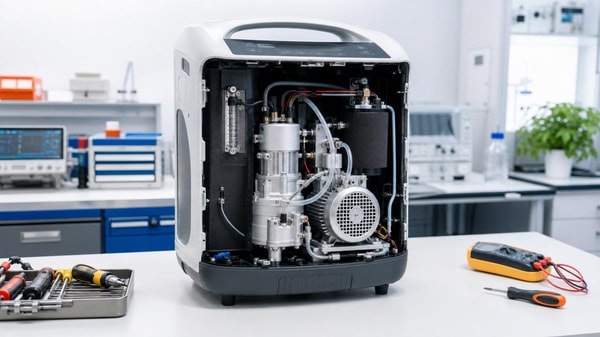
 Portable oxygen concentrators get noisy over time for several reasonsPortable oxygen concentrators get noisy over time due to dust, wear, loose parts, and aging compressors. Learn key causes, inspection priorities, and service tips to prevent failures.
 Interactive whiteboards: what schools regret not checking earlyInteractive whiteboards can boost learning, but schools often regret missing key checks on compatibility, durability, training, and support. Discover how to buy smarter.
 Medical diagnostic equipment downtime usually starts with this oversightMedical diagnostic equipment downtime often starts with one overlooked maintenance gap. Learn the warning signs, hidden costs, and smart service strategies to improve uptime.
 Eco-friendly building materials: where certification changes the decisionEco-friendly building materials now win or lose on certification. Learn how verified standards reduce sourcing risk, support compliance, and improve procurement decisions.
 Ergonomic workspace design mistakes that still cause daily strainErgonomic workspace design mistakes can silently cause daily strain, fatigue, and lower productivity. Discover practical fixes to improve comfort, focus, and workstation performance.
 Outdoor garden supplies that wear out too fast in summer heatOutdoor garden supplies can fail fast in extreme summer heat. Discover which items wear out first, what materials last longer, and how to buy smarter for durable, cost-saving performance.
 Sustainable home decor: how to spot green claims with substanceSustainable home decor explained: learn how to spot credible green claims, avoid greenwashing, compare materials and certifications, and choose stylish, healthier pieces with real impact.
 Modern office furniture trends that improve layout flexibilityModern office furniture trends are transforming flexible workplace design. Explore modular, mobile, ergonomic, and acoustic solutions that boost productivity and smarter space planning.
 Smart street lighting works best when control systems are not overlookedSmart street lighting succeeds when control systems come first. Learn how better monitoring, dimming, and integration improve ROI, maintenance efficiency, and long-term project performance.
 What solid-state battery breakthroughs are still years from market?Solid-state battery breakthroughs sound transformative, but which ones are still years from market? Explore the technical, cost, and scaling barriers shaping real adoption timelines.
 Commercial LED lighting retrofits: when is payback slower than planned?Commercial LED lighting payback can slip when costs, runtime, rebates, and controls are misjudged. Learn the hidden risks and review steps that protect ROI before approval.




















Popular Tags
Global Trade Insights & Industry
Our mission is to empower global exporters and importers with data-driven insights that foster strategic growth.
Search News
Popular Tags
Industry Overview
The global commercial kitchen equipment market is projected to reach $112 billion by 2027. Driven by urbanization, the rise of e-commerce food delivery, and strict hygiene regulations.