

SASO New Rule: Smart Locks for Saudi Import Must Meet IEC 60669-2-1 + Biometric Encryption from Oct 2026
Saudi Arabia’s Standards, Metrology and Quality Organization (SASO) has issued a mandatory technical requirement for imported smart door locks, effective 1 October 2026. This regulation directly impacts manufacturers, exporters, distributors, and certification service providers engaged in the smart building hardware supply chain to Saudi Arabia — particularly those handling fingerprint, facial, Bluetooth, or NFC-enabled locks.
Event Overview
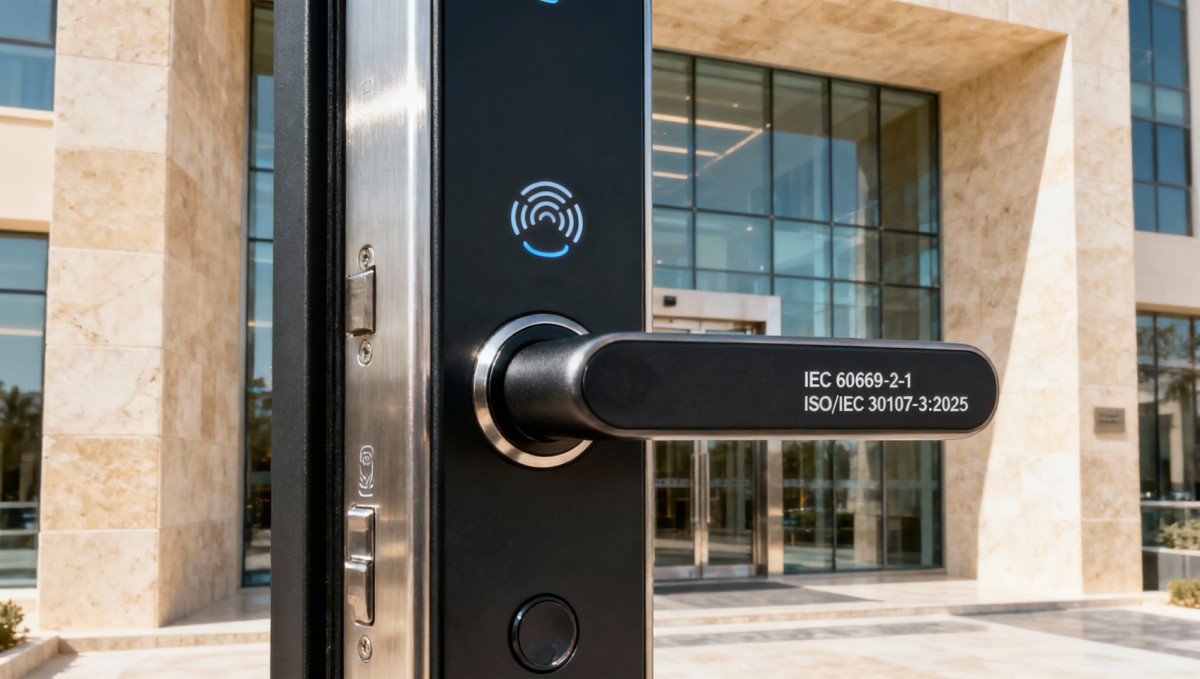
On 18 April 2026, SASO updated its Technical Regulation for Smart Building Equipment (SASO 2503:2026). The revision mandates that, starting 1 October 2026, all imported smart door locks must: (1) pass electrical safety testing per IEC 60669-2-1 at a SASO-recognized laboratory; and (2) comply with localized biometric data encryption and anti-replay attack requirements, aligned with ISO/IEC 30107-3:2025. Products failing to meet both criteria will be prohibited from customs clearance.
Industries Affected by This Regulation
Smart Lock Manufacturers & OEMs
Manufacturers supplying smart locks to the Saudi market must redesign or validate existing models to satisfy both the electrical safety standard and the biometric encryption requirements. Impact includes extended time-to-market, potential firmware/hardware revisions, and increased testing costs — especially where local biometric data storage architecture does not already meet ISO/IEC 30107-3:2025’s anti-replay provisions.
Exporters & Trading Companies
Trading firms handling smart lock imports into Saudi Arabia face heightened compliance risk. Non-certified shipments will be denied customs entry — resulting in detention, re-export, or destruction. Documentation verification (test reports, certificates of conformity) will become a critical pre-clearance checkpoint, requiring closer coordination with suppliers and labs.
Certification & Testing Service Providers
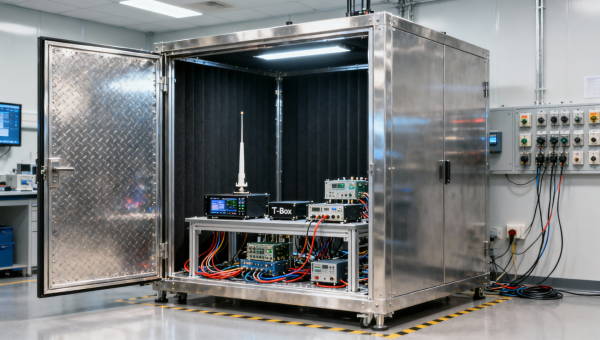
Laboratories accredited by SASO — or seeking accreditation — must now demonstrate capability to perform both IEC 60669-2-1 testing and evaluation against ISO/IEC 30107-3:2025 for biometric security. Demand for integrated certification packages is likely to rise, but only SASO-recognized labs may issue valid reports for customs submission.
Distribution & Channel Partners in KSA
Local distributors and system integrators must verify certification status before accepting inventory. Stocking uncertified units risks non-saleability post-October 2026 and may trigger contractual liability if end-user installations fail compliance audits. Inventory planning and supplier qualification processes require immediate review.
What Relevant Enterprises Should Monitor and Do Now
Track official SASO implementation guidance
While SASO 2503:2026 is published, detailed test protocols, acceptable encryption algorithms, and lab accreditation timelines remain pending. Enterprises should monitor SASO’s official portal and authorized notification channels for updates on transitional arrangements or phased enforcement — particularly regarding legacy stock.
Identify and prioritize high-volume or high-risk product lines
Not all smart lock variants carry equal risk. Fingerprint and facial recognition models — due to their direct reliance on biometric processing — are more likely to require architectural changes than basic Bluetooth/NFC-only devices. Companies should audit their export SKUs to flag those needing biometric firmware updates or secure element integration.
Distinguish between regulatory signal and operational readiness
This rule is a formal, date-bound mandate — not a proposal or consultation. However, actual lab capacity, turnaround times for dual-certification, and customs officers’ familiarity with the new requirements may lag initial rollout. Early engagement with SASO-recognized labs is advisable to assess feasibility and lead time, rather than assuming seamless execution from Day One.
Prepare documentation and internal alignment now
Supply chain teams, quality assurance units, and export compliance officers should jointly map current certification status across affected SKUs. Where gaps exist, initiate internal action plans covering lab selection, sample submission scheduling, and technical documentation translation/localization — especially for encryption architecture descriptions required under ISO/IEC 30107-3:2025.
Editorial Observation / Industry Perspective
From an industry perspective, this regulation signals SASO’s deliberate shift toward harmonizing physical security hardware standards with international digital trust frameworks — notably bridging electrical safety (IEC) and biometric assurance (ISO/IEC). It is not merely an incremental update, but a structural tightening targeting data sovereignty and real-time threat mitigation in access control systems. Analysis来看, it reflects broader Gulf regional trends toward embedding cybersecurity-by-design in IoT-enabled infrastructure. Current more appropriate interpretation is that this is a binding compliance milestone — not a warning or pilot phase — though practical enforcement maturity may evolve over the first 6–12 months post-implementation.
Conclusion
This SASO requirement establishes a clear, non-negotiable threshold for market access in Saudi Arabia’s smart lock segment. Its significance lies less in novelty and more in enforceability: it codifies both hardware safety and cryptographic integrity as prerequisites for import. For stakeholders, the regulation is best understood not as a distant policy development, but as an active timeline requiring technical validation, documentation alignment, and cross-functional coordination — beginning well before October 2026.
Source Attribution
Main source: SASO Technical Regulation SASO 2503:2026, published 18 April 2026. Official text available via the SASO e-Services Portal. Note: Specific test methodology details, lab accreditation lists, and transitional provisions remain subject to further official communication — ongoing monitoring is advised.
Recommended News
 Mexico Enforces NOM-019-SCFI-2026 EMC Certification for Auto Electronics from May 2026Mexico enforces NOM-019-SCFI-2026 EMC certification for auto electronics from May 2026 — mandatory local testing, stricter standards, and urgent compliance action required.
 Global Port Congestion Eases, but Red Sea Rerouting PersistsRed Sea rerouting persists amid easing port congestion—Shanghai–Rotterdam freight rates surge 4.2% to $5,280/TEU. Critical insights for exporters, importers & logistics leaders.
 RCEP Green Packaging Mutual Recognition Starts June 2026RCEP Green Packaging Mutual Recognition starts June 2026 — streamline exports to Australia, NZ, Japan & SK with GB/T 37572-2025 certification. Save time & costs!
 FDA AI Diagnostic Device Rules: ABIA Required from Q3 2026FDA AI diagnostic device rules now require ABIA reports from Q3 2026 — essential for 510(k)/De Novo submissions. Stay compliant, avoid delays & secure U.S. market access.
 Vietnam Suspends SASO Mutual Recognition for Chinese Irrigation EquipmentVietnam suspends SASO mutual recognition for Chinese irrigation equipment—sprinkler systems, drip controllers & irrigation systems now require local QUATEST 3 testing. Act now to avoid 12-week delays & 35% cost hikes.
") TÜV Rheinland Updates CE Certification for Industrial Robot Drives (2026 Q3)TÜV Rheinland’s 2026 Q3 CE certification update for industrial robot drives mandates PLd safety + EN 61800-3 EMC — act now to avoid EU market delays.
TÜV Rheinland Updates CE Certification for Industrial Robot Drives (2026 Q3)TÜV Rheinland’s 2026 Q3 CE certification update for industrial robot drives mandates PLd safety + EN 61800-3 EMC — act now to avoid EU market delays. IMDG Code Amendment 41-24 Takes Effect for Lithium Battery Sea FreightIMDG Code Amendment 41-24 is live: New QR labels, bilingual handling tags & SOC disclosure required for UN3480 lithium battery sea freight—act now to avoid delays.
 SASO SABER Phase II: Digital Type Test Reports Required for Building Hardware from Jun 2026SASO SABER Phase II requires digital type test reports & unique product IDs for building hardware exports to Saudi Arabia — effective June 2026. Act now to ensure compliance and avoid customs delays.
 CPSC Updates 16 CFR Part 1236: New Suffocation Test for Children's Sleep Sacks Effective July 2026CPSC Updates 16 CFR Part 1236: New suffocation test for children's sleep sacks takes effect July 2026 — ensure compliance, avoid delays & protect your U.S. market access.
 EN IEC 62471-2:2026 Effective Oct 2026 for EU LED Lighting ExportsEN IEC 62471-2:2026 mandates full-spectrum photobiological safety testing (200–3000 nm) for all EU-bound LED lighting — effective 1 Oct 2026. Act now to secure CE marking & avoid market access delays.
 AI Patent Tools Security Flaw Triggers Compliance ReviewAI Patent Tools security flaw exposed—triggering urgent compliance reviews for medical device, semiconductor & AI firms. Act now to secure submissions.
 Lithium Carbonate Price Rebound Pressures Battery CostsLithium carbonate price rebound in April 2026 pressures battery costs—impacting procurement, EV manufacturing & EU energy storage compliance. Key insights inside.
 AI+New Materials Summit at Canton Fair ClosesAI+New Materials Summit at Canton Fair closes—key insights for AI testing instruments, optical metrology & ISO/IEC 17025 compliance. Discover what Tier 1 auto buyers and TÜV/JIS labs really want.
 Sodium-Ion Battery Mass Production Accelerates for Energy StorageSodium-ion battery mass production accelerates in 2026 — lower-cost, UL 9540A-certified energy storage for solar exporters and off-grid markets.
 GMCC & Welling Showcase R290-Ready Compressors at CIFF 2026R290-ready compressors from GMCC & Welling—ultra-low noise (≤22 dB), high IPLV, EU F-Gas III & US DOE 2026 compliant. See why HVAC exporters must act now.
 Dongfang Select's Blue Hat Supplements Go Global with TraceabilityBlue Hat supplements with blockchain traceability—Dongfang Select’s global launch sets a new standard for trusted health & beauty exports.
 China’s New Green Design Guidelines Mandate LCA for Export Packaging & Building MaterialsChina’s new Green Design Guidelines mandate LCA for export packaging & building materials—key for EU, Korea, Canada market access. Act now to secure green procurement eligibility & tariff benefits.
 Semiconductor Supply Chain Price Hikes Extend Lead TimesSemiconductor supply chain price hikes hit MCUs, power ICs & automotive sensors—lead times now stretch 16–20 weeks. Act now to secure A-BOM readiness and local packaging capacity.
 Wuxi E-Bike Cluster Seeks Global Market at Canton FairWuxi e-bike cluster (Yadea, Aima, Tailg) targets global markets at Canton Fair—UL2849, IEC62133 & UN38.3 compliance is now key for LATAM entry.
 EU CBAM Enters Enforcement Phase on Jan 1, 2026EU CBAM enforcement starts Jan 1, 2026 — critical for exporters of iron, steel, aluminium, cement, fertilizers, electricity & hydrogen to the EU. Act now.
 2026 Jan–Feb Paper Industry Profits +6.1%; Green Packaging Export Premium EmergesGreen packaging export premium drives +6.1% paper industry profits in Jan–Feb 2026 — discover how FSC/PEFC certification and water-based processes boost margins for eco-friendly, food & cosmetics packaging exporters.



















Popular Tags
Global Trade Insights & Industry
Our mission is to empower global exporters and importers with data-driven insights that foster strategic growth.
Search News
Popular Tags
Industry Overview
The global commercial kitchen equipment market is projected to reach $112 billion by 2027. Driven by urbanization, the rise of e-commerce food delivery, and strict hygiene regulations.