

Smart home devices wholesale: which products bring repeat orders?
In smart home devices wholesale, repeat orders rarely come from flashy gadgets alone—they come from reliable, easy-to-sell products that keep end users satisfied and retailers profitable. For distributors, agents, and resellers, knowing which categories drive steady demand is the key to building long-term growth. This guide explores the smart home products most likely to generate recurring orders and stronger customer retention.
For most buyers in Smart home devices wholesale, the short answer is clear: repeat orders usually come from practical, affordable, low-return categories such as smart security devices, smart lighting, plugs, sensors, and ecosystem-friendly control products. These products solve obvious everyday problems, are easier for retailers to explain, and fit naturally into add-on purchases and replacement cycles.
That matters because distributors and resellers do not only need products that sell once. They need products that continue moving across seasons, channels, and customer segments. In wholesale, the best-performing smart home lines are often not the most innovative on paper, but the ones that combine stable demand, simple installation, acceptable after-sales risk, and broad compatibility.
What is the real buying intent behind this market question?
When distributors, agents, and wholesalers search for which smart home products bring repeat orders, they are usually not looking for a generic list of trending devices. They want to identify product categories that can support predictable replenishment, lower service friction, and healthier long-term account relationships with retailers, installers, and e-commerce sellers.
In other words, the core concern is commercial sustainability. Buyers want to know which SKUs are most likely to generate second, third, and ongoing purchase cycles rather than one-off trial orders. They are also evaluating margin stability, return rates, compatibility issues, customer satisfaction, and whether the products can be bundled into a broader smart home offering.
That is why a useful answer must go beyond trend language. It should help buyers judge product quality from a repeat-order perspective: Is demand recurring? Is setup simple enough for mainstream users? Does the category create natural cross-sell opportunities? Can the supplier support firmware consistency, certifications, and after-sales service at scale?
Which smart home product categories most often generate repeat orders?
The smart home categories with the strongest repeat-order potential tend to share five traits: they solve frequent household needs, have clear value at first glance, require limited technical knowledge to sell, fit multiple price tiers, and integrate easily into popular ecosystems. Based on these criteria, the strongest wholesale performers are usually smart security products, lighting, plugs, sensors, video doorbells, and selected energy-management devices.
Among these, smart security remains one of the most dependable categories. Consumers continue to prioritize home safety, remote visibility, and family protection. For resellers, that means repeat demand not only for the main device but also for accessory purchases, multi-room expansion, and upgrades. Products such as indoor cameras, outdoor cameras, door/window sensors, motion detectors, and smart locks often create follow-up orders once end users adopt one product and decide to expand coverage.
Smart lighting is another top category for recurring business. It benefits from broad appeal, relatively low entry barriers, and strong gifting, renovation, and lifestyle demand. Retailers often reorder smart bulbs, light strips, switches, and scene-control products because customers like starting with one room and gradually expanding to more rooms. This room-by-room adoption pattern is ideal for wholesale repeat cycles.
Smart plugs also perform well because they are easy to understand and easy to sell. They offer instant utility by turning traditional appliances into controllable devices without major installation work. For distributors, plugs are attractive because they work as entry-level products, impulse purchases, and bundle items. Once customers experience the convenience, they often return for more units across the home.
Sensors deserve special attention in Smart home devices wholesale because they often support a system-based sales model. Temperature sensors, leak detectors, presence sensors, and smoke-related smart alerts may not always be the hero product on the shelf, but they are excellent repeat-order items when paired with hubs, alarms, or automation packages. They also help raise average order value through expansion sales.
Video doorbells and smart locks can also drive repeat orders, especially in markets with strong suburban housing, apartment security concerns, or active property management channels. These categories usually require more careful support and certification control, but when executed well, they create premium-margin opportunities and recurring demand from renovation, multi-unit projects, and dealer networks.
Why practical products outperform flashy smart gadgets in wholesale
Many first-time buyers overestimate novelty and underestimate usability. In reality, products that win repeat orders are usually the ones that deliver visible everyday convenience with minimal learning friction. End users are more likely to recommend and repurchase products that work reliably than products that look advanced but create setup frustration or compatibility complaints.
For example, a decorative AI-enabled home gadget may attract short-term curiosity, but it often struggles to maintain reorder momentum if its benefit is vague or if the user experience feels unfinished. By contrast, a well-made smart plug, camera, or bulb solves a direct need in a way that buyers instantly understand. This makes it easier for retailers to convert traffic into sales and easier for wholesalers to sustain replenishment.
Practical categories also tend to have stronger resilience across economic cycles. When consumer spending tightens, buyers may delay premium lifestyle gadgets, but they still respond to products linked to security, energy saving, and household convenience. For distributors and agents, that difference matters because repeat orders often depend on categories with broad necessity rather than narrow enthusiasm.
What distributors and resellers care about most before placing repeat wholesale orders
Repeat business is rarely driven by product appeal alone. It depends on what happens after the first shipment reaches the market. Distributors and resellers typically care most about six commercial realities: sell-through speed, return rate, technical support burden, certification readiness, price protection, and SKU continuity.
Sell-through speed is the first test. A product that sits too long on shelves creates pressure on working capital. Categories with clear value propositions, such as cameras, bulbs, or plugs, tend to move faster because both online and offline retailers can explain them quickly. Faster sell-through supports faster replenishment.
Return rate is equally important. High-return categories can destroy margin even if initial demand looks strong. Smart home devices with poor app stability, weak Wi-Fi performance, confusing setup flows, or inconsistent firmware often generate service problems that discourage repeat purchasing. That is why many professional buyers prioritize “boring but reliable” over “innovative but unstable.”
Technical support burden is another decisive factor. If a device requires excessive customer education, long installation calls, or region-specific troubleshooting, resellers may reduce future orders even if gross margin looks attractive. Products with simple onboarding and strong user instructions are more likely to become repeat-order winners.
Certification and compliance matter especially in cross-border trade. Smart home products entering regulated markets may require CE, FCC, RoHS, ETL, RED, or other certifications depending on category and destination. Repeat orders depend heavily on documentation consistency. Buyers want confidence that every batch will meet import and platform requirements.
Price stability and channel protection also shape reorder behavior. If a supplier undercuts its own wholesale partners or allows aggressive uncontrolled pricing on major marketplaces, distributors become cautious. Sustainable repeat orders come from product lines where partners can preserve margin and avoid destructive channel conflict.
SKU continuity is often underestimated. Retailers do not want to build a listing, marketing campaign, and customer base around a model that disappears in a few months. In smart home wholesale, stable roadmap planning encourages larger and more frequent repeat orders because buyers can confidently invest in inventory and market development.
The best product types for recurring orders by channel
Not every smart home product performs the same across sales channels. A category that works well for e-commerce may not be the strongest fit for installer networks or regional distributors. Understanding this channel difference helps buyers choose the right wholesale mix.
For online retail and marketplace sellers, smart plugs, bulbs, indoor cameras, and basic sensors often work best. These products are visually easy to explain, price-comparable, and suitable for customer reviews and bundle promotions. They also benefit from lower installation complexity, which reduces post-sale complaints.
For offline retail and consumer electronics chains, smart lighting kits, video doorbells, entry-level security bundles, and voice-assistant-compatible products often perform strongly. In-store demonstrations help customers understand the value, and staff can upsell add-on units for other rooms or entrances.
For installers, contractors, and system integrators, premium locks, security sets, hubs, advanced sensors, and energy-management products may offer better repeat potential. These channels value system reliability, integration depth, and project-based expansion. Once trust is established, repeat orders can become sizable and recurring.
For property management and hospitality buyers, smart locks, occupancy sensors, thermostatic controls, and energy-saving devices may generate the best long-term value. These buyers often reorder based on standardization across multiple units, where compatibility and centralized management matter more than visual novelty.
How to evaluate whether a smart home SKU will actually reorder
Before committing to a new line in Smart home devices wholesale, distributors should evaluate each category through a repeat-order lens rather than a launch lens. A product may perform well in a first promotional batch yet fail to sustain replenishment. The most useful evaluation framework includes demand durability, expansion logic, support risk, and supplier capability.
Start with demand durability. Ask whether the product is linked to a long-term household need or just short-term hype. Security, convenience, and energy management usually have stronger staying power than novelty features. Historical category growth in local markets can also reveal whether demand is structural or temporary.
Then assess expansion logic. The best repeat-order products are often those that customers buy in multiples. Bulbs, plugs, sensors, and cameras fit this model because users start small and scale up. A one-device-only category generally has weaker reorder momentum unless it serves a replacement or maintenance need.
Next, review support risk. Test onboarding, app pairing, firmware behavior, packaging clarity, and compatibility claims. If your team sees confusion during sample evaluation, end users will likely see more. Every support ticket reduces the chance of a reorder.
Finally, examine supplier capability. Can the manufacturer maintain stable quality across batches? Can they support private label, multilingual packaging, and software updates? Can they provide timely technical files and after-sales support? Repeat orders depend as much on supplier discipline as on product demand.
Common mistakes that reduce repeat orders in smart home wholesale
One common mistake is chasing too many categories at once. A wide assortment may look impressive, but it often dilutes inventory efficiency and increases support complexity. Distributors usually get better repeat-order results by building a focused portfolio around a few high-confidence categories with clear cross-sell logic.
Another mistake is ignoring ecosystem compatibility. Smart home buyers increasingly care whether devices work with familiar apps, voice assistants, and automation standards. Products with weak compatibility or unclear integration messaging may still sell initially, but reorder rates suffer when customer reviews reveal limitations.
Some wholesalers also prioritize headline margin over lifetime value. A high-margin product with heavy returns can be less profitable than a lower-margin product that sells steadily with low support cost. Repeat orders come from healthy channel economics, not from invoice margin alone.
A further issue is underinvesting in merchandising and onboarding materials. Even strong products may underperform if resellers lack comparison charts, setup guides, localized listings, or package-bundle suggestions. In this market, content support can directly affect reorder speed.
How to build a repeat-order wholesale portfolio
A practical portfolio strategy usually starts with a layered product mix. First, include entry products such as smart plugs and bulbs that attract first-time users. Second, add core products such as cameras, doorbells, and locks that offer higher value and stronger household relevance. Third, support them with expansion products such as sensors, switches, and accessories that encourage system growth.
This approach helps distributors serve different buyer maturity levels. New retailers can start with simple fast-moving SKUs, while more advanced accounts can move into bundled solutions. Over time, repeat orders improve because the portfolio creates a natural path from trial purchase to ecosystem expansion.
It is also wise to limit excessive fragmentation. Too many near-identical models can confuse buyers and weaken forecasting. A tighter assortment with strong differentiation often performs better than a broad catalog filled with small variations that split demand.
Where possible, buyers should also look for private-label or semi-custom opportunities with suppliers that can maintain quality. Branding, packaging localization, and bundle creation can strengthen reseller identity and make recurring purchases less vulnerable to direct price comparison.
Final judgment: which smart home products are most likely to bring repeat orders?
If the goal is stable replenishment and channel-friendly performance, the safest bets in Smart home devices wholesale are usually smart security devices, smart lighting, plugs, and sensors. These categories combine understandable value, broad consumer demand, manageable support requirements, and strong potential for multi-unit or follow-up purchases.
Products such as cameras, bulbs, plugs, door/window sensors, and selected locks consistently outperform more experimental gadgets when measured by reorder logic rather than launch excitement. They are easier to position, easier to bundle, and more likely to generate household expansion purchases after the first successful sale.
For distributors, agents, and resellers, the key takeaway is simple: repeat orders come from products that are reliable, scalable, and commercially practical. The winners are not necessarily the newest devices, but the ones that help your customers sell confidently and keep end users satisfied. In a competitive market, that is what turns first shipments into long-term business.
Recommended News
 China’s First Embodied AI Robot Export Liability Insurance Launched in GuangxiEmbodied AI Robot Export Liability Insurance launched in Guangxi—China’s first insurer-backed solution for EU/Japan-bound industrial & service robots. Boost compliance, trust & tenders now.
 Morocco: 4th Top African Recipient of EU Energy Aid, Boosting China’s PV & Storage ExportsMorocco’s EU energy aid boost unlocks opportunities for Chinese PV mounting structures & containerized energy storage exports—act now to leverage new regulatory advantages.
 Industrial Robot Controller Thermal Gel: China's Export-Ready Heat Dissipation SolutionIndustrial Robot Controller Thermal Gel: China’s export-ready, TÜV-certified heat dissipation solution (8.5 W/mK) for robotics in SEA & Mexico.
 ADB Raises Vietnam’s 2026 GDP Forecast to 7.2% on Sino-Vietnam Supply Chain IntegrationADB raises Vietnam’s 2026 GDP forecast to 7.2% amid deepening Sino-Vietnam supply chain integration in electronics, solar PV, and lithium battery PACK production — key insight for OEMs, exporters & integrators.
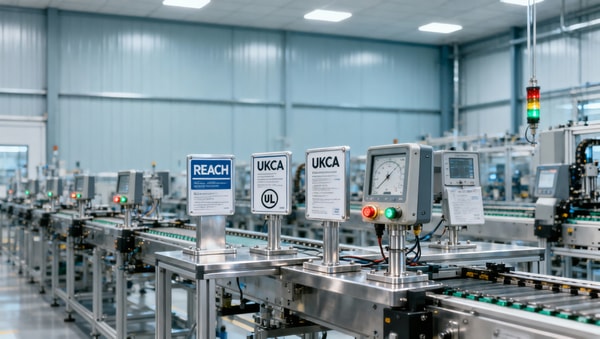
 First National SME Service Demonstration Platforms AnnouncedFirst National SME Service Demonstration Platforms announced—16 specialize in REACH, UKCA, UL certification & rapid factory audits for exporters.
 U.S. Natural Gas Inventory Growth Below Forecast: Impact on Plastic Export CostsU.S. natural gas inventory growth missed forecast—impacting plastic export costs globally. Learn how rising TTF prices affect PP/PE resin costs, margins & supply chain strategy for exporters.
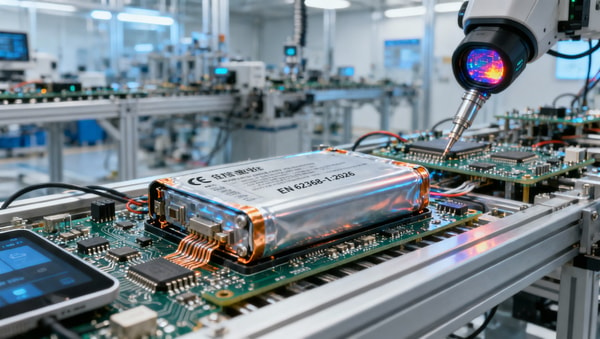
 EN 62368-1:2026 Enforced in EU: Thermal Runaway Protection for Wearables & Smart Home DevicesEN 62368-1:2026 is now mandatory in the EU—learn how thermal runaway protection impacts wearables, smart home devices & EV accessories.
 Q1 2026 Industrial Profits Up 15.5%: Supply Chain Cost Stability ConfirmedQ1 2026 Industrial Profits Up 15.5% — supply chain cost stability confirmed for global procurement, contract manufacturing & OEM teams.
") MIIT Releases Service Trade Standardization Plan (2026–2030)MIIT's 2026–2030 Service Trade Standardization Plan boosts AI-driven digital services—remote QA, cloud maintenance, intelligent warehouse SaaS—for global export competitiveness.
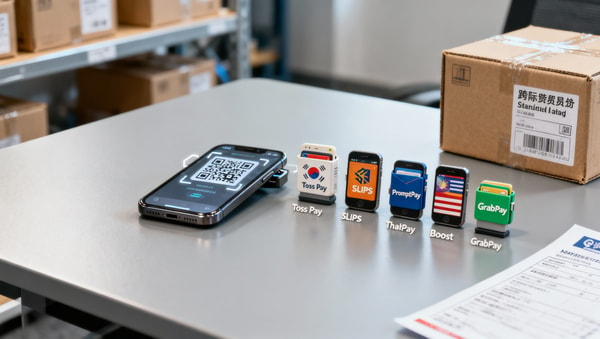
MIIT Releases Service Trade Standardization Plan (2026–2030)MIIT's 2026–2030 Service Trade Standardization Plan boosts AI-driven digital services—remote QA, cloud maintenance, intelligent warehouse SaaS—for global export competitiveness. WeChat Pay Integrates QR Codes from 5 Countries for B2B Cross-Border SettlementWeChat Pay integrates QR codes from South Korea, Sri Lanka, Thailand, Malaysia & Singapore — enabling faster, cheaper B2B cross-border settlement for global buyers and Chinese suppliers.
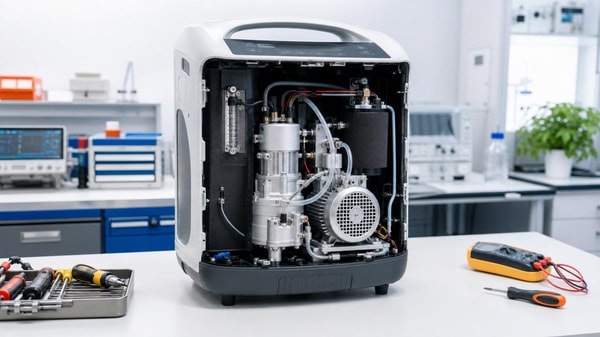
 Portable oxygen concentrators get noisy over time for several reasonsPortable oxygen concentrators get noisy over time due to dust, wear, loose parts, and aging compressors. Learn key causes, inspection priorities, and service tips to prevent failures.
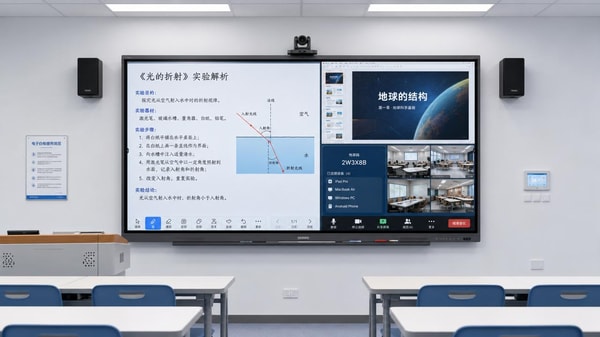
 Interactive whiteboards: what schools regret not checking earlyInteractive whiteboards can boost learning, but schools often regret missing key checks on compatibility, durability, training, and support. Discover how to buy smarter.
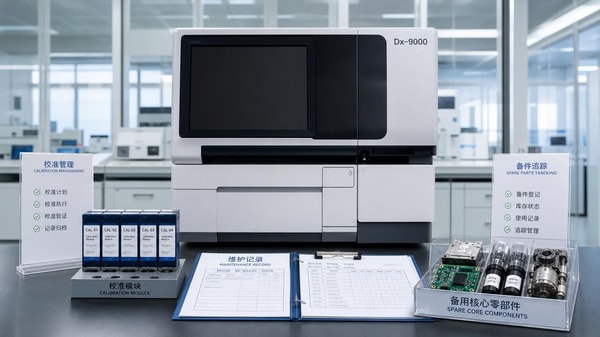
 Medical diagnostic equipment downtime usually starts with this oversightMedical diagnostic equipment downtime often starts with one overlooked maintenance gap. Learn the warning signs, hidden costs, and smart service strategies to improve uptime.
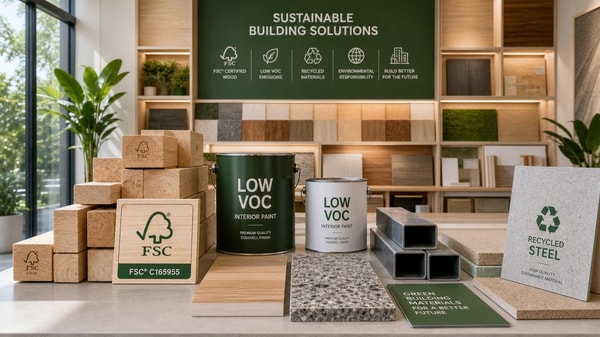
 Eco-friendly building materials: where certification changes the decisionEco-friendly building materials now win or lose on certification. Learn how verified standards reduce sourcing risk, support compliance, and improve procurement decisions.
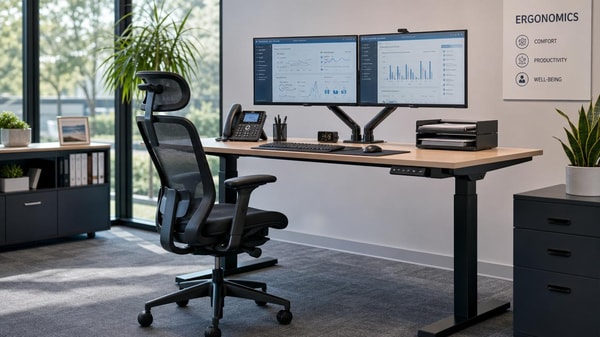
 Ergonomic workspace design mistakes that still cause daily strainErgonomic workspace design mistakes can silently cause daily strain, fatigue, and lower productivity. Discover practical fixes to improve comfort, focus, and workstation performance.
 Outdoor garden supplies that wear out too fast in summer heatOutdoor garden supplies can fail fast in extreme summer heat. Discover which items wear out first, what materials last longer, and how to buy smarter for durable, cost-saving performance.
 Sustainable home decor: how to spot green claims with substanceSustainable home decor explained: learn how to spot credible green claims, avoid greenwashing, compare materials and certifications, and choose stylish, healthier pieces with real impact.
 Modern office furniture trends that improve layout flexibilityModern office furniture trends are transforming flexible workplace design. Explore modular, mobile, ergonomic, and acoustic solutions that boost productivity and smarter space planning.
 Smart street lighting works best when control systems are not overlookedSmart street lighting succeeds when control systems come first. Learn how better monitoring, dimming, and integration improve ROI, maintenance efficiency, and long-term project performance.
 What solid-state battery breakthroughs are still years from market?Solid-state battery breakthroughs sound transformative, but which ones are still years from market? Explore the technical, cost, and scaling barriers shaping real adoption timelines.
 Commercial LED lighting retrofits: when is payback slower than planned?Commercial LED lighting payback can slip when costs, runtime, rebates, and controls are misjudged. Learn the hidden risks and review steps that protect ROI before approval.













Popular Tags
Global Trade Insights & Industry
Our mission is to empower global exporters and importers with data-driven insights that foster strategic growth.
Search News
Popular Tags
Industry Overview
The global commercial kitchen equipment market is projected to reach $112 billion by 2027. Driven by urbanization, the rise of e-commerce food delivery, and strict hygiene regulations.