

Smart home devices wholesale gets risky when standards do not match
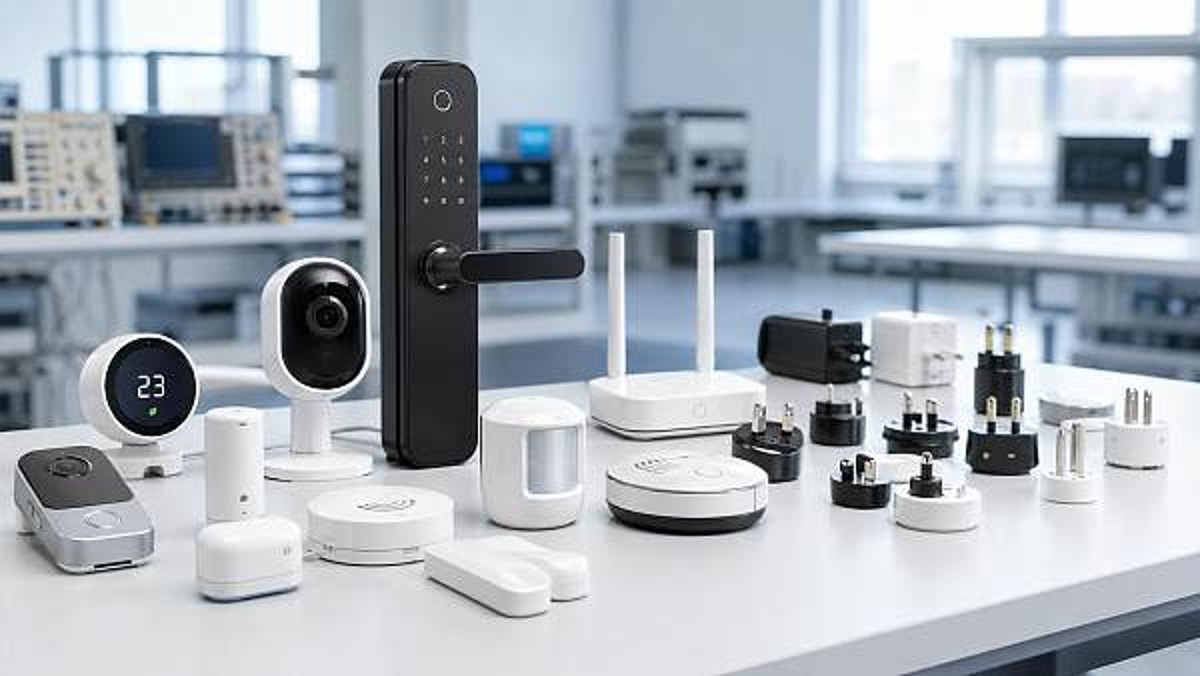
Smart home devices wholesale can quickly become risky when product standards, connectivity protocols, and certification requirements fail to align across markets. For procurement professionals, even small compatibility gaps may lead to delays, returns, and damaged buyer trust. Understanding how inconsistent standards affect sourcing decisions is essential for reducing risk, protecting margins, and building a more reliable global supply chain.
Why standards mismatches matter more in some buying scenarios than others
In Smart home devices wholesale, the same product can perform very differently depending on where it is installed, which ecosystem it joins, and what level of after-sales support the buyer must provide. A Wi-Fi camera that works well in a single-country retail channel may become a problem in a cross-border project if local power specifications, app language support, data handling expectations, or wireless compliance rules do not match. For procurement teams, standards are not a technical footnote; they are a frontline commercial risk factor.
The risk rises sharply when procurement moves across 3 layers at once: hardware standards, communication protocols, and regulatory access requirements. Many buyers focus first on unit price, MOQ, and delivery lead time, often in the 30 to 60 day range, but later discover that a low-cost item requires extra gateways, firmware adjustments, or different plugs for each destination market. What looked like a 5% savings at sourcing stage can turn into a 12% to 20% landed cost increase once relabeling, testing, replacement stock, and support tickets are included.
This is especially important for procurement professionals serving mixed channels. A distributor, an e-commerce private label seller, and a property technology integrator may all buy the same category of smart lock or sensor, yet their risk tolerance is not the same. One buyer can accept limited interoperability if margins are high and sell-through is fast. Another buyer cannot, because one failed deployment may disrupt 200 apartments, delay handover, or trigger service penalties.
Where risk usually starts in real procurement workflows
In many sourcing cycles, standards mismatches begin before the sample stage. Product listings often highlight features such as voice control, app integration, or low standby power, but may not clearly specify whether the device supports Zigbee, Z-Wave, Bluetooth Mesh, Thread, or only proprietary connections. If procurement teams compare offers from 5 to 8 suppliers without standardizing their technical checklist, inconsistent assumptions quickly spread across purchasing, compliance, packaging, and customer support teams.
Another common issue is that buyer and supplier define “compatible” differently. A supplier may mean a device can connect to a mobile app in lab conditions. A buyer may assume that the same product can operate with local hubs, regional cloud infrastructure, multilingual interfaces, and stable firmware updates for 24 months or longer. Those are not the same commercial promise, and the gap often appears only after trial batches reach overseas warehouses.
For that reason, Smart home devices wholesale should be evaluated by scenario, not by catalog category alone. Procurement teams that classify products only as cameras, locks, plugs, sensors, or lighting often miss the more important distinction: retail-ready devices, ecosystem-dependent devices, and project-grade devices require very different validation paths.
A quick scenario-based risk screen
- If the product is sold in more than 2 regions, check plug, voltage, radio, labeling, and language requirements before price negotiation.
- If the product relies on a hub or app, confirm ecosystem compatibility and update policy for at least 12 to 24 months.
- If the product enters residential or hospitality projects, verify installation conditions, user permissions, and maintenance workflow before placing the first bulk order.
- If returns are costly, ask for certification scope, firmware version control, and failure handling process before shipment release.
Typical Smart home devices wholesale scenarios and what buyers should watch
Different buying environments create different standards risks. The same smart thermostat, camera, or gateway can be acceptable in one channel and unsuitable in another. A scenario view helps procurement teams decide whether they need broad compatibility, strict compliance, low-touch installation, or deeper integration support before they commit to volume.
The table below compares 4 common Smart home devices wholesale scenarios. It is designed for sourcing teams that need to balance speed, cost, and deployment certainty across retail, online, project, and distribution models.
The comparison shows why Smart home devices wholesale cannot be managed with one checklist for all channels. E-commerce buyers often need packaging, labeling, and user experience consistency. Project buyers need deeper integration certainty. Distributors need products that are easier to support across many downstream customers. Private label importers must also think about what happens when the same SKU is reordered 90 or 180 days later and firmware has changed.
Scenario 1: Cross-border retail and marketplace selling
In retail-focused Smart home devices wholesale, return rates can erase margin quickly. A buyer selling through marketplaces usually needs simple installation, clear app onboarding, and minimal technical support. If the device requires a non-standard hub, unstable pairing, or region-specific setup steps, negative reviews can accumulate within the first 30 days of sales.
Retail procurement should prioritize visible compatibility points: voice assistant support, mobile operating system version range, plug or power adapter fit, and onboarding language coverage. Even a well-built device becomes hard to sell if setup instructions are incomplete or if firmware updates create frequent reconnection issues. In this scenario, standards discipline supports conversion as much as it supports compliance.
Buyers should also assess whether the supplier can maintain product consistency across at least 2 to 3 production runs. A listing may perform well only when the app experience, packaging claims, and hardware behavior remain stable. If standards drift between batches, customer support costs rise and review quality falls.
Scenario 2: Distribution into regional dealer networks
A distributor purchasing Smart home devices wholesale for resellers faces a broader challenge. The end users may combine products from multiple brands, and local installers may have different levels of technical skill. That means open or widely adopted protocols become more valuable than features that only work inside one proprietary environment.
In this channel, a 6 month support burden can matter more than a 3% price difference. Procurement managers should verify spare parts planning, reset procedures, firmware rollback options, and technical documentation quality. A product that saves a few dollars per unit but generates repeated installer callbacks will likely underperform over a full inventory cycle.
The best-fit products for distribution often have a balance of predictable compatibility and manageable complexity. They do not need the most advanced feature list, but they do need repeatable behavior in the field. Standards consistency is what allows channel partners to recommend, install, and reorder with confidence.
Scenario 3: Residential, office, and hospitality projects
Project-driven Smart home devices wholesale carries the highest operational risk because one procurement error can affect dozens or hundreds of rooms at once. A smart lock, energy sensor, switch panel, or thermostat may need to interact with access control, HVAC, lighting, or property management systems. In these deployments, standards mismatches create installation delays, not just user inconvenience.
Project buyers should define system architecture before supplier selection. Questions such as whether the deployment uses cloud control, local gateways, centralized dashboards, or room-level independence should be answered early. If not, procurement teams may order devices that work individually but fail when grouped into a building-wide environment of 50, 100, or 500 endpoints.
A disciplined project workflow usually includes sample verification, pilot installation, compatibility review, and maintenance planning. That sequence may add 2 to 4 weeks before mass order release, but it often reduces far greater losses later. For project scenarios, the cheapest product is rarely the lowest-risk product.
How standards gaps show up across devices, protocols, and compliance points
Procurement teams often hear that a device is “global version” or “export ready,” but this label can hide several unanswered questions. Standards risk in Smart home devices wholesale typically appears in 4 areas: electrical compatibility, communication protocol, software ecosystem, and market access documentation. Each area can create friction independently, and when 2 or more gaps overlap, the commercial risk grows quickly.
The table below helps buyers identify where mismatches are most likely to affect sourcing decisions, delivery schedules, and post-sale stability. It can be used during RFQ review, sample evaluation, or pre-shipment confirmation.
A practical reading of this table is that no single approval point is enough. A product may be electrically suitable yet still fail in user experience because the app is not ready for the destination market. It may support a popular wireless protocol but still create returns because the firmware update path is poorly managed. In Smart home devices wholesale, buyers should treat compatibility as a chain rather than a single checkbox.
Protocol mismatch is often a hidden cost center
Connectivity issues are among the most expensive problems because they are harder to detect from simple visual inspection. Two devices can look identical and share similar packaging, yet one may require a proprietary hub while another can join a broader ecosystem. Procurement teams that overlook this point may accidentally mix devices that force customers into separate apps, duplicate gateways, or more complex installation steps.
For projects and distribution, protocol decisions also affect expansion. A buyer who starts with 20 test units may later scale to 200 or more. If the protocol stack is not stable, every expansion stage becomes a new validation exercise. That slows reorder timing and makes forecasting less reliable.
This is where industry intelligence platforms become useful. Buyers need timely updates on protocol adoption, certification practices, and supplier behavior across regions, not just product brochures. Access to aggregated B2B information can shorten evaluation cycles and reduce blind spots before commercial commitments are made.
Checklist for pre-order standards review
- Map the destination markets and confirm whether one SKU can legally and functionally serve all of them.
- Document required protocol support, hub dependency, and app behavior before RFQ comparison.
- Ask suppliers to state firmware control policy, update cycle, and documentation scope in writing.
- Test at least one pilot batch in the intended user environment, not only in showroom conditions.
- Review packaging, manuals, and labels together with compliance and customer support teams.
How to adapt sourcing strategy by scenario instead of chasing the lowest unit price
A safer Smart home devices wholesale strategy starts with scenario fit. Procurement teams should define what failure looks like in each business model. In e-commerce, failure may mean a return rate above 8% or a review score decline within 60 days. In projects, failure may mean installation delays, incompatible gateways, or rising site support cost. Once failure is defined, sourcing criteria become clearer and negotiation becomes more practical.
One effective approach is to separate devices into 3 sourcing tiers: standard retail SKUs, managed channel SKUs, and project-grade SKUs. Retail SKUs prioritize user simplicity and logistics efficiency. Managed channel SKUs need better documentation and interoperability. Project-grade SKUs require integration discipline, stable firmware control, and clearer lifecycle planning. This tiering helps avoid the common mistake of using a consumer-focused device in a high-dependability project.
Buyers should also compare total risk cost across 90 to 180 days, not just ex-factory price. Rework, app support, certification review, local relabeling, extra adapters, and replacement stock can all affect margin. In many cases, a slightly higher unit price reduces operational waste and protects customer confidence.
Practical sourcing actions for procurement teams
First, build a standard review sheet that all shortlisted suppliers must complete. This should cover electrical range, communication protocol, app environment, language support, firmware policy, labeling details, and lead time. When every supplier answers the same questions, comparison quality improves immediately.
Second, involve technical and customer-facing teams earlier. Smart home devices wholesale often fails when procurement approves a product before installers, support staff, or compliance reviewers have tested the real usage path. A cross-functional check during the first 7 to 10 days of evaluation can prevent months of downstream friction.
Third, ask scenario-specific questions instead of general assurances. Do not only ask whether the device is compatible. Ask whether it can run in multi-unit housing, whether one gateway can support a defined number of nodes, whether account management can fit shared-property use, and whether firmware changes affect previously shipped stock. Those questions reveal supplier maturity much faster.
Common misjudgments that increase wholesale risk
- Assuming “works with app” means the product is ready for every destination market.
- Treating sample performance in one room as proof of multi-site deployment readiness.
- Ignoring firmware version control during repeat orders placed 3 to 6 months apart.
- Selecting products only by feature count rather than support burden and ecosystem fit.
- Overlooking packaging, labeling, and instruction quality when selling through retail channels.
These misjudgments are avoidable when buyers use structured market intelligence and channel-specific validation. Procurement is stronger when commercial data, technical fit, and regional compliance signals are reviewed together instead of in isolation.
Why informed buyers use market intelligence before expanding Smart home devices wholesale programs
As smart home categories expand across security, energy management, lighting, access control, and convenience devices, procurement complexity increases. Standards evolution does not happen at the same pace in every region or channel. Buyers need ongoing visibility into supplier movements, market expectations, and cross-border requirements if they want to scale without exposing themselves to unnecessary risk.
This is where an information-driven sourcing approach becomes valuable. GTIIN and TradeVantage support global buyers by aggregating real-time B2B information, sector updates, and industrial intelligence across more than 50 sectors. For procurement professionals evaluating Smart home devices wholesale, that kind of visibility helps identify where market conditions, compliance expectations, and product positioning are shifting before those changes affect sourcing outcomes.
Instead of relying only on fragmented supplier claims, buyers can use broader market signals to benchmark categories, compare sourcing patterns, and refine scenario-based selection decisions. This is particularly useful when expanding into new regions, adding product lines, or reviewing potential OEM and private label opportunities with different standards exposure levels.
Why choose us
We help procurement teams make better decisions before risk becomes cost. Through GTIIN and TradeVantage, you can access structured market insight that supports product selection, supplier evaluation, channel planning, and global visibility. Our role is not limited to publishing information; we help foreign trade enterprises strengthen trust, improve digital exposure, and connect market intelligence with practical sourcing action.
If your Smart home devices wholesale program involves multi-market sales, mixed protocol environments, distributor expansion, or project-grade deployment, contact us to discuss the details that matter most. You can consult with us on parameter confirmation, product selection direction, delivery cycle expectations, certification considerations, custom sourcing scenarios, sample support planning, and quotation communication strategy.
When standards do not match, small sourcing assumptions can become large operational problems. A better result starts with clearer scenario judgment, stronger information support, and earlier technical verification. If you are preparing your next sourcing round, reach out with your target market, application scenario, and product scope, and we can help you frame the right questions before volume commitments are made.
Recommended News
 Medical diagnostic equipment buying mistakes often start with workflowMedical diagnostic equipment buying mistakes often begin with workflow gaps. Learn how to compare systems, uncover hidden costs, and choose suppliers that fit real clinical operations.
 Interactive whiteboards are improving, but teacher adoption is unevenInteractive whiteboards are improving fast, but teacher adoption remains uneven. Explore what drives classroom success, ROI, and smarter edtech implementation.
 Portable oxygen concentrators: what noise levels feel acceptable?Portable oxygen concentrators: discover what noise levels feel acceptable for sleep, travel, work, and home use, with practical guidance to choose a quieter, more comfortable model.
 Car electronics failures often start with power instabilityCar electronics issues often begin with hidden power instability. Learn how voltage drops, ripple, and weak grounds cause faults—and how smarter diagnostics cut repair time and repeat failures.
 Telemedicine hardware works best when setup friction is lowTelemedicine hardware works best with low setup friction. Discover how faster deployment, easier operation, and scenario-based selection improve care efficiency and service quality.
 Are light-weighting vehicle materials worth the repair tradeoff?Light-weighting vehicle materials: Are efficiency gains worth higher repair costs? Explore lifecycle impact, EV value, downtime risks, and smarter sourcing decisions.
 Educational robots in class: novelty or lasting value?Educational robots are moving beyond classroom novelty. Discover how they create lasting value through STEM learning, scalability, and smarter school purchasing decisions.
 Biodegradable plastics fail when disposal assumptions are wrongBiodegradable plastics can fail when real disposal systems do not match design assumptions. Learn the compliance, contamination, and claim risks before they damage trust.
 Office stationery wholesale margins depend on boring detailsOffice stationery wholesale margins are won in the details—packaging, MOQ, freight, and SKU rotation. Learn how distributors protect profit and reduce hidden cost leakage.
 Carbon capture materials are improving, but durability still mattersCarbon capture materials are improving, but durability still decides ROI. Explore cycle stability, regeneration resilience, and supplier evaluation factors for reliable industrial deployment.
 Which graphene applications in industry are moving beyond pilots?Graphene applications in industry are moving beyond pilots fastest in coatings, composites, thermal management, sensors, and energy storage. See where commercialization is gaining traction.
 Precision farming drones need better data, not just better flight timePrecision farming drones deliver more value through accurate maps, crop insights, and faster decisions than longer flight time alone. See how better data improves farm efficiency.
 Smart classroom solutions often disappoint for one simple reasonSmart classroom solutions often fail when complexity is ignored. Discover how project leaders can improve adoption, scalability, ROI, and long-term classroom performance.
 Organic fertilizers: when higher cost brings better soil resultsOrganic fertilizers may cost more, but they can improve soil structure, moisture retention, and long-term plant health. Learn when the higher price delivers better garden results.
 Agri-PV systems can raise land efficiency, but not everywhereAgri-PV systems can improve land efficiency, but only in the right conditions. Explore where they work, key risks, and how to evaluate profitable deployment.
 Smart home devices wholesale gets risky when standards do not matchSmart home devices wholesale becomes risky when standards, protocols, and certifications do not align. Learn how to reduce sourcing errors, control costs, and protect buyer trust.
 Wearable technology users quit when comfort is overlookedWearable technology users quit when comfort is ignored. Discover the checklist for fit, weight, skin safety, and long-term wear to choose devices that improve adoption and user satisfaction.
 Next-gen wireless charging still faces a heat management gapNext-gen wireless charging still faces a critical heat management gap. Explore how thermal risks affect efficiency, safety, lifecycle, and product readiness.
 Foldable screen technology looks mature until repair costs appearFoldable screen technology looks premium and practical, but are repair costs too high? Discover the real tradeoff between innovation, durability, and long-term value before you buy.
 Plant-based protein processing bottlenecks start after extractionPlant-based protein processing bottlenecks often begin after extraction. Discover downstream risks, supplier evaluation tips, and cost-saving insights for better sourcing decisions.
 Photovoltaic solar panels lose value when degradation is underestimatedPhotovoltaic solar panels can lose value fast when degradation is underestimated. Learn how realistic modeling protects ROI, asset valuation, and smarter solar investment decisions.

















Popular Tags
Global Trade Insights & Industry
Our mission is to empower global exporters and importers with data-driven insights that foster strategic growth.
Search News
Popular Tags
Industry Overview
The global commercial kitchen equipment market is projected to reach $112 billion by 2027. Driven by urbanization, the rise of e-commerce food delivery, and strict hygiene regulations.